From Road Warrior to Real Estate Mogul: How Joe Crocker Built a Portfolio in Record Time
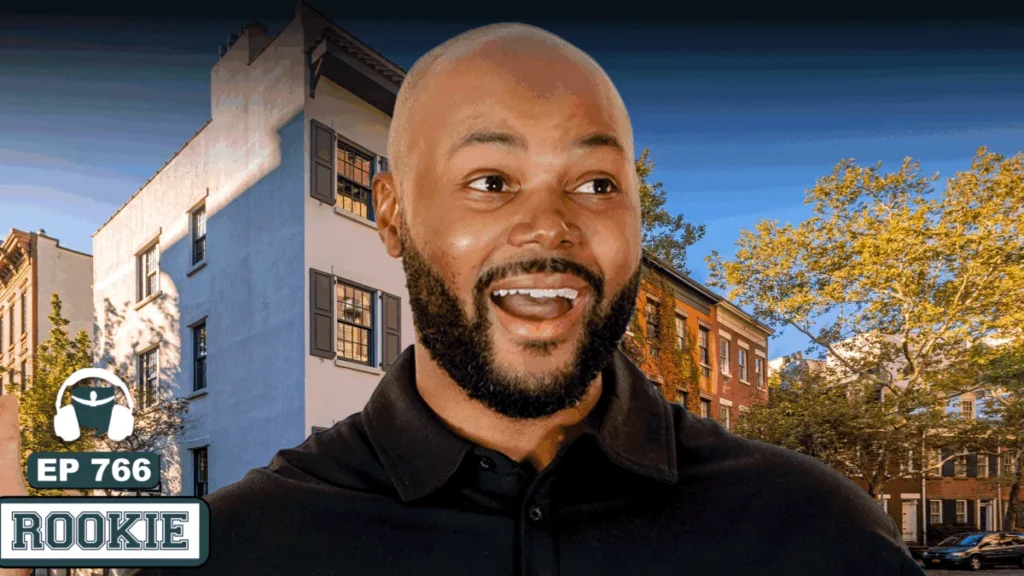
For many aspiring real estate investors, the primary obstacle is not a lack of ambition, but a perceived lack of resources. The "rookie hurdle"—the inability to secure funding or identify a viable deal in a saturated market—often causes potential investors to abandon their dreams before they even begin. However, a recent case study featured on the BiggerPockets Real Estate podcast suggests that success isn’t defined by market conditions or available free time, but by the relentless application of proven investment strategies.
Joe Crocker, a Houston-based investor, has shattered the myth that high-travel, demanding careers are incompatible with building a lucrative real estate portfolio. In less than a year, Crocker transitioned from a novice to a seasoned operator, acquiring eight units and building a monthly net cash flow of approximately $6,000. His journey serves as a blueprint for those looking to replicate his success in a challenging economic landscape.
The Reality of the "Rookie Hurdle"
New investors frequently find themselves caught in a cycle of analysis paralysis. They study their markets, select a strategy—such as the BRRRR (Buy, Rehab, Rent, Refinance, Repeat) method—and then stall when they encounter the practical difficulties of securing funding or finding properties that meet their return-on-investment (ROI) criteria.
As highlighted in the latest Rookie Reply segment of the BiggerPockets podcast, the common complaints are universal: "The numbers don’t work," "The market is too competitive," or "I don’t have the time." Crocker’s experience provides a direct rebuttal to these concerns. By focusing on the fundamentals of property analysis and creative financing, he has demonstrated that even in high-competition markets like Houston, Texas, opportunity remains for the disciplined.
Chronology of an Investor’s Rise
Crocker’s trajectory is characterized by rapid, decisive action. His background in commercial construction provided a foundational understanding of property value, but his entry into real estate was prompted by a personal need to plan for a post-career life.
The Initial Leap (December 2025)
Crocker, who spends 300 nights a year on the road for his W-2 job, began his journey by dedicating two months to daily market research. He scoured the Multiple Listing Service (MLS), analyzing properties to understand price points and deal viability. His breakthrough came with an estate sale in Houston. By targeting a property that had been lingering on the market—a common indicator of seller motivation—he acquired a house and an accessory dwelling unit (ADU) for $134,000.
Scaling Through Multi-Unit Acquisitions
Recognizing that he needed to scale, Crocker soon moved on to a second, more ambitious deal: a package consisting of two full homes on a single lot. Despite the property showing poorly and having incorrect square footage listed on the MLS, Crocker recognized the hidden value. He purchased the package for $295,000. Through strategic renovations—including converting a garage into additional living space—and an aggressive tax appeal, he significantly increased the property’s cash flow and equity.
The Short-Term Rental Pivot
By the summer of 2026, Crocker began incorporating short-term rentals (STRs) into his portfolio. He acquired a condo for $73,000, renovated it, and successfully refinanced the asset. This acquisition reinforced his commitment to the "flip-to-hold" mindset, where every property is analyzed as if it were a potential flip, ensuring a margin of safety regardless of the exit strategy.
Supporting Data: Numbers That Move the Needle
Crocker’s success is built upon a foundation of rigorous financial discipline. His approach to the BRRRR method and tax optimization illustrates how small adjustments can lead to substantial gains.
Strategic Tax Appeals
One of the most critical aspects of Crocker’s portfolio management is his active approach to property taxes. Upon acquiring his second deal, he was faced with an annual tax assessment of $13,000. By researching the local appeal process and presenting his case—supported by his purchase price—to the local tax office, he successfully reduced his annual tax burden to $5,000. This $8,000 annual savings directly bolstered his bottom-line cash flow, turning a struggling deal into a high-performing asset.
The Power of Multiple Exit Strategies
Crocker adheres to the philosophy of having at least two exit strategies for every deal. For his Galveston-area properties, he maintains the flexibility to:
- Operate the units as short-term rentals.
- Transition to long-term rentals if the STR market becomes oversaturated.
- Sell the property entirely if neither rental strategy meets his goals.
This protectionist approach mitigates the risks associated with the volatility of the short-term rental market, ensuring that he is not reliant on a single income stream.
Official Perspectives: The Role of Coaching and Mentorship
The BiggerPockets platform has long advocated for the "do it scared" mentality. Henry Washington, co-host of the podcast, emphasizes that real estate is a "simple, but not easy" business. Washington’s analysis of Crocker’s success underscores the importance of tenant selection—particularly regarding Section 8 housing.
Washington notes that there is a prevailing, often unfounded, stigma against Section 8 tenants. However, when managed with professional rigor, these properties often provide higher-than-market rents guaranteed by government agencies. Crocker’s upcoming deal—a five-bedroom home with two back units—is projected to generate $7,300 in gross monthly rent, showcasing the potential for high-cash-flow opportunities that many investors overlook.
Implications for the Future of Rookie Investors
The implications of Crocker’s story are significant for the broader real estate community. It suggests that the "ideal" time to start investing is non-existent; instead, success is found in the willingness to embrace discomfort and the technical ability to analyze deals effectively.
The "Road Warrior" Factor
Crocker’s ability to manage renovations while traveling 300 days a year highlights the necessity of building a support network. In his case, his mother and wife played instrumental roles in site visits and property management. For those without a family support system, the implication is that delegation—hiring property managers or project leads—is not a luxury, but a necessity for scaling.
The Necessity of Financial Literacy
Crocker’s journey demonstrates that being an investor requires more than just capital. It requires understanding:
- The 70% Rule: Analyzing deals as if they were flips to ensure a purchase price that allows for profit even if the market shifts.
- Tax Optimization: Treating tax assessment as a negotiable expense rather than a fixed cost.
- Lending Relationships: Recognizing that the "financing piece" is the most significant hurdle for those looking to scale beyond a few units.
Long-Term Vision
Crocker’s goal is to reach 30 units, at which point he plans to exit his W-2 career entirely. His progress—moving from zero to eight units in less than 12 months—suggests that this target is well within reach. By the end of his current cycle, he expects to have recouped his initial capital investment while maintaining a portfolio that provides a passive income stream exceeding his current salary.
Conclusion
Joe Crocker’s transition from a traveling employee to a successful multi-unit owner serves as a definitive case study for the modern investor. It proves that the "rookie hurdle" is a manageable challenge for those who prioritize education, risk mitigation, and consistent action. Whether through the strategic use of the BRRRR method, the savvy negotiation of property taxes, or the bold utilization of Section 8 housing, Crocker has demonstrated that the barriers to entry in real estate are often self-imposed.
For those waiting for the "perfect" market or the "perfect" financial situation, the lesson is clear: The best time to start is now. By focusing on the mechanics of the deal, rather than the noise of the market, aspiring investors can create their own path to financial independence, one property at a time.