Escalation in the Strait: Fragile Middle East Detente Teeters on the Brink of Collapse
The delicate architecture of peace in the Middle East, constructed through weeks of painstaking negotiations, is fracturing under the weight of renewed military hostilities. A flurry of strikes, counter-strikes, and maritime provocations this weekend has pushed the United States and Iran back toward the precipice of direct conflict, casting a dark shadow over the future of the Strait of Hormuz and the viability of the recently signed Memorandum of Understanding (MOU).
As of Saturday afternoon, the region remains in a state of high alert. Bahrain has officially accused Tehran of orchestrating a coordinated drone strike against its territory, while a merchant vessel in the strategic Strait of Hormuz has been incapacitated by an unidentified projectile. These incidents, occurring in rapid succession, have forced the Joint Maritime Information Center to elevate the security threat level for the waterway to "substantial," a move that underscores the volatility of the world’s most critical energy chokepoint.
A Chronology of Escalation: From Truce to Turbulence
The current volatility is the result of a rapid, 72-hour breakdown in the tenuous ceasefire established just last week. The timeline of the most recent hostilities highlights the difficulty of maintaining stability in a region where historical grievances and strategic ambitions remain deeply entrenched.
- Thursday, June 25: A container ship transiting the Strait of Hormuz was struck by an Iranian drone, a provocative act that effectively challenged the nascent peace deal. Following this, several commercial tankers reportedly received warnings from the Iranian Navy, prompting a number of vessels to alter their courses or turn back entirely.
- Friday, June 26: The United States launched a series of retaliatory strikes targeting Iranian missile storage facilities and radar installations. Pentagon officials characterized these actions as necessary, though an unnamed source later told CNN that the strikes were limited in scope and did not signal a return to "major combat operations."
- Saturday, June 27: The situation spiraled further. Tehran claimed to have hit undisclosed U.S. sites in the Persian Gulf in response to Friday’s strikes. Simultaneously, the Kingdom of Bahrain reported a drone assault on its territory, and a tanker was struck by a projectile within the Strait of Hormuz, forcing a reassessment of regional maritime security protocols.
The Strategic Importance of the Strait of Hormuz
The Strait of Hormuz remains the central theater of this conflict. For Iran, the ability to control or disrupt the flow of traffic through the waterway is its most potent geopolitical leverage. Since the onset of the conflict on February 28, the strait has been a recurring flashpoint, with Iran effectively shuttering the route during peak periods of tension, causing global energy markets to experience significant volatility.
The Joint Maritime Information Center’s decision to elevate the security threat to "substantial" is a direct response to the attack on the unnamed tanker. While satellite vessel-tracking data confirmed that many ships continued their transit near the coasts of Iran and Oman on Saturday morning, the psychological impact on the shipping industry is profound. Shipowners and insurers are now re-evaluating the risk-reward ratio of navigating the strait, a development that threatens to reverse the progress made in restoring global shipping traffic to pre-war levels.
The core of the dispute remains the enforcement of the recent MOU. Reports indicate that Oman has signaled to European officials that Iran may eventually seek to impose monetary tolls or "fees" on vessels passing through the strait. Such a move would be seen by Washington as a violation of the freedom of navigation, a principle the U.S. has repeatedly stated it is willing to defend with military force.
Official Responses: A War of Words and MOU Violations
The diplomatic fallout has been as intense as the kinetic activity. Iran’s Foreign Ministry issued a formal statement on Saturday, condemning the U.S. strikes as an "explicit violation of the first paragraph of the Memorandum of Understanding." The Islamic Revolutionary Guard Corps (IRGC) followed this with claims that they had successfully struck U.S. targets in the region, although they refrained from providing specific details.
In Washington, the response has been one of stern warning rather than retreat. Vice President JD Vance took to social media platform X to address the situation, emphasizing that the United States has "honored" the deal.
"If they have disagreements about how the MOU is being applied, they can pick up the phone," Vance stated. "But violence will be met with violence."
President Donald Trump, who spearheaded the 60-day truce, has maintained a firm stance. He has publicly stated that the U.S. will not hesitate to resume military action if Iran fails to adhere to the terms of the agreement, which include guaranteed freedom of navigation and a commitment to ongoing dialogue regarding Tehran’s nuclear program in exchange for much-needed sanctions relief.
Implications: The Lebanon Exception
Amidst the chaos in the Gulf, there remains a glimmer of hope on the periphery of the conflict. The war in Lebanon—a significant front involving Israel and the Iran-backed Hezbollah—has seen a surprising breakthrough. On Friday, the United States, Israel, and representatives of the conflict parties signed an initial agreement aimed at de-escalating the fighting.
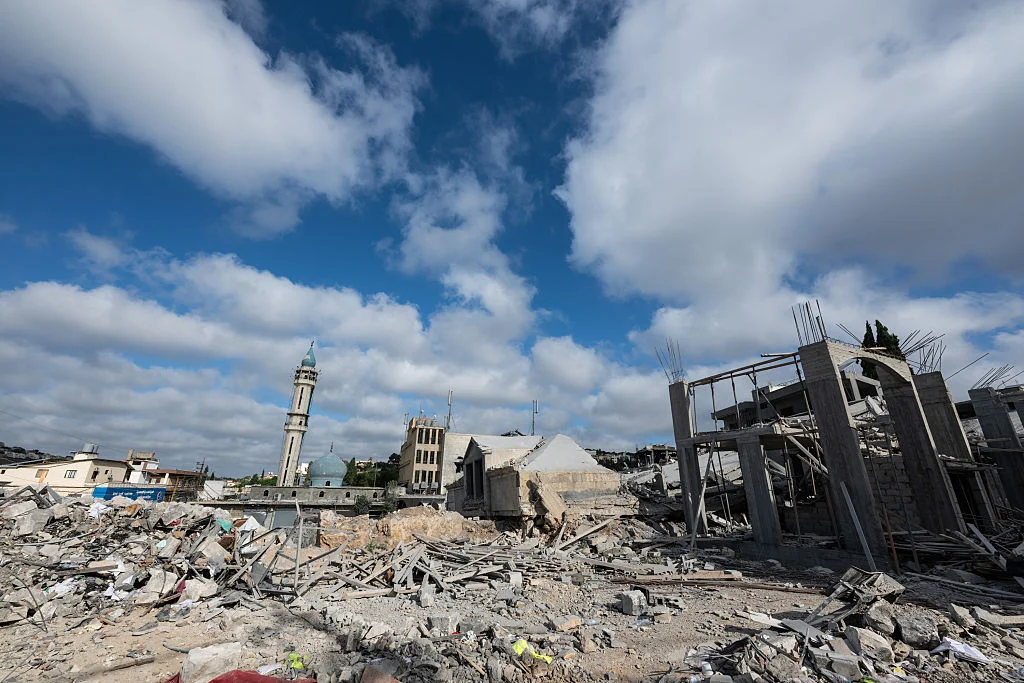
This agreement, which has already resulted in a reduction of violence in areas like Nabatieh, serves as a testament to the fact that the broader diplomatic effort is not entirely dead. However, the success of the Lebanese peace track is now inextricably linked to the survival of the U.S.-Iran MOU. If the Gulf remains a combat zone, the political capital required to maintain the Lebanese ceasefire may evaporate, potentially reigniting a multi-front war.
Assessing the Future of the Detente
The central question facing policymakers in Washington, Tehran, and the Gulf capitals is whether this weekend’s violence represents a temporary "blip" or the definitive end of the truce.
The U.S. Central Command continues to reiterate its commitment to providing safe passage coordination and support for commercial vessels, attempting to project stability in an increasingly unstable environment. However, the persistent Iranian claim that ships require Tehran’s permission to transit the strait suggests that the fundamental disagreement over sovereignty and maritime rights has not been resolved.
For the global economy, the stakes could not be higher. The disruption of the Strait of Hormuz in late February triggered a series of economic shocks that many nations are still struggling to absorb. A return to that state of play would likely lead to renewed inflation, energy insecurity, and a collapse of international investor confidence in the region.
As the international community watches, the current detente hangs by a thread. The combination of U.S. resolve to maintain the status quo and Iran’s determination to exercise influence over the waterway has created a feedback loop of escalation. Whether the "phone calls" mentioned by Vice President Vance can resume, or whether the region is destined for a broader conflict, will likely be determined in the coming days as both sides weigh the costs of continued confrontation against the elusive promise of a stable peace.
Photograph: Damage by Israeli airstrikes in the centre of Nabatieh on June 26, 2026; photo credit: Guy Smallman/Getty Images.
Copyright 2026 Bloomberg.