Cinematic Resilience: The Silicon Valley African Film Festival’s Fight for Sustainability in the Shadow of Tech Wealth
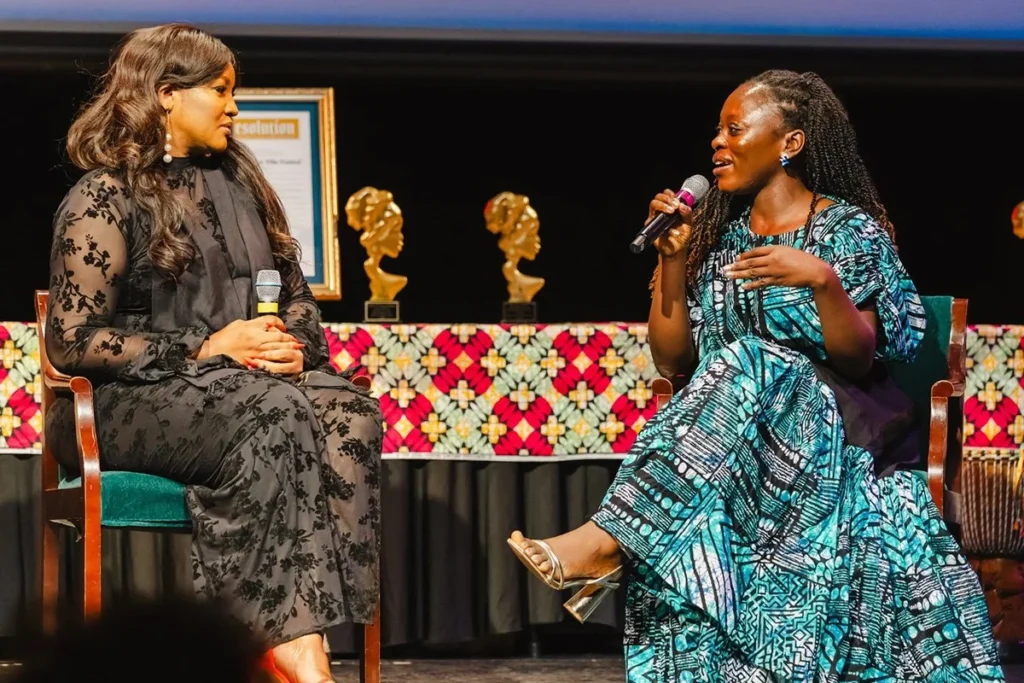
For nearly two decades, the Silicon Valley African Film Festival (SVAFF) has served as a vital cultural artery in Northern California. As it prepares for its 17th annual iteration, scheduled for October 8–11 at the Historic Hoover Theatre in San Jose, the festival stands as a testament to the power of storytelling. Featuring 76 films from 33 countries, the event is more than a screening series; it is a sprawling celebration of African identity, featuring live performances, an African marketplace, and deep-rooted community dialogue.
However, beneath the glamour of the red carpet lies a persistent, stark reality: the festival—and the nonprofit that sustains it—remains in a precarious financial state. Despite its location at the epicenter of global technological wealth, the SVAFF struggles to bridge the gap between corporate engagement and genuine, long-term financial investment.
The Genesis of a Cultural Bridge
The festival’s origins are rooted in the personal journey of Chike C. Nwoffiah. A Nigerian immigrant who arrived in Silicon Valley 36 years ago to pursue graduate studies, Nwoffiah initially worked in the biotech sector. Yet, his childhood passion for the arts proved too strong to ignore. During his transition back into film and theatre, Nwoffiah was struck by the prevailing ignorance surrounding the African continent. Colleagues would frequently express surprise that he spoke English or make patronizing requests for him to speak "African," revealing a profound lack of geographic and cultural literacy.
Nwoffiah’s response was academic and activist. While teaching African history at a local college, he began incorporating short films into his curriculum. He vividly recalls a student’s shock at a film depicting young women driving cars and attending nightclubs in Addis Ababa, Ethiopia—a stark contrast to the student’s stereotypical, impoverished image of the city.
Determined to expand this perspective, Nwoffiah curated a modest Saturday morning screening of ten short films. The response was immediate; audiences were hungry for more. What began as a small, community-driven experiment evolved into the formal organization that would eventually relocate to San Jose in 2017 to tap into the city’s significant African immigrant population and its robust network of institutional partnerships.
Chronology of Growth and Obstacles
Since its inception, the SVAFF has maintained a trajectory of organic growth. Its early years were spent at the Community School of Music and Arts in Mountain View, serving as a hub for cultural exchange. The move to San Jose was a strategic effort to scale the festival, taking advantage of the city’s international infrastructure and diverse demographics.
- 2007–2016: The formative years. Nwoffiah builds the foundation of the festival, establishing the "Africa in the Classroom" program and developing a library of over 500 films for educational use.
- 2017: The relocation to San Jose. The festival adopts the Historic Hoover Theatre as its primary home, aiming for deeper integration with the local African immigrant community.
- 2018–2023: Deepening corporate ties. SVAFF establishes relationships with internal employee resource groups (ERGs), including Adobe’s Black Employee Network, Black@YouTube, and Africans@Google.
- 2024–Present: The struggle for sustainability. Despite record-high submissions—nearly 1,000 films competing for 76 slots this year—the organization faces an existential threat posed by the high cost of living and the difficulty of securing multi-year corporate investment.
Supporting Data: The Cost of Displacement
The challenges facing SVAFF are inextricably linked to the broader socio-economic landscape of Santa Clara County. As highlighted by Jocelyn Dubin, a co-chair of the Black Leadership Kitchen Cabinet of Silicon Valley (BLKC), the region is undergoing a demographic and economic transformation that threatens the survival of local Black-led institutions.
Economic data paints a sobering picture. A 2024 analysis conducted by Gabriel Frank-McPheter for the nonprofit SV@Home reveals a concerning trend of displacement. Between 2010 and 2020, 171 census tracts in the county saw a decline in the Black population. Furthermore, homeownership rates for non-Hispanic Black adults in Santa Clara and San Mateo counties remain stagnant at approximately 34 percent, compared to 60 percent for their white counterparts.
For the SVAFF, these statistics are not just abstract figures; they are felt in the bottom line. The cost of venue rentals, technical services, and logistics in Silicon Valley is astronomical. Because of the festival’s prestigious location, vendors and service providers often assume the organization is flush with venture-capital-style funding, making the negotiation of affordable rates difficult. Meanwhile, Nwoffiah, who operates the festival without a salary and dedicates 80 hours a week to its success, struggles to retain experienced staff who are increasingly priced out of the region.
Official Responses and Corporate Paradox
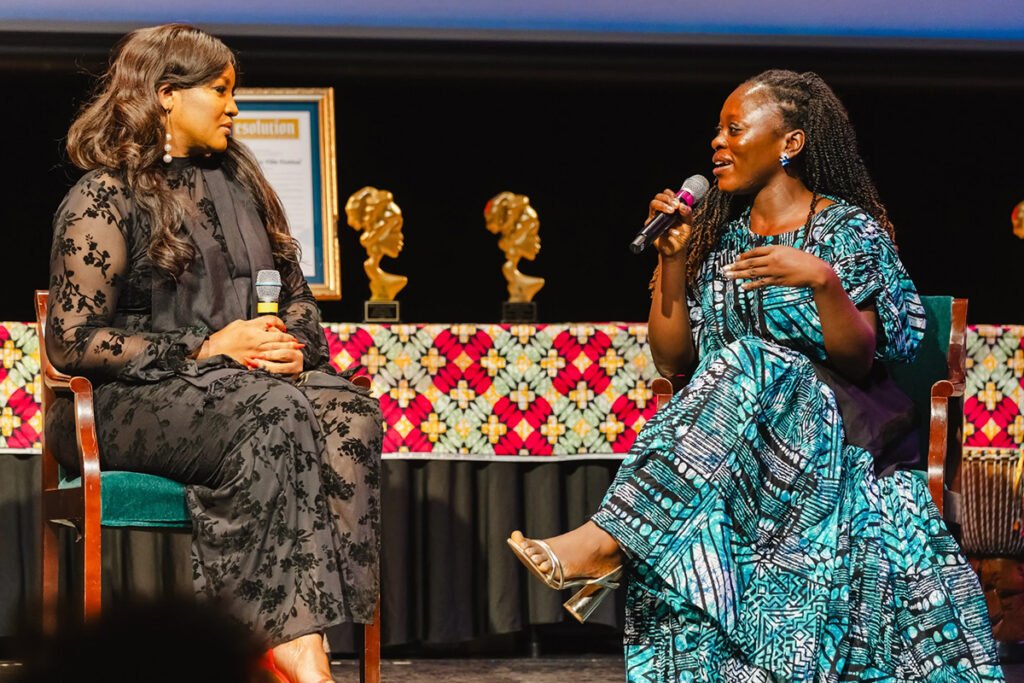
The festival’s relationship with "Big Tech" is defined by a paradox of access versus capital. Nwoffiah has successfully fostered relationships with employee-led groups, which has resulted in volunteers, ticket sales, and even technical demonstrations where filmmakers interact with software engineers to provide feedback on editing tools.
"We are grateful for every form of support," Nwoffiah stated, "but there is a difference between corporate engagement and corporate investment."
While corporate employees often provide personal time and enthusiasm, the festival lacks the institutional, multi-year financial backing required to move from a volunteer-run project to a sustainable year-round operation. Currently, the SVAFF operates on a shoestring budget of less than $200,000 annually. This forces the organization to restart its fundraising efforts from scratch every single year, a cycle that leads to inevitable burnout.
Jocelyn Dubin notes that this issue is reflective of a wider trend of "siloing" in the nonprofit sector. Organizations rarely coordinate their efforts, missing opportunities for synergistic support. She suggests that if corporate sponsors and health organizations treated cultural institutions like SVAFF as integral to the community’s social fabric—rather than just "one-off" events—the impact could be transformative.
Implications: A Model for Community-Led Arts
The implications of the SVAFF’s struggle are significant for the future of arts funding in high-cost, high-tech environments. If a globally recognized cultural asset cannot survive in one of the wealthiest regions on Earth, it raises urgent questions about the viability of independent, diverse, and community-led art.
However, the festival’s impact on its audience provides a compelling case for its survival. From the "African Cinema Café" series—which facilitates screenings on topics ranging from men’s mental health to grief—to the partnership with the Santa Clara County Alliance of Black Educators, the SVAFF is a catalyst for "courageous conversations."
The festival creates moments of profound belonging. Nwoffiah recalls the emotional testimony of a newly arrived Ghanaian grandmother who found a home in the festival’s programming, and the joy of children who refused to leave after a marathon of animated shorts. These are the markers of success that do not appear on a balance sheet but are essential to the social cohesion of Silicon Valley.
As the 17th edition approaches, the SVAFF stands at a crossroads. It has successfully proven that there is a deep, unmet demand for the stories it tells. It has built a loyal, multi-generational audience and a network of volunteers who see the festival as "theirs." Yet, the transition from a labor-of-love project to a sustainable institution requires a paradigm shift in how corporate Silicon Valley views its cultural neighbors.
The path forward, as suggested by both Nwoffiah and Dubin, lies in moving beyond sporadic engagement. It requires a commitment to structural investment that recognizes the festival not merely as an event, but as a critical piece of the region’s cultural and intellectual infrastructure. Whether the community can rally to provide that support before the exhaustion of its leadership takes its toll remains the defining question of the festival’s future. In the words of Nwoffiah: "When people believe that your organization belongs to them too, they will fight to keep it alive." The question remains whether the institutional powers surrounding that organization will join the fight.