The Sleeping Giant Awakens: Latine Political Power and the Battle for the Ballot Box
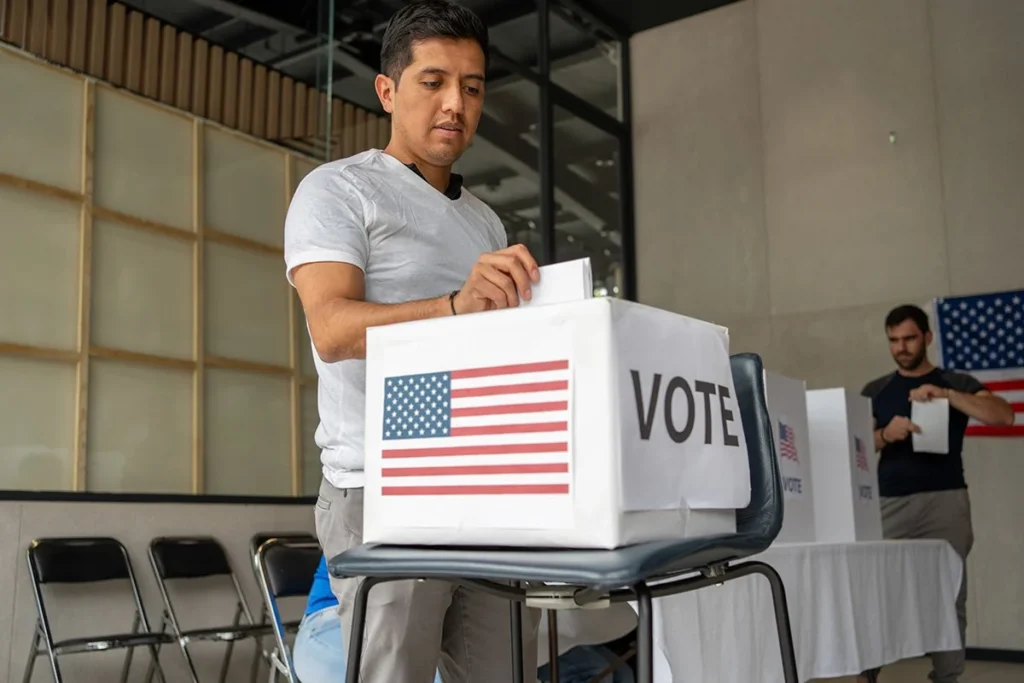
As the November midterms approach, the American political landscape is bracing for a seismic shift. For decades, the Latine electorate—a demographic that now boasts 36 million eligible voters—has been analyzed, courted, and occasionally ignored by the two major parties. However, as economic anxieties mount and aggressive, anti-immigrant rhetoric permeates the national discourse, the Latine community is moving from a passive voting bloc to a decisive force. Nonprofits and grassroots organizers are betting that this rising tide of frustration will effectively neutralize Republican fear tactics, potentially reshaping the balance of power in Washington.
A Legacy of Shifting Allegiances: Historical Voting Trends
To understand the current mobilization, one must look at the complicated history of the Latine vote. In 2001, the Center for Immigration Studies (CIS), a conservative think tank, issued a report suggesting that the Republican Party should abandon efforts to woo Hispanic voters, concluding that the effort required to make inroads was simply not worth the political capital. At the time, with the exception of the reliably conservative Cuban-American enclave in Florida, the broader Latine population was staunchly Democratic.
However, the political map proved more fluid than analysts anticipated. Following the controversies of the Clinton era and the economic instability in Latin America linked to neoliberal policies, George W. Bush made significant gains, securing 35 percent of the Hispanic vote in 2000. By 2004, that figure rose to 40 percent. These gains were largely driven by wedge issues such as national security post-9/11 and moral traditionalism, which resonated with Catholic swing voters.
The Republican optimism was short-lived. By 2008, 67 percent of Hispanics voted for Barack Obama, a surge fueled by a backlash against the GOP’s increasingly xenophobic rhetoric. Yet, the relationship between the Latine community and the Democratic Party remained fraught. Despite Obama’s hopeful campaign promises regarding immigration reform and the DREAM Act, his administration’s record was marked by record-breaking deportation numbers—surpassing even the Bush administration by one million people. This discrepancy between rhetoric and reality earned Obama the moniker "Deporter-in-Chief" among frustrated activists, a sentiment that would eventually contribute to a gradual decline in Latine support for Democratic candidates, dropping to 61 percent for Joe Biden and 57 percent for Kamala Harris.
The Evolution of the "Deportation Machine"
The immigration landscape has shifted from a policy debate to a logistical and existential crisis. Under the current administration, the utilization of the Department of Homeland Security’s (DHS) "Systematic Alien Verification for Entitlements" (SAVE) database has become a focal point of controversy. While originally designed in 1986 to verify federal benefit eligibility, the system has been repurposed as a tool for voter purges.
Legal experts and civil rights groups, such as the American Civil Liberties Union (ACLU), have long warned that the infrastructure built to facilitate deportations is an "unstoppable force." By expanding private prison capacity and increasing reliance on charter flights for deportations, the current administration has, according to critics, left a "deportation machine" ready to be weaponized by future executives. This environment has created a chilling effect on civic engagement, as many naturalized citizens fear that interacting with state databases could put them or their families at risk.
Institutional Intimidation and the Fight for Rights
The current political climate is defined by an aggressive push to demobilize non-White voters. Rather than solely relying on policy appeals, segments of the political right have pivoted to systemic barriers, including gerrymandering and the disruption of mail-in voting. Perhaps most alarming are the direct threats to deploy the National Guard and ICE agents to polling locations.
In response, a coalition of civil rights organizations, including LatinoJustice PRLDEF and the National Immigration Law Center, has taken the fight to the federal courts. On September 18, a federal lawsuit was filed to challenge the threatened use of armed federal agents at the polls. Shortly thereafter, a second suit targeted the DHS’s "voter fraud" investigations, which involve in-person interviews at the homes of recently naturalized citizens—a tactic critics describe as a thinly veiled attempt at voter intimidation.
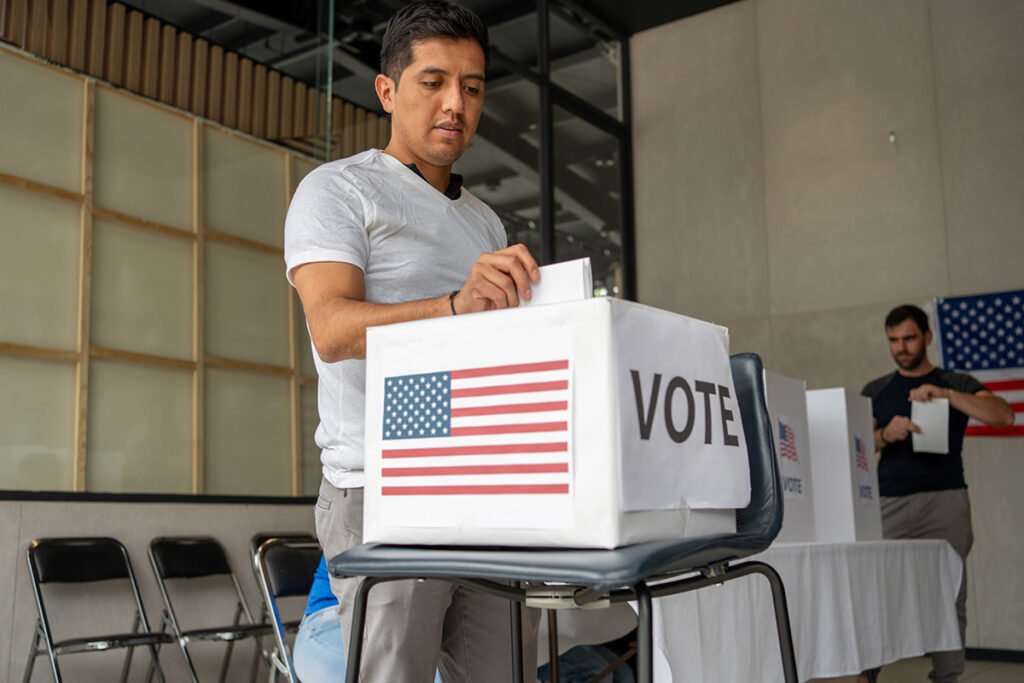
"Any elected leader or candidate who ignores the surging sentiment of the Latino electorate does so at their own peril," stated a recent press release from UnidosUS. The organization’s May poll of 3,000 Latine voters revealed that 76 percent plan to vote in November, with a significant majority expressing that the country is headed in the wrong direction due to economic instability and government harassment of their communities.
The Grassroots Mobilization: A 365-Day Strategy
The traditional "get-out-the-vote" effort, which often begins in the final weeks of an election cycle, has been replaced by a more sustainable, year-round engagement model. Organizations like Mi Familia Vota have expanded their footprint to ensure that the Latine electorate is not merely a checkbox during election years, but a consistent political presence. By linking issues such as reproductive rights, worker protections, environmental justice, and affordable healthcare to the act of voting, these groups have successfully moved the needle in key states like Arizona, Texas, and Nevada.
In the Rio Grande Valley, La Unión del Pueblo Entero (LUPE) has pioneered "people’s assemblies," fostering a culture of civic participation that transcends individual candidate popularity. Similarly, young voters are leading the charge in Florida, where school board races have become a battleground against book bans and censorship. The emergence of groups like the Sarasota Next Gen Dems highlights a shift in focus from abstract debates over critical race theory to tangible defenses of the First Amendment and educational quality.
Generational Shifts and the Myth of Monoliths
It is a fundamental error to treat the Latine community as a monolithic voting bloc. While national trends show a decrease in support for the Democratic ticket, the underlying motivations are diverse. Younger Cuban Americans, for instance, are increasingly distancing themselves from the anti-communist rhetoric that defined their parents’ generation. As one op-ed in the Miami Herald noted, the focus for this cohort is no longer on foreign policy nostalgia, but on the practical realities of college tuition, the job market, and the future of the American economy.
These generational shifts suggest that while the GOP has attempted to capture the Hispanic vote through fear-based messaging, the effectiveness of this strategy is waning. Even in Florida, a state long considered a Republican stronghold, internal polling from the Latino Public Opinion Forum indicates that economic anxiety and government overreach—specifically ICE tactics—are the primary drivers of voter sentiment.
Implications for the Future
The 2026 midterms serve as a critical stress test for American democracy. With Trump’s approval ratings hovering at 29 percent according to recent polls, Republican leadership is reportedly facing "bloodbath" fears. The outcome of these elections will be determined not just by the margins of victory, but by the integrity of the process itself.
If the legal challenges brought by civil rights groups succeed in curbing the use of federal databases and armed agents at the polls, the Latine vote has the potential to act as a firebreak against authoritarian encroachment. However, the outcome remains uncertain. The intersection of economic hardship and a desire for systemic reform means that both parties are operating on borrowed time.
The Latine community is no longer asking for a seat at the table; they are currently in the process of rebuilding the room. Whether this leads to a realignment of American politics or a prolonged period of political volatility will depend on the turnout in November. One thing remains clear: the "sleeping giant" is wide awake, and the political establishment is finally beginning to realize that the era of treating this demographic as a predictable, secondary concern is officially over. As the nation approaches the ballot box, the voices of 36 million potential voters will echo across the country, serving as a reminder that in a democracy, the only voice that matters is the one that is cast and counted.