Beyond the Ultra-Wealthy: How "Main Street Millionaires" and Younger Generations Are Reshaping American Prosperity
October 6, 2026
By Ben Carlson
Main Facts: The Duality of American Wealth
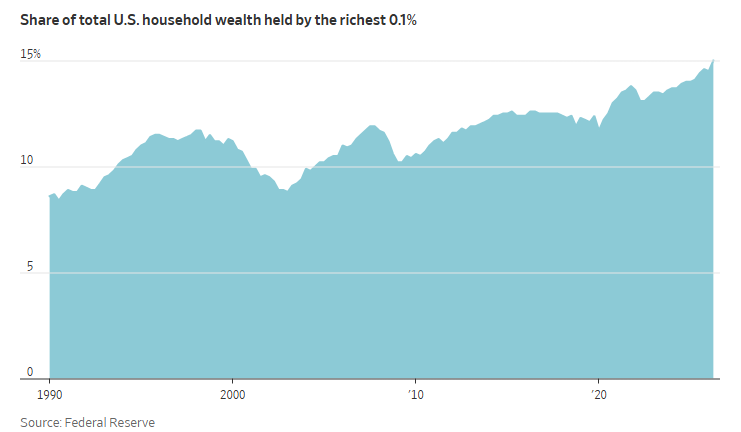
The contemporary American economic landscape is defined by a striking paradox. On one hand, wealth concentration at the absolute apex of society continues to scale unprecedented heights. According to recent data highlighted by The Wall Street Journal, a tiny fraction of the population—specifically the top 0.1%, comprising roughly 137,000 households—controls an astonishing 15% of all household wealth in the United States. The average net worth within this hyper-exclusive tier hovers around $200 million, with the group’s collective fortunes having surged by nearly $15 trillion during the current decade alone.
Yet, focusing solely on the hyper-elite obscures a broader, more resilient economic narrative unfolding across the country. While the wealthiest continue to accumulate staggering gains, the rest of America is quietly growing richer as well.
A profound shift is occurring beyond Wall Street and Silicon Valley. A new wave of prosperity is being driven not by tech founders or mega-cap executives, but by everyday entrepreneurs, doctors, dentists, contractors, and auto dealers—a demographic economists term "Main Street Millionaires." Simultaneously, younger generations, particularly Millennials, are entering the investment markets earlier and accumulating inflation-adjusted wealth at rates that outpace their predecessors at the same age.
Chronology: The Evolution of the Wealth Gap and Broadened Prosperity
To understand how modern American wealth has reached this juncture, it is helpful to trace the structural shifts in income, savings, and investment over the past several decades:
- The Post-War Decades to Late 20th Century: For decades, American wealth accumulation was characterized by traditional pathways—defined-benefit pensions, homeownership, and steady corporate employment. Stock market participation was largely restricted to the affluent and institutional investors.
- The Turn of the Century and the Entrepreneurial Boom: As the American economy transitioned further toward services, specialized trades, and localized private enterprises, a robust tier of successful private business owners began to scale. The rise of accessible brokerage accounts and digital trading platforms also started democratizing the stock market.
- The 2010s to 2020s: Following the recovery from the Great Financial Crisis, wealth accumulation accelerated. The ultra-wealthy saw their assets skyrocket alongside a historic bull market. However, structural changes in labor markets, rising inflation-adjusted wages, and aggressive saving habits among younger workers also lifted the financial floor for millions of middle- and upper-middle-class households.
- The Current Era (Mid-2020s): Data from economists and research institutions—such as the Cato Institute, the Boston Consulting Group (BCG), and updated generational wealth trackers—show that inflation-adjusted wealth for working-age populations has hit all-time highs. Even as consumer sentiment fluctuates due to cost-of-living pressures, participation in equity markets and income growth have broadened across multiple demographics.
Supporting Data: Unpacking the Numbers
Recent economic literature and empirical datasets offer a granular look at where America’s wealth actually resides.
The Rise of the "Everywhere Millionaire"
In their book The Everywhere Millionaire, economists Owen Zidar and Eric Zwick expand our understanding of the wealthy beyond the conventional Forbes 400 list. They define the rich as households holding at least $5 million in total wealth—placing them in the top 4 percent of American households as of 2022.
- Broad Threshold: Nearly 5 million U.S. households meet or exceed the $5 million threshold.
- Decamillionaires: More than 2 million households possess at least $10 million.
- Centimillionaires: Approximately 65,000 households hold at least $100 million.
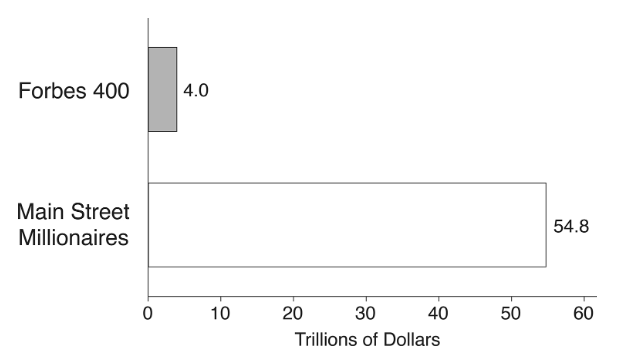
- The Business Backbone: The vast majority of these wealthy households—including three-quarters of decamillionaires and nearly all centimillionaires—derive their success from owning private businesses. Zidar and Zwick define "Main Street Millionaires" as private business owners numbering roughly 3 million, with an average net worth of around $25 million. These are local enterprises: medical practices, logistics providers, construction firms, and franchise operators.
Generational Shifts in Investing and Income
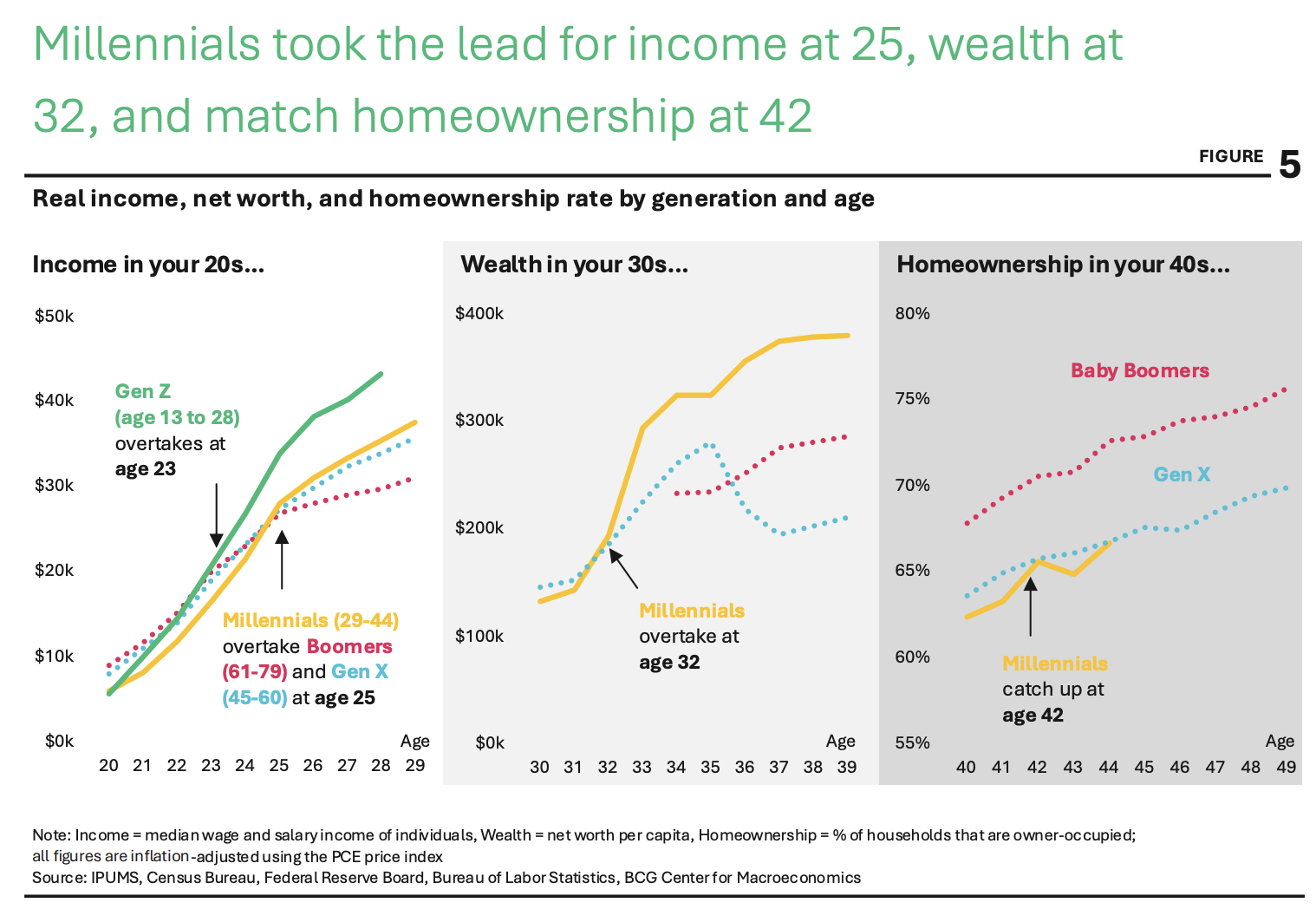
Conventional wisdom often paints younger generations as financially strapped and locked out of the American Dream. However, data from BCG and independent analysts challenge this narrative:
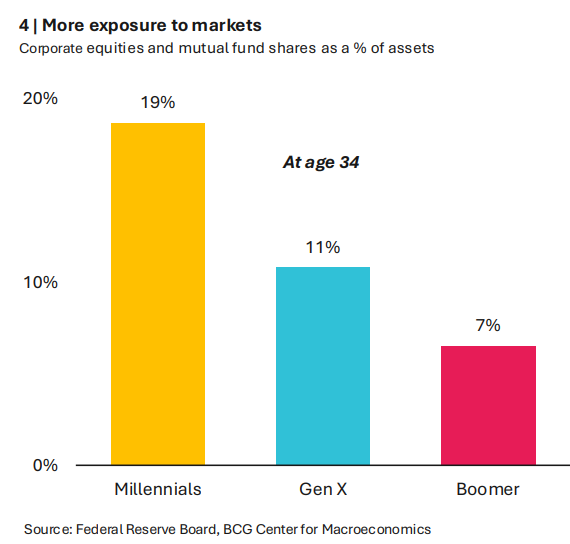
- Earlier Market Entry: Millennials are deploying capital into stocks at significantly higher rates than Gen X or Baby Boomers did at comparable stages in their lives.
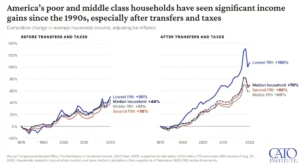
- Income Progression: Inflation-adjusted incomes for successive generations have trended upward. Data compiled by the Cato Institute reveals that the share of Americans earning high incomes has quintupled over the past 60 years.
- Net Worth Milestones: Working-age populations under the age of 45 are currently further along in inflation-adjusted wealth accumulation than previous generations were at the exact same age. While homeownership and family milestones may be delayed, the ultimate financial trajectory remains upwardly mobile.
The Storage Unit Phenomenon: A Cultural Footprint of Wealth
Perhaps one of the most unusual statistical indicators of American abundance is the self-storage industry. According to reports from The New Yorker, the United States accounts for roughly 90% of global self-storage capacity.
- There are more self-storage facilities in the U.S. than the combined totals of Starbucks, McDonald’s, Walmart, Home Depot, Domino’s, Dunkin’, and Costco.
- A study by Stanley Black & Decker revealed that over a third of American residential garages are so packed with overflow possessions that owners cannot park their vehicles inside them.
Official Responses and Expert Perspectives
Economic analysts and public policy researchers remain divided on the broader implications of these trends, even as the raw data paints a picture of historic prosperity.
Critics and progressive economists emphasize the dangers of hyper-concentration. The fact that 137,000 households control 15% of national wealth—and that top-tier fortunes have expanded by $15 trillion this decade—underscores persistent structural inequalities. For many working-class families grappling with elevated everyday expenses, the statistical reality of "record average wealth" feels disconnected from their day-to-day financial friction.
Conversely, free-market analysts and institutional researchers point to the democratization of wealth-building tools. Scholars from organizations like the Cato Institute argue that the expansion of high-income brackets across a five-decade horizon demonstrates that the economic pie is not merely growing larger at the top, but expanding access for the broader populace. Furthermore, financial commentators note that widespread stock ownership and rising real wages have provided a robust cushion for households, fundamentally altering how modern generations prepare for long-term security.

Implications: What This Means for the Future Economy
The coexistence of mega-millionaires, Main Street entrepreneurs, and investing-savvy youth carries profound implications for the trajectory of the U.S. economy:
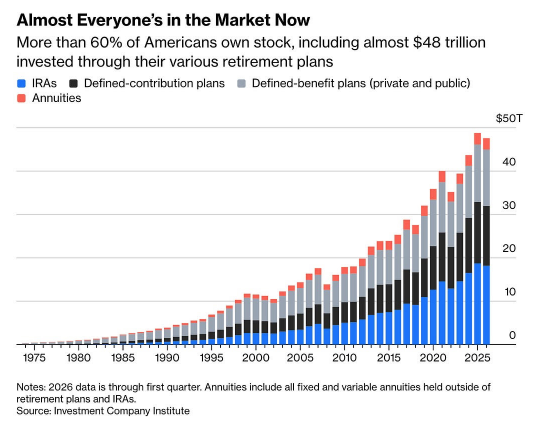
- Macroeconomic Resilience: The immense accumulation of wealth across various strata of society acts as a powerful economic shock absorber. This household cushion is a primary reason why the U.S. economy has successfully staved off prolonged recessions despite aggressive monetary tightening cycles in recent years.
- The "Wealth Effect" Vulnerability: While widespread asset ownership supports consumer spending, it also exposes the broader economy to the "wealth effect." Should equity or real estate markets experience a severe downturn, the psychological and financial pullback among asset-holding consumers could be swift and pronounced.
- A Changing Entrepreneurial Landscape: As baby boomer business owners look toward retirement, the vast reservoir of capital held by Main Street Millionaires will likely trigger the largest generational business transition in history, creating new avenues for acquisition and upward mobility for younger buyers.
- Persistent Sentiment Disconnect: Economic indicators can simultaneously reflect record-breaking national prosperity and acute consumer anxiety. Inflation, housing affordability, and the rising cost of living create genuine hardships, proving that while the American economic machine is the wealthiest in history, its benefits are experienced unevenly.
Ultimately, while the rich are undeniably getting richer, the underlying data suggests a more nuanced reality: through entrepreneurship, early investing, and long-term compounding, the capacity to build wealth is reaching deeper into the fabric of American society than ever before.