Beyond Caller ID: Truecaller’s New "Scam Checker" Battles the Multi-Channel Fraud Epidemic
For more than a decade, the name "Truecaller" has been synonymous with the fight against unwanted telemarketing and spam calls. With a massive user base exceeding 500 million, the Swedish company has spent years building a digital shield that identifies who is on the other end of a phone line. However, as the tactics of cybercriminals evolve from simple voice calls to sophisticated, multi-channel phishing campaigns, Truecaller is shifting its strategy.
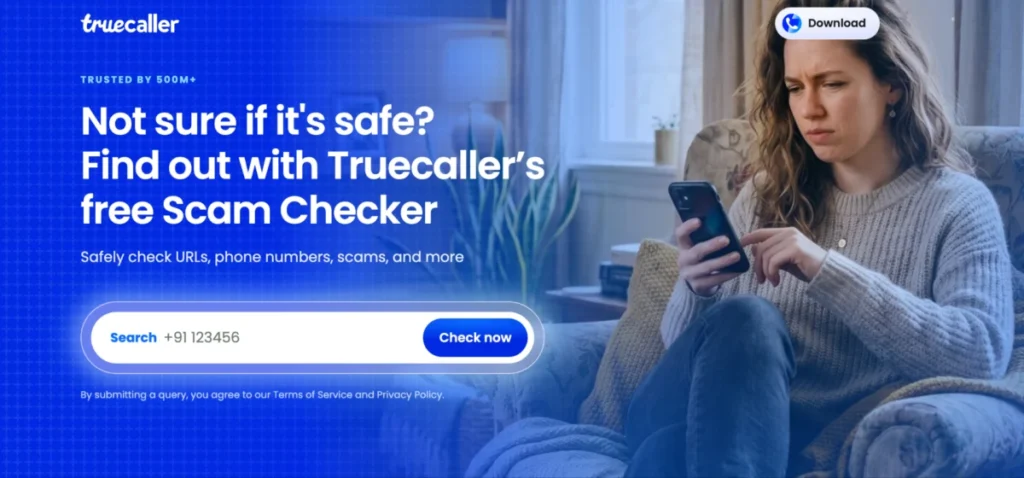
In a significant pivot, the company has launched "Scam Checker," a new web-based and Android-integrated service that allows users to verify the legitimacy of suspicious phone numbers, web links, and text messages without the need to sign in or download the full application. This move marks a departure from its traditional app-centric model, signaling a transition toward becoming a comprehensive digital safety ecosystem.
The New Frontier: What is Scam Checker?
Launched this Sunday, Scam Checker is designed to meet users exactly where they are—often in moments of uncertainty. Whether a user receives a dubious WhatsApp message claiming a traffic fine or a suspicious link via SMS, they can now copy and paste that information directly into the Truecaller web portal.
The service acts as a diagnostic tool. When a link is submitted, the platform automatically expands shortened URLs and tracks redirects to determine the final destination, cross-referencing this against Truecaller’s proprietary risk database and fraud signals. If a phone number is entered, the service draws from "ScamFeed," a crowdsourced repository of reports provided by the company’s vast global community.
While the service offers rapid verification, Truecaller has maintained a clear boundary between the free web tool and its premium, sign-in-required app. Deep-dive data, such as specific names or personal details associated with a phone number, remains locked behind the authenticated app experience. Initially rolling out in India, the service is slated for rapid expansion into Latin America, the Middle East, Africa, and Southeast Asia.
Chronology of a Shifting Threat Landscape
To understand why Truecaller is expanding beyond caller ID, one must look at how scamming has changed over the last several years.
- The Early Era: Truecaller’s inception focused almost exclusively on the "nuisance call"—telemarketers and robo-callers.
- The Rise of Messaging Apps: As internet penetration deepened in emerging markets, scammers abandoned voice calls in favor of encrypted messaging apps and SMS.
- 2025 – The Turning Point: A landmark GSMA study on Indian consumers revealed a sobering reality: only 32% of reported scams occurred via voice calls. In contrast, 46% of victims were targeted through messaging apps, and 37% through SMS.
- 2026 – The Pivot: Truecaller identified that users were already attempting to perform their own investigations. Analysis of search traffic revealed approximately 14 million monthly web searches dedicated to verifying suspicious links and numbers. Recognizing this "moment of doubt," the company accelerated the development of a tool that could provide answers instantly.
Supporting Data: The Scale of the Fraud Crisis
The necessity for such a tool is underscored by the sheer volume of fraudulent traffic Truecaller is forced to mitigate. Between September 14 and September 20 alone, the company’s systems evaluated a staggering 12.9 billion messages globally. Of those, 20.3 million were flagged as fraudulent.
In India, the company’s largest market with over 350 million users, the "ScamFeed" community has become a vital sensor network. There are currently 20,000 live scam reports being monitored in the country, with an average of 1,300 new entries being added to the database every single week. This crowdsourced data is not merely a feature; it is a critical piece of intelligence that allows the company to stay ahead of rapidly changing scam patterns.
Official Perspectives: Addressing the "Moment of Doubt"
In an interview with TechCrunch, Truecaller CEO Rishit Jhunjhunwala emphasized that the inspiration for Scam Checker came from observing human behavior during the moment a user receives a suspicious message.
"When you need it, you’re usually somewhere else," Jhunjhunwala explained. "The link shows up on WhatsApp. Your mum gets a message about a traffic fine. A friend forwards you a screenshot and asks, ‘Is this real?’ What people do in that moment is search."

By creating a frictionless, no-login environment, Truecaller is removing the barriers that typically prevent a user from performing a due-diligence check. While the tool serves as a natural lead-generation engine for the main app, Jhunjhunwala insists that the primary intent is consumer protection. Furthermore, he noted that the intelligence gathered via Scam Checker could eventually fortify "Truecaller for Business," the company’s enterprise-facing fraud and risk management suite, creating a feedback loop that benefits both individual consumers and corporate entities.
Strategic Implications: Truecaller’s Changing Business Model
The launch of Scam Checker arrives at a precarious time for the company. As its core business matures, Truecaller is facing unprecedented competition and regulatory hurdles, particularly in India.
The Competition
The commoditization of caller identification has made it difficult for third-party apps to maintain a competitive advantage. Telecom operators in India are currently rolling out government-backed "Calling Name Presentation" (CNAP) services that provide similar identity verification at the network level. Simultaneously, tech giants like Apple and Google have integrated native spam-protection features directly into their mobile operating systems, effectively bypassing the need for third-party apps for the average user.
Regulatory Pressure
The regulatory environment has also become more aggressive. Last week, the Telecom Regulatory Authority of India (TRAI) issued a mandate requiring caller-ID apps to share user-submitted spam reports directly with telecom operators. Truecaller has been vocal in its opposition to this, characterizing the directive as a "one-way exchange" that requires them to provide their proprietary, hard-earned data without receiving reciprocal insights in return.
A New Strategic Vision
In light of these pressures, Truecaller’s strategy is evolving from a single-utility application to a multi-layered security platform.
"Caller ID was the first problem we solved, and it’s still how most people find us," Jhunjhunwala noted. "But scams moved to a more multi-channel approach with links and messages, and increasingly to voice and video. Our protection has to follow the scammer."
This shift suggests that Truecaller is positioning itself not just as a phone app, but as an essential utility for digital hygiene in the developing world. By moving into link analysis and message verification, the company is attempting to insulate itself from the risks posed by OS-level integration and government-backed caller ID programs.
Future Outlook
Looking ahead, Truecaller has signaled that the current iteration of Scam Checker is merely the foundation. The company is actively working to broaden the spectrum of scam types the tool can identify, with a near-term roadmap that includes the integration of screenshot analysis. This feature would allow users to upload images of suspicious messages, allowing AI to parse the text and embedded media for signs of fraud.
As the company navigates the delicate balance between maintaining its market dominance in India and expanding into volatile emerging markets in Africa and Southeast Asia, its ability to stay ahead of the "scammer’s curve" will be the true test of its longevity. For now, the launch of Scam Checker proves that Truecaller is willing to tear down its own walls—literally—to remain relevant in a world where the most dangerous threats are no longer just a phone call away.