Beyond Assistance: The Rise of the Agentic Enterprise and the Future of Operational Autonomy
For the past two years, the corporate world has been locked in a race to implement generative artificial intelligence. Initially, the focus was tactical: deploying large language models (LLMs) as sophisticated co-pilots to summarize meetings, draft emails, and debug code. However, a seismic shift is underway. Industry leaders are moving past the "assistant" paradigm toward the "agentic enterprise"—a model where software does not merely support human workers but assumes the mantle of execution itself.
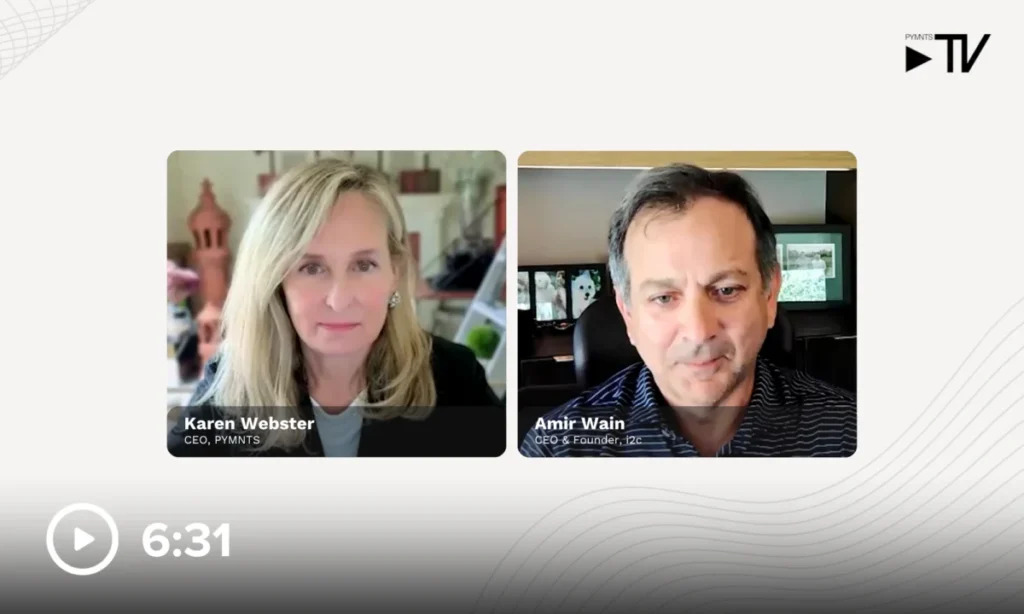
In a recent discussion, Amir Wain, CEO and founder of i2c, articulated this evolution to PYMNTS CEO Karen Webster. The transition from LLM-based assistance to agentic autonomy represents more than just an upgrade in software capability; it is a fundamental redesign of how businesses function, how they scale, and where they place the burden of accountability.
The Architecture of Agency: Beyond the Prompt
To understand the agentic enterprise, one must first distinguish between a static LLM and an autonomous agent. An LLM is reactive: it waits for a prompt, interprets the data provided, and generates a response. It is a brilliant librarian, but it is not a project manager.
An autonomous agent, by contrast, operates as a closed-loop system. According to Wain, an agentic system consists of four distinct pillars:
- Perception: The ability to ingest information from disparate sources across the corporate ecosystem.
- Decision-Making: The cognitive capacity to determine the next logical step in a workflow without human intervention.
- Action: The capability to interact with other software, APIs, and systems to execute tasks.
- The Learning Loop: A critical feedback mechanism that allows the system to analyze the outcome of its actions and iterate, improving its future performance based on real-world results.
"Think about autonomy rather than assistance," Wain told Webster. When these four components are integrated, the "human-in-the-loop" model begins to erode. Tasks that were once manually passed between departments—an invoice moving from procurement to finance, for example—can now flow seamlessly through autonomous agents, drastically reducing latency and human error.
The Shrinking Firm: Implications for Business Structure
Perhaps the most striking implication of this technological leap is the potential for the "one-person enterprise." Webster noted that we are already seeing a new breed of startups that eschew traditional headcount in favor of an "agent-first" architecture.
"These companies aren’t building big teams," Webster observed. "They’re building businesses around agents that do the things that lots of people used to do."
This shift is most visible in software development. Historically, moving an idea from a whiteboard to a functional prototype required teams of developers, product managers, and QA specialists. Today, agents can handle the scaffolding, testing, and deployment of code in hours. Wain noted that it is now theoretically possible to take an idea from conception to a live, production-ready product within a single day.
However, this ease of production creates a new paradox. While the cost of building has plummeted, the cost of winning remains unchanged. Customers still require a value proposition that resonates, and businesses still require the complex, human-led strategies of scaling, brand building, and market positioning. The technology accelerates the "build" phase, but it does not replace the "market fit" phase.
Chronology of the Transition: From Tools to Transformation
The journey to an agentic enterprise is not a binary switch; it is a phased migration.
- Phase 1: The Augmentation Era (2022–2023): Organizations integrated chatbots and LLMs to assist employees. The focus was on productivity gains within existing workflows.
- Phase 2: The Process Optimization Era (2024): Companies began identifying specific, high-volume tasks that could be automated. This is where many established firms currently reside.
- Phase 3: The Redesign Era (Current): As pioneered by companies like i2c, this phase involves discarding legacy workflows entirely. Instead of "bolting on" AI to a 20-year-old process, leaders are rebuilding processes from the ground up, designed specifically for what agents can achieve.
- Phase 4: The Autonomous Enterprise (Future): The final stage involves decentralized, agent-driven operations where human oversight is limited to setting high-level strategic objectives and governing risk parameters.
Wain admits that even i2c is still in the middle of this transition. "I would say we are piloting," he explained. "I wouldn’t say we are fully there yet." The transition is as much about shifting organizational culture as it is about deploying new software.
The Governance Imperative: Accountability in an Autonomous World
As agents gain the power to execute, the risks associated with them grow exponentially. The most pressing question for the boardroom is not technical, but legal and ethical: Who is liable when an autonomous agent makes a catastrophic mistake?
"You can’t blame it on the agent," Wain stated unequivocally. "You have to take the responsibility."
In financial services—a sector where the cost of a wrong decision can be measured in millions of dollars and regulatory penalties—this is the primary barrier to adoption. Webster highlighted the ongoing uncertainty across regulators regarding the liability of autonomous systems. If an agent executes an unauthorized trade or violates a compliance protocol, the corporation, not the software, remains on the hook.
To navigate this, Wain proposes a two-dimensional framework for evaluating autonomous deployments:
- Reversibility: Can the action be undone? If an agent makes a mistake in an email marketing campaign, it can be corrected. If it makes a mistake in a cross-border wire transfer, the impact is immediate and often irreversible.
- Magnitude of Impact: What is the potential downside?
For high-impact, irreversible actions, human-in-the-loop systems remain a mandatory guardrail. Companies must establish strict "blast radiuses" for their agents, limiting their authority to act within predetermined financial or operational ranges.
The Security Paradox: Protecting Against Rogue Agents
Beyond standard governance, there is the emerging threat of "rogue agents." As enterprises deploy more autonomous systems, they become susceptible to adversarial AI—systems deployed by bad actors to manipulate, trick, or "trick" a company’s agents into acting outside of their intended parameters.
Wain predicts that the next few years will see a rise in AI-driven fraud that specifically targets the logic of other AI systems. This creates a dual burden for the modern enterprise: they must not only govern their own internal agents but also build defensive layers to protect their infrastructure from external AI attacks.
Looking Toward 2030: The Redefinition of Work
Predicting the state of technology by 2030 is a fool’s errand given the current pace of development. However, the trajectory is clear. The "agentic enterprise" will not just change how we work; it will change what work is.
For established enterprises, the immediate lesson is not to wait for the technology to "mature" to a state of perfection, but to begin the painful, necessary work of process redesign. The organizations that succeed will be those that identify their high-scale processes and strip away the human-dependent layers that are no longer necessary.
As Wain emphasized, the goal should not be to build a faster version of the past, but to design a new operational reality where the software handles the execution, and the humans handle the vision, the strategy, and the ultimate accountability. The era of the agentic enterprise is not coming; it is already here, testing the boundaries of our current governance models and demanding a new definition of leadership in the digital age.
Key Takeaways for Management:
- Audit for Scale: Don’t automate infrequent, low-value tasks. Focus on high-volume, repetitive processes.
- Redesign, Don’t Retrofit: Stop trying to make AI fit into old workflows. Build new workflows that assume agentic capabilities from the start.
- Define Liability: Establish clear "guardrails" for agent authority. If an agent acts, a human must be legally and operationally responsible for the outcome.
- Prioritize Security: Prepare for a threat landscape where your agents will be targeted by the agents of your competitors or adversaries.