Amazon Deepens India Bet: A $48 Billion Strategic Pivot Toward Global AI Dominance
In a move that underscores India’s rapidly ascending status as the world’s next great digital powerhouse, Amazon announced on Thursday that it will inject an additional $13 billion into its Indian operations by 2030. The investment is specifically earmarked for the expansion of its artificial intelligence (AI) infrastructure and cloud computing footprint.
The announcement followed a high-level meeting in New Delhi between Amazon CEO Andy Jassy and Indian Prime Minister Narendra Modi. This latest capital infusion is designed to scale Amazon Web Services (AWS) data center capacity in key metropolitan hubs like Mumbai and Hyderabad, signaling that the tech giant views India not merely as a market for consumer retail, but as a foundational pillar for its global AI strategy.
A Timeline of Escalating Ambition
Amazon’s latest commitment is the third major pledge in a series of aggressive financial maneuvers over the last three years. The rapid succession of these announcements highlights a shift in corporate strategy, moving from incremental growth to a massive, front-loaded expansion.
- 2023: The Foundation. Following a pivotal meeting between Andy Jassy and Prime Minister Modi in 2023, Amazon announced a landmark $15 billion investment plan slated for 2030. That figure included $12.7 billion specifically allocated to AWS infrastructure, laying the groundwork for cloud scalability in the region.
- December 2025: The Acceleration. As the global generative AI race reached a fever pitch, Amazon significantly bolstered its position by committing an additional $35 billion, bringing the total planned expenditure to $75 billion.
- 2026: The Strategic Expansion. Thursday’s $13 billion announcement, when calculated alongside previous commitments, cements a staggering $48 billion total investment framework. While Amazon has not provided a granular breakdown of how these funds will be deployed across its various business segments, industry analysts note that such long-term commitments typically encompass a mix of capital expenditures (infrastructure, hardware, real estate) and operating expenses (personnel, energy, R&D).
The Infrastructure Boom: India as a Global AI Hub
Amazon is not acting in a vacuum. Its aggressive push into India comes amid a broader gold rush by global technology behemoths looking to establish India as the primary backend for global AI workloads.
The landscape of investment in India has shifted from back-office support to high-end infrastructure development. Microsoft, for instance, announced in December 2025 that it would invest $17.5 billion in India by 2029 to capture the growing demand for cloud and AI services. Similarly, Google pledged $15 billion in October 2025 to develop a massive AI infrastructure hub.
Beyond the "Big Tech" players, institutional investors and industrial conglomerates are pouring capital into the physical foundations of this AI revolution. Australia’s AirTrunk has committed $30 billion to construct 5GW of AI-ready data centers, while the Canada Pension Plan Investment Board (CPP Investments) has entered the fray as a major financier. Domestically, the scale is even larger: Reliance Industries and the Adani Group have pledged $110 billion and $100 billion, respectively, toward building the energy and data infrastructure necessary to fuel India’s digital future.
Policy Catalysts: The "New Delhi" Effect
The surge in foreign investment is not accidental. The Indian government, led by the Ministry of Electronics and Information Technology, has been proactively dismantling barriers to entry and creating fiscal incentives for global data providers.
A cornerstone of this policy shift is the introduction of aggressive tax exemptions. Under new directives, foreign cloud providers are being offered zero-tax environments on services sold to international clients, provided those workloads are processed within Indian data centers. This effectively transforms India from a consumer of cloud services into an exporter of computational power, turning the country into a "data refinery" for the global AI ecosystem.
Beyond the Cloud: The Retail and Logistics War
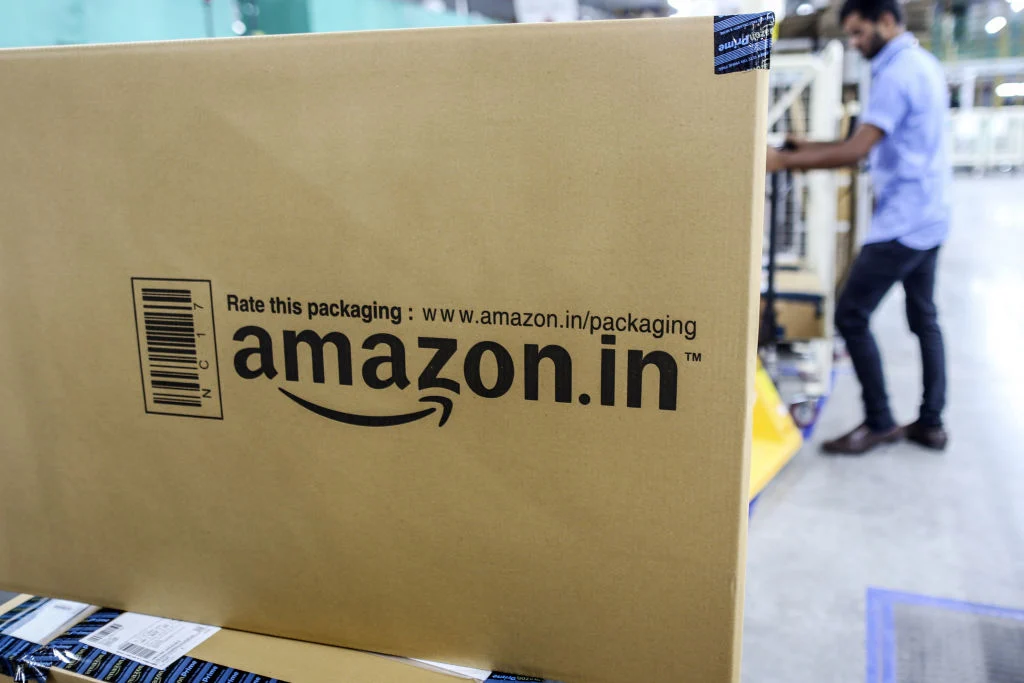
While AWS remains the crown jewel of Amazon’s investment strategy, the company is concurrently doubling down on its e-commerce and logistics dominance. Amazon is currently in the midst of a massive physical infrastructure build-out, including the addition of 20 new fulfillment centers and over 100 last-mile delivery stations this year.
The urgency is driven by a fiercely competitive "quick-commerce" market. Amazon is moving to scale its "Amazon Now" service to over 300 cities and towns across India. This puts it in direct, high-stakes competition with domestic and international incumbents like Blinkit (owned by Eternal), Swiggy’s Instamart, Zepto, and Walmart-owned Flipkart.
Flipkart, sensing the intensity of the competition, recently announced plans to open 1,500 micro-fulfillment centers by the end of 2026. This logistical "arms race" indicates that Amazon is not looking to win solely on technology, but on the ability to deliver goods to a burgeoning Indian middle class with unprecedented speed.
Implications: A Dual-Engine Strategy
The implications of this $48 billion total commitment are twofold.
For the Global AI Market
By concentrating its data center expansion in India, Amazon is hedging against the rising costs and regulatory scrutiny faced in the United States and Europe. India offers a unique combination of a highly skilled, English-speaking technical workforce and a government that is actively incentivizing digital infrastructure. For Amazon, this means lower latency for its AI services, access to a deep talent pool, and a geographically diverse server network that can serve the APAC region and beyond.
For the Indian Economy
The macroeconomic impact of these investments cannot be overstated. By creating a massive web of data centers and logistics hubs, Amazon is helping to modernize India’s industrial backbone. The influx of capital is expected to create hundreds of thousands of jobs, ranging from data center technicians and AI engineers to supply chain managers and delivery personnel.
Furthermore, by embedding itself into the local retail ecosystem, Amazon is digitizing the "mom-and-pop" store (Kirana) economy, bringing traditional retailers into the formal digital fold.
Risks and Challenges
Despite the optimism, the road ahead is not without obstacles. Amazon faces a complex regulatory environment in India, where local competition laws and protectionist sentiments remain potent. Additionally, the massive energy requirements for AI-driven data centers pose a sustainability challenge. India’s power grid, while improving, will face significant strain as these facilities come online, forcing Amazon to invest heavily in renewable energy projects to meet its net-zero goals.
Furthermore, the "quick-commerce" sector remains a low-margin, high-burn business. While Amazon has the capital to sustain long-term losses, the profitability of the 300-city expansion depends on whether Indian consumers are willing to pay the premium for ultra-fast delivery, or if the market will eventually consolidate into a few dominant players.
Conclusion: The Long View
Amazon’s decision to commit an additional $13 billion is more than just a capital expenditure—it is a clear signal that the company’s leadership views India as the indispensable partner in its long-term AI roadmap. By synchronizing its cloud infrastructure investments with a massive expansion of its retail and logistics network, Amazon is attempting to build a self-reinforcing loop: using the profits from its digital services to subsidize its physical footprint, and using its logistics dominance to capture the massive influx of data generated by the Indian consumer.
As the decade approaches 2030, the success of these investments will likely serve as the benchmark for how global corporations engage with the "Global South." For now, Amazon is betting big that in the future of the digital world, all roads will lead through India.