A State Under Siege: Texas Hill Country Grapples with Historic Flash Flooding
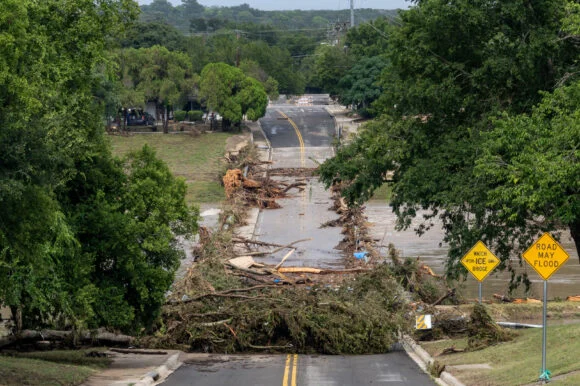
The Crisis Unfolds: A Landscape Transformed
The Texas Hill Country, a region known for its rugged limestone bluffs and winding rivers, has been thrust into a state of emergency. As relentless, torrential rains pummel the landscape, local authorities have issued mandatory evacuation orders across multiple counties, racing to stay ahead of a deluge that has already decimated critical infrastructure. With bridges buckled and arterial roads rendered impassable, the region is facing what Governor Greg Abbott has described as a "historic flooding event."
As of Friday morning, the National Weather Service (NWS) Austin/San Antonio office reports that a massive, stationary weather system continues to dump record-breaking precipitation across the region. With forecasts calling for up to eight additional inches of rain through the end of the week, the cumulative total in some areas could approach a staggering 30 inches over a 72-hour period. This current crisis serves as a haunting echo of the catastrophic floods that claimed more than 130 lives just one year ago, forcing a traumatized population to confront the volatility of their environment once again.
Chronology of the Deluge
The escalation of the crisis followed a week of sporadic, intense downpours that saturated the soil, leaving the earth unable to absorb the secondary wave of storms that arrived mid-week.
Wednesday into Thursday: The initial phase of the storm front saw rapid water level increases along the Guadalupe and Nueces Rivers. By Thursday, the situation in the town of Kerrville—near the epicenter of the 2025 tragedy—deteriorated rapidly. Local police initiated urgent evacuations for residents living in low-lying areas near creek beds, opening emergency shelters in church gymnasiums to accommodate the displaced.
Thursday Evening: The intensity of the rainfall increased, triggering a surge in the Guadalupe River. Official reports indicate that the river rose a terrifying 32 feet in just four hours. As darkness fell, the situation in Uvalde, located 85 miles west of San Antonio, turned dire. The Leona River breached its banks, sweeping through residential streets and trapping families in their homes.
Friday Morning: Emergency responders, including state game wardens, police, and specialized water rescue teams, moved into the hardest-hit zones. In Uvalde, the Texas National Guard deployed Black Hawk helicopters to perform high-stakes aerial extractions, plucking residents from rooftops as floodwaters continued to rise. The NWS has warned that the danger is far from over, noting that scattered thunderstorms continue to redevelop across south and central Texas, with the added threat of brief, isolated tornadoes embedded within the stronger storm cells.
Supporting Data: Hydrological Extremes
The scale of this flooding is difficult to quantify, but experts are pointing to the Nueces River as a primary indicator of the event’s severity. Governor Abbott noted that the river, which remains a dry bed for much of the year, is projected to swell to a volume equivalent to double the flow of Niagara Falls—a record-shattering benchmark.
Philip Bedient, a Rice University engineering professor and founder of the Severe Storm Prediction Center, emphasizes that the danger in the Hill Country is unique due to the region’s topography. "These are very rapidly moving rivers," Bedient explained. "Once you’re swept away, you’re definitely in harm’s way."
The hydrological data suggests that the saturation levels of the region have reached a breaking point. While the rainfall amounts are comparable to the record-setting deluge of last year, the physical impact on the landscape—specifically the destruction of bridges and highway closures—has been immediate and widespread. More than 90 road and highway closures between San Antonio and the border town of Del Rio have effectively paralyzed transit, forcing rescue teams to navigate a labyrinth of debris and fast-moving currents.
Official Responses and Life-Saving Efforts
Governor Greg Abbott held a series of briefings to address the state’s response, confirming the deaths of two individuals. One victim was a man operating a recreational vehicle that was swept away by a sudden wall of water; the second was a woman whose vehicle was inundated during her commute.
"Each individual in the state of Texas has the capability of protecting and saving their own life right now by staying away from the rising rivers," the Governor stated, urging citizens to treat evacuation orders as life-saving imperatives rather than suggestions.
The state’s emergency management strategy has shifted toward a more proactive posture compared to the previous year. Hatim Sharif, a professor at the University of Texas at San Antonio, notes that early-warning systems and public awareness have proven effective in preventing a higher death toll. "People are well prepared this time and more cautious," Sharif observed. He noted that a significant contributing factor to lower human impact has been the decision by many businesses and institutions to suspend operations, preventing employees from entering flood-prone zones during the peak of the storm.
Notably, the summer camp industry—which suffered devastating losses last year along the Guadalupe River—appears to have implemented rigorous safety protocols. Camps such as Camp Waldemar and Camp Stewart reported that all campers and counselors were accounted for and safe. Another facility, the Children’s Association for Maximum Potential, successfully sheltered in place while maintaining constant communication with Kerr County emergency officials.
Wider Implications: A Continent Under Pressure
The flooding in Texas is part of a larger, unsettling trend of extreme weather events currently battering the North American continent. The National Weather Service and other international monitoring agencies have noted that the atmospheric conditions causing the Texas floods are occurring simultaneously with wildfires in Canada that have choked New York City in smoke, and oppressive, record-breaking heat waves across the American West and the East Coast.
This "perfect storm" of climate-driven events has stretched emergency resources thin and sparked a national conversation about infrastructure resilience. As the continent faces choking pollution, soaring temperatures, and advancing flames, the Texas flood serves as a sobering reminder of the vulnerability of modern settlements to extreme precipitation.
For the residents of the Hill Country, the immediate focus remains on survival and the containment of the rising waters. However, the long-term implications are clear: the infrastructure—both physical and social—must adapt to a new reality where once-in-a-century floods appear to be becoming a seasonal, if not annual, occurrence.
As the rain continues to fall through Friday, the resilience of the Uvalde, Kerrville, and San Antonio communities will be tested. For now, the message from the governor and emergency services remains consistent: stay off the roads, heed the evacuation orders, and respect the power of the rising rivers. In a state that has seen its fair share of natural disasters, the collective goal is to ensure that while the landscape may be forever altered by the water, the people remain safe.
Copyright 2026 Bloomberg. All rights reserved. This report was compiled using real-time data from the National Weather Service, official briefings from the office of Governor Greg Abbott, and expert analysis from academic institutions in Texas.