Major US Corporations Push Back as OKX and ICE Expand Tokenized Stock Venue Plans
The roster of prominent companies objecting to the unauthorized tokenization of their equities continues to swell, raising fresh legal, technical, and regulatory questions regarding the future of 24/7 digital asset trading platforms.
Main Facts
The pushback against the proposed tokenized stock trading venue spearheaded by crypto exchange OKX and Intercontinental Exchange (ICE)—the parent company of the New York Stock Exchange—is gaining significant momentum. According to an updated public notice released by the OKXICE Tokenized Securities Venue (TSV) on Friday, October 26, six additional major corporations have formally requested that their shares be excluded from being traded on the platform.
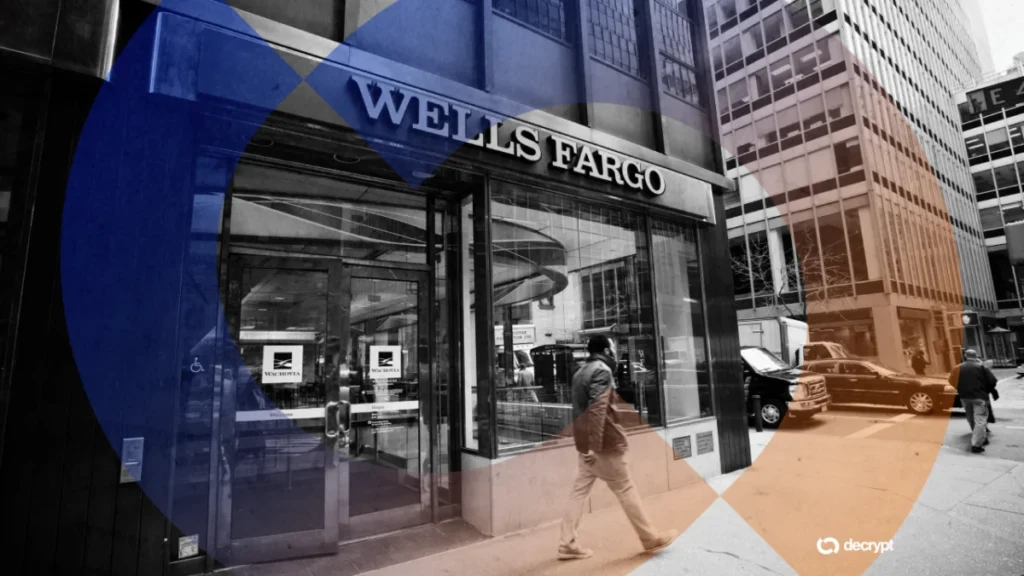
The newest batch of objecting issuers includes financial giant Wells Fargo, tech heavyweights Cisco Systems and Marvell Technology, semiconductor leader Arm Holdings, biotechnology firm Moderna, and financial software provider Intuit.
This latest expansion brings the total number of objecting companies to 22, up sharply from 16 on October 19 and just nine when the initial public notice was issued on October 15. The growing coalition of dissenting firms reads like a cross-section of corporate America, spanning banking, technology, healthcare, and telecommunications.
Despite the growing friction, neither the platform operators nor the objecting corporations have publicly detailed the exact legal or strategic rationales behind the opt-out requests. Furthermore, the practical enforcement mechanism—specifically how an objection legally or technically prevents a third party from tokenizing and listing a company’s equity—remains murky.
Chronology of Events
The unfolding friction between legacy corporate titans and the emerging decentralized finance (DeFi) trading venue highlights a rapidly evolving regulatory and technological landscape.
- Early 2024: OKX and ICE quietly initiate a partnership to explore the intersection of traditional equity markets and blockchain infrastructure, laying the groundwork for a joint venture focused on tokenized securities.
- September 2024: Following the legislative stalling of the Clarity Act in the U.S. Senate, the Securities and Exchange Commission (SEC) unveils a novel "innovation exemption" framework designed to allow controlled experimentation with tokenized securities.
- October 15, 2024: OKXICE TSV publishes its initial public notice, revealing that an initial cohort of nine major corporations—including high-profile blue-chip entities—have requested that their shares be kept off the platform.
- October 19, 2024: An updated filing shows the list of objecting issuers expanding to 16, drawing heightened attention from Wall Street and crypto industry observers alike. Concurrently, the venue clarifies its operational parameters, noting that it has the technical capability to list shares tokenized directly by issuers or by external third parties.
- October 26, 2024: OKXICE TSV releases its latest public notice, adding six more corporations—Wells Fargo, Cisco Systems, Marvell Technology, Arm Holdings, Moderna, and Intuit—bringing the total tally of objecting companies to 22.
Supporting Data and Corporate Rosters
To understand the scale of the resistance, it is necessary to examine the full composition of companies that have formally opted out of the OKXICE TSV project.
The roster of 22 objecting companies includes:
- Technology & Software: Microsoft, Alphabet, Cisco Systems, Broadcom, Qualcomm, Intuit.
- Finance & Banking: Goldman Sachs, Wells Fargo.
- Healthcare & Biotechnology: UnitedHealth Group, Moderna.
- Telecommunications & Infrastructure: Verizon, Arm Holdings, Marvell Technology.
- …and additional enterprise issuers comprising the cumulative 22-company total.
Platform Mechanics and Risk Factors
The OKXICE TSV is structured as a 50-50 joint venture between NYSE-owner ICE and OKX’s U.S. holding company. The primary value proposition of the venue is to allow approved, verified users to trade tokenized versions of U.S. equities on a 24/7 basis—effectively bridging the gap between traditional market hours and the continuous nature of cryptocurrency markets.
From a technical standpoint, the venue is designed to operate using Uniswap v4 liquidity pools deployed on OKX’s proprietary layer-2 blockchain, XLayer. Trades within these pools would be paired with stablecoins, predominantly USDC.

However, the October 26 public notice lays bare a series of significant operational risks and technical vulnerabilities that may be unnerving both corporate issuers and institutional broker-dealers:
- Absence of Circuit Breakers: While trading will automatically pause if the underlying equity is halted on traditional primary exchanges, the platform lacks broader market-wide circuit breakers to curb flash crashes during off-hours.
- MEV (Maximal Extractable Value) Vulnerabilities: The venue currently maintains no explicit policies or technical safeguards to mitigate MEV—the profit miners or validators can capture by arbitrarily reordering, front-running, or inserting transactions within blockchain blocks.
- Regulatory & Compliance Gray Areas: Participating broker-dealers face unresolved questions regarding official trade reporting standards and regulatory "best execution" requirements. These ambiguities threaten to deter mainstream institutional participation and create severe liquidity bottlenecks.
- Centralized Smart Contract Control: Venue administrators retain the unilateral ability to upgrade underlying smart contracts without providing advance notice to users. Furthermore, the specific smart contract governing identity verification and trading permissions has reportedly undergone only internal security audits.
Official Responses and Industry Context
The corporate pushback against OKX and ICE is not occurring in a vacuum. Major market infrastructure providers are actively staking out opposing territory in the race to tokenize traditional financial assets.
Notably, Nasdaq—which recently secured SEC approval to launch its own dedicated tokenized securities pilot program—has publicly stated that it will actively opt its own corporate shares out of the SEC’s innovation exemption framework, signaling institutional skepticism toward unregulated or loosely regulated third-party tokenization initiatives.
Meanwhile, external economic watchdogs have weighed in on the viability of the underlying asset class. A recent report published by the International Monetary Fund (IMF) acknowledged that there is genuine, measurable market demand for tokenized stocks—particularly among retail and international investors seeking exposure to U.S. equities during overnight and weekend hours when traditional brokerages are closed.
However, the IMF report issued a stern cautionary note, warning that despite growing demand, the current tokenized stock ecosystem remains plagued by structural volatility, thin liquidity, and systemic counterparty risks.
Implications for the Future of Tokenized Equities
The mounting resistance from companies like Microsoft, Alphabet, Goldman Sachs, and now Wells Fargo and Arm Holdings underscores a profound philosophical and legal battleground in modern finance.
At the heart of the conflict is a fundamental question of control and property rights: Do corporations possess the legal right to prevent third parties from creating derivative digital tokens that track the financial performance of their shares?
Proponents of tokenization argue that permissionless public blockchains are inherently open-access networks, meaning that any asset can theoretically be wrapped, tokenized, and traded without the explicit permission of the underlying issuer. They view tokenization as an inevitable technological evolution that will lower transaction costs, democratize global access, and introduce capital efficiency through 24/7 settlement.
Conversely, corporate issuers and legacy exchange operators view unauthorized tokenization as a perilous encroachment. Without direct issuer cooperation, tokenized equities can introduce severe legal liabilities, brand association risks, and compliance nightmares. If a tokenized product breaks its peg, suffers a smart contract exploit, or falls victim to unchecked MEV manipulation, the resulting reputational fallout can bleed back onto the underlying corporation, even if they had no operational involvement in the venue.
As the SEC’s innovation exemption framework is put to the test, the outcome of the OKXICE TSV standoff will likely set a monumental legal precedent. Whether tokenized stocks forge ahead as a wild-west frontier of 24/7 decentralized trading or are forced into a tightly regulated, issuer-approved paradigm will depend heavily on how regulators, courts, and corporate boardrooms navigate this high-stakes digital frontier in the months ahead.