The Reopening of History: Fukuyama, Thiel, and the Battle for the Twenty-First Century
NEW YORK — More than three decades after he famously declared "The End of History," political scientist Francis Fukuyama finds himself on the defensive. In his newly released memoir, In the Realm of the Last Man, the Stanford University scholar attempts to rescue his seminal 1992 thesis from the ash heap of geopolitical reality. Yet, even as Fukuyama tries to clarify his original warnings about the internal contradictions of liberalism, contemporary events are ruthlessly dismantling his arguments anew.
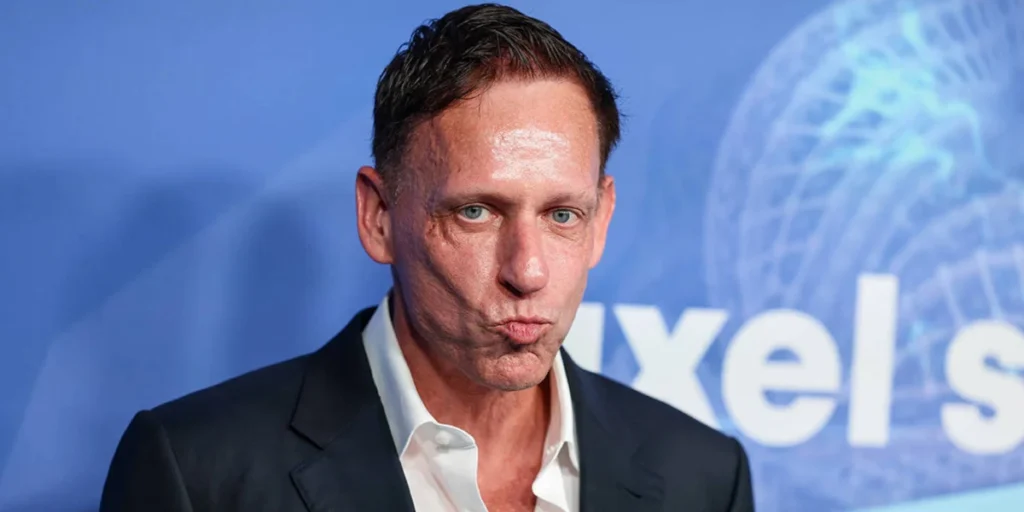
Chief among the living refutations of the "End of History" thesis is Silicon Valley billionaire Peter Thiel. Through an aggressive, multi-decade crusade to evade government regulation, dismantle administrative oversight, and wrest control of humanity’s trajectory from democratic majorities, Thiel embodies precisely the kind of post-democratic threat that Fukuyama’s critics argue his early philosophy fundamentally failed to anticipate.
As liberal democracies grapple with rising populism, technological feudalism, and a resurgence of great-power competition, the ideological battle between Fukuyama’s managed liberalism and Thiel’s techno-authoritarian libertarianism has emerged as the defining intellectual struggle of our era.
Main Facts: The Clash of Two Visions
The ideological fault line dividing Fukuyama and Thiel represents a fundamental disagreement over whether liberal democracy represents the permanent destination of human political evolution or merely a temporary, unstable waypoint.
- Fukuyama’s Defensive Pivot: In In the Realm of the Last Man, Fukuyama argues that his critics fundamentally misread his 1992 work, The End of History and the Last Man. He contends that his thesis never promised a permanent utopia. Instead, it warned that liberal democracy harbored intrinsic stresses—specifically, the discontent of individuals whose "desire for recognition" (thymos) outstrips what a stable, egalitarian liberal order can satisfy.
- Thiel’s Post-Democratic Crusade: Conversely, Peter Thiel has long abandoned faith in democratic governance. Arguing publicly that "freedom and democracy are incompatible," Thiel has poured his vast wealth into ventures designed to bypass the nation-state entirely. From sea-steads and offshore libertarian enclaves to heavy investments in surveillance technology, cryptocurrency, and artificial intelligence, Thiel’s projects are engineered to create parallel power structures free from the reach of voters, regulators, and constitutional checks and balances.
- The Crisis of the Liberal Order: The collision of these two perspectives highlights a deeper systemic vulnerability. While Fukuyama diagnoses the cultural and psychological malaise of citizens feeling alienated by technocratic liberalism, figures like Thiel weaponize that very alienation to construct an oligarchic future where corporate technocrats dictate the terms of human progress.
Chronology: From the End of History to the Age of Techno-Oligarchy
To understand how the global political landscape devolved from the triumphalism of the post-Cold War era into today’s authoritarian threat landscape, it is necessary to trace the historical arc of the past thirty-five years.
1989–1992: The Triumphalist Dawn
- Summer 1989: Francis Fukuyama publishes his essay "The End of History?" in the journal The National Interest, arguing that the collapse of the Soviet bloc marks the "unabashed victory of economic and political liberalism."
- 1992: Fukuyama expands the essay into his definitive book, The End of History and the Last Man, positing that humanity has reached the endpoint of its ideological evolution and the universalization of Western liberal democracy as the final form of human government.
2000–2016: The Silicon Valley Divergence
- 2003–2004: PayPal, co-founded by Peter Thiel alongside Elon Musk and Max Levchin, thrives during the dot-com recovery. Thiel utilizes his newfound wealth to begin funding libertarian political projects.
- 2009: In an essay published for the Cato Institute, Thiel writes the now-famous line: "I no longer believe that freedom and democracy are compatible." This marks a definitive intellectual break from the Fukuyama consensus that capitalism and democracy are inextricably linked.
- 2016: The convergence of Brexit and the election of Donald Trump—backed notably by Thiel, who serves on the presidential transition team—shatters the illusion of an irreversible global consensus toward liberal democracy.
2020–2026: The Reckoning
- 2022–2024: Amid global democratic backsliding, the rise of state-backed artificial intelligence, and widening wealth inequality, critics increasingly point out that liberal democracies are failing to deliver broad-based economic security or cultural cohesion.
- September–October 2026: Fukuyama releases his memoir, In the Realm of the Last Man, attempting to reframe his legacy on morning news programs and literary circuits. Simultaneously, Thiel-backed political candidates, technologies, and corporate entities continue to expand their footprint, directly challenging the regulatory authority of democratic nation-states.
Supporting Data: The Metrics of Democratic Decay
The viability of Fukuyama’s thesis versus Thiel’s critique cannot be separated from empirical measures of global political health and economic inequality. Data compiled by international democracy watchdogs paints a sobering picture of the liberal order’s current standing.
- Global Freedom Decline: According to Freedom House’s annual reports, global freedom has suffered an unbroken decline for nearly two decades. More than 40 countries have experienced net democratic deteriorations over the past five years alone.
- Economic Inequality and Thymos: Data from the World Inequality Lab indicates that the top 1% of earners globally captured nearly twice as much new wealth as the bottom 50% over the last decade. This extreme divergence fuels the exact crisis of thymos—the desperate craving for status, dignity, and recognition—that Fukuyama warned could destabilize liberal regimes.
- Technological Concentration: The valuation and market capitalization of the top five technology firms now exceed the Gross Domestic Product (GDP) of most G7 nations. Figures like Thiel exercise disproportionate control over vital public infrastructure, intelligence-gathering apparatuses (such as Palantir Technologies), and financial networks, often operating with minimal public accountability.
Official Responses and Intellectual Reactions
The publication of Fukuyama’s memoir and the visible ascendance of Thiel-style techno-libertarianism have sparked fierce debates across the political and academic spectrum.
The Fukuyama Defense
Defending his life’s work, Fukuyama argues that his 1992 thesis was fundamentally misunderstood as a prediction rather than an observation of historical direction. In recent interviews promoting In the Realm of the Last Man, he emphasized:
"People forgot the warning half of the book. I argued that the very success of liberal democracy would breed complacency and a profound spiritual void. Human beings do not just want comfort and security; they want recognition. When liberal systems fail to provide a sense of higher purpose or shared meaning, populations turn toward nationalism, populism, and extremist movements."
The Thielist Critique
Thiel and his intellectual allies offer a sharply contrasting view, arguing that democracy has become bloated, inefficient, and fundamentally captured by self-serving bureaucratic elites. Proponents of Thiel’s worldview contend that democratic majorities are too easily swayed by short-term emotional appeals, rendering them incapable of managing complex, long-term existential challenges like technological stagnation, energy scarcity, and demographic collapse.
In their view, salvation does not lie in defending decaying democratic institutions, but in fostering decentralized, high-tech networks led by visionary elites who can bypass political gridlock entirely.
Implications: Whither the Future of Governance?
The ideological collision between Fukuyama’s defensive liberalism and Thiel’s post-democratic technocracy carries profound implications for the rest of the twenty-first century.
If Fukuyama is correct that liberal democracy remains the only sustainable framework capable of accommodating diverse human populations without perpetual civil conflict, then societies must urgently reform themselves from within. This would require addressing the deep economic inequities, cultural alienation, and institutional decay that drive citizens into the arms of populists and oligarchs alike.
However, if Thiel’s bleak assessment proves accurate—if democratic majorities are indeed structurally incapable of managing an increasingly complex, automated world—then humanity may be hurtling toward a neo-feudal future. In this scenario, nation-states will gradually hollow out, replaced by corporate fiefdoms and technological monopolies managed by unelected executives who answer to no ballot box.
Ultimately, Fukuyama’s new memoir serves as both a confession and a warning. By acknowledging that democracy can indeed break down from within, he inadvertently concedes that history never truly ended. Instead, it has merely entered a volatile, high-stakes new phase—one where the battle lines are drawn not between rival nation-states, but between the remnants of democratic self-governance and the rising tide of techno-authoritarian rule.