HUD Launches Investigation into Wells Fargo’s Mortgage Practices, Targeting Race-Conscious Lending Programs
By Editorial Staff
October 8, 2026
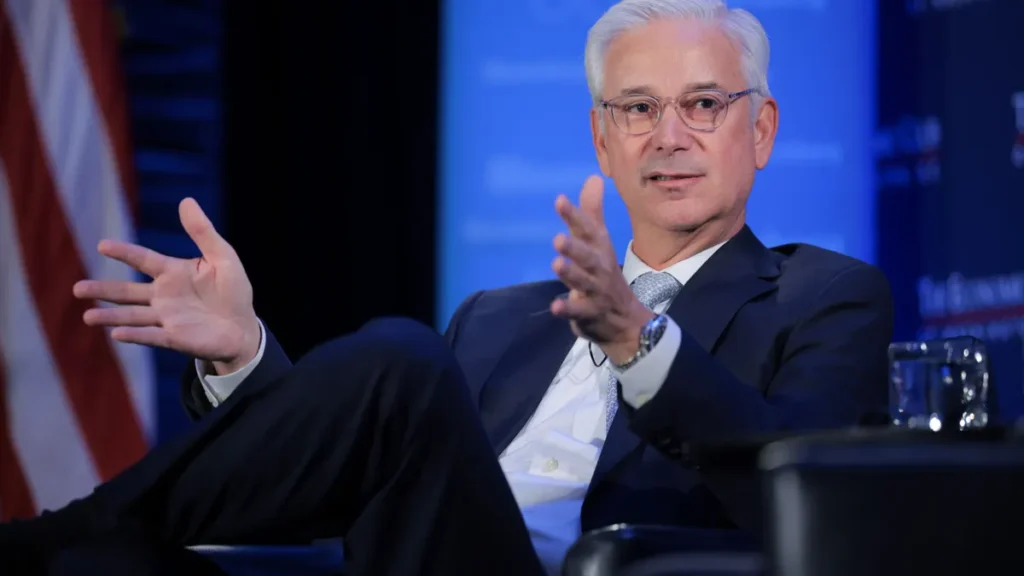
In a move that signals a seismic shift in the regulatory environment for American financial institutions, the U.S. Department of Housing and Urban Development (HUD) has launched a formal investigation into Wells Fargo & Company. The probe, announced Wednesday, centers on the bank’s historic mortgage lending policies, specifically targeting special purpose credit programs (SPCPs) that were designed to increase homeownership rates among Black Americans.
The administration, under the leadership of Secretary Scott Turner, has leveled sharp criticism at the banking giant, labeling the institution’s race-conscious initiatives as "immoral, unethical, and un-American." The investigation marks a significant escalation in the federal government’s crackdown on diversity, equity, and inclusion (DEI) initiatives within the private sector, moving beyond public rhetoric to active legal scrutiny.
The Core Conflict: A Clash of Regulatory Philosophies
At the heart of the dispute is a fundamental disagreement over the interpretation of the Fair Housing Act (FHA). HUD’s inquiry, detailed in a letter sent to Wells Fargo CEO Charlie Scharf, asserts that the bank’s efforts to bridge the racial homeownership gap through targeted lending constitute a violation of the FHA’s prohibition on race-based discrimination.
Craig Trainor, assistant secretary for fair housing and equal opportunity, did not mince words in his correspondence with the bank. "Despite the Fair Housing Act’s unambiguous, categorical prohibition on race-based home loans, the previous administration used special purpose credit programs as a vehicle to import racial discrimination into the housing market," Trainor wrote.
The federal government’s stance suggests that any policy that explicitly considers race—even for the purpose of rectifying historic inequities—is inherently discriminatory. This represents a departure from the guidance provided by the Biden-era federal regulators, who had actively encouraged financial institutions to utilize SPCPs to better serve "economically disadvantaged" populations.

A Chronology of Controversy: From Commitment to Scrutiny
The programs under the microscope span nearly a decade of corporate strategy at Wells Fargo, beginning well before the current regulatory climate took hold.
2017: The $60 Billion Commitment
In the early days of the first Trump administration, Wells Fargo announced an ambitious $60 billion lending commitment. The objective was clear and public: to facilitate the creation of at least 250,000 new African American homeowners by 2027. At the time, the program was hailed by housing advocates as a necessary intervention to combat the persistent racial wealth gap in the United States.
2022: Expanding the Scope
The second program under investigation is a $150 million special purpose credit program launched in 2022. This initiative was designed to allow eligible Black homeowners to refinance their mortgages at lower interest rates. The timing was significant; it followed a high-profile Bloomberg investigation that revealed Wells Fargo trailed the industry-wide average acceptance rate for Black mortgage refinance applicants by 15 percentage points. The bank positioned this program as a corrective measure to address its own internal statistical disparities.
2025–2026: The Regulatory Pivot
As the political tide shifted in Washington, the regulatory landscape began to contract. By 2025, faced with increasing pressure and legal threats regarding DEI practices, many large financial institutions, including Wells Fargo, began systematically scrubbing mentions of diversity and equity from their corporate communications and public filings. In August 2026, the federal government officially rescinded the interagency guidance that had previously encouraged banks to use targeted credit programs to aid disadvantaged communities.
Supporting Data and Context: Why Banks Used SPCPs
To understand why Wells Fargo and other institutions implemented these programs, one must look at the data that prompted them. For decades, the racial homeownership gap in the U.S. has remained stubbornly wide. According to historical mortgage data, Black applicants have consistently faced higher rejection rates and higher interest rates compared to their white counterparts, even when controlling for credit scores and debt-to-income ratios.
In 2022, when Wells Fargo initiated its refinance program, the bank was struggling to reconcile its lending performance with its public commitment to racial equity. The 15-percentage-point gap in refinance acceptance rates was a major reputational liability. The bank’s leadership viewed the SPCP as a data-driven solution to a structural problem—a way to ensure that creditworthy borrowers were not being unfairly excluded due to historical biases in automated underwriting systems.

However, the current HUD leadership views these statistical gaps not as justification for targeted programs, but as irrelevant to the legal question at hand. As Trainor stated in his letter to CEO Charlie Scharf, "Attempting to close statistical racial gaps in homeownership by doling out loans based on race is no way to do business. And doing so in residential real estate related transactions is illegal under the Fair Housing Act."
Official Responses and the "Immoral" Accusation
Wells Fargo has maintained a cautious silence, with a spokesperson for the bank declining to comment on the ongoing investigation. The lack of a defensive statement reflects the high-stakes environment in which the bank now operates.
HUD Secretary Scott Turner, however, has been vocal. In a prepared statement, Turner elevated the critique from a legal question to a moral one. "Even if Wells Fargo did not violate the law, its practice of dividing Americans based on race is immoral, unethical and un-American," Turner said.
This framing serves a dual purpose: it pressures the bank to comply with the federal investigation while signaling to other financial institutions that the era of "race-conscious" banking is over. The administration is making it clear that it expects financial institutions to operate under a "colorblind" model, regardless of the historical context of the neighborhoods or the demographics of the borrowers.
The Broader Implications for the Financial Sector
The investigation into Wells Fargo is likely to have a chilling effect on the entire banking industry. Banks that once sought to gain favor with regulators and community groups by launching DEI-focused lending products are now re-evaluating those commitments.
The End of the "DEI Era" in Finance
The current administration’s focus is not merely on the programs themselves, but on the underlying logic of corporate DEI departments. Trainor’s assertion that "the bank’s obligations under the Fair Housing Act rise or fall based on actual practices, not buzzwords or website aesthetics" suggests that even if a bank removes "DEI" from its marketing materials, it will still be held accountable for any legacy programs that utilize race as a factor in credit decisions.

Legal Precedent and Compliance
Legal experts are closely watching this case, as it may set a new precedent for how the FHA is enforced in the 21st century. If HUD successfully proves that Wells Fargo’s programs violated the law, it could lead to a massive unwinding of similar programs across the nation. Small community banks and large national lenders alike will likely face pressure to audit their portfolios for any programs that could be construed as "race-conscious."
The Economic Impact on Minority Borrowers
For the communities these programs were intended to help, the regulatory pivot creates significant uncertainty. If financial institutions abandon targeted outreach and refinancing programs for fear of federal retaliation, the gap in homeownership may widen. Advocates for these programs argue that without targeted interventions, the "neutral" systems of modern banking will continue to produce outcomes that disproportionately disadvantage minority borrowers.
Conclusion: A New Standard of Oversight
The HUD investigation into Wells Fargo is more than a regulatory audit; it is a manifestation of a profound cultural and political transformation. By aggressively targeting programs that were once encouraged by federal regulators, the current administration is redefining the boundaries of the Fair Housing Act.
For Wells Fargo, the coming months will be a test of resilience and legal strategy. For the rest of the financial services sector, the message is clear: the standards for compliance have changed, and the regulatory environment will be strictly enforcing a policy of total colorblindness in lending. As the investigation unfolds, the industry will be forced to grapple with the tension between its internal goals of equity and the external reality of a federal government that views those very goals as a violation of the law.