The Sleeping Giant Awakens: How Latine Voters are Reshaping the American Political Landscape
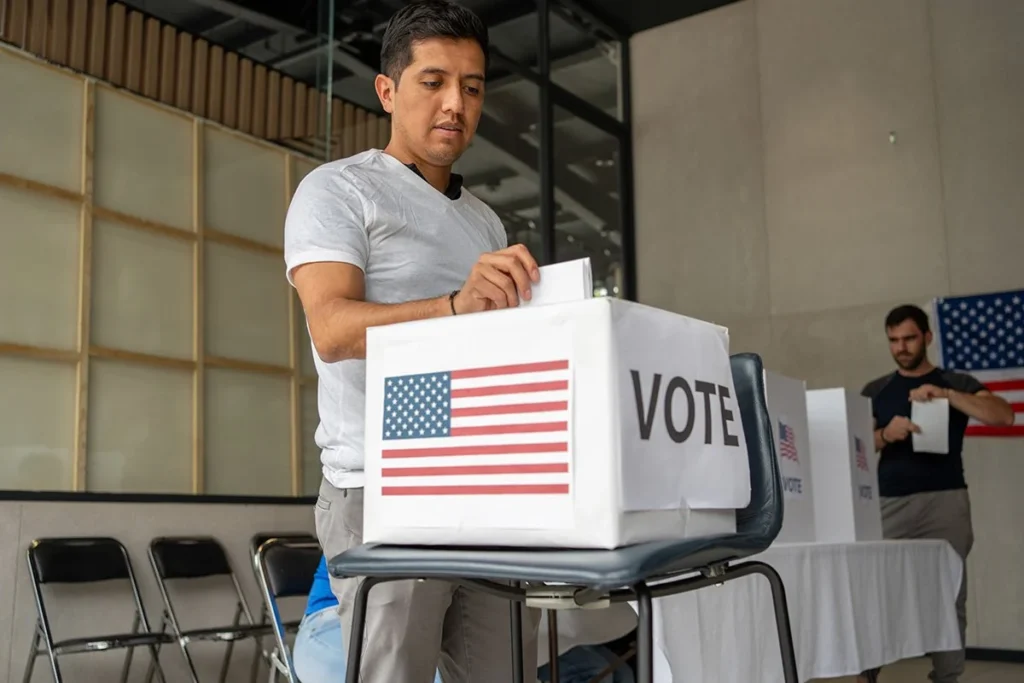
For decades, the Latine electorate in the United States was often viewed through a reductive lens—either as a monolith or as a demographic perpetually on the cusp of political alignment. However, as the 2026 midterms approach, that narrative is fracturing. Fueled by a potent cocktail of economic frustration, alarm over aggressive immigration enforcement, and a growing grassroots movement, 36 million eligible Latine voters are positioned to act as a definitive "kingmaker" in American politics.
While historically leaning toward the Democratic Party, the Latine vote has experienced significant turbulence over the last quarter-century. Today, as anti-immigrant rhetoric intensifies and the machinery of federal deportation reaches unprecedented levels, nonprofit advocacy groups are pivoting from traditional outreach to a year-round mobilization strategy. They are betting that widespread anger at current policies will effectively neutralize the fear-based tactics that have become the hallmark of the modern Republican platform.
A Chronology of Shifting Allegiances
To understand the current volatility, one must look back at the historical arc of the Hispanic vote. In 2001, the Center for Immigration Studies (CIS)—a conservative think tank—published a report suggesting that the GOP’s efforts to woo Hispanic voters were a futile endeavor, asserting that the effort required to make inroads was simply not worth the political capital.
Yet, the 2000s defied these expectations. Following the geopolitical shock of 9/11 and the cultural debates surrounding same-sex marriage, George W. Bush successfully captured 35 percent of the Hispanic vote in 2000, a figure that grew by 5 percent in 2004. Republicans briefly believed they had cracked the code, particularly among Catholic swing voters.
The dream of a GOP-aligned Hispanic coalition, however, quickly evaporated. By 2008, 67 percent of Hispanic voters backed Barack Obama. The shift was driven largely by the Republican Party’s pivot toward overtly anti-immigrant rhetoric, which many perceived as carrying racial overtones. Despite the Bush administration’s own failed attempts at immigration reform, the rise of Immigration and Customs Enforcement (ICE) in 2003 signaled a new era of enforcement. Under Bush, deportation rates more than doubled, setting a precedent that would soon evolve into a permanent, highly militarized state apparatus.
When Obama assumed the presidency, he arrived on a platform of hope and immigration reform. Yet, his administration’s record was marked by a profound disconnect between rhetoric and reality. Early in his tenure, DHS Secretary Janet Napolitano prioritized border security, leading to a wave of deportations that exceeded those of his predecessor. By 2011, advocacy groups like the United We Dream Network were mobilizing in open protest, accusing the administration of betrayal. While the 2012 creation of the Deferred Action for Childhood Arrivals (DACA) program secured 71 percent of the Hispanic vote for Obama that year, the "deporter-in-chief" label began to stick as 69 percent of those removed under his watch were non-criminals or low-level offenders.
The Modern Erosion of Trust
The subsequent years saw a steady decline in Democratic support among Latine voters. From 67 percent for Hillary Clinton in 2016 to 57 percent for Kamala Harris, the trend line is unmistakable. For many voters, the shift has been less about a sudden embrace of Republican ideology and more about a strategic move away from a party that many feel has taken their support for granted.
The Biden administration’s tenure, while marked by efforts toward naturalization, was overshadowed by the post-COVID global economic crisis. The continued use of Title 42 expulsions and the expansion of private prison capacity for detention meant that, for many, the Democratic "immigration machine" looked remarkably similar to its predecessor. According to the CATO Institute, the administration’s increase in deportation charter flights and the maintenance of ICE partnerships with local law enforcement have served to solidify a deportation infrastructure that is now being weaponized by the current administration.
Data and Demographics: Beyond the Monolith
It is a common error to treat the Hispanic vote as a monolithic bloc. While immigration remains a critical touchstone, economic stability, healthcare, and education often rank higher in priority for many families. However, the sheer scale of 36 million eligible voters creates a force that cannot be ignored. When this group overlaps with the 30 million Black eligible voters—who remain the most loyal Democratic constituency—the potential for a progressive coalition is immense.
Despite the right-wing focus on "voter fraud," data suggests that the Republican Party is increasingly reliant on voter suppression to maintain its grip on power. The use of the Systematic Alien Verification for Entitlements (SAVE) database to purge voter rolls has drawn sharp criticism and legal challenges. Critics argue that these programs, often based on outdated information, are designed to intimidate naturalized citizens and discourage participation in the electoral process.
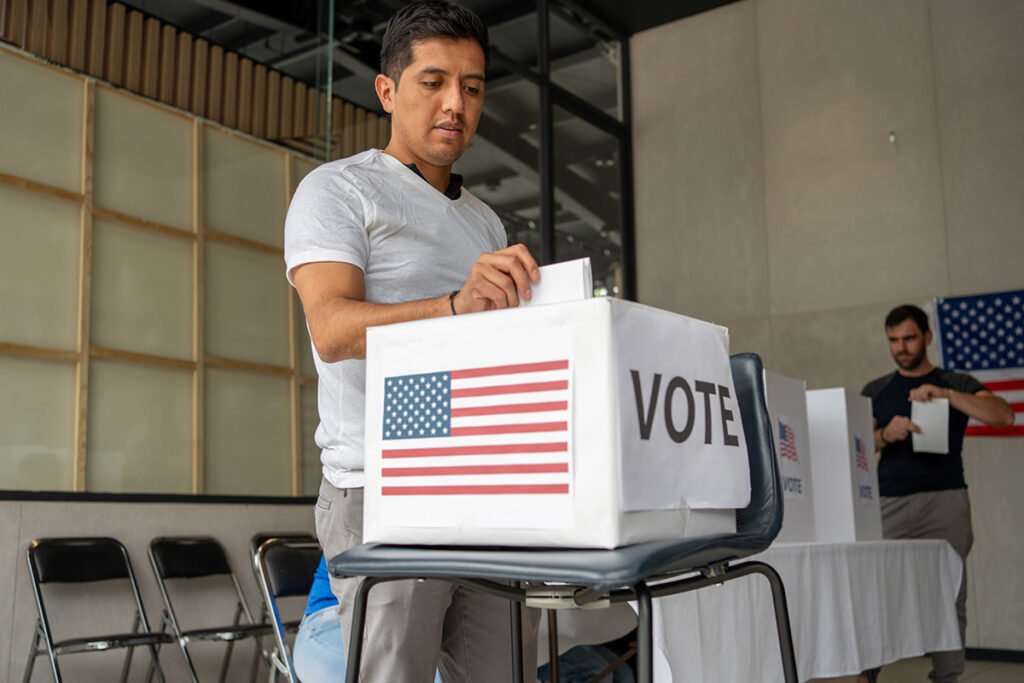
The Trump administration’s threats to deploy the National Guard and ICE agents to polling locations represent a direct escalation in voter intimidation. These actions are not merely political theatre; they are targeted efforts to suppress the vote in communities that have already suffered from racial profiling and excessive force by federal authorities.
Official Responses and Legal Challenges
In response to these tactics, a robust legal and grassroots defense has emerged. A coalition of nine nonprofits, including LatinoJustice PRLDEF, filed a federal lawsuit in September to challenge the interference of armed federal agents at polling sites. Similarly, the National Immigration Law Center has initiated legal action against the Department of Homeland Security to stop the agency from compiling lists of voters for "in-person interviews," a move critics describe as a blatant violation of privacy and voting rights.
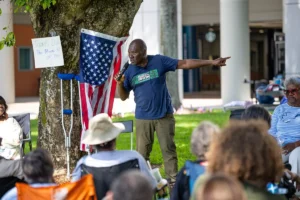
Meanwhile, organizations like Mi Familia Vota and Voto Latino have moved toward a "365-day engagement model." By focusing on year-round mobilization rather than just election-cycle blitzes, these groups are successfully connecting bread-and-butter issues like reproductive rights, labor protections, and environmental justice to the act of voting. In the Rio Grande Valley, groups like La Unión del Pueblo Entero (LUPE) are using community assemblies to educate voters on their rights, effectively turning the "Valle Fuerte, Valle Libre" campaign into a blueprint for political empowerment.
Implications for the Future
The political implications of this mobilization are profound. As Republican approval ratings hover at anemic levels—recent polls show support as low as 29 percent—the party is showing signs of deep internal anxiety. The strategy of using anti-communist messaging, once a powerful tool in Florida, is showing significant wear as a younger, more Americanized generation of Cuban Americans shifts its focus to college tuition, the job market, and long-term domestic policy.
The growth of progressive movements in unexpected places, such as school board takeovers in Florida to combat book bans, suggests that the next generation of voters is more interested in defending civil liberties than in the outdated tropes of the past.
As we look toward the 2026 midterms and the 2028 presidential race, the primary takeaway is clear: the Latine vote is not waiting to be "won." It is being earned through the sweat and labor of grassroots organizers who are building a political infrastructure capable of surviving—and ultimately overcoming—the current climate of intimidation. Any candidate or party that fails to address the material needs and safety concerns of the nation’s second-largest voting-age population does so at their own peril. The sleeping giant of American politics has not only awakened; it is organizing.