Cinema in the Shadows of Giants: The Silicon Valley African Film Festival’s Fight for Sustainability
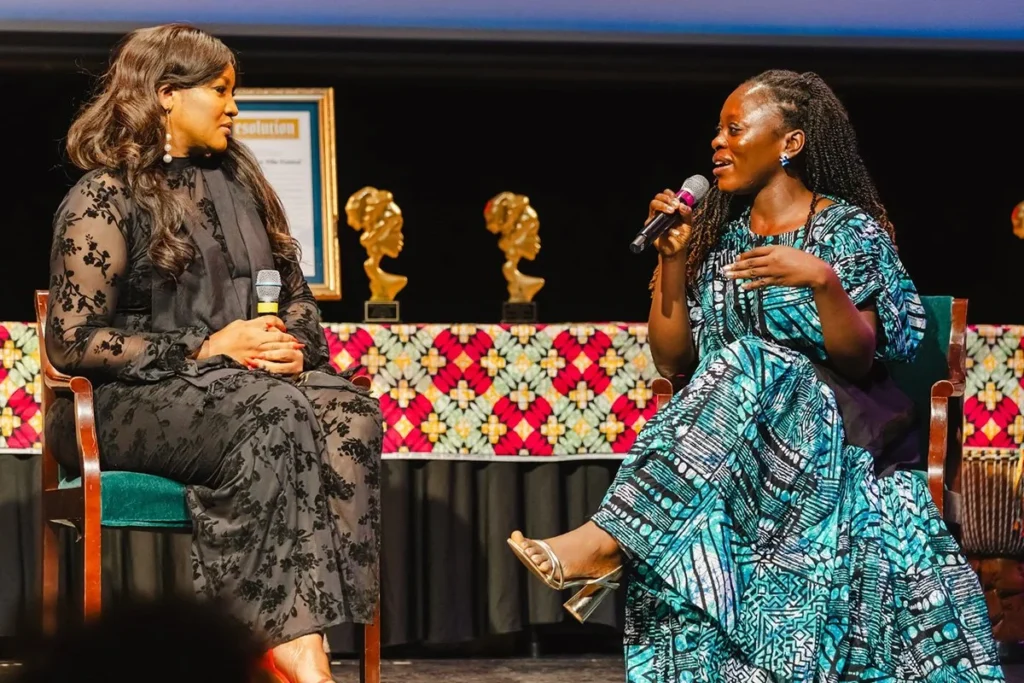
For nearly two decades, the Silicon Valley African Film Festival (SVAFF) has served as a cultural anchor in one of the world’s most affluent regions. Yet, as the 17th edition of the festival prepares to launch at San Jose’s Historic Hoover Theatre from October 8-11, its organizers face a stark reality: despite being neighbors to some of the world’s most powerful technology corporations, the nonprofit continues to operate on a precarious financial tightrope.
Featuring 76 films from 33 countries, the festival is a testament to the power of community-led arts. However, the contrast between the festival’s mission—to provide a platform for African stories—and the economic volatility of the region it calls home, highlights a growing crisis for grassroots cultural institutions in Silicon Valley.
The Core Facts: A Cultural Bridge in Tech Hub
The SVAFF, founded by Nigerian-born filmmaker Chike C. Nwoffiah, is more than a film screening series; it is a vital community hub. The festival offers an immersive experience, featuring an African market, live performances, and critical discussions that bridge the gap between filmmakers from the continent and the diaspora.
This year’s programming, which culled 76 selections from nearly 1,000 global submissions, highlights the diversity of African narratives. The opening-night feature, Afrotopia by David Mboussou, explores the intersection of traditional Indigenous values and the encroaching pressures of the logging industry in the Congo Basin. Simultaneously, local Bay Area filmmaker Kenan Moos’s Diagnosing Healthcare turns the lens inward, examining the systemic medical injustices faced by Black Americans. These films underscore the festival’s commitment to storytelling that is as globally conscious as it is locally relevant.
A Chronology of Growth and Displacement
The festival’s journey is one of evolution and persistence. When Chike C. Nwoffiah first arrived in Silicon Valley 36 years ago as a graduate student, he carried with him the cultural richness of Nigeria. He soon discovered, however, a profound disconnect in his new home: many of his peers were remarkably uninformed about the African continent, often asking him to “speak African” or expressing surprise that he spoke English.
Driven to combat these misconceptions, Nwoffiah began teaching African history at a local college, using film as his primary pedagogical tool. A turning point occurred when he screened a short film about young women in Addis Ababa, Ethiopia, navigating modern life—driving cars and frequenting nightclubs. The revelation that his students were shocked by these depictions of agency and modernity fueled his mission.
What began as a modest plan to “curate a Saturday morning” of 10 short films evolved into a formal organization. From its early years at the Community School of Music and Arts in Mountain View, the festival migrated to San Jose in 2017 to tap into the city’s dense African immigrant population and superior infrastructure. Despite this strategic growth, the organization has remained tethered to an exhausting, year-to-year funding cycle that threatens its long-term viability.
Data and the Cost of Living Crisis
The financial struggle of SVAFF is inextricably linked to the broader economic landscape of Santa Clara County. As of 2024, the region remains one of the most expensive in the United States, a factor that complicates the operations of any nonprofit, but especially those serving marginalized communities.
Data from the Silicon Valley Institute for Regional Studies reveals a significant homeownership gap, with non-Hispanic Black adults holding a 34% homeownership rate compared to 60% for their white counterparts. This disparity is mirrored in the displacement of residents. A 2024 analysis by Gabriel Frank-McPheter for the nonprofit SV@Home found that neighborhoods with higher Black poverty rates were significantly more likely to see a decline in Black residents between 1990 and 2000, a trend that persisted through the 2010–2020 decade.
For SVAFF, this means a constant struggle to retain staff and volunteers. Nwoffiah notes that he frequently loses experienced team members who simply can no longer afford to live in the region. Furthermore, the nonprofit faces a “Silicon Valley tax”: vendors and service providers often assume that because the festival is based in the heart of tech wealth, it must be flush with cash, making it difficult to negotiate the affordable rates necessary to keep a sub-$200,000 budget afloat.
Official Responses and Corporate Engagement
The relationship between SVAFF and Silicon Valley’s corporate giants is complex. Nwoffiah has successfully cultivated relationships with employee groups such as Adobe’s Black Employee Network, Black@YouTube, and Africans@Google. These partnerships have resulted in valuable exchanges: filmmakers have visited tech campuses to demo editing software and participate in discussions about algorithmic bias.
However, Nwoffiah draws a sharp distinction between “corporate engagement” and “corporate investment.” While companies provide hospitality, volunteers, and group ticket purchases, they have yet to provide the kind of sustained, foundational funding that would allow SVAFF to hire permanent staff or secure long-term space.
“We are grateful for every form of support, but there is a difference between corporate engagement and corporate investment,” Nwoffiah stated. The festival currently operates with no permanent paid staff, and Nwoffiah himself—who works an estimated 80 hours a week—receives no salary. This reliance on volunteer labor, while indicative of deep passion, is not a sustainable model for an organization that serves as a pillar of the regional arts ecosystem.
Implications: The Future of Community-Led Arts
The implications of SVAFF’s struggle are clear: without institutional support, the cultural fabric of Silicon Valley risks becoming a monolith. Jocelyn Dubin, a co-chair of the Black Leadership Kitchen Cabinet (BLKC), emphasizes that the festival provides a rare, essential space for Black residents to celebrate their heritage and connect with artists.
The BLKC and SVAFF have formed a symbiotic partnership, with Nwoffiah contributing his production expertise to BLKC’s public health initiatives, and the coalition providing support and ticket subsidies for community members. Yet, Dubin warns that this “siloed” approach is insufficient. She advocates for cross-sector collaboration, where health organizations, arts funders, and tech companies align their missions to sustain the vital infrastructure that festivals like SVAFF provide.
“I think too often we’re siloed, and we don’t call on each other,” Dubin observed. The strategy of pairing affordable housing with robust support for Black-owned businesses and nonprofits is, according to experts at SV@Home, the only way to ensure that the demographic groups that have historically built the region’s culture are not priced out of its future.
Beyond the Screen: A Legacy of Connection
Ultimately, the success of the Silicon Valley African Film Festival cannot be measured solely by box-office figures or corporate partnerships. It is measured in the moments that defy quantification: the kindergartners who refuse to leave a screening, demanding more stories; the Ghanaian grandmother who finds a sense of belonging in a theater thousands of miles from home; and the students who, through the “Africa in the Classroom” program, receive a more nuanced education than a standard textbook could ever provide.
As the 17th edition approaches, Nwoffiah remains focused on his mission, though he acknowledges the mounting pressure. He hopes that the tech companies that welcome his filmmakers to their headquarters will eventually recognize the value of investing in the festival as a permanent, local cultural institution.
“When people believe that your organization belongs to them too, they will fight to keep it alive,” Nwoffiah said. Whether that fight is enough to withstand the relentless economic pressures of Silicon Valley remains an open question. For now, the SVAFF continues to operate on the conviction that its work—providing a mirror for the diaspora and a window for the broader community—is too vital to be silenced by the bottom line. As long as the projector runs, the stories of Africa will continue to find a home in the heart of the valley, provided the community can find the means to keep the doors open.