Decoding Market Paradoxes: Why Rising Bond Yields and a Declining VIX No Longer Spell Doom for Equities
October 1, 2026
By Ben Carlson (Enriched & Expanded Financial Analysis)
Main Facts
In the intricate, often counterintuitive landscape of modern global finance, traditional textbook formulas frequently collide with market reality. A prevailing puzzle capturing the attention of investors centers on a profound disconnect: 10-year U.S. Treasury yields have surged aggressively—climbing roughly 30%—yet the stock market has managed to rack up solid double-digit gains for the year. Compounding this anomaly, the Cboe Volatility Index (VIX), commonly known as Wall Street’s "fear gauge," has drifted downward rather than spiking alongside escalating bond yields.
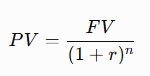
According to fundamental finance theory taught in introductory university courses, the present value ($PV$) of any asset is derived from the future value of its cash flows ($FV$) discounted by an interest rate ($r$):
$$PV = fracFV(1 + r)^n$$
Under this mathematical framework, rising interest rates should inherently depress the present value of equities, driving stock prices downward. Furthermore, higher yields typically correlate with heightened market uncertainty, which should naturally inflate volatility metrics like the VIX.
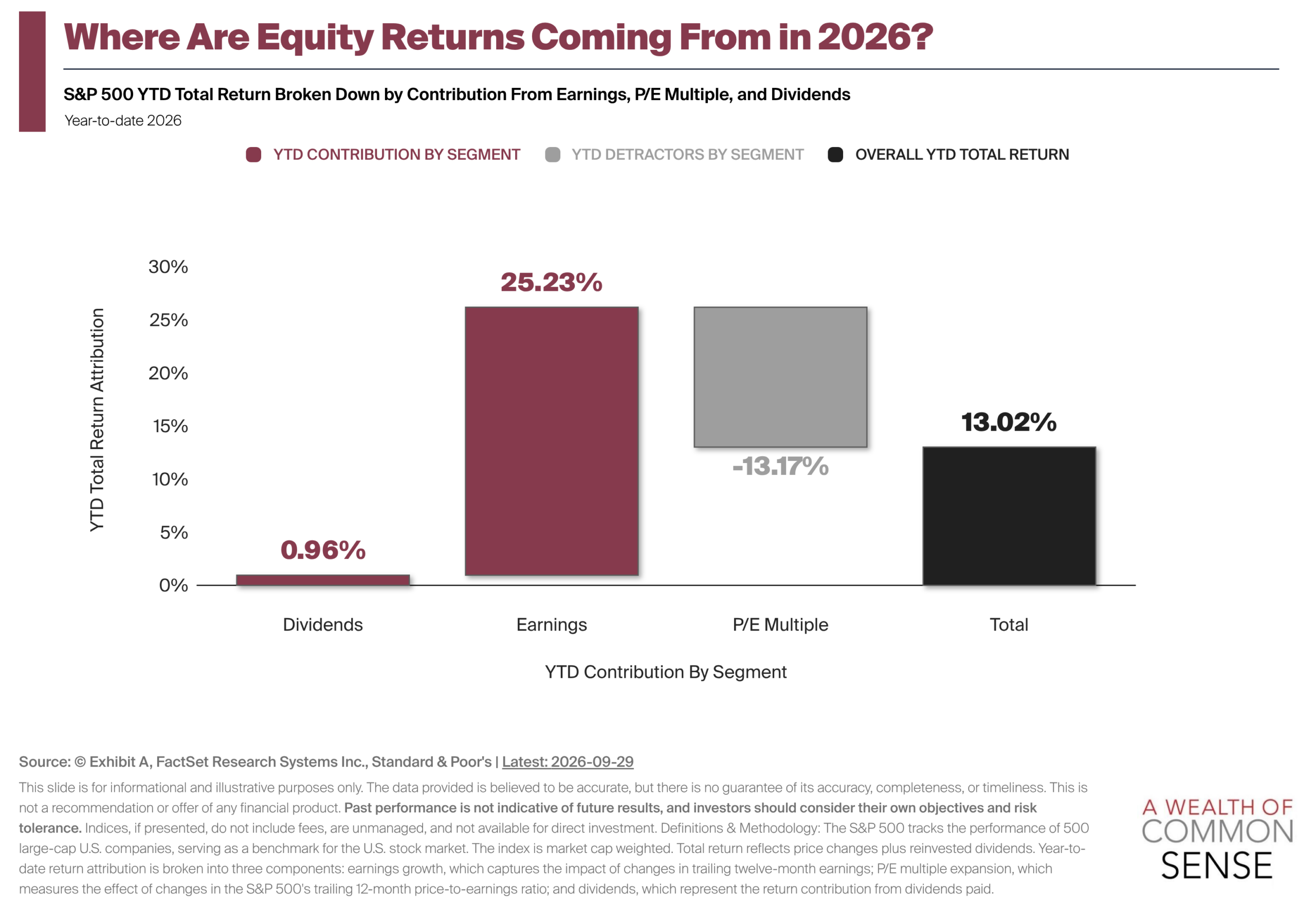
However, current market dynamics defy this rigid formula. Despite surging yields, persistent geopolitical conflicts—such as the ongoing war in Iran driving up global energy prices—and renewed inflation pressures, equities remain remarkably resilient. Strong corporate earnings, an unyielding artificial intelligence (AI) capital expenditure (capex) boom, and an improving labor market have offset the headwinds of tighter monetary conditions. While valuations (price-to-earnings multiples) have compressed, overall share prices have held their ground, leaving market participants to re-evaluate the true relationship between interest rates, inflation, and equity performance.
Chronology of Market Shifts
To understand how contemporary markets arrived at this counterintuitive juncture, it is vital to trace the evolution of macroeconomic conditions over the past several years:
- Early 2021 (The Pandemic Stimulus Era): As unprecedented government pandemic relief packages flooded the global economy, investors began panicking over potential spikes in inflation and interest rates. Market analysts heavily debated whether rising rates would trigger an equity crash. Historical analyses—such as research highlighting that the stock market historically performs well during periods of rising yields—suggested that economic growth, rather than rate levels per se, was the critical variable.
- The 2022 Inflationary Shock: Theory briefly aligned with reality in 2022 when a potent mix of multi-decade-high inflation and rapidly escalating interest rates forced the Federal Reserve into aggressive monetary tightening. The result was a painful 2022 bear market, with the S&P 500 shedding roughly 25%. This period cemented the idea that uncontrolled inflation—not merely rising rates—is the true poison for stock valuations.
- 2024–2025 (The AI Boom and Stabilization): Inflation cooled significantly from its post-pandemic peaks, hovering around manageable levels while corporate productivity surged. Fueled by massive investments in artificial intelligence and resilient consumer spending, corporate earnings growth exploded, allowing stocks to absorb elevated interest rate environments without tipping into systemic crises.
- Mid-to-Late 2026 (The Current Paradox): Entering the latter half of 2026, 10-year Treasury yields mounted a dramatic 30% ascent. Concurrently, geopolitical flare-ups in the Middle East—specifically the Iran conflict—reignited energy-driven inflation fears, pushing inflation readings up from 2.4% to 3.4%. Despite these mounting pressures, the stock market refused to sell off, and the VIX unexpectedly declined, setting the stage for widespread financial debate over what this divergence signifies for the future.
Supporting Data and Historical Context
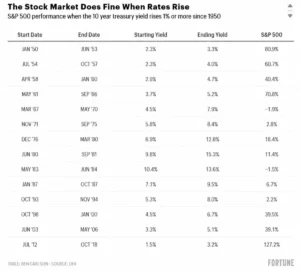
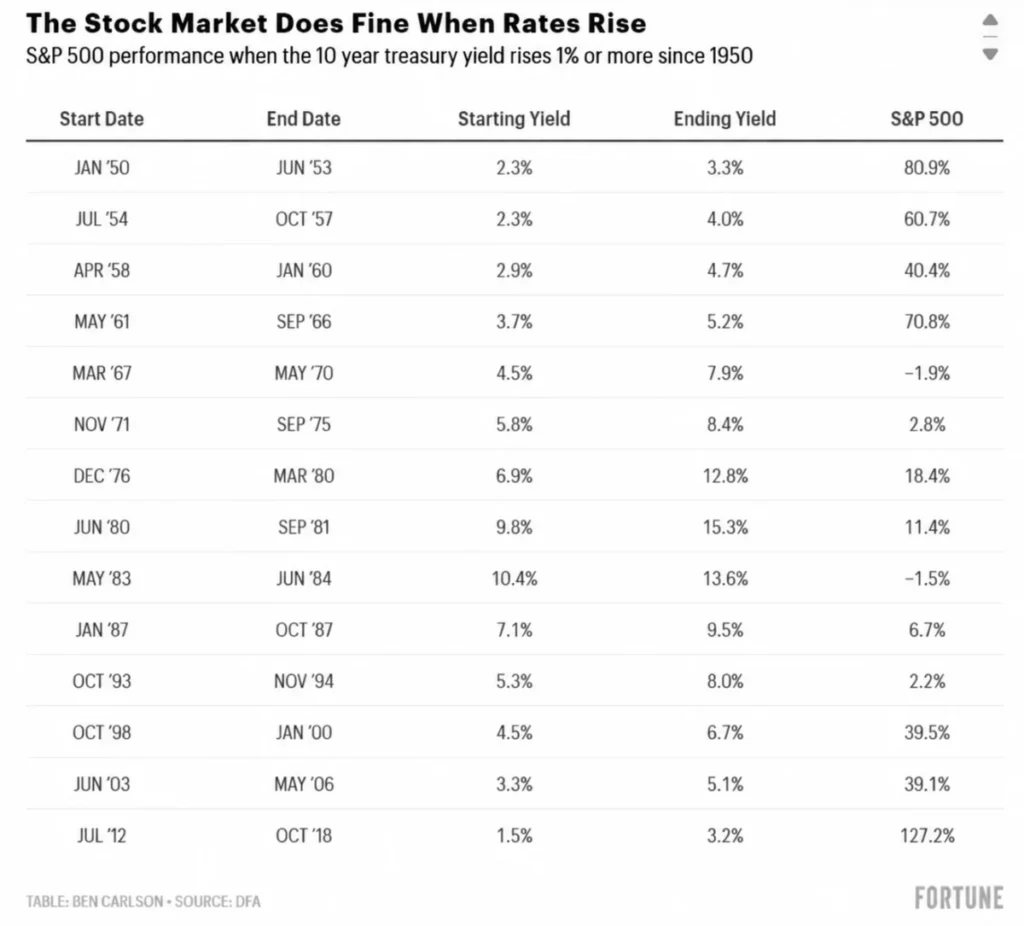
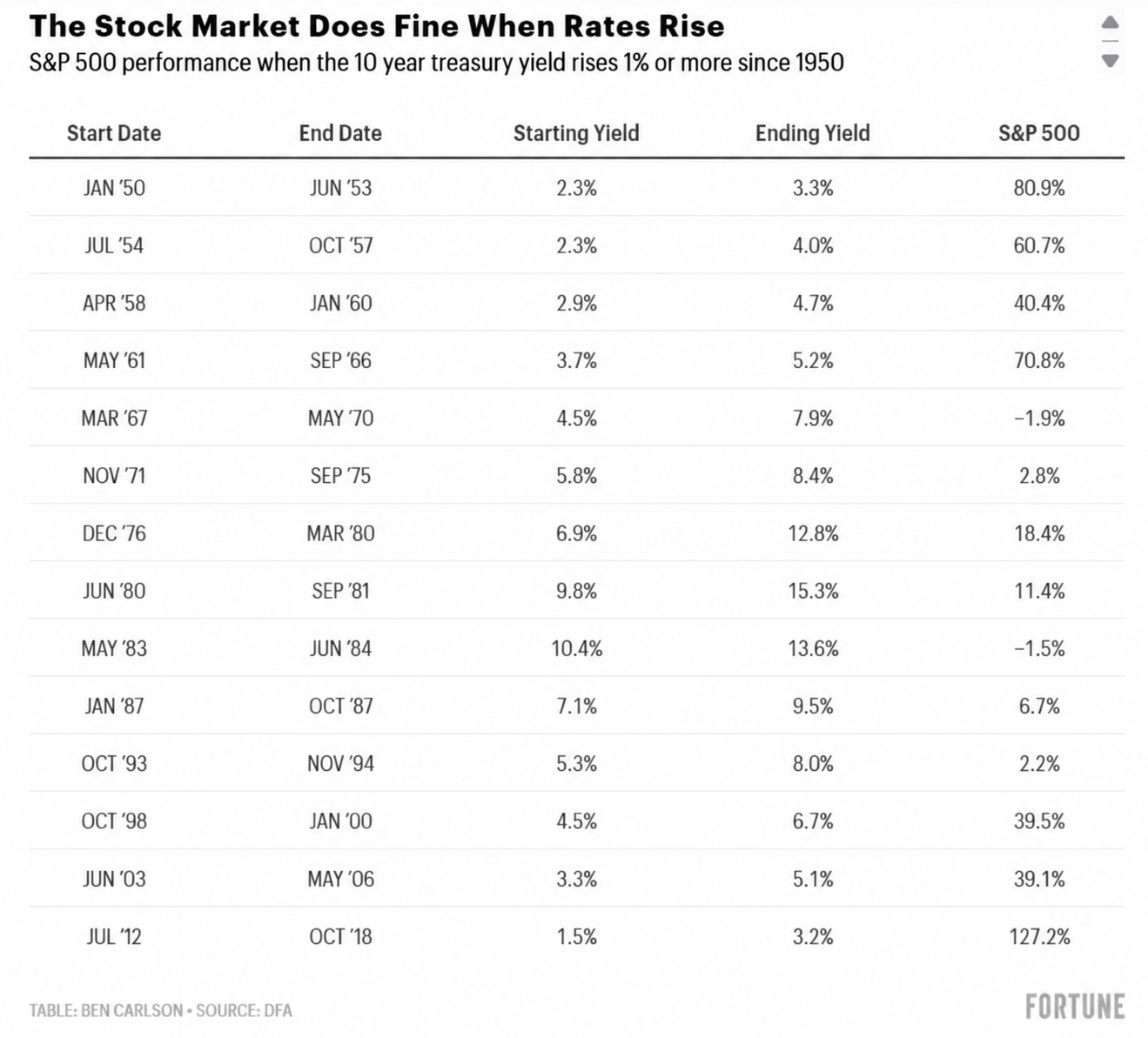
Financial history demonstrates that the conventional fear of rising interest rates is largely overblown. In a comprehensive study tracking historical market responses to significant rate environments, out of 14 distinct historical periods where the 10-year U.S. Treasury yield rose by 1% or more, the stock market posted positive total returns in 12 of those instances.
+-----------------------------------------------------------------+
| HISTORICAL STOCK MARKET PERFORMANCE DURING RISING YIELD PERIODS |
+-----------------------------------------------------------------+
| Total Historical Episodes Analyzed: 14                          |
| Positive S&P 500 Return Over Period: 12 out of 14 (85.7%)       |
| Negative S&P 500 Return Over Period:  2 out of 14 (14.3%)*      |
+-----------------------------------------------------------------+
*Note: Notable exceptions where rate spikes ended in severe drawdowns
include 1987 and 2000.
The underlying economic rationale for this historical resilience is straightforward: Interest rates typically rise because the underlying economy is expanding. Strong economic growth boosts corporate revenues and profit margins, which frequently outpaces the negative mathematical impact of a higher discount rate. Conversely, when central banks aggressively cut rates, it is often a reactionary measure to combat an unfolding economic recession—a scenario that historically spells far worse outcomes for corporate earnings and equity valuations.
However, context remains king. The data illustrates a crucial distinction regarding inflation thresholds:
- Mild Inflation: A moderate, predictable rise in prices accompanies robust economic demand and is easily absorbed by pricing power within major corporations.
- Galloping Inflation: When inflation spikes rapidly (as seen in 2022, pushing past comfortable central bank targets), it destroys consumer purchasing power, compresses margins, and forces aggressive monetary tightening that destabilizes financial assets.
In the current environment, while inflation has ticked up from 2.4% to 3.4% due to energy shocks, it remains well below the catastrophic double-digit fears of prior cycles. This controlled velocity has allowed stocks to digest higher bond yields, even if that digestion has manifested as compressed valuation multiples rather than outright price drops.
Official Responses and Market Commentary
Market strategists, wealth managers, and financial commentators have weighed in heavily on this unusual divergence between bond yields, equity prices, and volatility indexes.
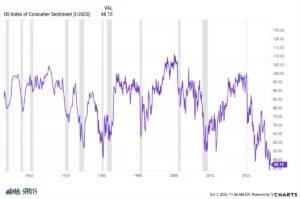
During a recent episode of the financial discussion program Ask the Compound, featuring guest expert Jonathan Novy alongside regular analysts, the conversation dissected the psychological and structural disconnects plaguing everyday investors. Discussions centered on how consumers and institutional allocators are reacting to wage growth versus persistent consumer sentiment strains, zero-percent credit card usage, and alternative asset competition.
Key takeaways from industry experts emphasize that the "TINA" (There Is No Alternative) era for stocks has officially ended. For over a decade of ultra-low interest rates, equities were the only game in town for investors seeking meaningful returns. Today, with fixed-income instruments and cash equivalents offering safe, guaranteed yields of 5% to 7%, bonds have transformed from a defensive portfolio diversifier into a direct competitor for capital allocation.
As expert commentary highlights, if Treasury yields continue their upward trajectory past an undisclosed "pain threshold," institutional and retail investors will face mathematical mandates to trim equity holdings and reallocate capital into risk-free fixed income. While official Federal Reserve communications continue to balance the tightrope between managing sticky inflation and supporting employment growth, private-sector analysts warn that complacency in the face of climbing yields could leave portfolios vulnerable to sudden sentiment shifts.
Implications for Investors Going Forward
What does this decoupling of bond yields and market volatility mean for the road ahead? Several strategic implications emerge for long-term investors navigating this unusual market environment:
1. Earnings Matter More Than Discount Rates
As long as corporate earnings—particularly among mega-cap technology and AI-driven infrastructure sectors—continue to expand at double-digit rates, the equity market possesses a powerful natural defense against rising interest rates. Valuation multiples (P/E ratios) may compress as money becomes more expensive, but expanding fundamental profits can successfully anchor absolute share prices.
2. Monitoring the "Tipping Point" for Bond Competition
While 5% to 7% yields are currently being absorbed by a strong economy, there exists a critical tipping point. If 10-year yields breach higher psychological thresholds, the risk-reward calculation tilts heavily in favor of bonds. At that juncture, institutional re-balancing could drain liquidity from equities, injecting sudden volatility into a currently complacent market.
3. The Threat of Escalating Geopolitical Inflation
Investors must closely monitor exogenous supply shocks—particularly in energy markets stemming from Middle Eastern conflicts. If energy-driven inflation transforms into a persistent wage-price spiral that forces the Federal Reserve into unexpected hawkish pivots, the benign relationship between rising rates and a falling VIX will likely shatter, paving the way for a harsher market correction.
4. Avoiding Dogmatic Investing
The primary lesson of the current market anomaly is that finance is not a physics lab. Rigid formulas like Finance 101 present clean, isolated models, but the real world operates within a complex web of shifting economic growth, technological revolutions, liquidity dynamics, and investor psychology. Successful long-term portfolio management requires contextual analysis, diversification, and a healthy respect for the markets’ capacity to surprise even the most seasoned forecasters.