The Great Economic Trade-Off: Winners, Losers, and the Hidden Costs of a High-Interest-Rate Era
Introduction: The Myth of Economic Equilibrium
In the complex machinery of modern macroeconomics, equilibrium is nothing more than a theoretical illusion. No matter the prevailing trajectory of Gross Domestic Product (GDP) growth, inflation prints, or central bank interest rate decisions, economic shifts invariably trigger a chain reaction of trade-offs. For every beneficiary of a shifting fiscal landscape, there is a counterpart bearing the brunt of the cost.
Consider the stark contrast between the previous decade and the current one. The 2010s were characterized by historically low inflation—a welcome relief for everyday consumers—yet this was accompanied by sluggish economic growth and stubbornly stagnant wages. Conversely, the post-pandemic era of the 2020s has ushered in robust economic expansion and meaningful wage gains, but this progress has come tethered to an unwelcome companion: persistent, elevated inflation.
Now, as central banks maintain higher interest rates to cool price pressures, financial pundits and everyday citizens alike are left to reckon with a new financial reality. While higher borrowing costs are frequently framed as a necessary bitter pill to stabilize the monetary system, a granular examination of the data reveals a deeply polarized landscape. When we tally the ledger of today’s high-rate environment, the damage inflicted on key sectors of the economy far outweighs the isolated benefits.
Chronology of a Paradigm Shift: From Zero Interest Rates to Tightening Cycles
To understand today’s economic strains, one must trace the recent policy timeline:
- The 2010s (The ZIRP Era): In the wake of the Global Financial Crisis, central banks instituted Zero Interest-Rate Policies (ZIRP) and quantitative easing. While this prevented a deeper depression, it starved savers of yield, pushed investors into speculative assets, and set the stage for explosive asset price inflation—particularly in residential real estate.
- The Pandemic Shock (2020–2021): Massive fiscal stimulus collided with severe supply chain bottlenecks. Inflation surged from the dead, forcing central banks to pivot abruptly.
- The Tightening Cycle (2022–Present): To combat decades-high inflation, monetary authorities executed one of the fastest interest rate hiking campaigns in history. Benchmark rates soared, transforming the cost of capital overnight and fundamentally altering the financial calculus for consumers, corporations, and governments.
Main Facts: The Winners of Higher Interest Rates
It would be inaccurate to paint the rising rate environment as a universal catastrophe. Certain segments of the population and corporate America are thriving under the current regime.
1. Cash Finally Earns a Return
For over a decade, holding cash was a losing battle against inflation, with savings accounts yielding near-zero percentages. Today, risk-free assets have staged a remarkable comeback. Treasury bills (T-bills) yield upwards of 4%, and comparable returns are readily available in high-yield savings accounts, certificates of deposit (CDs), and money market funds. Savers are finally being rewarded for holding liquidity.
2. Fixed-Income Investors
The bond market has experienced a renaissance. High-quality corporate and municipal bonds now offer yields well over 5%, while riskier fixed-income segments push 6% to 7%. After years of being forced into the stock market to chase yield, conservative investors can once again generate substantial, predictable income from traditional bonds.
3. Retirees and the "Baby Boomer" Windfall
Retirees are arguably experiencing a golden financial moment, having timed the macroeconomic cycle with near-perfection. This demographic enjoyed a historic bull market in equities throughout the 2010s, followed by the largest surge in residential real estate values in modern history. Now, as they transition into retirement and de-risk their portfolios, they can lock in attractive fixed-income yields and higher annuity payouts. For the first time in a generation, safe assets are actually paying a living return.
4. Cash-Rich Corporations
Enterprises sitting on massive cash reserves on their balance sheets are reaping the rewards of high rates. Without taking on additional operational risk, these corporate giants are generating billions of dollars in interest income simply from their cash holdings.
5. Debt-Hedged Consumers and Companies
Those who locked in low-cost debt prior to the rate hikes pulled off one of the greatest financial hedges in history. Homeowners who secured 3% fixed-rate mortgages and consumers who locked in 5% auto loans are insulated from the current environment, enjoying monthly debt service obligations vastly lower than market rates.
Supporting Data: The Losers of Higher Interest Rates
Despite the wins enjoyed by savers and retirees, the broader economy is groaning under the weight of expensive capital. The casualties of high interest rates span residential housing, automotive markets, small businesses, public debt, and the rental market.
1. Homebuyers and the Stagnant Housing Market
While financial historians are quick to point out that 7% mortgage rates are not unprecedented—matching levels seen in the 1970s, 80s, and 90s—today’s market features a toxic combination: 7% mortgage rates paired with asset prices inflated by an era of 3% money.
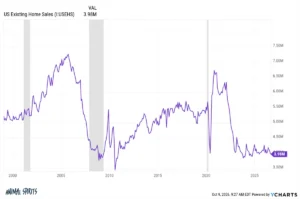
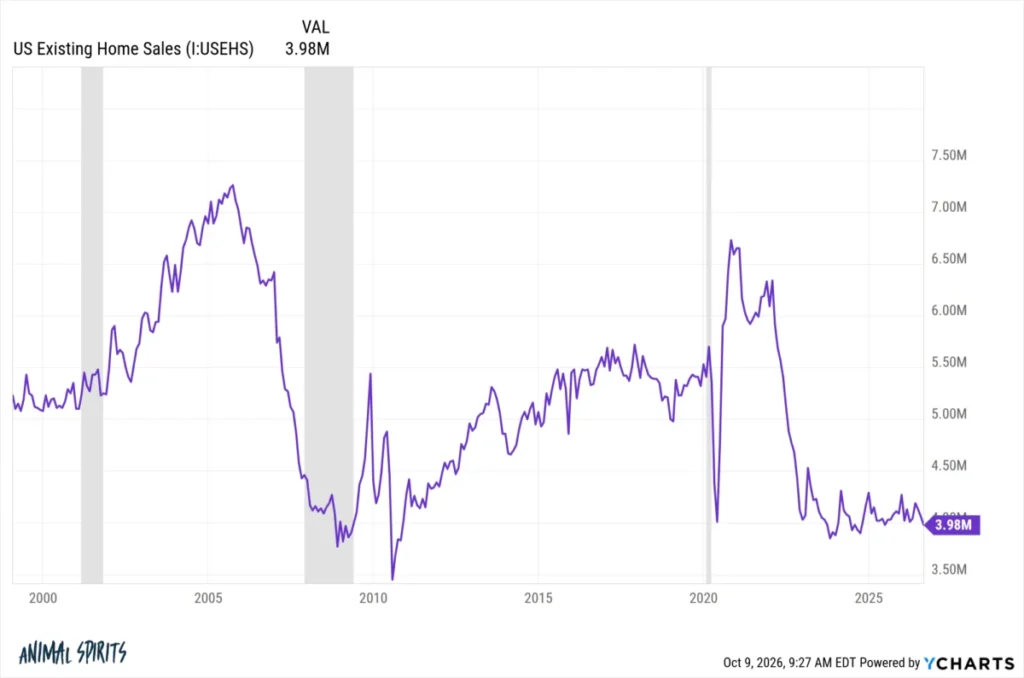
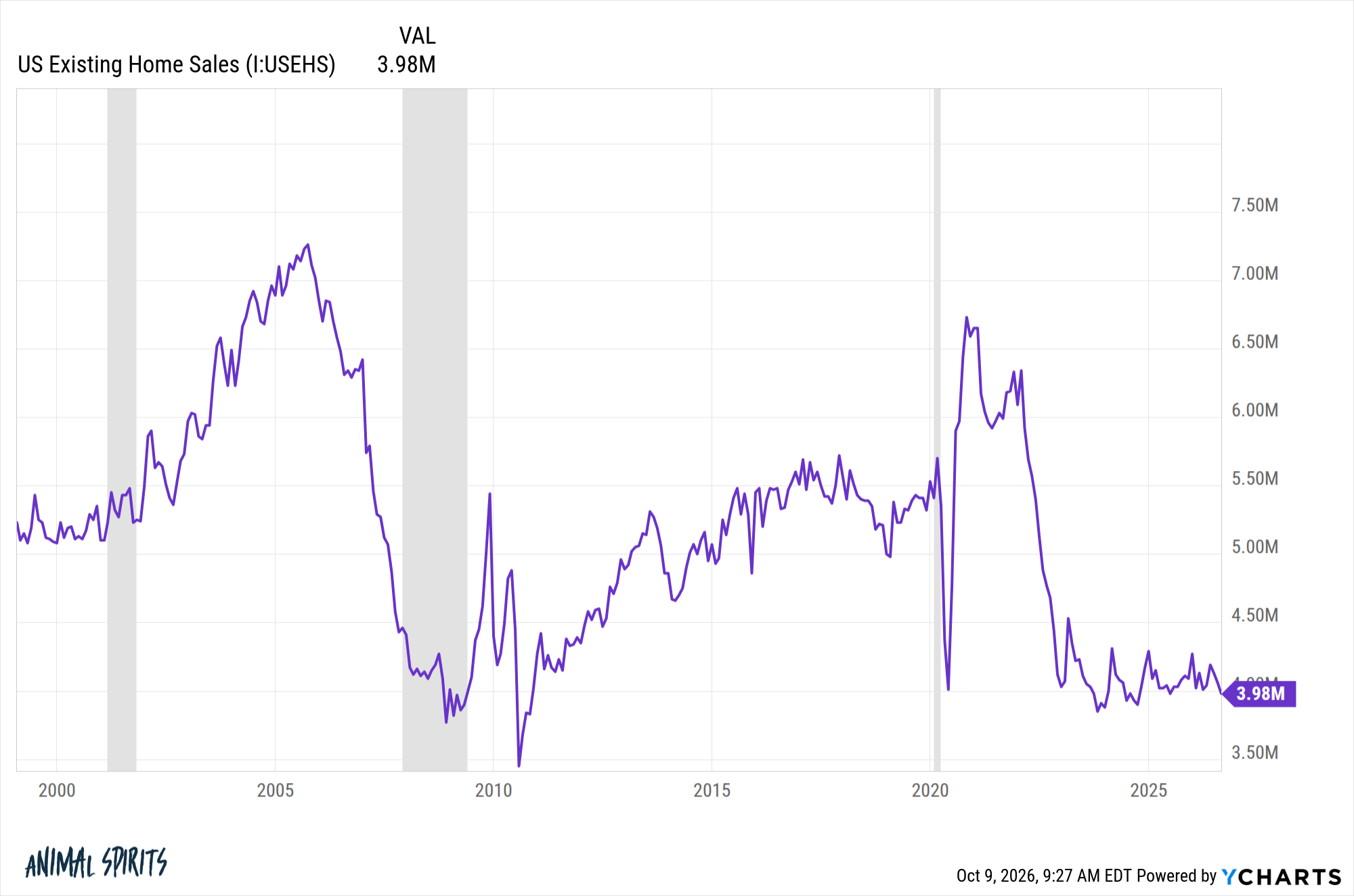
The result is a housing market gridlock. At the turn of the century, with a U.S. population of roughly 280 million, more than 5 million homes traded hands annually. Today, despite a population that has grown by nearly 65 million people, existing home sales have plummeted to fewer than 4 million annually. Buying activity has ground to a near-halt, making it one of the worst eras in modern history to be a first-time homebuyer.
2. The Auto Loan Trap
Automotive financing has mirrored the housing market’s distress. The national average for auto loans has surged past 7%. Combined with a 30% jump in new and used vehicle prices over the decade, monthly payments have reached astronomical heights.
Data shows that the average new car payment is rapidly approaching $800 a month, even as roughly a quarter of all new car loans stretch out to an exhausting 84 months. More than 20% of new car buyers are now saddled with monthly payments of $1,000 or more.
3. Exploding Government Debt Service Costs
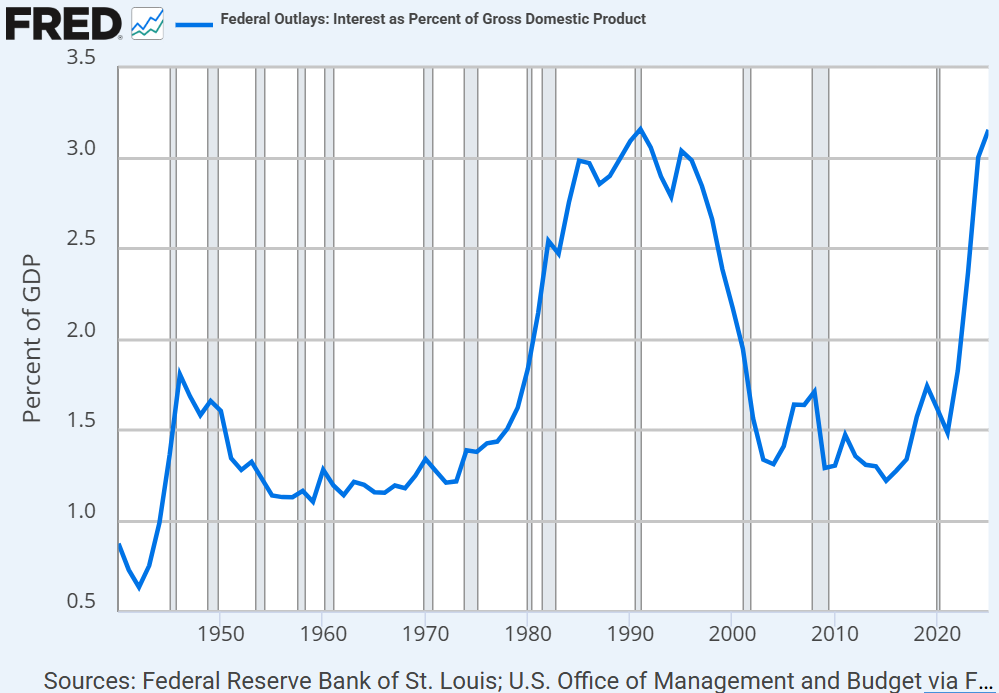
Skeptics of aggressive monetary tightening long warned that the U.S. federal government—having accumulated trillions of dollars in pandemic-era debt—could not sustain significantly higher interest rates without catastrophic fiscal consequences. Those warnings have proven entirely accurate.
Government interest expenses have exploded, consuming an unprecedented share of federal tax revenues. With structural deficits locked in, the trajectory of government debt service points sharply upward, guaranteeing that fiscal debt will remain a volatile political battleground for decades.
4. Small Businesses and Floating-Rate Vulnerability
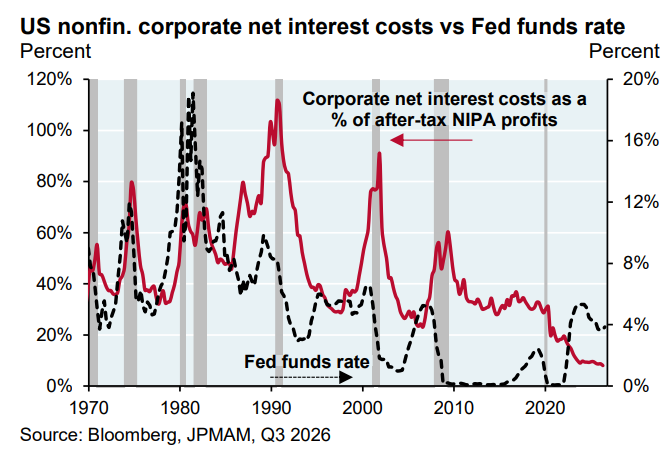
While massive corporations largely insulated themselves by locking in low-rate debt (mirroring the homeowner with a 3% mortgage), small- and mid-sized enterprises do not have that luxury. Small businesses and small-cap corporations are frequently forced to rely on floating-rate debt. As benchmark rates rise, the cost of servicing operational debt skyrockets, squeezing profit margins and threatening the viability of Main Street businesses.
Official Responses and Expert Insights: The "Higher Rates, Higher Rent Doom Loop"
Perhaps the most insidious secondary effect of high interest rates is their impact on the rental market and, ironically, on future inflation.
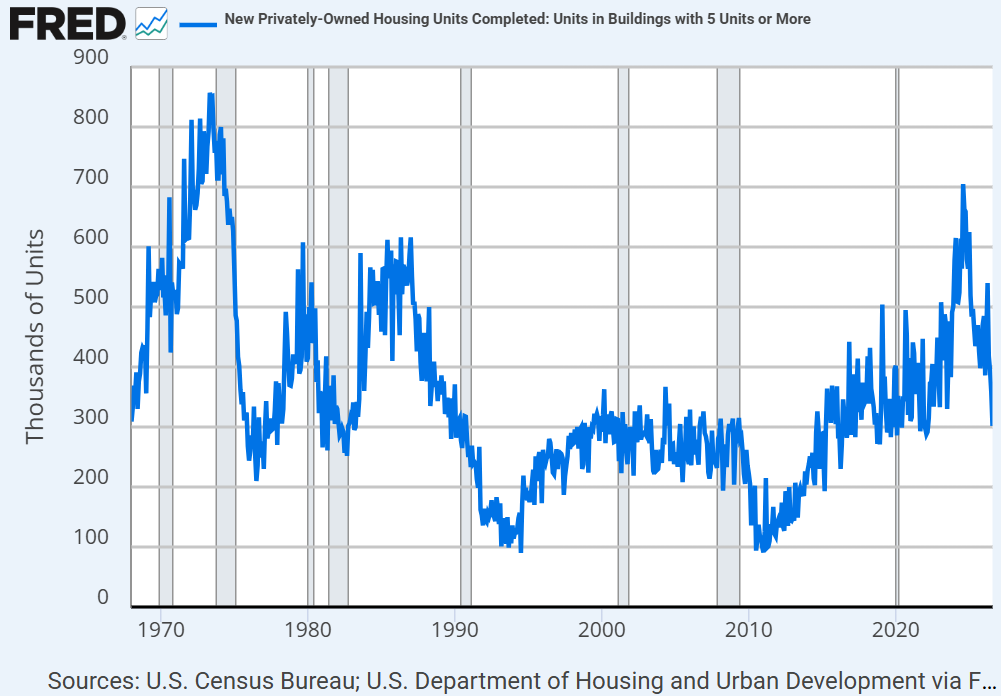
While multifamily housing construction experienced a boom during the low-rate era of the early 2020s—ultimately cooling rent growth as new supply hit the market—that pipeline has abruptly shut down. Torsten Slok of Apollo Global Management has identified this dynamic as a dangerous macroeconomic feedback loop:
"When rates are high, builders build less, and when fewer homes and apartments get built, rents go up, which pushes inflation higher and keeps rates high. Call this the ‘higher rates, higher rent doom loop.’ With owners’ equivalent rent alone making up roughly a quarter of the CPI basket, this re-acceleration in rents is a problem for the Fed because it puts upward pressure on inflation driven by higher rates."
Data tracking multi-family housing starts shows construction falling off a cliff following the central bank’s tightening campaign. By choking off new housing supply, high interest rates are inadvertently setting the stage for a resurgence in rental inflation.
Implications: A Looming Economic Reckoning
The prevailing argument for maintaining high interest rates has been the necessity of crushing inflation. Proponents point to the fact that the broader economy has stubbornly refused to enter a severe recession, proving its resilience.
However, looking past headline GDP numbers reveals underlying structural fractures. The damage being inflicted by today’s monetary policy is deep, cumulative, and structural:
- Housing market mobility is paralyzed, trapping generations of would-be buyers.
- Consumer discretionary spending is being cannibalized by punishing auto and housing debt.
- Small businesses are gasping for air under crushing floating-rate financing costs.
- Federal fiscal stability is deteriorating as debt servicing consumes an ever-larger portion of the budget.
- The rental market faces a renewed inflationary threat due to suppressed housing construction.
While zero-interest-rate policies had their own destabilizing consequences, a balanced assessment of the current economic landscape suggests that today’s high interest rates are causing far more structural damage than long-term good. The policy choices being made today are setting the economic parameters for years to come—and the bill will eventually come due.