Federal Reserve Renovation Under Scrutiny: Management Deficiencies Revealed in OIG Report
By Gabrielle Saulsbery
Published October 1, 2026
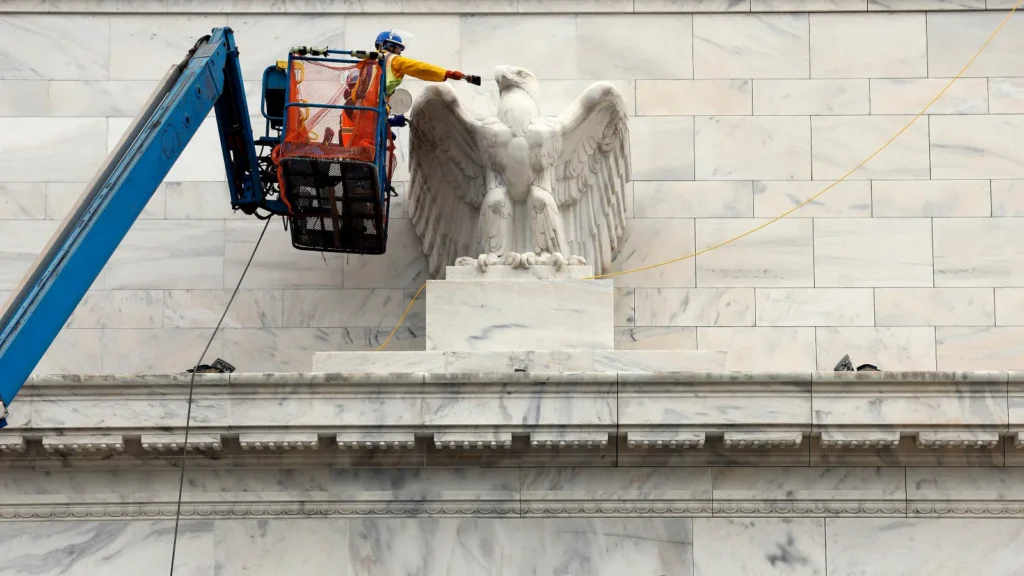
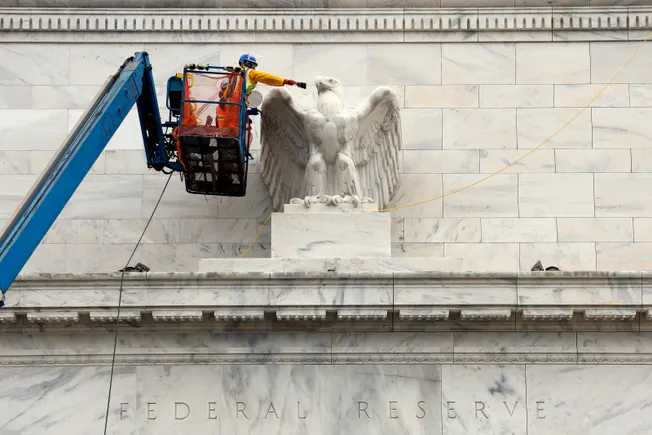
The Federal Reserve Board, the central bank of the United States, finds itself at the center of a growing political and administrative firestorm following the release of a damning report by the Office of the Inspector General (OIG). The audit, released Wednesday, provides a detailed examination of the multibillion-dollar renovation of the Marriner S. Eccles Federal Reserve Board Building complex in Washington, D.C. While the watchdog cleared the Fed of criminal wrongdoing, the report paints a picture of systemic mismanagement, poor oversight, and ballooning costs that have drawn sharp condemnation from the White House and Capitol Hill alike.
The OIG’s findings come at a time of heightened scrutiny over the Fed’s operational transparency. As the project enters its final phase—with a revised completion date now pushed to December 2027—the report suggests that the central bank’s failure to establish rigorous fiscal guardrails early on has left taxpayers footing a significantly larger bill than originally projected.
The Core Findings: A Failure of Oversight
The OIG report confirms that the Federal Reserve Board engaged in significant mismanagement during the multi-year renovation of its historic building complex. The audit identifies critical lapses in project governance, most notably the Fed’s failure to secure a "guaranteed maximum price" (GMP) contract until years into the project.
According to the watchdog, the Fed did not obtain a formal project cost estimate from its construction manager until January 2026—a staggering three-and-a-half years after the commencement of construction. By the time that initial estimate was produced, the project was already on a trajectory to cost $2 billion.
Despite these failures, the OIG was careful to delineate between administrative incompetence and criminal activity. "At no point during our evaluation did we find reasonable grounds to believe that a violation of federal criminal law had occurred requiring a referral to the U.S. Attorney General," the report stated. It further clarified that while the evaluation uncovered "deficiencies in the management of the renovation project," it did not identify evidence of "administrative misconduct."
Chronology of a Financial Quagmire
To understand the scale of the controversy, one must look at the timeline of the Eccles building project, which has evolved from a routine infrastructure upgrade into a lightning rod for political debate.
- 2020: The project is launched with an initial budget estimate of approximately $1.3 billion. At the time, the scope was presented as a necessary modernization to maintain the historic integrity of the Federal Reserve headquarters.
- 2024: As reports of cost overruns hit the public domain, the project budget begins to draw intense scrutiny from the Office of Management and Budget (OMB) and political leadership. Costs have ballooned to over $2 billion.
- January 2026: The Fed finally obtains a formal cost estimate from the construction manager, confirming the $2 billion price floor. This same month, the Department of Justice issues a subpoena to the Federal Reserve regarding former Chair Jerome Powell’s previous testimony on the renovation’s financials.
- August 2026: The Fed Board officially approves a revised funding level of $2.38 billion for the project.
- October 1, 2026: The OIG releases its final audit, detailing the lack of early fiscal controls and recommending immediate steps to finalize the project without further waste.
- December 2027 (Projected): Current anticipated completion date for the construction, more than three years behind the original schedule.
Political Fallout: Trump and the Demand for Accountability
The report’s conclusions acted as a catalyst for President Donald Trump, who has long targeted the Federal Reserve’s leadership. In a post on Truth Social on Wednesday, the President did not mince words, blaming the mismanagement directly on Jerome Powell and demanding his immediate resignation.
"If he doesn’t resign, he should be sued, at the highest level, by the United States Government, for either corruption or incompetence, both of which are completely unacceptable," Trump wrote. The President confirmed he has directed Attorney General Todd Blanche to "study" the OIG report, potentially signaling further legal or administrative pressure on the Fed.
This move follows months of escalating tension between the White House and the Fed. Last year, Trump and OMB Director Russ Vought expressed public outrage over the project’s fiscal trajectory, characterizing it as a hallmark of government waste. The subpoena issued in January was a clear indicator that the executive branch was treating the renovation not just as a construction issue, but as a potential case of misleading Congress.

Legislative Reactions: The View from the Senate
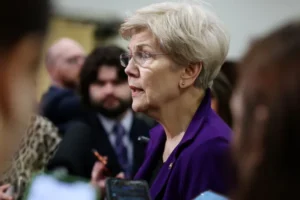
The controversy has bridged the partisan divide in Washington, albeit for different reasons. While President Trump focuses on the leadership of the Fed, Senator Elizabeth Warren (D-MA), the ranking member of the Senate Banking Committee, has framed the project as a systemic failure that necessitates broader legislative reform.
"Like Trump’s ballroom and his planned 250-foot triumphal arch, the Fed has overspent and underdelivered on its renovations," Warren said in a statement. "Today’s report underscores something I have long pushed for: Congress must act to improve transparency and accountability at the Federal Reserve."
Senator Warren urged the Fed to "swiftly implement" the OIG’s recommendations, echoing the sentiment that the era of the central bank operating with total autonomy in its administrative affairs may be coming to an end.
Implications: The Path Toward Reform
The OIG has outlined a specific roadmap for the Fed to rectify the current situation and prevent future mismanagement. The primary recommendation is for the Board to negotiate a guaranteed maximum price for the remainder of the work. This legal mechanism is intended to shift the risk of further cost overruns from the taxpayer to the contractors.
Furthermore, the watchdog has called for an audit of all remaining expenditures to ensure that every dollar spent in the final phase of the project provides "best value."

The implications for the Federal Reserve are significant. Beyond the immediate fiscal impact of the $2.38 billion expenditure, the institution faces a crisis of credibility. When the world’s most powerful central bank is shown to lack basic oversight in its own facilities management, it invites skepticism regarding its stewardship of the national economy.
The Question of Independence
For decades, the Federal Reserve’s independence has been its bedrock, designed to shield monetary policy from short-term political interference. However, critics now argue that this same independence has fostered a culture of administrative insulation where poor decision-making goes unchecked. The call for "transparency and accountability" voiced by Senator Warren is no longer a fringe opinion; it has become a central theme in the current Washington discourse.
As the project heads toward its 2027 completion date, the Fed must navigate not only the physical construction challenges but also a complex political environment. Whether the Board can satisfy the demands of the White House and Congress while maintaining its institutional integrity remains the central question.
For now, the Eccles building stands as a monument to both the historical significance of the American central bank and the modern-day perils of unchecked bureaucratic spending. The coming months will likely see further hearings, additional audits, and potentially significant changes to the way the Federal Reserve manages its internal capital projects. The era of the "unwatched" Fed appears to be firmly in the rearview mirror.