The War for Talent: Inside the High-Stakes Battle for Small-Business Banking Supremacy

The landscape of American commercial banking is undergoing a tectonic shift. As financial institutions look toward the next decade of growth, they are increasingly abandoning the broad, indiscriminate retail strategies of the past in favor of a specialized, high-intensity focus on small and midsize enterprises (SMEs). This pivot has triggered an unprecedented arms race for talent, with banking giants like Bank of America, Wells Fargo, U.S. Bank, and Capital One fighting to capture the loyalty of the nation’s most vital economic engines: business owners.
Sharon Miller, the president of business banking at Bank of America, describes the current environment as nothing short of a "competitive marketplace." According to Miller, the urgency to hire specialized bankers has surged significantly over the last 18 months, reflecting a broader realization among institutional lenders that the small-business sector is a "fountain of leads" capable of sustaining long-term growth across multiple banking verticals.
The Strategic Pivot: Why Small Business Matters
For large, $3 trillion-plus asset banks, the small-business owner is the "holy grail" of customer acquisition. The logic is compelling: a single business relationship serves as a gateway to an entire ecosystem of financial needs. By securing a small business’s primary operating account, a bank can cross-sell personal banking products to the owner, manage complex wealth management needs, facilitate payroll and workplace benefits for employees, and provide the credit necessary for commercial expansion.
Because these relationships are so lucrative, the scramble for human capital has reached a fever pitch. "When I look at the openings for jobs in this space at some of our major competitors, they’re up over 105% versus this time last year," Miller noted. "Other banks are figuring that out. People are after this space."
A Chronology of the Talent Arms Race
The current hiring surge did not happen in a vacuum. It is the culmination of a multi-year trend that began in earnest following the pandemic, as banks realized that digital agility and physical presence were both essential for business survival.
- 2020–2021: The initial phase focused on digital transformation and emergency lending, such as the Paycheck Protection Program (PPP). This period forced banks to overhaul their technology stacks, setting the stage for current AI-driven efficiencies.
- 2022: As the economy stabilized, major institutions shifted from crisis management to aggressive market-share acquisition. Regional and national banks began announcing ambitious hiring targets for commercial and business bankers.
- 2023: Banks began solidifying their long-term strategies. For instance, Wells Fargo and U.S. Bank ramped up their middle-market hiring, while Capital One moved to bolster its commercial banking leadership.
- 2024–Present: The focus has moved toward retention and internal development. As the market for experienced bankers becomes saturated, firms are increasingly investing in "home-grown" talent, training branch staff to transition into specialized business roles.
Supporting Data and Market Penetration
Bank of America’s commitment to this space is backed by massive scale. The firm currently serves approximately 3.4 million small and midsize clients, each generating up to $50 million in annual revenue.
The bank’s strategic goal, articulated during its November 2023 investor day, is to achieve a 30% market share in the 50-plus markets where it operates. As of the most recent reports, BofA has reached a national average of 27.6%, a steady climb from the 27% mark recorded in late 2025.
To support these growth targets, the bank maintains a massive workforce. As of late last year, the business-banking segment boasted approximately 2,125 specialized roles, including business solution advisers, relationship managers, and senior relationship managers. These teams are deployed strategically, with Miller highlighting a specific focus on the top 20 U.S. markets by gross domestic product (GDP).
Internal Talent Development and Retention
In a market where experienced commercial bankers are highly sought after and expensive to poach, Bank of America has doubled down on internal mobility. The company identifies high-performing "business solutions advisers" currently working in its retail branch network and provides them with the training necessary to manage larger, more complex business relationships.
"Where we can hire someone that already knows our systems, that knows how we operate and can move into working with larger and larger clients, that’s a good thing for us," Miller explained. "We want to keep the employees that we have, and helping them grow is a key way we can do that."
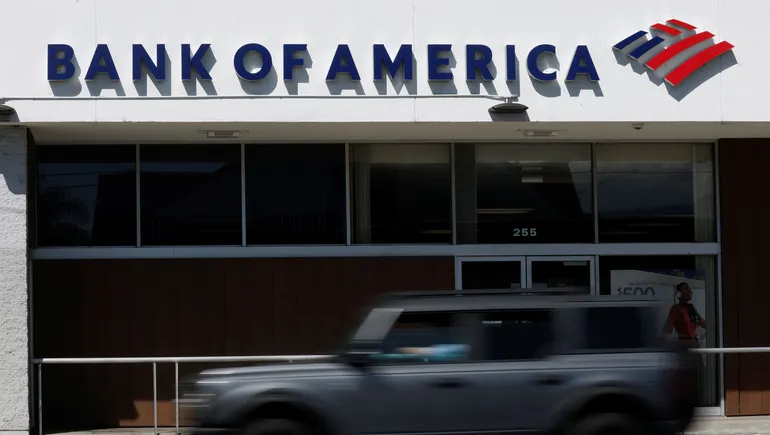
This "grow-from-within" strategy also functions as a risk-mitigation tool. By promoting from within, the bank preserves institutional knowledge and maintains a consistent corporate culture—an essential element when dealing with high-touch, long-term business clients.
The Role of AI in Efficiency and Speed
The competition is not just about the number of heads in chairs; it is about the "speed to market." In the world of small-business lending, the ability to process a loan application or provide a credit decision in hours rather than weeks is a significant competitive advantage.
Bank of America is currently integrating advanced artificial intelligence (AI) to streamline its credit departments. Miller highlighted a successful pilot in the "practice solutions" space, which serves professional clients like doctors, dentists, and veterinarians. The implementation of a new AI agent has reduced the time required to gather and process critical paperwork from three hours to just 15 minutes.
"We expect to put that across our entire business in 2027, because it’s working," Miller stated. The implication for revenue is clear: in a competitive bidding environment for commercial real estate or equipment, a business owner will inevitably choose the lender that can provide the funding fastest. "You might lose a deal because you’re not as fast as your competitor. We should be able to get more commitments to us, because we can get that done by the time the client needs it."
The "Human" Paradox in a Digital Age
Despite the reliance on AI and sophisticated digital platforms, Miller remains adamant that technology cannot replace the "across-the-desk" conversation. This creates a fascinating paradox for modern banking: the more digital the backend becomes, the more premium the human element becomes on the frontend.
When the bank enters a new market—such as Omaha, Nebraska—digital tools are necessary, but they are insufficient on their own. "We’ve got to build those relationships. It takes time," Miller said. "For all the good AI and all the technologies we have… it doesn’t take the place of those across-the-desk conversations."
This philosophy explains why the bank continues to prioritize in-person outreach. For BofA’s leadership, being "in the moment" with a client—understanding their specific local market challenges—is the only way to ensure long-term loyalty. This is especially true for the bank’s cash management and money movement platforms, which Miller views as a critical differentiator that very few competitors can successfully replicate at scale.
Implications for the Financial Services Sector
The ongoing battle for small-business bankers carries several long-term implications for the industry:
- Consolidation of Competencies: As banks like BofA and Wells Fargo pour resources into SME lending, smaller community banks may find it increasingly difficult to compete on speed and technology, potentially leading to further industry consolidation.
- Increased Focus on Specialized Verticals: By segmenting by industry (e.g., healthcare, tech, manufacturing), banks are becoming more "consultative" rather than purely transactional.
- The Rise of the "Hybrid" Banker: The future of the industry lies in professionals who are equally comfortable navigating an AI-driven credit platform as they are negotiating a complex loan agreement in a boardroom.
- Operational Efficiency as a Moat: The ability to use AI to slash underwriting timelines is no longer a luxury; it is becoming a fundamental requirement for survival in the business-banking segment.
Conclusion
As Bank of America continues to refine its approach, the strategy remains clear: provide a seamless, tech-enabled experience on the backend, while doubling down on human relationship-building on the frontend. Whether this combination will be enough to hit the 30% market-share target remains to be seen. However, in the high-stakes world of small-business banking, the message from Sharon Miller is unmistakable: the bank that wins the talent war and masters the balance between machine efficiency and human touch will ultimately control the future of the American business economy.