The Economics of Childhood: How One Family is Demystifying Personal Finance for the Next Generation

In an era defined by seamless digital transactions and the constant, algorithmic push of consumer marketing, the task of teaching children the value of a dollar has become increasingly complex. For many parents, money is a taboo subject, often shrouded in silence or anxiety. However, one Vermont-based family—known to their readers as the Frugalwoods—is taking a markedly different approach. By integrating financial literacy into the daily rhythm of farm life, they are transforming mundane outings like county fairs and grocery runs into rigorous, hands-on masterclasses in economics for their five- and seven-year-old daughters.
Main Facts: The "Family Money Philosophy"
At the core of their strategy lies what the parents refer to as their "Family Money Philosophy." While the name suggests a complex academic framework, the execution is intentionally stark and transparent. The philosophy rests on a binary division of financial responsibility:

- Parental Provision: The parents cover all essential needs. This includes shelter, clothing, healthcare, standard nutritional requirements, and educational expenses. Furthermore, the parents pay for entry into cultural and recreational venues, such as museums or county fairs.
- Child Discretionary Spending: Any desire that falls outside the scope of "essential" is the responsibility of the child. If a child wants a specific treat, a souvenir from a gift shop, or an item from a school book fair, they must procure it using their own capital.
This model is designed to demystify the adult world of commerce. By separating "needs" from "wants," the parents are teaching their children that money is not an infinite resource provided by magic, but a finite tool earned through labor and governed by the laws of supply and demand.
Chronology of Financial Literacy
The development of these lessons has followed a logical, developmental trajectory, starting from simple observation and moving toward sophisticated decision-making.

Phase 1: The Concept of Labor
The journey began with the children observing their parents’ professional lives. Through open discussion, the parents articulated the basic equation of modern labor: Work equals pay, and pay equals the ability to purchase necessities. By explaining that a car full of groceries is the tangible result of hours spent working, the parents removed the mystery behind the "swipe" of a credit card.
Phase 2: Earning Through Chore Equity
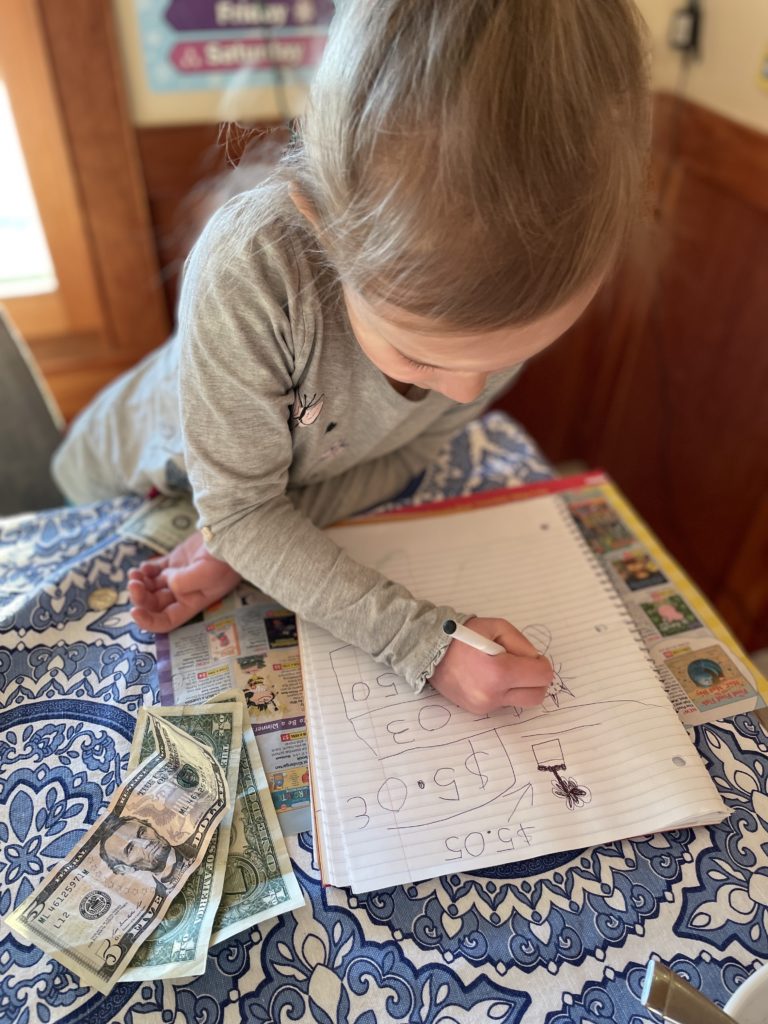
As the children grew, the family introduced a system of paid chores. These are not general household maintenance tasks—which remain an unpaid obligation of being a family member—but specific, "extra" tasks that hold a defined market value. Whether it is deep-cleaning kitchen cabinets or organizing specific household areas, the children engage in "fair market value" negotiations. If the children feel the compensation is too low, they are permitted to negotiate, teaching them the basics of contract bargaining.
Phase 3: The Reality of Debt
A pivotal moment in the children’s financial education occurred at a county fair, when one child attempted to purchase an inflatable unicorn priced at $13 while holding only $9. The parents allowed the transaction to proceed, providing a $4 loan. This introduced the concept of debt. The subsequent requirement to perform mandatory, non-negotiable chores to "pay off the loan" provided a visceral, real-world lesson: debt is a burden that consumes future time and freedom.
Supporting Data: The Mechanics of the "Bank of Parental Units"
To reinforce these lessons, the parents emphasize ownership. The children are responsible for their own wallets and the physical safekeeping of their earnings. This has led to critical "near-miss" scenarios—such as a misplaced wallet at a museum—which serve as high-stakes simulations for the necessity of personal responsibility.
The "Bank of Parental Units" is the next stage in this financial curriculum. While the current model focuses on "earn and burn"—where children spend most of what they make—the parents are preparing to introduce the concept of interest. By acting as a private bank, the parents intend to incentivize saving by paying interest on deposits, effectively teaching the children about the time value of money and the power of compounding.
Official Parental Perspective: Demystifying the "Adult World"
The parents maintain a firm stance on why this transparency is necessary. According to the mother, "Kids don’t go around thinking about the fact that adults are paid to do their jobs." By demystifying the process, the parents aim to eliminate the anxiety and shame often associated with money.

The goal is not to raise "money-obsessed" children, but rather to treat money as a neutral tool. They emphasize that money is not synonymous with status, self-worth, or happiness. By framing money as a tool—much like exercise, sleep, or nutrition—the family seeks to provide their children with the autonomy to manage their resources without being controlled by them.
Implications: The Long-Term Impact on Financial Health
The implications of this early-childhood economic education are profound. By allowing their children to experience the pain of a lost wallet or the frustration of working off a debt, the parents are building a foundation of financial resilience.

Critical Lessons Learned:
- Delayed Gratification: By forcing children to save for "wants," they learn the patience required to acquire items of value.
- Risk Management: Misplacing money provides an immediate, low-risk consequence that teaches the importance of asset security.
- Collaborative Economics: As seen in the farm-pizza-dessert incident, the children have begun to negotiate between themselves, realizing that sharing costs requires math, cooperation, and conflict resolution.
- The "Sting" of Debt: Understanding that debt is not just a number on a statement, but a commitment of future labor, is a lesson that many adults do not learn until they are deep in high-interest consumer debt.
As the children transition toward adolescence, the family’s approach suggests that they will be well-equipped to handle more complex financial tools, such as investment accounts and personal budgeting. The parents’ willingness to let their children "fail" in controlled environments—like the unicorn loan or the lost wallet—serves as a powerful buffer against the more catastrophic financial errors often made in young adulthood.
Ultimately, this Vermont family is demonstrating that financial literacy is not a subject to be taught from a textbook in high school, but a lived experience that begins with a child, a chore list, and the realization that the world operates on a system of value exchange. By prioritizing this education, they are gifting their daughters something far more valuable than a savings account: the confidence to navigate the economic world with competence and composure.