Beyond the Fable: Reimagining Leadership Through the Lens of Ruby Bridges and Barbara Henry
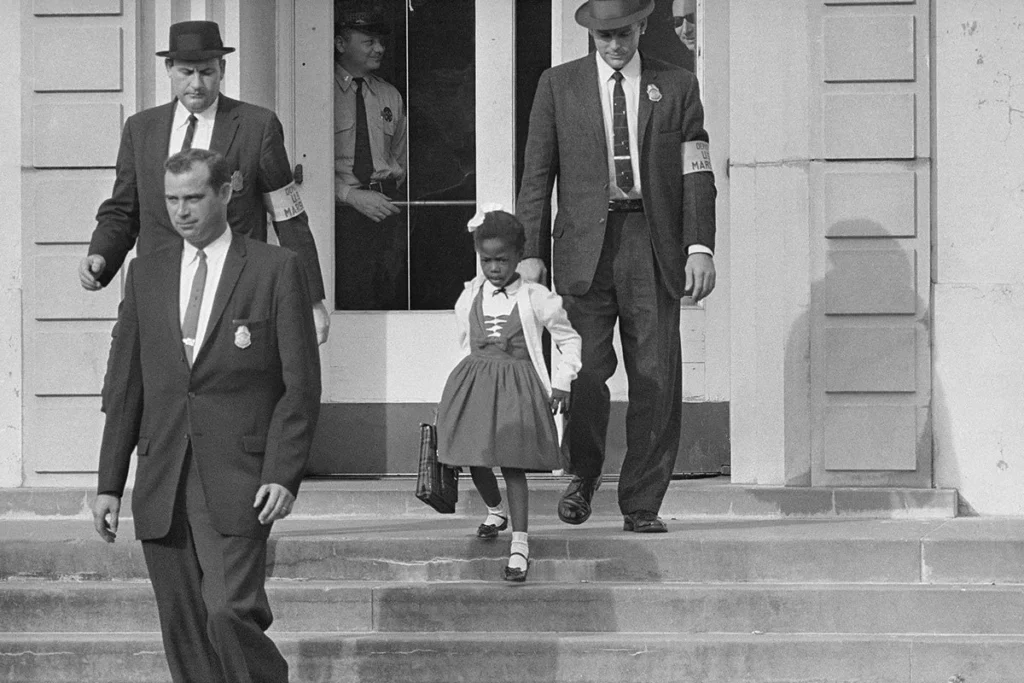
The image is etched into the collective American consciousness: a six-year-old Black girl, dressed in a pristine white dress and hairbow, walking stoically past a baying mob of segregationists, flanked by towering U.S. Marshals. The story of Ruby Bridges and her teacher, Barbara Henry, at William Frantz Elementary in 1960 New Orleans is frequently told as a sanitized civil rights fable—a simple, binary tale of "good" versus "evil" where individual heroism triumphs over systemic bigotry.
However, when we move beyond the mythic, singular archetype of the "heroic leader," we uncover a far more intricate reality. By examining the lived experiences of both Bridges and Henry, we can dismantle the Western-centric, patriarchal, and individualistic notions of leadership that have long dominated our professional and social discourse. True leadership, as it turns out, is rarely a solitary crusade; it is an act of connection, endurance, and quiet, persistent resistance.
The Myth of the Rugged Individualist
For decades, leadership training has been saturated with the image of the "Great Man"—the fearless, rugged individualist who moves through the world with absolute certainty, slaying dragons and single-handedly altering the course of history. As scholars like Laura Morgan Roberts, Anthony J. Mayo, David A. Thomas, and the late bell hooks have noted, these archetypes are deeply rooted in patriarchal and Eurocentric norms.
When we insist that leadership must look like a solitary figure on a pedestal, we inherently erase the decentralized, group-centered networks that drive genuine organizational change. Furthermore, the obsession with "certainty" creates a toxic environment where leaders feel pressured to project an aura of infallibility. This prevents them from admitting mistakes, building authentic trust, or fostering a culture where collective safety is prioritized.
True leadership is not the possession of a hero; it is the strength drawn from the person standing beside you. To understand this, one must look at the quiet, unvarnished history of Barbara Henry.
A Chronology of Conscience
Barbara Henry’s path to the Upper Ninth Ward was not paved with grand ambitions of leadership, but rather a commitment to professional integrity. Born in Boston in 1932, Henry was a product of the Girls’ Latin School, a public institution that prided itself on treating every student with respect, regardless of socioeconomic or racial background. This foundation proved vital as she navigated her early career.
After graduating, Henry sought to teach in the Air Force’s overseas schools. Despite a brief, disappointing redirection from Senator John Kennedy—who advised her to wait a year before reapplying—she eventually secured a post in France in 1958. There, she taught in a desegregated school for the children of U.S. Air Force personnel, an experience that challenged her and solidified her belief in integrated education.
Upon returning to the United States and moving to New Orleans with her husband, Hank, Henry sought to resume her career. When the New Orleans superintendent of schools offered her a position, he disclosed a critical detail: the school was to be desegregated. When he asked, "Would that make a difference to you?", Henry’s immediate, stunned rejection of the implication defined her trajectory.
On her first day in 1960, she faced a scene of chaotic hatred. As white parents pulled their children from the school, the facility fell silent. Henry walked through an irate mob to reach the school, where she found staff and faculty paralyzed by fear and anger. It was in this vacuum of moral courage that Henry became the sole teacher for a young Ruby Bridges.
The Reality Behind the Frame
The popularized version of the story often neglects the sheer, grueling persistence required of both teacher and student. Ruby Bridges, at age six, arrived daily to an empty classroom, knowing she was being ostracized by peers and adults alike.
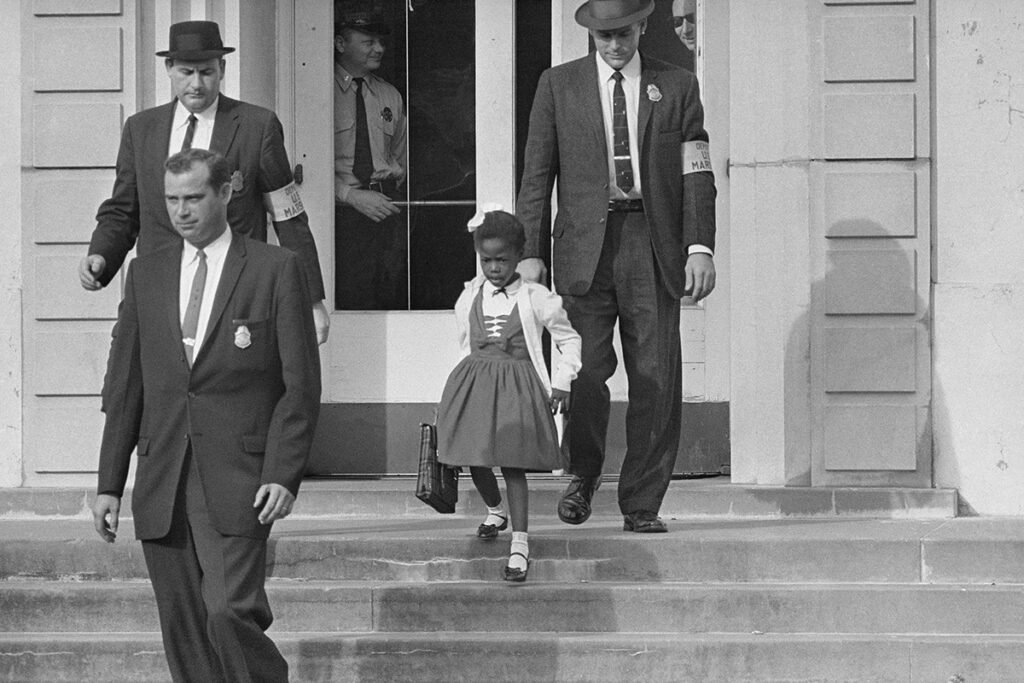
"She was strong," Henry recalls. "She would come every day, back to school, knowing that she wasn’t going to have playmates to talk to, but me."
The institutional reality was equally bleak. Henry eventually discovered that other students were being kept in the school’s basement by a teacher who refused to instruct a Black child. Driven by a refusal to accept this segregation, Henry intervened. She demanded the right to teach the students who had been hidden away. "In the afternoons, we desegregated the school, literally and factually," she explains.
This was not a "heroic" feat achieved with a speech or a grand gesture; it was a daily grind of pedagogical defiance. It involved constant, exhausting safety measures—U.S. Marshals stationed outside the door—and the complete isolation of being shunned by her colleagues.
The Human Cost of Segregation
To fully grasp the leadership dynamics of this era, one must acknowledge the consequences that the history books often gloss over. The cost of Ruby Bridges’ attendance was paid by her entire family. Her father lost his job; her grandparents were evicted from the Mississippi farm they had sharecropped for 25 years.
While the "Brave Ruby" story is a staple of school curriculum, the context of the "segregation academies"—private schools that bloomed specifically to maintain racial partition—is often absent. These academies were a direct response to the integration movement, showing that the battle was never just about a single classroom, but about the systemic preservation of power.
Implications for Modern Leadership
In a two-hour interview conducted in 2022, when asked if she identified as a leader, Barbara Henry—now in her 90s—remained humble. "No, I have never used that word myself," she stated. "I think probably I was one who was willing to take risks and be the first one to act, but I never saw myself as a leader."
However, her reflection on her career provides a vital correction to modern leadership theory. "You really are a leader when you’re a teacher. You are in a classroom facing 30 or more students. You definitely have to be."
This reveals a profound truth: Leadership is not a personality trait or a title; it is a series of decisions made in the face of ambiguity. For modern leaders—whether in non-profits, corporate boardrooms, or community organizing—the Henry-Bridges story offers three primary lessons:
- Redefining Failure and Success: We must abandon the need for "clean" or "rapid" victories. Leadership is often marked by partial successes and the endurance of long, difficult processes.
- The Necessity of Connection: The strength of the leader is found in the connection to the person next to them. Without the bond formed between Henry and Bridges, the systemic pressure would have been unbearable.
- Humanizing the Narrative: We must strip away the superhero myths. Leaders are human beings defined by their traumas, strengths, and the necessity of navigating uncertainty. When we allow leaders to be "human," we make it possible for them to build trust and foster resilience.
Conclusion: A Road Map of Humanity
The path of leadership is not a straight line toward a triumphant resolution. It is a complex, often jagged road map filled with vagaries. By moving away from the "fables" of leadership—which demand that we be perfect, solitary, and certain—we can move toward a model of leadership that is grounded in the full, messy, and beautiful human experience.
As Barbara Henry and Ruby Bridges demonstrate, true leadership is found in the daily choice to show up, to educate, to protect, and to persist. It is found in the quiet refusal to accept the status quo, even when you are the only one standing in the room. When we share these unredacted stories, we find that we are not lacking in leadership; we are simply looking for it in the wrong places. We are not alone in our challenges, and in that shared human experience, we find the only template for true progress.