Navigating the Nadir of Multilateralism: The High-Stakes Race and Reform Roadmap for the Next UN Secretary-General
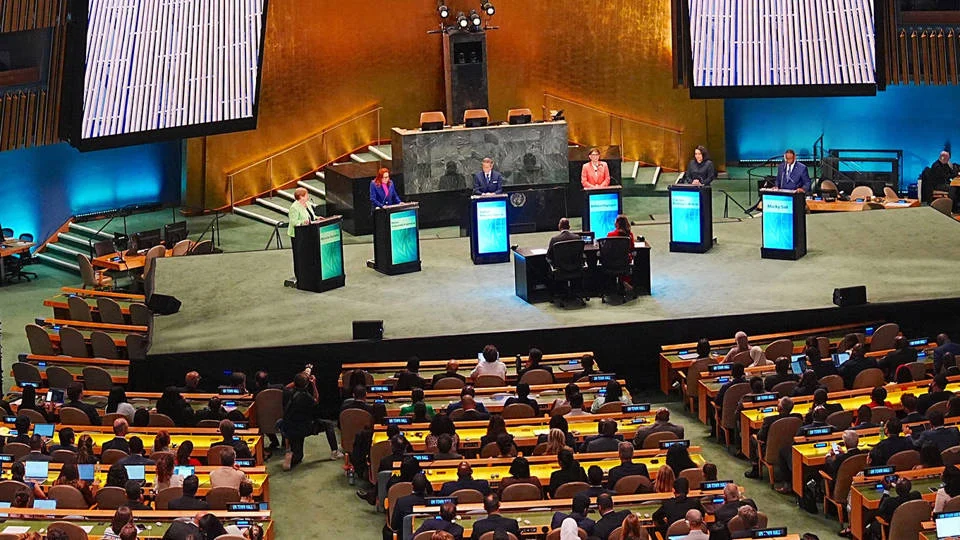
As the postwar global order fractures under the weight of surging geopolitical rivalries, regional conflicts, and shifting global power dynamics, the United Nations faces an existential crossroads. When the next UN Secretary-General steps into office in January 2027, they will assume the most prominent position in multilateral governance at a time when multilateralism itself is arguably at its lowest ebb.
Far from being a purely administrative handover, the transition offers a generational opportunity. To rebuild international trust and steer global governance through the complexities of the 21st century, the incoming leader must view the current institutional crisis not as an insurmountable roadblock, but as an urgent catalyst for fundamental reform. Navigating this multipolar reality will require instilling a renewed sense of purpose, overhauling internal structures, and demanding greater accountability and commitment from member states.
Main Facts
The race to succeed current UN Secretary-General António Guterres is well underway, setting the stage for a pivotal leadership transition in global diplomacy.
- The Succession Timeline: António Guterres’s second and final five-year term concludes at the end of 2026. The newly selected Secretary-General will officially take office on January 1, 2027.
- Regional Rotation: In accordance with the UN’s unwritten principle of regional rotation, the next chief is widely expected to hail from the Latin American and Caribbean region.
- The Contenders: Out of an initial field of seven hopefuls, recent UN Security Council straw polls have narrowed the race significantly. Rebeca Grynspan of Costa Rica and Carolyn Rodrigues Birkett of Guyana have emerged as the leading frontrunners. However, political analysts note that the absence of a runaway consensus candidate leaves the door open for late entrants.
- The Mandate: The incoming leader will inherit a sprawling organization of approximately 120,000 personnel grappling with severe budget constraints, low internal morale, and deep-seated skepticism from member states regarding the UN’s efficacy in resolving contemporary crises.
Chronology of the Leadership Transition and Reform Path
The path to the 2027 leadership transition follows a carefully choreographed diplomatic process intertwined with ongoing institutional evaluations:
- 2024–2025 (The Groundwork): Think tanks, academic institutions, and multilateral coalitions—such as the Bogotá-based Cepei—begin convening regional consultations. Scholars, former diplomats, and policymakers meet worldwide to draft the priorities and agendas necessary to modernize UN leadership.
- Mid-2025 (The UN80 Initiative): The UN advances its internal review framework, the UN80 Initiative, aimed at improving institutional efficiency, auditing legacy mandates, and proposing structural realignments.
- Late 2025 to Mid-2026 (The Straw Polls): The UN Security Council conducts a series of straw polls to test member states’ support for declared candidates. These votes progressively whittle down the candidate pool while reinforcing the expectation of a Latin American or Caribbean appointment.
- Late 2026 (Formal Selection): The Security Council is scheduled to formally recommend a candidate to the UN General Assembly, which will then elect the ninth Secretary-General.
- The First 100 Days (January–April 2027): The critical window for the new Secretary-General. During this period, the leader must implement a transformative 100-day roadmap, signaling clear political intent, restructuring the senior leadership team, and establishing new baselines for donor engagement and mandate execution.
Supporting Data and Context
Operating within strict institutional limitations, the UN Secretary-General relies less on direct enforcement power and more on political capital, moral authority, and skilled diplomacy. Data gathered from multilateral advisory groups and administrative bodies highlight the scale of the challenge:
- 120,000 Personnel: The approximate global workforce of the United Nations, currently operating under considerable strain due to impossibly tight budgets and administrative bloat.
- The Donor Dependency Paradox: A significant portion of the UN’s operational funding relies on voluntary, earmarked contributions originating from a small, concentrated group of major donor states. This dynamic frequently skews the organization’s governance away from universal priorities toward donor-specific agendas.
- Proliferation vs. Execution: Over decades, member states have piled thousands of overlapping mandates onto the UN system without corresponding resource increases. The sustainable development goals (SDGs) and international climate agreements remain structurally underfunded and bottlenecked by implementation gaps.
- Multipolar Power Dispersion: Unlike the bipolar Cold War era or the unipolar post-Cold War period, today’s global landscape features multiple competing power centers. Tokenistic engagement by traditional Western or major powers no longer suffices; influence is widely dispersed across regional organizations, middle powers, and non-state actors.
Official Responses and Stakeholder Perspectives
The international diplomatic community has offered varied perspectives on what the next Secretary-General must prioritize to revive the organization’s credibility.
Perspectives from Global Think Tanks and Civil Society
Multilateral research organizations, including Cepei, emphasize that the incoming Secretary-General must pivot away from thematic expansion and focus strictly on execution.
"The next secretary-general should focus on delivering consistent messaging and on using the largely predictable UN calendar to achieve some early wins," notes a recent policy advisory compiled from global consultations. "They should begin with political clarity… complete existing agendas, such as the Sustainable Development Goals and climate agreements; and shift the focus from proliferation to execution."
Experts argue that institutional reform cannot succeed if it views the UN’s failures purely as administrative mismanagement. Instead, stakeholders stress that many operational bottlenecks stem directly from the political choices, shrinking consensus, and shifting priorities of UN member states. Consequently, the transition agenda must demand greater responsibility from capitals around the world, rather than placing the burden of reform solely on the Secretariat.
Perspectives on Funding and Governance
Financial transparency advocates within the UN ecosystem argue that the organization’s funding model is broken. By relying heavily on earmarked funds, the UN compromises its institutional neutrality. Analysts suggest that the next chief must aggressively pursue unearmarked voluntary funding frameworks and create transparent, project-specific funding windows that do not distort broader governance structures.
Implications for Global Governance and the Future
The success or failure of the next UN Secretary-General will carry profound implications for the architecture of international relations over the next several decades.
1. Rebuilding Trust Through Internal Courage
To restore internal morale and external credibility, the incoming leader must assemble a senior management team defined by political courage, independent judgment, and a willingness to withstand external criticism. Appointing leaders committed to active mediation will signal a departure from bureaucratic stagnation and a return to proactive diplomacy.
2. Strategic Differentiation Over Institutional Withdrawal
At the country level, the UN faces difficult choices regarding its footprint. Rather than retreating from the field, the next Secretary-General must adopt a principle of differentiation. This means recognizing where the UN holds a comparative advantage—specifically in universal legitimacy, norm-setting, and "good offices" mediation—while consciously delegating localized service delivery to regional and national actors better equipped to operate on the ground.
3. Tackling Frontier Challenges: Climate and AI
Beyond traditional peacekeeping and humanitarian relief, the new chief will inherit a formidable docket of existential threats. Geopolitical gridlock currently impedes consensus on pressing transnational issues, notably long-term climate action and the global regulation of artificial intelligence. If the UN fails to adapt quickly to a multipolar reality where influence is decentralized, it risks sliding further into irrelevance, deepening the global legitimacy crisis.
Conclusion
The journey ahead is fraught with systemic hurdles, but it is precisely this state of crisis that creates a window for historic realignment. By demonstrating decisive management, fiscal pragmatism, and unflinching political clarity during their first 100 days in office, the next UN Secretary-General can lay the essential foundation for a reinvigorated, resilient, and fit-for-purpose United Nations.