Beyond the Ballot: Why Philanthropy Must Pivot from Election-Cycle Funding to Community Empowerment
In the high-stakes theater of American politics, the arrival of a midterm election year often signals a familiar ritual among the philanthropic elite: a frantic, last-minute influx of capital aimed at "saving democracy." As the nation faces what many observers describe as a systemic freefall, private foundations are once again pouring resources into voter turnout initiatives and policy advocacy. However, a growing chorus of community leaders and social equity experts is issuing a stark warning: by viewing democracy through the narrow lens of election cycles, the philanthropic sector is failing to address the foundational rot that has left millions of citizens disillusioned and disengaged.
The current strategy—a reactive, cyclical approach—ignores the reality that for many marginalized groups, "democracy" has never functioned as a guarantor of prosperity or security. True democratic resilience, experts argue, cannot be bought in a two-year sprint; it must be cultivated through sustained, long-term investment in the communities that reflect the true diversity of the American landscape.
The Chronology of a Misguided Strategy
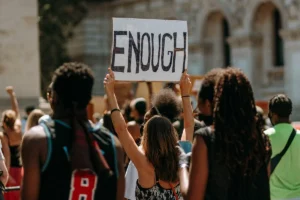
To understand the current crisis in funding, one must look back to the watershed year of 2020. Following the national racial reckoning, the philanthropic sector experienced a moment of genuine introspection. For a brief period, capital flowed toward Black-led nonprofits and community organizations that had been historically excluded from institutional support. There was an industry-wide recognition that structural racism was a primary driver of democratic decline.
However, the momentum proved fleeting. Recent data, including reports from the Center for Cultural Innovation (CCI), confirms that the post-2020 funding surge has largely evaporated. As the urgency of the latest "most important election of our lifetime" takes hold, funders have pivoted away from community-driven infrastructure and back to traditional, top-down pro-democracy efforts. This regression suggests that the philanthropic sector continues to operate under a false binary: the belief that one must choose between strengthening democratic institutions and investing in community-level empowerment.
The Disconnect: Why Civic Engagement Wanes
The widening turnout gap between Black and White voters is not merely a byproduct of legislative changes or the systematic dismantling of the Voting Rights Act. It is a symptom of a deeper, broken social contract. When the governing apparatus only engages with marginalized communities during the months leading up to an election, while providing no tangible improvements to their daily lives during the intervening years, the value of the vote is inevitably diminished.
When democracy fails to deliver concrete results—whether in housing stability, economic opportunity, or land use—civic participation is often the first casualty. The "turnout gap" is, in effect, a protest against a system that feels disconnected from the material reality of the governed. For philanthropy to repair this, it must stop treating community investment as a secondary activity and recognize it as the bedrock of a functioning pluralistic society.
Supporting Data and The "False Binary"
The urgency of the current political moment is undeniable. Yet, the assumption that community-building is a distraction from the defense of democracy is mathematically and sociologically flawed. Authoritarian movements succeed precisely because they exploit the isolation and alienation of disenfranchised populations.
Research indicates that individuals gain and exercise power only when they feel a sense of belonging at a scale they can navigate. When philanthropic dollars are redirected away from local, community-led initiatives in favor of national campaign-adjacent projects, it leaves citizens further isolated. By contrast, investments in local, collective ownership—such as community land trusts, cooperative housing, and local cultural spaces—provide the infrastructure for self-governance.
When a community is empowered to manage its own data centers, negotiate local housing contracts, or control land-use decisions, they are not just "beneficiaries" of democracy—they are practitioners of it. This practice, scaled up, is the most robust defense against the erosion of civic norms.

The Case for a Structural Shift in Philanthropy
For philanthropy to move beyond the current impasse, a fundamental shift in strategy is required. Leaders in the sector, such as those at the Center for Cultural Innovation, propose a three-pronged approach to realigning capital with democratic health:
1. Radical Listening: Asking, Not Assuming
Philanthropic institutions must move away from top-down mandates and embrace a model of direct inquiry. By engaging with local mutual aid networks, cultural land trusts, and neighborhood leaders—rather than just large, traditional 501(c)(3) entities—funders can gain a more accurate picture of community needs. This process of community input is, in itself, an exercise in democracy.
2. Diversifying the "Pro-Democracy" Portfolio
There is a pressing need to acknowledge that traditional nonprofits are not always synonymous with the communities they claim to represent. While these organizations perform vital service work, they are often prone to the same strategic shifts and funding pressures that hinder long-term impact. Real impact requires funding alternative structures: collectives, grassroots organizers, and groups that are embedded in and directly accountable to the residents they serve.
3. The Power of Unrestricted Giving
The practice of project-restricted, time-limited funding creates a cycle of dependency and instability. When a funder dictates exactly how money must be spent, they inadvertently signal a lack of trust in the community’s judgment. Conversely, research consistently shows that unrestricted giving accelerates impact. It allows organizations to be agile, responding to the specific, evolving needs of their constituents—whether that involves food security, voter education, or infrastructure development.
Implications for the Future of American Democracy
The danger of the current trajectory is that the United States will continue to face an existential threat every two years, never addressing the underlying structural neglect that makes the system vulnerable in the first place. If democracy is to be "more than a name," it must deliver tangible results for those who have historically been excluded from its promise.
The implications for the philanthropic sector are clear: either foundations continue to participate in the cyclical, performative funding that accompanies election years, or they commit to the difficult, long-term work of building a pluralistic democracy from the ground up.
Healing a broken social contract cannot be accomplished on the timeline of a two-year election cycle. It requires a sustained, multi-decade commitment to empowerment. When funders provide deep, consistent investment, they provide the foundation for a life of active, engaged citizenship.
As we look toward the midterms and beyond, the goal should not merely be the protection of existing institutions. The goal must be the creation of a vision of democracy that is actually felt by every resident. We must move beyond the transactional nature of the ballot box and invest in the human architecture of a truly inclusive society. Only then can we hope to replace the myth of our democracy with a sustainable, functional reality.
The question for every donor and foundation head remains: are you funding the next election, or are you funding the next century of democratic participation? The answer to that question will determine whether our democracy continues to retreat into the shadows of plutocracy or finally emerges as a promise kept for all.