The Quiet Giant: Insight Partners’ Deven Parekh on AI, Liquidity, and the Future of Venture Capital
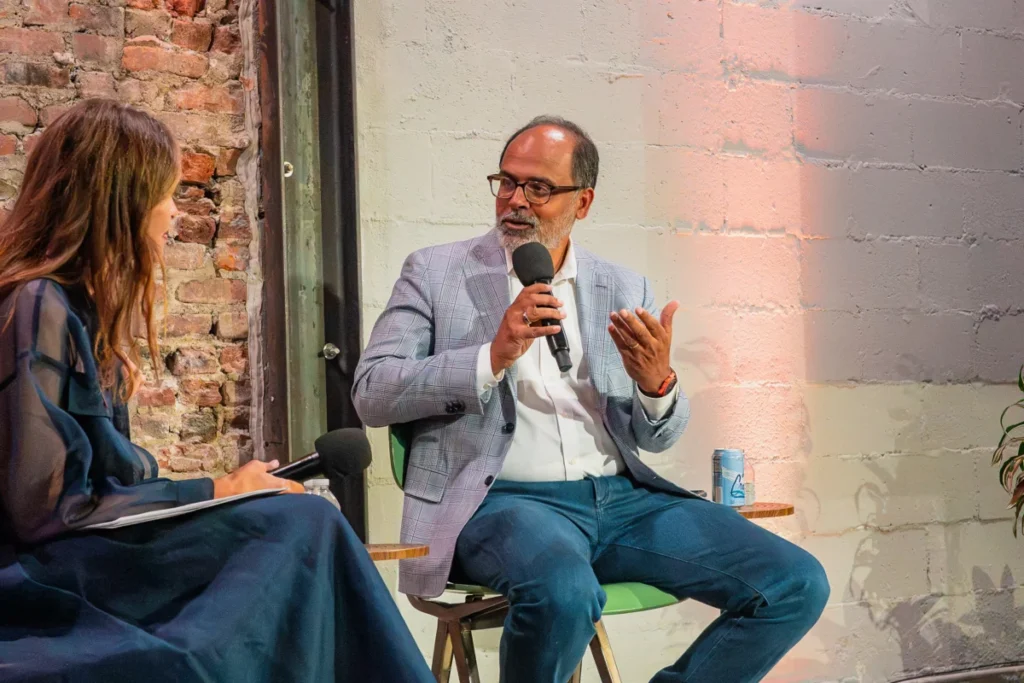
For 26 years, Deven Parekh has navigated the high-stakes world of venture capital as a managing director at Insight Partners. While the industry has become increasingly defined by "loud" investors—those who dominate the discourse on X (formerly Twitter) and leverage personal podcasts to shape market sentiment—Parekh and his firm have remained conspicuously quiet.
With $90 billion in assets under management, Insight Partners operates as a heavyweight in the venture ecosystem, maintaining stakes in industry pillars like Databricks, OpenAI, and Anthropic. Yet, the firm’s strategy remains rooted in performance over posture. At a recent TechCrunch StrictlyVC event in New York, Parekh offered a rare, candid look at the firm’s philosophy, the shifting landscape of artificial intelligence, and the structural pressures currently facing venture capital.
The AI Dichotomy: Risk vs. Revolutionary Potential
The conversation opened with a pressing question regarding the recent public resignation of an Anthropic researcher who warned of the existential risks posed by self-improving AI. While some voices in Silicon Valley have been dismissive of these alarms, Parekh offers a nuanced, pragmatic perspective.
"Keith [Rabois] and I probably don’t agree on politics, but we agree on this," Parekh noted. He acknowledged the potential for bad actors to weaponize open-source models, but argued that such risks are overshadowed by the societal benefits of AI-driven innovation. Specifically, he pointed to the pharmaceutical industry, where AI is drastically reducing drug development cycles, and healthcare, where predictive diagnostics are already saving lives.
As a board member at NYU Langone, Parekh has seen these applications firsthand. "We can look at 50 million patient records and tell someone walking in for something unrelated that they have a 25% chance of a heart attack," he said. For Parekh, the math is simple: the aging global population and the shortage of medical professionals make AI not just an opportunity, but a necessity for scaling healthcare. Like every technological leap before it, from aviation to drone warfare, he views AI as a manageable risk that will ultimately drive a massive increase in global living standards.
The Strategy of Silence: Why Insight Stays Out of the Spotlight
When asked about Insight’s comparatively low profile despite its massive $90 billion footprint, Parekh was blunt. He expressed skepticism regarding the modern trend of VCs positioning themselves as polymath experts on everything from epidemiology to geopolitics.
"Every venture capitalist thinks they’re an expert on everything now," Parekh observed. "Our attitude has been: Let the portfolio do the talking." Insight’s mandate, as he describes it, is to support founders. While the firm communicates enough to maintain relevance in a competitive deal-making environment, he insists that their reputation should be tethered to performance rather than the personal branding of the partners.
Navigating the Market: From Buyouts to Early-Stage Bets
Insight Partners is known for its versatility, operating across early-stage, growth, and buyout strategies. However, Parekh emphasized that their allocation is "temporal, not fixed."
The current macroeconomic climate has significantly altered the firm’s playbook. With high interest rates and uncooperative debt markets, the buyout landscape has cooled considerably. "We haven’t done a major buyout since 2024," Parekh noted.
Simultaneously, the firm has recalibrated its venture approach. With valuations rising at a pace reminiscent of the 2021 bubble, Parekh expressed concern that follow-on rounds are currently providing little in the way of risk reduction. "You’re paying more without reducing risk," he explained. The firm’s logical response has been to pivot toward earlier-stage investments. By writing smaller checks—$20 million to $25 million compared to the massive $500 million tickets of the past—Insight can double down on winners while mitigating the potential downside of a portfolio company failing. He cites the cybersecurity firm Wiz as a prime example, where a series of incremental checks led to significantly higher returns than a one-time, massive deployment would have yielded.
The Geography of Talent and the "Legora" Lesson
The debate over whether San Francisco remains the sole epicenter of the tech world continues to rage, but Parekh offers a sophisticated middle ground. He notes that while talent for "AI infrastructure" is heavily concentrated in the Bay Area—so much so that his own son recently relocated there to pursue a VC career—other verticals are more dispersed.
For instance, the talent for financial services AI is largely concentrated in New York, as evidenced by companies like Ramp. This verticalization allows for a more geographically diverse investment strategy. When asked about losing the deal for the buzzy AI legal-tech firm Legora to General Catalyst, Parekh took it in stride. "It’s a big world; we don’t need to win every deal," he said, acknowledging that sometimes competitors simply sell their value proposition more effectively.
The "Rival" Paradox: Investing in OpenAI and Anthropic
A once-taboo practice in venture capital—investing in direct competitors—has become a hallmark of the current AI boom. Insight maintains positions in both OpenAI and Anthropic, a strategy Parekh frames as a logical evolution of the market.
"Once you’re at a later stage, off the board, not driving governance, you’re just buying a great stock," he explained. As these companies require massive capital infusions ranging from $30 billion to $100 billion, they can no longer mandate exclusivity. While Insight maintains strict information-sharing restrictions during Series A and B rounds to protect founder interests, the scale of current AI funding necessitates a departure from traditional "zero-sum" investment mentalities.
Liquidity and the Responsibility to LPs
Perhaps the most critical takeaway from Parekh’s session was his stance on the "liquidity crisis" currently gripping the industry. Many funds that raised record-breaking capital between 2021 and 2023 have failed to return cash to their Limited Partners (LPs).
"Many first- and second-time funds won’t raise a next fund because they didn’t prioritize liquidity," Parekh warned. He advocates for a disciplined approach to secondary sales and strategic exits. Insight has returned more than $20 billion to its LPs over the last two years alone. He urges founders and fund managers alike to view the market with sobriety: "If Anthropic’s going to triple from here, fine—take your basis out anyway."
Regarding the looming IPOs of companies like Anthropic and OpenAI, Parekh sees them as necessary milestones for the industry. While these massive, multi-trillion-dollar market cap exits are impressive, he cautions that they set a bar that may be difficult for the next tier of startups to meet. "Eventually even these companies become normal-growth companies, and you need public markets for that," he said.
Looking Ahead: The Future of the VC Boom
As the interview drew to a close, Parekh touched upon the cyclical nature of venture capital. He lamented the tendency of LPs to pile into markets at the exact moment they should be pulling back. "That boom-bust cycle is hard to avoid," he said.
However, for a firm like Insight Partners, which is currently on its 13th fund, the focus remains on the long horizon. Whether through massive strategic buyouts like the $7 billion exit of Armis to ServiceNow or patient, early-stage nurturing of emerging platforms, Parekh’s philosophy is anchored in the belief that while the market may be frothy, the underlying value created by the right founders in the right markets remains the only true north.
As the industry prepares for a potential IPO wave over the next 18 months, Parekh’s quiet, performance-driven approach serves as a necessary counterweight to the noise, reminding us that in the world of venture capital, the math eventually catches up to the hype.