Beyond the Ballot: Why Philanthropy Must Pivot to Community Empowerment to Save Democracy
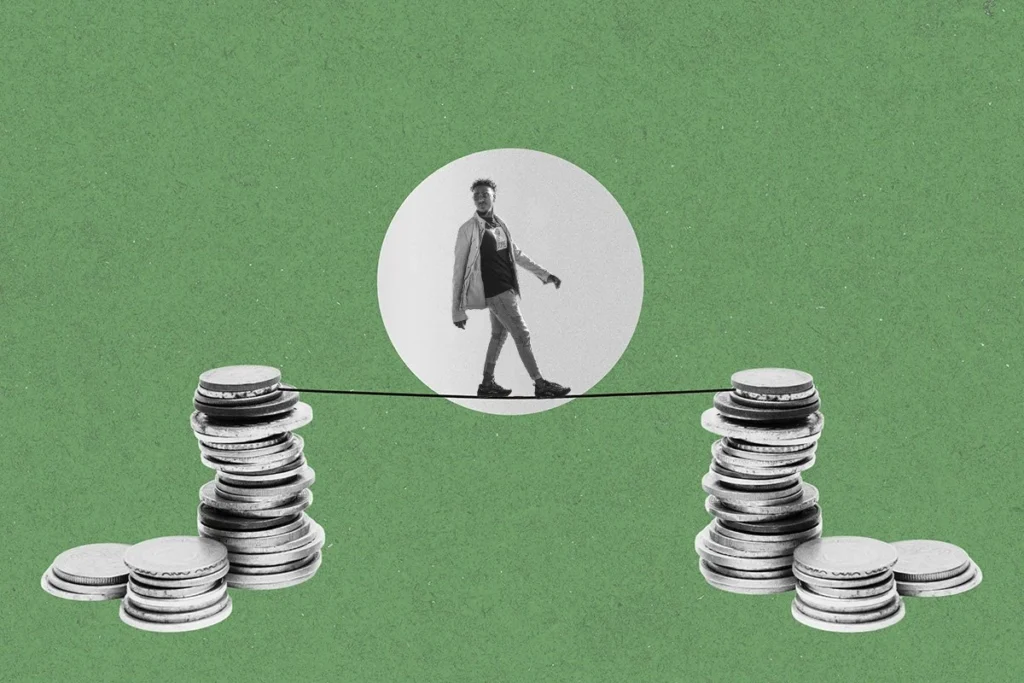
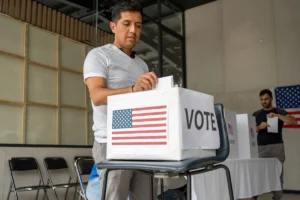
In the high-stakes theater of American politics, the biennial ritual of the midterm elections often triggers a familiar, frantic response from the philanthropic sector. As indices of democratic health continue to flash red, private foundations rush to pour capital into voter protection, election administration, and media advocacy. However, a growing chorus of critics—including veteran nonprofit leaders—argues that this "election-cycle myopia" is not only failing to address the root causes of democratic decay but is actively widening the chasm between the governed and the governing.
The central argument is compelling: democracy in the United States has, for many marginalized populations, remained a theoretical promise rather than a lived reality. By viewing "democracy" as an abstract set of institutions to be defended every two years, rather than a tangible contract that delivers prosperity and agency to communities, philanthropy is missing the forest for the trees.
The Myth of the "Most Important Election"
For decades, the standard philanthropic playbook has prioritized reactive, short-term interventions. When the 2020 racial reckoning sparked a temporary surge in funding for Black-led nonprofits and community-based organizations, many observers hoped it marked a paradigm shift toward structural investment. That hope, however, has largely been dashed.
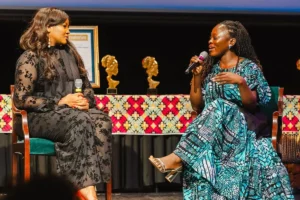
Recent data confirms a disheartening trend: the post-2020 funding surge has largely evaporated. As the CEO of the Center for Cultural Innovation (CCI), I have witnessed firsthand a regression where foundations are pivoting away from community-fueled, grassroots solutions and returning to traditional, top-down "pro-democracy" efforts. This shift is often justified by a false binary: the idea that a funder must choose between strengthening democratic infrastructure and supporting local community development.
In reality, the two are inextricably linked. A democracy that does not provide tangible, daily results for its citizens—such as affordable housing, local economic agency, and community safety—will inevitably face a crisis of participation. When voting feels disconnected from life outcomes, the civic engagement gap grows. This is not a failure of the electorate; it is a failure of the democratic contract.
Chronology of a Failed Promise
To understand the current crisis, one must look at the trajectory of philanthropic focus over the last decade:
- 2013–2019: Philanthropy largely focused on institutional advocacy and traditional policy reform. During this period, the Supreme Court’s decision to gut the Voting Rights Act set the stage for systemic disenfranchisement, yet philanthropic responses remained largely siloed from community-building efforts.
- 2020–2021: The racial justice movement forced a momentary but significant pivot. Foundations pledged billions toward racial equity, with an emphasis on Black-led organizations and community-led solutions. This period saw a rise in trust-based philanthropy and unrestricted funding models.
- 2022–2024: As political polarization intensified, the focus drifted back toward "defensive" democracy funding. Community-specific investments were deprioritized in favor of electoral initiatives, leading to a "funding cliff" for many of the organizations that had been empowered just two years prior.
- 2025–Present: We are currently in a cycle of regression. Research confirms that the gains of 2020 have not been institutionalized, leaving many community groups struggling to sustain the infrastructure they built during the brief period of intense donor interest.
Supporting Data: The Erosion of Civic Trust
The empirical evidence linking civic participation to community well-being is undeniable. According to data from the Brennan Center and various academic studies, the turnout gap between White and Black voters has steadily widened over the past twenty years. While legal barriers are a factor, researchers argue that a significant portion of this decline stems from a deep-seated perception that political processes are unresponsive to the needs of marginalized communities.
When communities are only engaged by political entities during the heat of an election cycle, and ignored during the intervening years, the incentive to participate diminishes. Conversely, communities that possess "institutional memory"—that is, organizations that are embedded, accountable, and consistently funded—show higher levels of resilience and civic engagement.
Furthermore, economic data suggests that when communities have collective control over local resources—such as land trusts or participatory budgeting—they are more likely to engage in local governance. This "hyper-local" democracy serves as the bedrock upon which national democratic participation is built.

Implications: A New Framework for Investment
The current strategy of "election-cycle funding" is a form of plutocratic thinking, even when dressed in the language of democracy. To reverse this, philanthropy must adopt a long-term, structural approach. The following three pillars represent the necessary evolution for foundations seeking to move beyond the binary of "democracy vs. community."
1. Directing Capital to the Locus of Change
Philanthropy must stop dictating solutions from the boardroom and start asking communities what they need to thrive. This requires bypassing traditional, often exclusionary, philanthropic pipelines. By engaging with local mutual aid networks, cultural land trusts, and community organizers, funders can gain a clearer picture of the barriers to participation. When residents hold the power to shape their own environments—such as having a say in the placement of data centers or the development of affordable housing—they are not just "voting"; they are practicing self-governance.
2. Moving Beyond the 501(c)(3) Proxy
While 501(c)(3) organizations perform vital work, they are not always the best proxies for community voice. Many are service-oriented, not representative-oriented. Funders should increase support for grassroots collectives, neighborhood councils, and alternative governance structures that are directly accountable to local residents. These entities are the true bulwarks against authoritarianism, as they foster the community belonging that prevents isolation and radicalization.
3. The Power of Unrestricted Giving
The insistence on project-restricted, time-limited funding is a manifestation of institutional distrust. Research consistently shows that unrestricted giving accelerates impact and allows organizations to remain agile. For democracy to be a living, breathing system, the groups on the ground must have the flexibility to address the immediate needs of their neighbors—whether that means feeding families today or organizing a town hall tomorrow. Trusting communities with capital is the ultimate act of democratic faith.
Official Responses and the Road Ahead
In discussions with philanthropic leaders, the defense for short-termism often hinges on the urgency of the "existential threat." However, this defensive posture is precisely what keeps the sector trapped in a loop. By focusing exclusively on the next election, donors ensure that the structural rot in our democracy—disenfranchisement, alienation, and inequality—is left to fester.
The path forward requires a radical "north star": the realization that democracy is not merely a mechanism for selecting leaders, but a system for ensuring that all people have a meaningful stake in their collective future.
The midterm elections will pass, as they always do. The question for the philanthropic class is whether they will emerge from this cycle having learned that their resources are most potent when they serve as a catalyst for community self-determination. If we want a democracy that can withstand the pressures of the 21st century, we must stop viewing community investment as a secondary issue. We must recognize it as the primary work of building a resilient, inclusive, and truly democratic nation.
Healing cannot be scheduled. It requires a sustained commitment to the people who have been left behind. Only when we bridge the gap between the ballot box and the kitchen table will we truly see the emergence of a democracy that delivers for everyone.