Sacred Ground, Sustainable Future: How a Historic Salem Church is Pioneering Community Energy
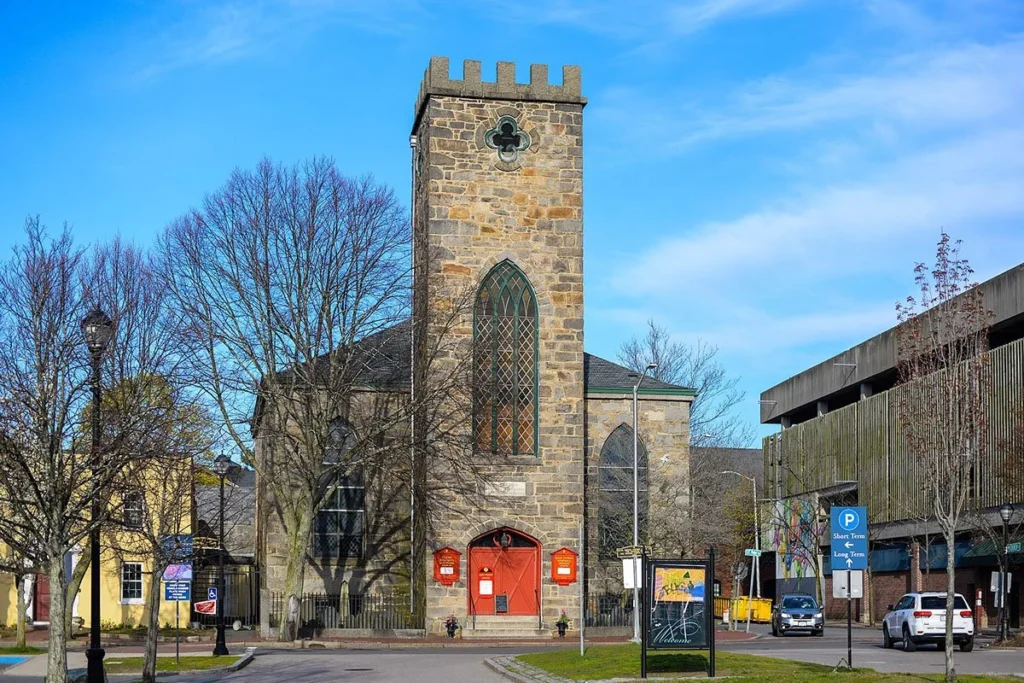
In the heart of Salem, Massachusetts, a centuries-old institution is undergoing a transformation that is as much about spiritual resilience as it is about cutting-edge technology. St. Peter’s–San Pedro Episcopal Church, a granite monument to history founded in 1733, has become the unlikely engine of a radical, multi-million dollar renewable energy initiative. What began as a desperate response to a staggering utility bill has blossomed into the "Heaven and Earth Project," a neighborhood-scale geothermal and solar network that aims to bridge the gap between historic preservation and the urgent, modern demands of climate change.
The Catalyst: A Financial Wake-Up Call
The spark for this ambitious transition occurred in December 2022. For years, the church had operated under the impression that its heating costs were manageable, thanks to what turned out to be a malfunctioning gas meter that had been under-reporting usage. When the local utility finally replaced the device, the reality of the building’s energy inefficiency was laid bare overnight.
"It went from $100 a month to $3,000 a month overnight," recalls Reverend Nathan Ives, who has served as the rector of the bilingual congregation since 2018. "Too much longer of this, and we’ll not be able to heat the place in the wintertime."
This financial shock served as the impetus for a broader, more existential reflection. For a church that serves a predominantly Latino congregation from the local "El Punto" (The Point) neighborhood, the rising cost of energy was not just a line item in a budget—it was a threat to the church’s ability to serve its community. Recognizing that climate change disproportionately impacts low-income populations, Reverend Ives began to view the church’s transition to green energy as a moral imperative.
Chronology of a Community Vision
The path from a broken gas meter to a district-scale energy network has been defined by rapid planning and intense community engagement.
- December 2022: The "meter shock" incident forces the church leadership to confront unsustainable heating costs.
- Early 2023: Initial discussions begin regarding solar installation on the church’s Parish Hall. These conversations quickly evolve into a more ambitious, neighborhood-wide geothermal concept.
- 2023–2024: The "Heaven and Earth Project" takes shape. Partnerships are solidified with HEET (a Boston-based nonprofit specializing in gas-to-geothermal transitions), engineering firms, and the City of Salem.
- December 2024: The project completes a formal feasibility study, mapping a 1.25-mile network connecting over 20 buildings, including public housing, commercial properties, and major cultural landmarks like the Peabody Essex Museum and the Salem Witch Museum.
- Present Day: The project is in the fundraising and governance phase, with the church actively engaging local residents in bilingual town halls to determine the rollout schedule.
The Engineering Behind the "Heaven and Earth"
The project’s moniker—Heaven and Earth—is a literal description of its dual-pronged approach. The "Heaven" component involves rooftop solar panels and battery storage installed on the church’s Parish Hall, designed to provide uninterruptible, clean power. This ensures that the church remains a "climate resilience hub," a safe harbor where community members can shelter during extreme weather events or grid failures.
The "Earth" component is more complex. It involves the construction of a thermal energy network—a series of pipes buried beneath the streets of Salem. This system will circulate a mixture of water and antifreeze, connecting to hundreds of boreholes drilled 500 feet into the ground beneath the Salem Common. Because the earth’s subsurface temperature remains a constant 56 degrees Fahrenheit, the system acts as a massive thermal battery, extracting heat for buildings during the winter and pushing excess heat back into the ground during the summer.
"It’s like buying 50 years of fuel up front," says Zeynab Magavi, executive director of HEET. By moving away from individual gas furnaces and toward a shared, networked system, the participating buildings effectively insulate themselves from the volatility of fossil fuel prices.
Official Responses and Strategic Alliances
The Heaven and Earth Project has garnered significant backing from both local and state entities. Salem is one of several Massachusetts cities committed to achieving net-zero greenhouse gas emissions by 2050, and the church’s project has been cited as a model for urban retrofitting.
The financial viability of the project has been bolstered by over $850,000 in early-stage grant funding. This includes a $349,000 grant from the Massachusetts Department of Environmental Protection and $50,000 from HEET, which funded the initial feasibility studies and community outreach.
The collaboration has been a masterclass in coalition building. By bringing together the City of Salem, historical societies, private business owners, and local nonprofits, the project creates a "shared power" model. "We’re not doing this in isolation," Reverend Ives explains. "We’re saying, ‘The church in your neighborhood is going to be green, and we want you all to be green with us, and let’s get off of gas together.’"
Challenges of Historic Preservation
The project is not without its hurdles. St. Peter’s is located in the Salem Common Historic District, a status recognized by the National Register of Historic Places since 1976. The Gothic Revival structure, with its iconic square bell tower and original wooden pews, requires delicate handling.
Retrofitting a 19th-century granite building for 21st-century energy efficiency requires specialized engineering that respects the structure’s architectural integrity. The team must navigate strict zoning and preservation regulations, ensuring that the installation of heat pumps and the necessary infrastructure does not compromise the aesthetic that has defined the site since the early 1800s.
The Human Dimension: Climate Justice
While the project is a feat of engineering, its primary goal is social. The residents of "The Point" are currently navigating a dual crisis: the long-term threat of environmental instability and the immediate, pressing uncertainty caused by the current political climate and the fear of social displacement.
Reverend Ives sees the church as a necessary anchor in a changing world. "We serve a community that is beleaguered right now," he says. "We’re doing everything we can to protect them, and part of that is being around, and being available, and being on this curb where we’ve been for almost three hundred years—that means we have got to take action to make sure we can still stay here and operate."
By lowering the energy burden on the church and its surrounding neighborhood, the project creates economic breathing room for those who need it most. It transforms a place of worship into a place of active community defense.
Implications for a Changing Nation
The Heaven and Earth Project is part of a growing movement of faith-based organizations taking the lead on climate action. From New Orleans’ "Community Lighthouse" program—which provides solar and battery storage to churches to ensure energy independence during hurricanes—to Salem’s geothermal network, religious institutions are proving they can be the vanguard of the green transition.
The fundamental lesson of the project, according to Magavi, is that the technology is only half the battle. "One of the things that I think is most special about this technology is that it actually does bring people together," she says. "You have to network the people to network the buildings."
As the project moves toward its next phase—deciding whether the church should serve as a pilot or whether the entire neighborhood should be developed simultaneously—the emphasis remains on the democratic process. Reverend Ives expects the final roadmap to be set later this year. Regardless of the timeline, the goal is firm: within two years, St. Peter’s–San Pedro will be powered by the very earth beneath it.
In a town famous for its history of "witch trials" and superstition, this project represents a different kind of magic: the practical, hard-won, and deeply communal application of science to ensure that a 300-year-old institution can continue to serve the people of Salem for 300 more. As the church prepares to transition, it stands as a testament to the idea that true "shared power" is not just an energy concept—it is a community requirement for the future.