The Battle for Dignity: Inside the Decade-Long Fight to Abolish NYC’s 24-Hour Workday
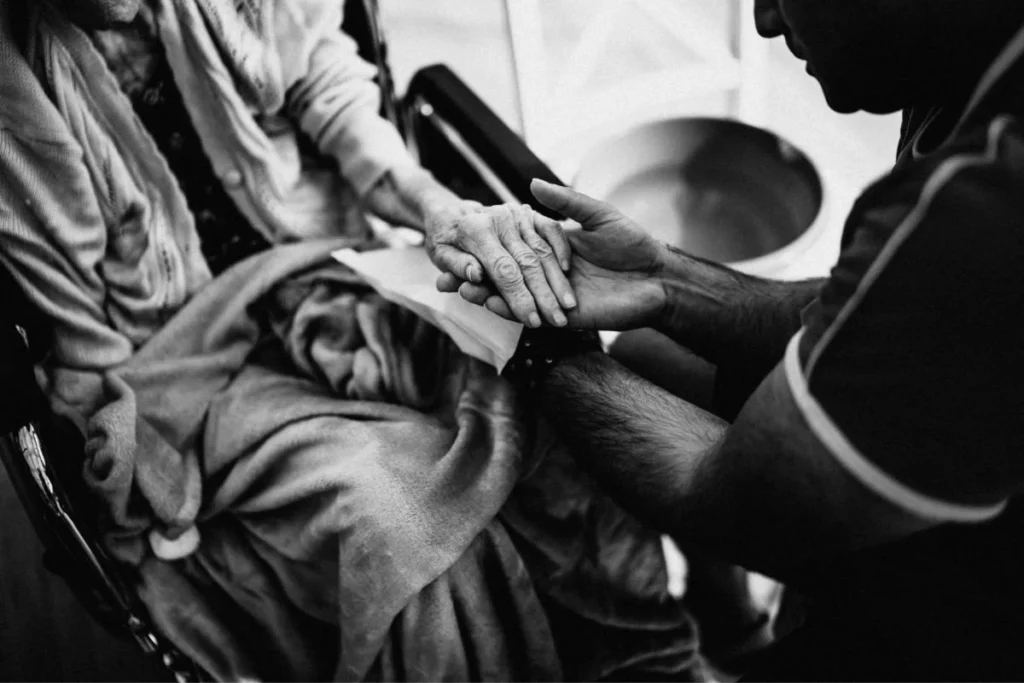
For over a decade, a quiet but brutal crisis has persisted in the shadows of New York City’s healthcare system. Thousands of home care workers—predominantly immigrant women of color—have been subjected to a "24-hour workday" model, a system that demands round-the-clock availability for pay that covers only a fraction of the time spent on duty. As the latest legislative effort to end this practice, the No More 24 Act (Intro. 303-2026), stalls in the City Council, a growing coalition of workers and disability rights activists is challenging the narrative that this system is either necessary or humane.
The Legislative Impasse: A Stalled Path to Reform
The path to passing Intro. 303 has been fraught with political maneuvering and sudden shifts in support. The bill, which seeks to mandate that 24-hour shifts be split into two 12-hour shifts—a configuration already permitted by the New York State Department of Health—seemed poised for a decisive victory in March 2026. However, the momentum was abruptly halted.
After Governor Kathy Hochul reportedly signaled that the state would withhold funding for the increased Medicaid costs associated with the split-shift model, the political landscape shifted. Following this, the Legal Aid Society, along with District Council 37 (DC 37) and a coalition of disability advocacy groups, voiced formal opposition to the bill. City Council Speaker Julie Menin ultimately pulled the bill from the floor before a vote could be held, and as of mid-2026, no new date has been scheduled.
Critics of the bill, including the Legal Aid Society, argue that the legislation is "destabilizing" and fails to account for the integrated nature of state-funded care. They warn that mandating a shift to 12-hour periods could lead to a collapse of the current care system, potentially forcing vulnerable patients into institutional care. Conversely, supporters of the bill view these arguments as fearmongering, designed to protect the profit margins of insurance companies and the convenience of a system built on the exploitation of labor.
A Chronology of Struggle: From 2022 to the Present
The movement to end the 24-hour workday is not a recent phenomenon, though its current legislative iteration is the most sophisticated to date. The "Ain’t I A Woman?!" Campaign, a coalition led by the Chinese Staff and Workers’ Association (CSWA) and the National Mobilization Against Sweatshops (NMASS), has been at the forefront of this struggle for years.
- 2022: City Council Member Christopher Marte introduces the first version of the bill. Despite significant grassroots pressure, it fails to come to a vote.
- 2024: A second version of the legislation is introduced. Like its predecessor, it is sidelined by political gridlock and lack of leadership support.
- March 2026: Intro. 303 is introduced, appearing to have the necessary support to pass. The atmosphere is optimistic until Mayor Zohran Mamdani, under pressure from the Governor’s office, attempts to amend the bill’s language.
- April–May 2026: A series of protests, including daily sit-ins at City Hall and a week-long hunger strike, brings the issue to the forefront of the city’s political discourse. The Legal Aid Society and other groups issue a joint letter opposing the bill, further complicating the path to passage.
The Reality of the 24-Hour Shift: Systemic Failure
The justification used by home care agencies to avoid paying for a full 24 hours relies on a loophole in New York State labor law. Agencies are permitted to pay for only 13 hours of a 24-hour shift, provided the worker receives three hours for meal breaks and five hours of uninterrupted sleep.
In practice, however, this "uninterrupted sleep" is an impossibility. Home care recipients often require assistance with turning, toileting, and medical monitoring throughout the night. Workers who attempt to claim these hours often face retaliation or are told that they are failing to provide adequate care. Consequently, these women endure years of sleep deprivation, which, according to medical literature, leads to chronic insomnia, heart disease, and permanent bone and musculoskeletal damage.
The financial structure of the industry also penalizes these workers. Unions often mandate that a worker must log at least 130 hours per month to qualify for health benefits. Because only 13 hours of a 24-hour shift are "counted" toward these quotas, workers are trapped in a precarious cycle where they must constantly maintain these grueling hours just to keep their insurance. If they fail to meet the quota, they risk losing their coverage for months at a time, further deepening their reliance on the very system that is breaking them.
Official Responses and the Clash of Interests
The opposition to Intro. 303 has created an unusual alliance between legal advocacy groups, large public-sector unions, and government officials. The Legal Aid Society, in its correspondence to the City Council, emphasized the fear of "destabilization." They maintain that any reform must be handled at the state level to ensure funding continuity.
However, the workers and their allies argue that this is a diversion. Zishun Ning, a member of the CSWA, suggests that the opposition is less about the health of the disabled and more about protecting the financial interests of insurance companies. "It’s good for workers, good for disabled people, and good for the union," Ning stated. "The only people who suffer are the insurance companies who make millions in profit."
Mayor Mamdani’s office has faced intense backlash for the proposed amendments, which critics argue would gut the bill’s protections. When staff members suggested that workers "consent" to these shifts, the backlash was swift. Advocates like Kim Beck of the Downtown Nasty Women’s Social Group noted that consent is a farce in a system where refusing a 24-hour assignment often results in being blacklisted from future work.
The Human Cost: Stories of Survival
The personal toll of this system is best illustrated by workers like Lai Yee Chan, who worked 24-hour shifts for 22 years before a career-ending injury. Chan’s testimony—and the testimony of dozens like her—highlights the physical degradation inherent in the work.
The United Nations Working Group on discrimination against women and girls has even weighed in, expressing "serious concern" regarding the treatment of these workers. In a letter to the U.S. Department of State, the group highlighted that the current practice mirrors indicators of forced labor, violating human rights to health, privacy, and family life.
For many disabled activists, the argument that they need 24-hour shifts to survive is a "racist trope." In a letter authored by activists Keith Rosenthal and Arielle Concilio Parra, they write: "It is absolutely possible for disabled people to receive care without entrenching a system that enslaves workers." They argue that the state’s failure to provide adequate funding for home care is the true source of the "destabilization," not the attempt to provide workers with humane shifts.
Implications for the Future of Care
The outcome of the No More 24 Act will have profound implications for the future of labor rights and healthcare in New York. If the bill continues to be blocked, it sends a message that the exploitation of immigrant women is a fixed cost of the city’s healthcare infrastructure. Conversely, if it passes, it would represent a landmark victory for labor organizers and disability rights advocates alike, proving that the two movements need not be at odds.
As the coalition continues to call on Speaker Menin to bring the original bill to a vote, the tension remains high. The workers who have spent years in this "sleep-deprived torture" are not backing down. For them, the battle is not just about wages or shifts—it is about the basic recognition of their humanity in a system that has long treated them as invisible, disposable components of a larger, profit-driven machine.
The fight to end the 24-hour workday is a struggle for the soul of the city’s care system. It asks a fundamental question: Can a society claim to care for its most vulnerable members if the system built to support them relies on the systematic destruction of the caregivers themselves? The answer, according to the thousands gathered at City Hall, is a resounding "No."