Reclaiming the Icon: Nancey B. Price’s "Of Liberty" Challenges the American Narrative
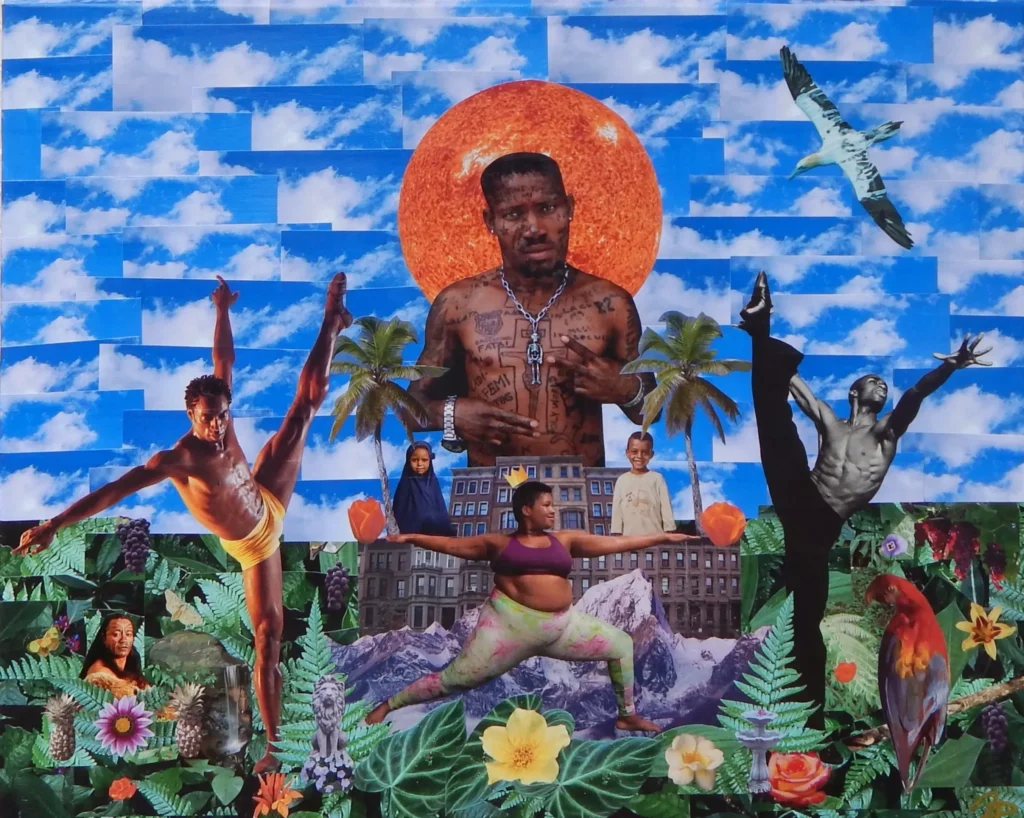
In the pantheon of American symbols, few are as immutable or as contentious as the Statue of Liberty. Standing in New York Harbor, she serves as a beacon of welcome—a promise often directed at specific, “palatable” narratives of immigration. But for artist and storyteller Nancey B. Price, that symbol has long felt incomplete, if not exclusionary. Through her latest work, Of Liberty, Price has embarked on a radical act of cultural reclamation, stripping away the static bronze of the traditional icon to reveal a dynamic, living, and unapologetically Black American experience.
Of Liberty is more than an art project; it is a visual manifesto. By removing the word “statue” from the title, Price centers the project on the human body—a vessel that is constantly in motion, evolving, and resilient. In a landscape where Black bodies have been historically devalued and surveilled, Price’s work posits that the true “liberty” of this nation is found not in a cold metal monument, but in the thriving, joyful, and creative communities that have persisted in spite of systemic oppression.
The Genesis of a New Iconography: A Chronology of the Project
The journey toward Of Liberty began in the intersections of Price’s life as a rural Georgia-born artist and her deep immersion in Southern Gothic traditions, folklore, and oral histories.
- Early Conceptualization: For years, Price’s work in analog collage has focused on the layering of visual narratives. The concept for Of Liberty emerged from a desire to address the dissonance between the national myth of “freedom for all” and the lived reality of Black Southerners.
- The Development Phase: Price spent months synthesizing the visual language of the piece. She began experimenting with the juxtaposition of regal, spiritual imagery—such as the sun halo—with scenes of everyday communal joy, including yoga and dance.
- Refining the Message: During the design process, the decision to remove the word "statue" became the pivotal moment for the work. Price concluded that a statue represents a finished, frozen object, whereas her community represents a fluid, ongoing history.
- Public Unveiling: As the piece gained traction in digital and exhibition spaces, it shifted from a private artistic endeavor to a public conversation piece, challenging viewers to consider whose bodies are deemed worthy of being “monumentalized” in American society.
Supporting the Narrative: The Power of Representation
To understand the weight of Price’s work, one must look at the data regarding the lack of diverse representation in public art. According to recent surveys on public monuments in the United States, the vast majority of statues commemorate historical figures involved in colonization, war, or the perpetuation of systemic inequality.
The Myth of the "Palatable" Immigrant
Price’s work serves as a critique of the “palatable” immigration narrative often championed by traditional American institutions. While the national narrative focuses on the voluntary immigrant—the person seeking a “new beginning”—it frequently obscures the history of those brought to this land in chains.
- Historical Context: Unlike the traditional immigrant experience, the history of Black Americans is rooted in forced displacement and the struggle for autonomy.
- Resilience as Glory: Price highlights that despite the lack of a “warm welcome,” the culture created by Black communities is a testament to extraordinary resilience. The collage elements—the tattooed skin, the haloed head, the community in motion—are visual data points representing a culture that does not merely survive, but thrives with “glorious” intent.
Expert Perspectives: The Role of the Artist in Democracy
The importance of this work is not lost on the broader nonprofit and journalistic communities. In an era where multiracial democracy is under constant attack, the role of the artist-activist becomes a vital pillar of truth-telling.
Voices from the Field
Nancey B. Price is not working in a vacuum. Her practice as a facilitator with organizations like the DEEP Center and the Savannah Black Art Expo highlights the necessity of creativity as a tool for political and social reflection.
“Our voices are our power,” notes a spokesperson for the Nonprofit Quarterly (NPQ), which has supported the amplification of Price’s message. “Journalism and the arts are the primary vehicles through which we hold power accountable. By sharing stories from leaders like Price, we reclaim the narrative from those who wish to suppress it.”

The consensus among cultural historians is that public art must evolve to reflect the complexity of the population. If a monument only speaks to one demographic, it fails its function as a symbol of “liberty.” By creating Of Liberty, Price provides a blueprint for what a more inclusive American iconography might look like—one that honors the history of the marginalized rather than erasing it behind a veil of nationalistic myth-making.
Implications: Moving Toward an Evolving Democracy
The implications of Of Liberty are profound for both the art world and the broader political sphere. If we accept Price’s premise—that our bodies and cultures are not static—we must rethink how we approach civil rights, education, and community development.
1. Challenging the Static Nature of Law and Policy
Just as Price argues against the “static” nature of a statue, so too should we view our legal and social systems as living, breathing entities. The law, much like culture, must evolve with each new generation. The rigidity of tradition often serves to trap communities in the past; Price’s work invites us to imagine a future where policies are as fluid and adaptive as the people they serve.
2. Redefining “Monumental”
In the wake of recent national debates over the removal of controversial monuments, Of Liberty offers a creative alternative. Rather than just taking things down, we must consider what we choose to elevate. Price’s work suggests that we should be monument-making that celebrates joy, health, spiritual growth, and community solidarity—the true markers of a healthy democracy.
3. The Necessity of Artistic Labor
Price’s career, which includes collaborations with the Cincinnati Symphony Orchestra and recognition in national publications, demonstrates that Black artistic labor is an essential economic and cultural driver. As she continues to facilitate workshops at institutions like the University of South Carolina, her pedagogy—which centers creativity as a tool for personal storytelling—empowers others to claim their own narratives.
Conclusion: A Living Legacy
Nancey B. Price’s Of Liberty is a profound intervention in the American consciousness. By transforming the icon of the Statue of Liberty into a reflection of Black resilience, joy, and evolution, she challenges us to look beyond the cold bronze of history and see the living, breathing, and moving people who define the true character of this nation.
The work is a call to action. It asks us to recognize that our freedom is not a gift bestowed by a monument, but a practice we must cultivate every day. As Price continues to push the boundaries of collage and narrative, she reminds us that we are the authors of our own history. The statue may be static, but the people—the vibrant, evolving, and glorious people—are the true heart of liberty.
In a time when the truth is often obscured, projects like Of Liberty are essential. They remind us that art is not just a decoration; it is a vital, necessary, and powerful force for social change. As we look toward the future, we would do well to follow the lead of artists like Price: to stop looking for liberty in the past, and start building it in our own communities, in our own bodies, and in our own, ever-evolving stories.