The Great Real Estate Reshuffle: Baby Boomers Defy Downsizing, Reshaping Housing for a New Generation
By [Journalist Name/Staff Writer]
Published: July 21, 2026
For decades, the American dream has been inextricably linked to homeownership, governed by a set of unwritten rules: a house is your most significant investment; renting is financial folly; housing values perpetually climb; and retirement signals a move to a smaller, more manageable abode, perhaps by the beach or a golf course. These deeply ingrained financial scripts have long dictated individual and familial aspirations, forming the bedrock of personal wealth and community building. Yet, as we navigate the mid-2020s, these venerable maxims are not merely bending – they are breaking, giving way to a new, complex reality.
A seismic shift is underway in the U.S. housing market, largely propelled by the Baby Boomer generation. Far from embracing the traditional narrative of downsizing in their golden years, many affluent Boomers are instead opting to upsize or retain their larger family homes, creating a ripple effect that reverberates across generations and challenges long-held economic assumptions. This phenomenon, while a testament to the unprecedented wealth accumulated by older Americans, is simultaneously exacerbating the affordability crisis for younger generations striving to plant their own roots.
Challenging the Old Scripts: A Paradigm Shift in Real Estate
The traditional financial wisdom surrounding real estate, once considered immutable, is facing an unprecedented challenge. For generations, the idea of homeownership was sacrosanct:
- A House as the Ultimate Investment: It was seen as the primary vehicle for wealth creation, a tangible asset that appreciated reliably over time, offering both shelter and financial security.
- Renting as "Throwing Money Away": The monthly payment to a landlord was often framed as a wasted expense, a direct contrast to building equity through mortgage payments.
- Housing Prices Always Go Up: This optimistic outlook fueled generations of homebuyers, confident in the consistent growth of their property values.
- Downsizing in Retirement: The logical progression for retirees was to sell off their larger, often paid-off homes, unlock equity, and move into smaller, more manageable properties, freeing up capital for leisure or healthcare.
These scripts, forged in eras of different economic dynamics and demographic structures, are now proving to be increasingly out of sync with contemporary realities. The current housing market, characterized by soaring prices, high interest rates, and limited inventory, has exposed the fragility of these assumptions, particularly for those just entering the housing market.
The Boomer Upsizing Phenomenon: Wealth, Choice, and Market Impact
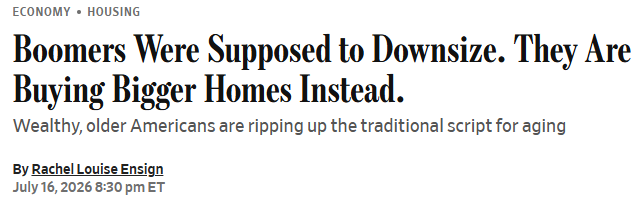
The most striking departure from these traditional scripts is the dramatic shift in retirement housing patterns among Baby Boomers. A recent report from The Wall Street Journal, published on July 21, 2026, highlighted this trend, revealing that many older Americans are actively choosing to upsize their homes, or at least avoid downsizing, rather than sell.
Merrill Lynch financial adviser April Tardiff notes, "The historic retirement play of sell your home and buy a smaller one just isn’t happening." She revealed that of her eight clients who retired this year, every single one upsized, and only one client had downsized in the past five years. This anecdote is buttressed by the sentiments of many Boomers, such as Victor, 64, who declared, "We’ll downsize when they plant me 6 feet into the ground."
This trend is not merely anecdotal; it is a direct consequence of the considerable wealth accumulated by this demographic. Baby Boomers and older generations collectively hold an astounding $110 trillion in total wealth, far surpassing that of younger Americans. Many of these individuals purchased homes and invested in stocks decades ago, benefiting immensely from the sustained appreciation of these assets. With paid-off mortgages and substantial financial cushions, they possess the flexibility to make housing choices driven by comfort, lifestyle, and a desire for space, rather than financial necessity. This affluence enables them to remain in larger homes, or even purchase larger ones, often with cash.
This financial prowess makes Boomers a formidable force in the current housing market. Data indicates that a remarkable 42% of homebuyers in 2026 are from the Baby Boomer generation. Their ability to pay in cash or with substantial down payments gives them a significant advantage, often outcompeting younger, first-time homebuyers reliant on mortgages. For this generation, the choice to upsize or stay put is a luxury born of decades of economic prosperity and strategic asset accumulation.
The Generational Divide: Housing Unaffordability and Inequality
While Boomers exercise their financial freedom in the housing market, the implications for younger generations are profound and increasingly dire. The phenomenon of older Americans staying in or acquiring larger homes directly contributes to a severe constriction of housing supply, particularly for the family-sized homes typically sought by Millennials and Gen Z.
As Kyla Scanlon meticulously detailed in The New York Times on July 14, 2026, the disparity in real estate wealth between generations has become stark. Since 2010, Americans aged 55 and older have added approximately $20 trillion in real estate wealth. In stark contrast, Americans under 40 have added a mere $3.5 trillion over the same period. This means that two out of every three dollars of housing wealth accumulated in America since 2010 now sit with those aged 55 and older. The data paints an even more vivid picture of spatial inequality: empty nesters own about 28 percent of large homes in the U.S., while Millennials with children own only about 16 percent.
This imbalance means that larger homes, traditionally transitioning from older to younger families, are simply not entering the market at a sufficient pace. The consequence is an acute housing shortage for young people with families who are looking to establish roots, build equity, and raise their children in stable environments. The market, skewed by the buying power and preferences of an affluent older generation, has become increasingly unaffordable and inaccessible for those just starting out. The dream of homeownership, once a rite of passage, is receding for a significant portion of the younger population.
Eroding Faith in Housing as an Investment
The challenges in the housing market are fundamentally altering how younger adults perceive real estate as an investment. The long-held belief that "housing prices always go up" is being questioned, particularly by those who have witnessed the rapid escalation of prices coupled with stagnant wage growth and rising interest rates.
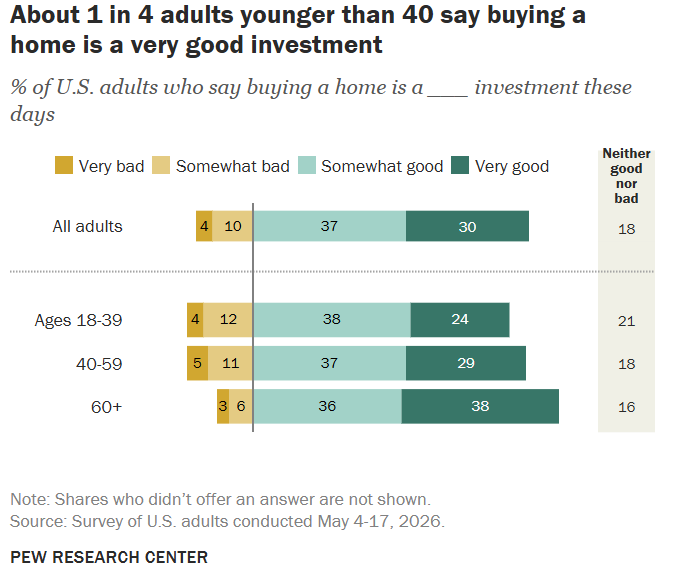
A June 2026 study by Pew Research revealed a significant generational divergence in investment sentiment. Only one-quarter of adults aged 18-39 now believe that housing is a "very good investment." This figure stands in stark contrast to the much higher percentages among older age groups, who have largely benefited from historical housing appreciation. For younger adults, the sheer cost of entry, coupled with the myriad expenses associated with homeownership (property taxes, insurance, maintenance, repairs, and the increasingly high cost of borrowing), makes the financial return on investment appear less compelling compared to other asset classes. The "psychic income" of homeownership – the emotional security, stability, and sense of belonging – remains powerful, but the financial calculus is undeniably shifting.
The Unexpected Pivot: Young People and the Stock Market
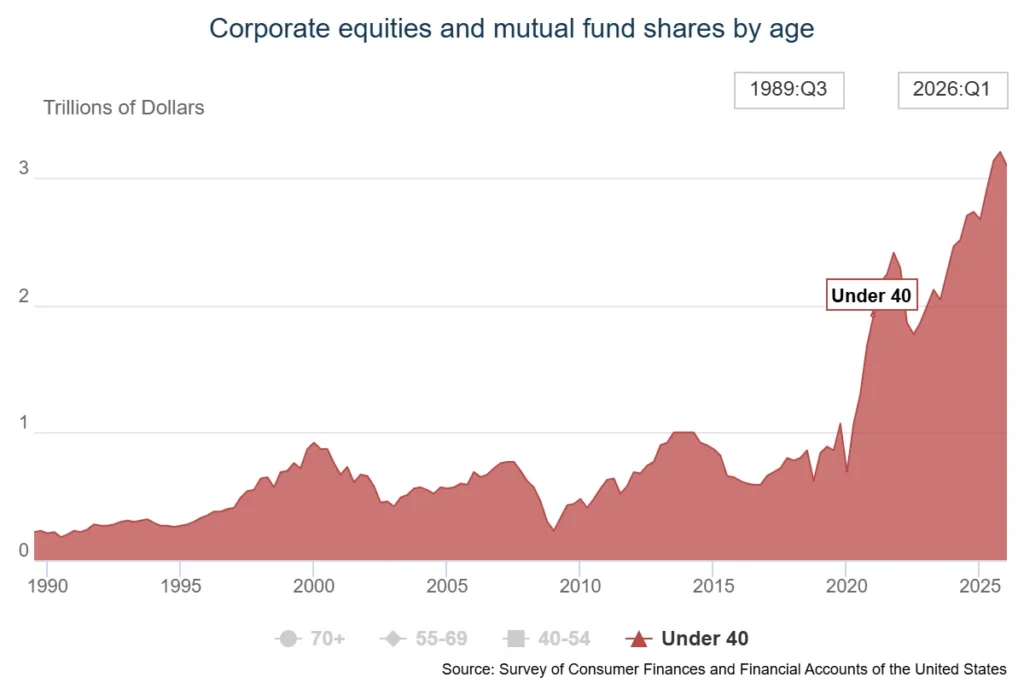
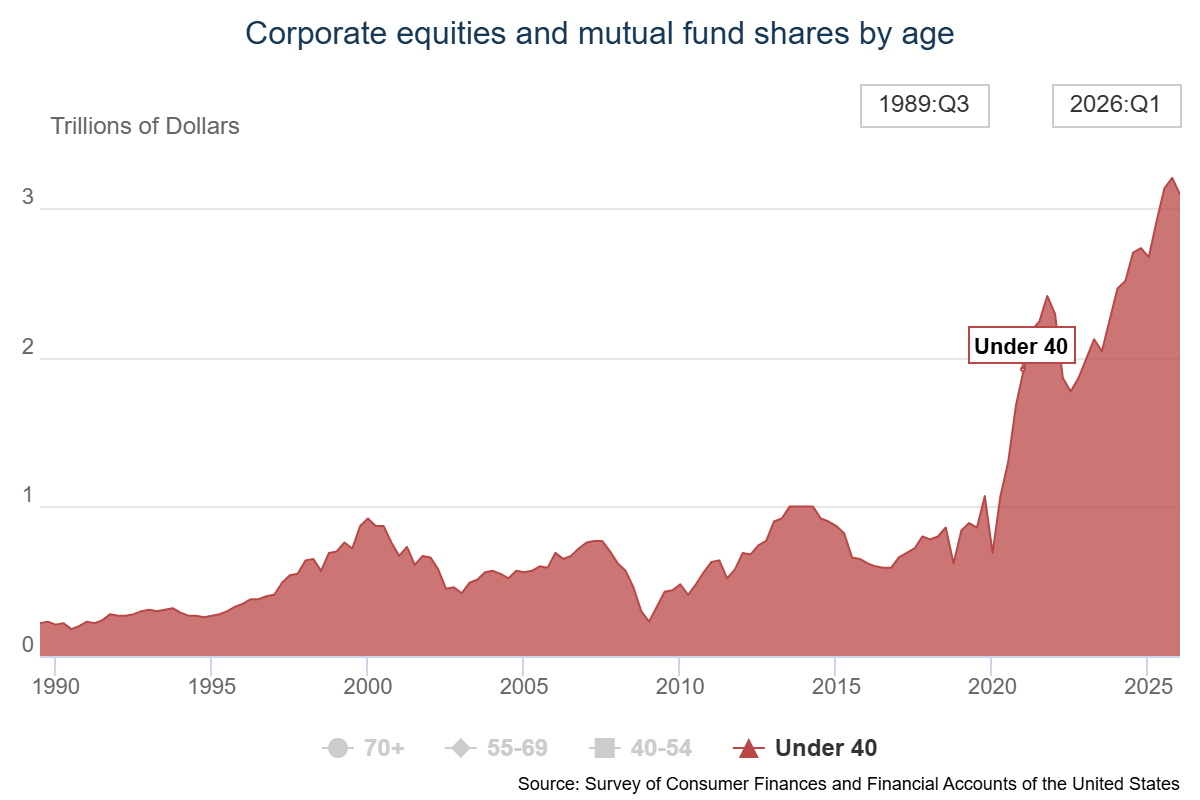
Ironically, the very unattainability of housing is driving a significant portion of younger generations into an alternative investment vehicle: the stock market. With housing becoming an insurmountable financial hurdle for many, young households are increasingly directing their savings and investment capital towards equities.
Data for the 2020s shows a remarkable surge in equity holdings for people under 40. Unable to afford a down payment or secure a mortgage for a suitable home, and with rents consuming a substantial portion of their income, many young individuals are strategically investing in stocks, bonds, and other financial instruments. This is not necessarily a choice born of preference but often one of necessity. If a house is financially out of reach, the stock market becomes the most accessible and potentially lucrative avenue for wealth accumulation.
While this pivot may lead to increased financial wealth for some younger individuals over the long term, it also raises critical questions about societal well-being. Will a generation forced into the stock market rather than homeownership truly feel secure and fulfilled, even with potentially larger investment portfolios? The social and psychological benefits associated with owning a home – community roots, stability for families, a sense of permanence – cannot be easily replicated by a diversified investment portfolio.
The Policy Vacuum: Why Don’t We Build More Housing?
Amidst this generational housing crisis, a critical question emerges: why is there such a profound lack of concerted effort from policymakers to address the fundamental issue of housing supply? The solution to many of these problems, particularly for younger generations, seems deceptively simple: build more houses.
However, for whatever reason, increasing housing supply has not become a national priority. Several factors contribute to this policy inertia:
- NIMBYism (Not In My Backyard): Local opposition to new construction, often driven by concerns about property values, traffic congestion, and changes to neighborhood character, creates significant hurdles for developers.
- Restrictive Zoning Laws: Many municipalities have stringent zoning regulations that limit density, mandate large lot sizes, and complicate mixed-use developments, effectively stifling construction.
- High Costs of Construction: Rising material costs, labor shortages, and complex permitting processes inflate the cost of building, making affordable housing projects less financially viable.
- Political Inertia: Policymakers often prioritize the interests of existing homeowners, who represent a powerful voting bloc and whose wealth is tied to rising property values. Initiatives to increase supply, which could temper price growth, may be seen as politically risky.
The absence of a robust national strategy to incentivize construction, streamline regulations, and overcome local opposition means that millions of young people who would otherwise aspire to homeownership will likely be unable to do so. This policy failure has profound economic and social consequences, including decreased geographic mobility, delayed family formation, and an exacerbation of wealth inequality.
Housing vs. Stocks: A Re-evaluation of Investment Returns
The shifting dynamics in real estate are also prompting a critical re-evaluation of homeownership as the "best" investment, especially when compared to the stock market. Alison Schrager’s piece for Bloomberg on July 15, 2026, sharply illustrated this point.
She cited the example of Nantucket, Massachusetts, a famously hot real estate market, where the median house price soared from $500,000 in 1995 to nearly $4 million today. While seemingly a "stunning increase," Schrager highlighted an even more astonishing performance: an investment of $500,000 in the S&P 500 Index in 1995 would now be worth over $8.2 million, and even more with reinvested dividends.
This comparison underscores a crucial point often overlooked in the housing narrative: the hidden costs of homeownership. As a homeowner, the constant outflow of capital for maintenance and repairs is a stark reality. From new appliances and pest control to garage door repairs, exterior power washes, and interior vent cleaning – as experienced by Ben Carlson himself in just a single month – these expenses chip away at the perceived investment returns. Property taxes, insurance, and interest payments further diminish the net financial gain. When all costs are factored in, the true financial return on a primary residence can often be significantly lower than what many assume, and potentially less than a diversified stock portfolio.
Of course, the "psychic income" of owning a home – the emotional return, the sense of stability, control, and belonging that a stock portfolio can never fully provide – remains a powerful draw. It offers a tangible asset, a space for personal expression, and a foundation for family life. However, the financial realities are forcing a re-evaluation of this emotional benefit against the backdrop of opportunity costs and alternative investment returns.
The Downstream Effects and Future Questions
The confluence of Baby Boomer wealth, changing retirement patterns, generational wealth disparities, and policy inaction is setting the stage for significant downstream effects that will redefine the landscape of homeownership and wealth accumulation for decades to come.
The central questions posed by this evolving scenario are profound: Will younger generations, forced into the loving arms of the stock market due to unattainable housing, ultimately end up wealthier than their home-owning predecessors? And if so, will this financial prosperity translate into happiness and societal well-being, or will the absence of traditional homeownership leave a persistent void, fostering a sense of instability and dissatisfaction?
Beyond individual financial outcomes, the broader implications are far-reaching. What does this mean for social cohesion and the intergenerational contract? How will it impact family formation, community development, and geographic mobility? Will this lead to increased political polarization as younger generations feel locked out of traditional pathways to prosperity?
We are currently in a grand societal experiment, testing many strongly held beliefs about homeownership, wealth, and the very structure of the American dream. The decisions made (or not made) by policymakers, the evolving financial strategies of individuals, and the inherent dynamics of generational change will undoubtedly redefine what it means to be financially secure and socially rooted in the years ahead. The current real estate reshuffle is more than just an economic trend; it is a profound cultural and social transformation unfolding in real-time.