IRS Proposes 36% Hike in Estate Tax Closing Letter Fees: A Deep Dive into the Regulatory Shift
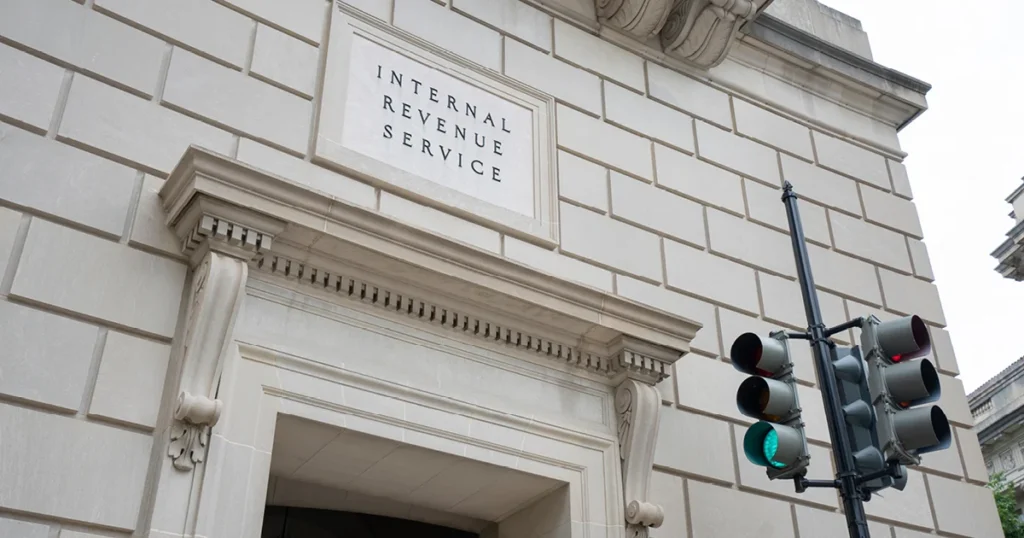
The Internal Revenue Service (IRS) has signaled a significant shift in the cost structure for estate administration. According to recently issued proposed regulations (REG-103193-26), the agency intends to increase the user fee for an estate tax closing letter—officially known as IRS Letter 627—from its current rate of $56 to $76. This proposed 36% increase reflects the agency’s ongoing commitment to aligning service fees with the actual operational costs of processing these sensitive financial documents.
The proposed adjustment, unveiled on Monday, marks a critical juncture for estate executors, tax practitioners, and legal professionals who rely on these documents to finalize the distribution of assets and provide certainty to beneficiaries regarding the status of a decedent’s tax liabilities.
The Core Facts: Understanding the Proposed Change
At the heart of the proposed regulation is a simple arithmetic adjustment based on administrative overhead. An estate tax closing letter serves as the IRS’s formal confirmation that an estate tax return (Form 706) has been accepted or that the estate tax liability has been satisfied. For executors, this document is the "gold standard" for closing out an estate, as it provides the necessary peace of mind that no further tax audits or claims will arise against the estate assets.
The Financial Breakdown
- Current Fee: $56 (implemented December 1, 2025).
- Proposed Fee: $76.
- Percentage Increase: Approximately 36%.
- Scope: Applies to all requests for IRS Letter 627 received on or after the date 30 days following the publication of the final regulations in the Federal Register.
The IRS maintains that this fee increase is not a revenue-generating tax, but rather a cost-recovery mechanism. Under the guidelines established by the Independent Offices Appropriations Act of 1952, federal agencies are encouraged—and often required—to ensure that specialized services provided to specific individuals are "self-sustaining" to the extent possible. Because an estate tax closing letter provides a specific benefit to an authorized person (the executor or administrator) that the general public does not receive, the IRS posits that the cost of providing that service should be borne by the requester rather than the taxpayer at large.
Chronology: A History of Fee Adjustments
The path to this $76 fee is not an overnight decision; it is the result of a rigorous, mandatory biennial review process.
The 2025 Review Cycle
In 2025, the IRS conducted an exhaustive biennial review of the costs associated with the estate tax closing letter program. The goal of this review was to calculate the "full cost" of the service, encompassing both direct costs (such as staff time spent reviewing returns and generating correspondence) and indirect costs (such as overhead, information technology support, and facility costs).
Data Collection and Analysis
The IRS arrived at the $76 figure through a methodical breakdown of program expenditures. The agency determined that the total annual cost to operate the estate tax closing letter program is approximately $615,593. By projecting an annual request volume of 8,053 letters, the agency divided the total program cost by the number of anticipated requests. The resulting quotient—$76.44—was rounded down to the proposed $76 user fee.
This biennial process ensures that as inflation, wage growth, and administrative requirements evolve, the user fees remain tethered to the actual resource drain on the agency.
Supporting Data: Why the Costs Are Rising
The IRS’s justification for the fee hike rests on the complexity of modern estate administration. Issuing an estate tax closing letter is not a simple automated task; it requires a verification process to ensure that the estate has complied with all federal tax obligations.
Direct vs. Indirect Costs
The IRS defines its costs through a multi-layered accounting framework:
- Direct Costs: These include the labor of IRS personnel who must review the filing status, ensure that any necessary audits have been concluded, and authorize the issuance of the letter.
- Indirect Costs: These represent the "hidden" costs of the bureaucracy, including the maintenance of the secure electronic systems where estate tax data is housed, the cost of paper and postage for official correspondence, and the administrative support required to manage the request system.
Statistical Justification
The decision to set the fee at $76 is supported by the following metrics:
- Total Annual Program Cost: $615,593.
- Volume Projection: 8,053 requests per annum.
- Cost per unit: $76.44 (rounded to $76).
By holding the fee at $56 previously, the IRS was effectively subsidizing the difference through general tax funds. The proposed regulation seeks to eliminate this subsidy, adhering to the federal mandate that the beneficiaries of specific administrative services should pay for the costs associated with those services.
Official Responses and Procedural Requirements
The proposed regulation is currently in a "notice and comment" period. The IRS has emphasized that the proposed figures are not yet etched in stone. Before these regulations are adopted as final, the agency is required to consider feedback from the public, tax professionals, and legal associations.
The Role of Public Comment
The IRS is inviting stakeholders to submit timely comments to the Treasury and the IRS. This is a vital stage in the rulemaking process. Professionals who represent estates may use this window to voice concerns regarding the timing of the fee, the accuracy of the IRS’s cost-accounting methods, or the potential impact on smaller estates.
Public Hearings
Should any person submit a request for a public hearing in writing, the IRS is obligated to schedule one. This provides a formal forum for stakeholders to discuss the implications of the fee hike. If requested, this hearing will be a pivotal moment for transparency, allowing the IRS to explain its methodology in greater detail and hear directly from the practitioners who handle these estates on a daily basis.
Implementation Timeline
The regulation specifies a transition period. Once the final regulations are published in the Federal Register, the new fee will not take effect immediately. Instead, there is a 30-day "grace period" before the $76 fee becomes mandatory. This allows practitioners to finalize pending requests under the existing fee structure, provided they act promptly once the final rule is announced.
Implications: What This Means for Estates and Practitioners
The proposed increase, while seemingly modest in the context of high-net-worth estates, carries significant implications for the broader landscape of tax administration and estate planning.
Impact on Estate Administration
For the average estate, an increase of $20 is unlikely to be a dealbreaker. However, for smaller estates or those with limited liquidity, every dollar counts. Furthermore, the administrative burden of tracking these fee changes is a recurring frustration for practitioners.
The "Cost of Doing Business"
Tax professionals and estate attorneys must now factor these fee changes into their engagement letters and budget estimates for clients. As the IRS moves toward a "full-cost" model, it is highly likely that other administrative services will see similar, inflation-adjusted price hikes in the coming years.
The Move Toward Self-Sustainability
This proposal is a clear signal that the IRS is prioritizing the mandate of the Independent Offices Appropriations Act. By ensuring that the estate tax closing letter program is self-sustaining, the IRS is attempting to free up resources to focus on its core mission of enforcement and taxpayer service. However, critics may argue that such fee increases could potentially deter executors from requesting closing letters, which could ironically lead to more open-ended, unresolved tax issues in the long run.
Conclusion
As the IRS moves toward finalizing this 36% increase, the focus for the estate planning community should be on the upcoming comment period. Whether the agency’s cost-accounting is viewed as transparent or overly aggressive, the proposed regulation is a reminder that the administrative cost of death—and the subsequent legal finality required by the IRS—continues to rise. For now, executors and their advisors should prepare for the transition to the $76 fee and ensure that all outstanding requests are managed with an eye toward the impending change in the Federal Register.
For those interested in contributing to the dialogue surrounding these proposed changes, formal comments should be submitted to the Treasury and the IRS in accordance with the instructions provided in the REG-103193-26 document. Practitioners are encouraged to monitor the Federal Register for the publication date of the final regulations to ensure compliance with the new fee structure.