The Great Disconnect: How the Iran Conflict is Reshaping the Global Economic Order
By Jayati Ghosh
July 15, 2026
The current global economic landscape is defined by a paradox of perception. While major financial indices in New York, London, and Tokyo continue to scale new heights, buoyed by the relentless momentum of Artificial Intelligence (AI) sector stocks, the foundational pillars of the real economy are showing signs of structural fracture. The ongoing US-Israeli conflict with Iran—an intermittent but devastating struggle—has acted as a stress test for a world already reeling from post-pandemic inflation and supply chain volatility.
While equity markets have largely shrugged off the geopolitical turbulence, viewing it as a localized friction, the long-term economic costs are beginning to emerge. These costs are not being felt in the trading pits of Wall Street, but rather in the fuel-starved markets of the Global South and the agricultural belts of developing nations.
The Disconnect: Markets vs. Reality
The current "on-again, off-again" nature of the conflict has created a dangerous sense of complacency among institutional investors. Financial markets have become increasingly insulated from the physical realities of global trade. AI-driven optimism has created a "bull market bubble" that effectively masks the underlying vulnerability of the global energy architecture.
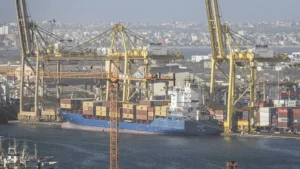
However, beneath the surface of record-breaking tech valuations, the "real" economy is struggling with the cascading effects of a conflict that has paralyzed key shipping lanes and decimated regional refining capacity. The disconnect is not merely a technicality; it is a fundamental misreading of risk. While speculators bet on the infinite productivity of algorithms, the global supply of energy and fertilizer—the two most critical inputs for human survival—is being throttled.
A Chronology of Conflict and Contagion
The escalation of tensions did not happen in a vacuum. To understand the current economic malaise, one must look at the timeline of the recent hostilities:
- Early 2026: Tensions reached a boiling point following a series of maritime skirmishes in the Strait of Hormuz, leading to a sudden spike in crude oil prices.
- March 2026: The onset of coordinated strikes against Iranian refining infrastructure caused immediate, albeit localized, shortages in refined petroleum products.
- April-May 2026: As the conflict settled into a protracted phase, the focus shifted to the exhaustion of Strategic Petroleum Reserves (SPRs). Major powers, including the United States, were forced to tap into these buffers to prevent runaway inflation, leaving the global market with little "insurance" against further shocks.
- June 2026: The compounding effect of fuel shortages hit the agricultural sector. Fertilizer production, heavily dependent on natural gas and refined energy inputs, saw prices skyrocket.
- July 2026: Current status. Financial markets remain buoyant, but inflation in emerging economies has become entrenched, leading to a wave of social unrest and fiscal instability across Africa and South Asia.
Supporting Data: The Hidden Costs
The data paints a starkly different picture from the exuberant headlines of the financial press.
1. Energy Volatility
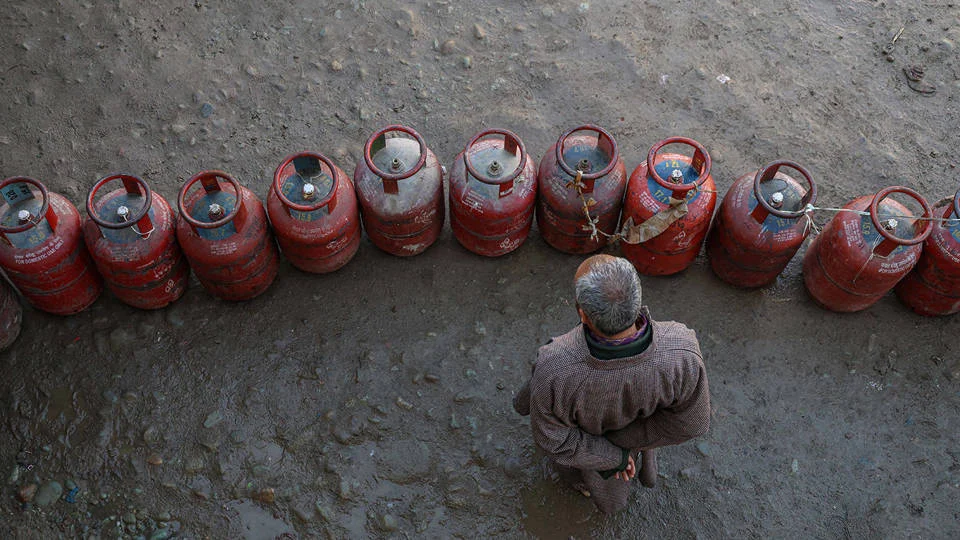
While crude prices have fluctuated, the cost of refined products—diesel, gasoline, and jet fuel—has remained persistently high. The damage to refining capacity in the Persian Gulf has created a bottleneck that cannot be easily bypassed. Global refining margins have surged by over 40% since the start of the year, a cost passed directly to the consumer in developing nations.
2. The Fertilizer-Food Nexus
Perhaps the most alarming indicator is the price of nitrogen-based fertilizers. Because the production of ammonia is energy-intensive, the conflict has turned food security into a geopolitical pawn. Fertilizer prices in sub-Saharan Africa have increased by an estimated 35% compared to the 2025 average, threatening to diminish crop yields for the upcoming harvest season.
3. Depletion of Reserves
Strategic Petroleum Reserves among OECD nations are currently at their lowest levels since the 1980s. This depletion means that the global economy has lost its primary shock absorber. Any further escalation—or even a minor disruption to pipelines—will result in immediate and unmitigated price volatility.
Official Responses and Policy Paralysis
The international community’s response has been fragmented, dictated by domestic political pressures rather than global economic stability.
- The Federal Reserve and Central Banks: The US Federal Reserve has maintained a stance of "watchful waiting," prioritizing the containment of domestic inflation while largely ignoring the external shocks impacting the Global South. Their focus remains on the "AI productivity miracle" as a potential hedge against stagflation.
- The IMF and World Bank: Both institutions have issued warnings regarding the "fragmentation of global trade," yet they have struggled to provide liquidity to the hardest-hit nations. Their official communiqués emphasize fiscal discipline, a policy that many developing nations view as tone-deaf in the face of imported, war-driven inflation.
- Regional Powers: Governments in the Global South have increasingly called for a "de-dollarization" of trade, seeking to bypass US-sanctioned financial channels to purchase oil and fertilizer. This is signaling a shift toward a multi-polar economic system, as nations realize that the Western-led financial order cannot insulate them from the consequences of regional wars.
The Long-Term Implications: A World Divided
The long-term economic trajectory of this conflict suggests a permanent alteration of the global order. We are entering an era of "Geopolitical Economics," where the cost of doing business is no longer determined by market efficiency, but by political alignment.
1. The Death of Just-in-Time Efficiency
The era of globalized, just-in-time supply chains is effectively over. Nations are now prioritizing "just-in-case" resilience, moving toward regionalization and resource hoarding. This transition is inherently inflationary, as it moves away from the lowest-cost producer model.
2. The Debt Trap
For lower-income economies, the current situation is catastrophic. Faced with higher fuel and food import bills, these nations are burning through their foreign exchange reserves. As their currencies weaken against the dollar, the cost of servicing external debt increases, leading to a cycle of default and austerity that will stifle growth for the next decade.
3. The AI-Reality Gap
The most profound danger lies in the continued divergence between the tech-centric financial sector and the resource-dependent real economy. If financial markets remain divorced from reality, they risk a "Minsky Moment"—a sudden, violent collapse of asset values when investors finally acknowledge that a digital economy cannot function without physical energy and affordable food.
Conclusion
The war with Iran is not a peripheral event; it is a catalyst for a structural shift in how the world economy functions. While the masters of the financial universe continue to gaze at their AI-driven dashboards, the real-world consequences—famine, fuel poverty, and fiscal collapse—are spreading.
Unless there is a fundamental re-evaluation of how global energy and food systems are managed, the disconnect between markets and reality will only deepen. We are witnessing the end of an era of cheap energy and stable supply chains. The transition to a new order will be painful, and it will be the most vulnerable populations who pay the highest price.
History teaches us that financial bubbles built on illusions of invulnerability rarely end well. As we look toward the second half of 2026, the question is not whether the markets will correct, but how much damage will be done to the global social fabric before they do.