The Battle for the Fed: Custodia Bank Takes Constitutional Fight to the Supreme Court
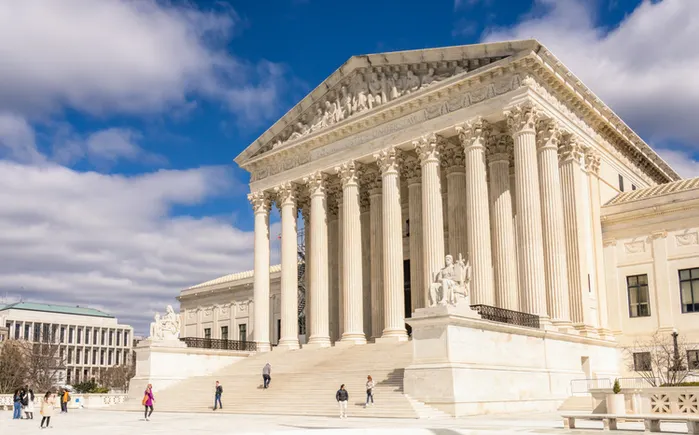
In a high-stakes legal maneuver that could redefine the boundaries of central bank authority, Wyoming-based digital-asset lender Custodia Bank has officially petitioned the U.S. Supreme Court to review a ruling that has effectively barred the firm from accessing a Federal Reserve master account. This move marks the latest chapter in a multi-year, contentious legal battle between a crypto-native financial institution and the bedrock of the American monetary system.
The petition, filed this past Friday, challenges a March ruling by the 10th Circuit Court of Appeals, which upheld the Federal Reserve’s authority to deny Custodia access to its payment services. At the heart of the dispute is a fundamental question of administrative power: whether regional Federal Reserve Bank presidents possess “unbounded, unreviewable discretion” to act as gatekeepers to the nation’s financial infrastructure, or if their decisions must be subject to clear statutory constraints and judicial oversight.
A Chronology of Conflict: From Application to Litigation
The friction between Custodia and the Federal Reserve began in 2021, when the Wyoming-chartered Special Purpose Depository Institution (SPDI) applied for a master account—a digital gateway that allows financial institutions to settle transactions, hold reserves, and send payments directly through the Fed’s ledger without relying on intermediary commercial banks.
The Delay and the Accusations
Custodia’s frustration with the process reached a boiling point in June 2022, when it filed a lawsuit against the Federal Reserve Board of Governors and the Federal Reserve Bank of Kansas City. At the time, the bank noted that it had been waiting 19 months for its application to be processed, despite the Fed’s own internal guidance suggesting that such applications typically take between five and seven business days.
Tensions escalated when the Fed approved a master account for BNY Mellon to provide custody services for crypto assets, fueling allegations of favoritism. Custodia argued that the central bank was picking winners and losers in the burgeoning digital asset space. The Federal Reserve, however, consistently disputed these allegations, maintaining that each application is assessed on its own merits and specific risk profile.
The Formal Rejection
In January 2023, the Kansas City Fed formally denied Custodia’s application. The central bank cited several core concerns, including:
- Business Model Volatility: The Fed argued that Custodia’s heavy reliance on the volatile cryptocurrency market posed unacceptable risks.
- Illicit Finance Risks: Concerns were raised regarding the bank’s internal controls and the potential for exposure to money laundering or illicit financial activities.
- Systemic Risk: The regulators noted that Custodia’s limited experience in traditional risk management, combined with its crypto-centric focus, could pose broader systemic implications for the U.S. financial system.
Despite subsequent requests for reconsideration and accusations of “illegal coordination” between the Board of Governors and the Kansas City Fed, the regulator stood its ground, detailing three distinct areas where the firm failed to meet the necessary criteria for entry.
The Constitutional Argument: Who Governs the Regulators?
Custodia’s petition to the Supreme Court is built on a sophisticated constitutional foundation. The firm argues that the Federal Reserve—an institution uniquely shielded from presidential control—must be held accountable to the will of Congress.
The “Officer of the United States” Debate
A pivotal moment in the litigation occurred last October, when Judge Timothy Tymkovich of the 10th Circuit Court of Appeals issued a stinging dissent. Judge Tymkovich challenged the majority opinion for endorsing a reading of the law that allows unappointed bank officials to exercise significant, unreviewable executive authority.
“I doubt our Constitution allows that,” Tymkovich wrote. He emphasized that regional Reserve Bank presidents are not "officers of the United States" in the traditional sense. They are not elected, nor are they appointed by the President or confirmed by the Senate. Instead, they are chosen by boards of directors composed of private citizens, often with input from private member banks.
Custodia is now leaning heavily on this logic, asserting that the “aggregation of such enormous power in its unappointed reserve bank presidents flouts statutory text.” The bank argues that this structure creates a constitutional crisis regarding the Fed’s accountability, the separation of powers, and the state-level prerogative to charter and regulate local banks.
Reliance on Trump v. Cook
In its filing, the bank draws a direct line to the Supreme Court’s June opinion in Trump v. Cook, which acknowledged clear boundaries on executive power. Custodia posits that if the judiciary is currently engaged in checking the power of executive agencies, it must similarly apply that scrutiny to the Federal Reserve’s claim of unreviewable discretion.
Implications for the Financial System and Crypto Regulation
The outcome of this case carries "monumental" implications, as described by Custodia in its filing. The dispute highlights the growing divide between state-level innovation and federal-level caution.
The Federal vs. State Divide
Wyoming has positioned itself as the nation’s hub for the digital asset industry, crafting a robust regulatory framework designed to bring crypto companies into the mainstream banking fold. Custodia argues that the Kansas City Fed’s decision to deny them access was effectively a rejection of Wyoming’s sovereign policy choices. If the Supreme Court declines to hear the case, it may signal that federal regulators have the ultimate authority to override state banking charters, effectively stifling state-led financial experimentation.
The "Skinny" Account Alternative
The landscape has shifted somewhat during the pendency of this litigation. In recent months, the Federal Reserve has begun exploring or offering "skinny" master accounts—a limited-access version of the traditional master account intended for non-traditional financial institutions. However, Custodia views this as an inadequate substitute for the full access it believes it is legally entitled to.
The Future of Crypto-Banking
For the broader crypto industry, this case serves as a litmus test. Should the Supreme Court agree to hear the case, it could lead to a landmark decision clarifying the extent of the Fed’s discretionary power. If the Court refuses to intervene, Custodia warns that the “Fed’s power grab” will continue unchecked, leaving crypto-centric institutions in a state of permanent limbo, forced to rely on intermediaries that may be hostile to their business models.
Conclusion: A High-Stakes Legal Gamble
As the Supreme Court enters its summer recess, the legal team for Custodia is preparing for what it describes as a “massive undertaking.” The bank’s petition makes a final, desperate plea: "It is a massive undertaking for a bank laboring under a death sentence to litigate the issue all the way to the [Supreme] Court, and there is unlikely to be another opportunity like this one in the foreseeable future."
The Federal Reserve has long maintained that its master account criteria are essential for protecting the safety and soundness of the national payment system. The central bank views its role as a steward of stability, particularly in the face of what it perceives as the speculative and high-risk nature of the crypto economy.
Whether the Supreme Court will choose to step into the fray remains to be seen. However, the questions raised by Custodia—regarding the accountability of unappointed officials and the limits of central bank authority—strike at the very heart of the modern American administrative state. When the Court reconvenes in October, the financial sector will be watching closely to see if the justices decide to rein in one of the most powerful and insulated institutions in the world.