The Microsoft Exit: What a Landmark Voluntary Retirement Program Teaches Us About Financial Readiness

In an unprecedented shift for the tech giant, Microsoft recently made headlines by offering a select cohort of employees a "Voluntary Retirement Program" (VRP). This move—the first of its kind in the company’s history—provided eligible staff with a structured, albeit time-sensitive, opportunity to transition into early retirement. While the offer was designed to manage organizational headcount, it has inadvertently provided a masterclass in retirement readiness for professionals across the corporate landscape.
As the employees who accepted the package begin their exits, the implications of this program ripple far beyond Redmond. For the modern executive, the VRP serves as a mirror, reflecting the complexities of life transitions in an era of AI-driven workforce volatility and shifting economic conditions. By dissecting the components of Microsoft’s offer, we can derive a roadmap for navigating the "what-ifs" of our own financial futures.
The Anatomy of the Microsoft VRP: A Chronology of Change
The rollout of the Voluntary Retirement Program was swift and decisive. In early 2026, Microsoft signaled a shift in its workforce strategy, aiming to streamline operations while managing costs in a competitive, AI-heavy market.
- The Announcement: Microsoft introduced the VRP to specific segments of its U.S. workforce, defining clear eligibility criteria based on tenure and role.
- The Offer: The package was multifaceted, focusing on the primary anxieties of the modern retiree: severance pay tied to years of service, the continued vesting of company equity, and a critical "runway" of continued health insurance coverage.
- The Decision Window: Employees were given a tight, roughly one-month window to accept or decline. This compressed timeline acted as a catalyst, forcing individuals to confront long-term financial questions that they might have otherwise deferred for years.
- The Transition: As of mid-2026, the first wave of retirees began their departure, effectively testing the viability of the program’s provisions against the reality of current market conditions.
1. Defining Your "Financial Freedom Number"
The most fundamental lesson from the Microsoft VRP is that retirement readiness is not a feeling—it is a calculation. Microsoft provided employees with a tangible offer, forcing them to assess whether that number was sufficient to support their desired lifestyle.
For high-earning executives, the concept of a "financial freedom number" is essential. This figure represents the point at which your net worth, inclusive of investments and company equity, can sustain your standard of living without the need for a corporate paycheck. Many executives, even those sitting on substantial portfolios of company stock, often struggle with "readiness anxiety." They fear that despite their wealth, they are not truly prepared to walk away.
To bridge this gap, modern planning must move beyond general savings and into "Coast FI" frameworks. Coast FI, or "Coast Financial Independence," is a strategy where an individual has saved enough that their current investments will grow to reach their retirement goal by a certain age without further contributions. By framing retirement readiness through this lens, professionals can replace abstract fear with actionable data.
2. The Healthcare Bridge: Solving the Pre-Medicare Puzzle
Perhaps the most significant component of the Microsoft VRP was the provision for up to five years of continued medical, dental, and vision coverage. For most Americans, the years between career exit and age 65—the age of Medicare eligibility—represent a "healthcare chasm."
Healthcare costs are the primary anchor keeping many talented professionals in jobs they might otherwise leave. The "mental gymnastics" required to solve this problem often involve considering low-wage "bridge jobs" or even international relocation. Microsoft’s solution was to provide a multiyear runway, effectively removing the healthcare barrier.
For those not offered such a package, the challenge remains to build an equivalent runway. This requires:
- Annual Cash Flow Projections: Mapping out income and expenses to account for the spike in premiums that occurs when employer subsidies vanish.
- ACA Marketplace Strategy: Understanding that in early retirement, you can often control your taxable income to qualify for Affordable Care Act (ACA) subsidies, significantly reducing premiums.
- Dedicated Health Savings: Treating healthcare premiums as a line item in a long-term budget, ensuring that the "freedom" of early retirement is not derailed by a medical emergency.
3. The Tax Implications of the "Strategic Planning Window"
Every financial decision made during a career transition is, at its core, a tax decision. Employees accepting the Microsoft VRP faced a complex tax landscape: a potentially high-income exit year followed by a period of reduced income.
This scenario creates a "Strategic Planning Window." When your income fluctuates, you have a brief opportunity to perform "tax-efficient" maneuvers that are impossible during peak earning years. These include:

- Roth Conversions: Moving traditional retirement account funds to a Roth account during low-income years to pay taxes at a lower marginal rate.
- Capital Gain Harvesting: Realizing long-term capital gains at lower tax brackets.
- Tax-Loss Harvesting: Offsetting gains with losses to keep the overall tax liability manageable.
The Microsoft retirees were essentially forced to become their own CFOs for a year. Those who fared best were the ones who conducted multi-year tax projections, understanding that the tax bill today would dictate their flexibility tomorrow.
4. The "Stock for Breakfast" Paradox
A recurring theme in executive compensation is the reliance on concentrated company stock. Microsoft’s decision to allow continued equity vesting for six to 12 months after departure was a generous concession, but it highlights a common vulnerability: the inability to live on assets that are not liquid.
"You can’t eat stock for breakfast" is a mantra for wealth managers. While a portfolio heavy in Microsoft stock may look impressive on paper, it does not necessarily provide the cash flow required for daily living. The transition from an "accumulator" of company stock to a "distributor" of assets is a high-stakes pivot.
To successfully manage this transition, professionals should:
- Articulate Cash Flow Needs: Determine exactly how much cash is needed monthly, independent of market performance.
- Diversify Intelligently: Use strategies like direct indexing, exchange funds, or phased selling to reduce concentration risk without triggering catastrophic tax events.
- Avoid Analysis Paralysis: The complexity of selling stock can lead to inaction. By defining specific financial goals first, the strategy for liquidating stock becomes a clear, logical step rather than an emotional burden.
5. The Non-Financial Hurdle: Identity and the "Golden Handcuffs"
The most overlooked aspect of the Microsoft VRP was the psychological deadline. By giving employees only one month to decide, the company forced a choice that many would have otherwise deferred indefinitely.
Often, families are financially ready to retire years before they are mentally ready. The "golden handcuffs" of corporate life are not just about the stock options that haven’t vested yet—they are about the routine, the status, and the identity associated with a title.
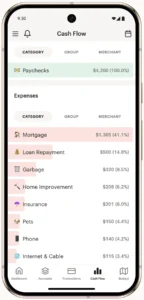
The most effective tool to combat this is a simple, year-by-year cash flow plan. When you can see the math laid out, the "what if" becomes "I can." A clear, written plan replaces the ambiguity of fear with the certainty of a strategy.
Implications for the Future Workforce
Microsoft’s Voluntary Retirement Program is a signal of a broader trend. As AI continues to reshape the corporate org chart, companies may increasingly use voluntary packages to manage transitions. Whether or not your employer offers such a program, the lesson remains the same: the most resilient employees are those who act as though their own "VRP" is always just around the corner.
The families who navigate these transitions successfully are not those who are luckiest in the stock market. They are the ones who have done the foundational work:
- They know their number.
- They have a healthcare runway.
- They treat every financial move as a tax move.
- They diversify their assets before they need them.
- They have mentally prepared for the life that follows the paycheck.
In the end, retirement is not an event that happens to you—it is a phase you prepare for. By observing the Microsoft experience, we can all learn to build a level of readiness that allows us to walk away on our own terms, rather than waiting for an employer to offer us the door.