The Cornered Bear: Vladimir Putin’s High-Stakes Calculus Amidst Strategic Encirclement
By Ian Bremmer
July 3, 2026
Introduction: A Presidency at the Precipice
NEW YORK — For a quarter-century, Vladimir Putin has navigated the turbulent waters of Russian governance with a mix of calculated brinkmanship and iron-fisted control. Yet, as of mid-2026, the Russian President finds himself in a position more precarious than at any other moment since his ascent to power in 1999. While the Kremlin’s apparatus remains intact and his internal grip on the state security services appears absolute, the strategic reality surrounding Moscow has darkened significantly.
The confluence of sustained battlefield setbacks in Ukraine, a crumbling domestic economy, and an increasingly emboldened Western alliance has created a "cornered" dynamic. In the cold calculus of the Kremlin, when the walls close in, the instinct for self-preservation often dictates a dangerous turn toward escalation. As Ukraine continues to project power deep into Russian territory and Crimea becomes an increasingly untenable logistical hub for the Russian military, the temptation for Putin to seek a "game-changing" provocation grows.
Main Facts: The Strategic Squeeze
The current crisis for the Putin administration is not merely a military one; it is an existential challenge to the myth of Russian invincibility. Several key developments define this current inflection point:
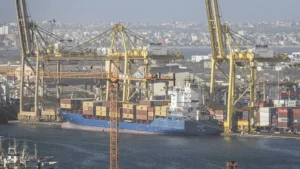
- The Crimea Conundrum: Once the jewel of Putin’s 2014 territorial expansion, the Crimean Peninsula is now a strategic liability. Constant Ukrainian drone and missile strikes have rendered the Kerch Bridge and major naval bases in Sevastopol highly vulnerable, forcing the Black Sea Fleet to relocate further east, effectively ceding control of the western maritime theater.
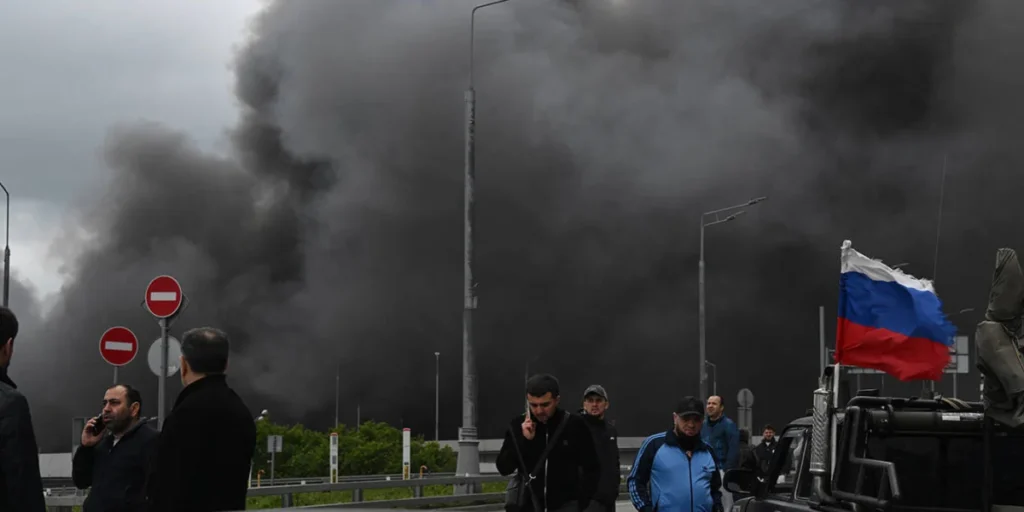
- Asymmetric Deep Strikes: Ukraine has successfully operationalized long-range strike capabilities, targeting energy infrastructure, refineries, and command-and-control nodes deep within the Russian heartland. These strikes have not only diminished Russian military capacity but have also shattered the illusion of a "protected" Russian interior.
- Economic Attrition: The Russian economy, while resilient in the early years of the conflict due to massive military spending, is now showing signs of systemic fatigue. High inflation, a labor shortage exacerbated by mobilization and emigration, and the cumulative impact of secondary sanctions have pushed the Kremlin toward increasingly desperate fiscal measures.
- Frontline Stagnation: Despite the massive mobilization of personnel, the Russian military has struggled to translate human waves into meaningful territorial gains. The front has largely crystallized into a grueling, high-attrition conflict that drains resources without offering a decisive victory.
Chronology: The Road to Isolation
To understand the current tension, one must look at the trajectory of the last 30 months:
- Early 2024: Russia launches a series of offensives, banking on Western war fatigue. However, the anticipated breakthrough fails to materialize as Western aid packages are finalized and delivered.
- Late 2024: Ukraine begins the systematic targeting of Russian oil refineries, causing significant spikes in domestic fuel prices and signaling a new phase of economic warfare.
- Early 2025: The "Crimean Blockade" intensifies. Ukraine utilizes maritime drones and long-range precision munitions to systematically dismantle Russian logistics in the peninsula.
- Mid-2025: The Russian economy faces a "triple threat": a plummeting ruble, a shrinking tax base, and the exhaustion of the National Wealth Fund.
- Late 2025 – Early 2026: A series of high-profile security breaches near Moscow force the Kremlin to shift focus from the front lines to internal regime security.
- Present Day (July 2026): Putin is faced with a strategic choice: concede to a slow, grinding decline or escalate the conflict to force a new set of negotiations.
Supporting Data: The Indicators of Decline
The empirical evidence of Russia’s struggle is found in the divergence between official Kremlin messaging and independent economic indicators.
The Macroeconomic Strain
While Russia’s GDP growth figures have been bolstered by the "war machine" (defense manufacturing), this is a classic "broken window" fallacy. The productivity of the civilian economy has cratered. Labor statistics indicate that nearly 25% of the workforce is now either deployed in the military or working in defense-related industries, creating a catastrophic vacuum in the private sector. Furthermore, the cost of borrowing has reached levels that stifle innovation, making Russia increasingly dependent on a shrinking pool of transactional partners in the Global South.
Military Attrition Rates
Intelligence estimates suggest that Russia has suffered over 600,000 casualties since February 2022. While the Kremlin has successfully replenished these ranks through aggressive recruitment and, more recently, clandestine mobilization, the quality of personnel has plummeted. The training period for new recruits has shrunk to weeks, leading to a tactical decline on the battlefield that forces commanders to rely on blunt force rather than sophisticated combined-arms maneuvers.
Official Responses: The Rhetoric of Desperation
The Kremlin’s response to these challenges has been a combination of denial and ominous signaling.
- The Kremlin Narrative: Vladimir Putin continues to insist that the "Special Military Operation" is proceeding according to plan, framing the conflict as a defensive struggle against a NATO-backed existential threat. He has frequently utilized the "Nuclear Umbrella" rhetoric to warn Western capitals against further crossing "red lines."
- Western Diplomatic Stance: The Western alliance, led by the United States and the European Union, has shifted its policy from "helping Ukraine survive" to "enabling Ukraine to dictate terms." The deployment of advanced long-range systems and the easing of restrictions on their use inside Russia signal a fundamental change in Western tolerance for Russian brinkmanship.
- The "Global South" Pivot: Moscow has attempted to court non-aligned nations to circumvent sanctions. While countries like Iran and North Korea have provided material support, larger economies like China and India have maintained a more cautious distance, fearing the fallout of secondary sanctions as Russia’s economic position becomes more radioactive.
Implications: The Dangers of a Cornered Leader
The primary concern for global security experts is not necessarily a sudden Russian collapse, but rather a "convulsive" reaction from the Kremlin. History suggests that authoritarian leaders facing existential threats often turn to extreme measures to regain the initiative.
1. The Escalation Trap
If Putin perceives that he is losing, the threshold for a "game-changing" event drops significantly. This could include:
- Hybrid Warfare: Intensified cyberattacks on critical infrastructure in NATO countries.
- Provocations in the Baltics: Attempting to test Article 5 of the NATO treaty to fracture the alliance.
- Tactical Escalation: The use of non-conventional assets or the deliberate targeting of civilian population centers to force a capitulation.
2. The Internal Fragility
While the security apparatus (the siloviki) remains loyal, their loyalty is predicated on Putin’s ability to guarantee their interests. If the war continues to drain the resources that sustain the elite, the internal calculus may shift. The risk of a "palace intrigue" or a challenge from within the security state, while currently low, increases in direct proportion to the lack of a viable exit strategy from the war.
3. Global Repercussions
The potential for a wider conflict is at its highest point in decades. Should Russia attempt to expand the theater of operations to involve NATO members, the result would be a rapid escalation that neither side may be able to control. The global economy, already suffering from the inflationary pressures of the conflict, would face a catastrophic shock, potentially leading to a prolonged period of stagflation.
Conclusion: The Need for Strategic Clarity
As we move into the second half of 2026, the international community is faced with a difficult paradox. Ukraine’s successes are necessary to prevent a Russian victory, but they also exacerbate the psychological and political pressure on a leader who has tied his survival to a "total war" narrative.
The West must walk a delicate line: providing enough support for Ukraine to decisively shift the battlefield, while simultaneously maintaining clear communication channels with Moscow to prevent a catastrophic miscalculation. Vladimir Putin is indeed cornered, but a cornered bear is at its most dangerous when it believes it has nothing left to lose.
The coming months will test not only the resolve of the Ukrainian people but the strategic discipline of the global alliance that supports them. The era of managing the status quo is over; we have entered a phase of high-stakes transition where every decision carries the weight of a potential systemic collapse. For the sake of global stability, the endgame must be managed with a precision that has, thus far, been entirely absent from the Kremlin’s planning.