The Revolving Door Under Scrutiny: Senator Warren Demands Transparency on Capital One-CFPB Ties
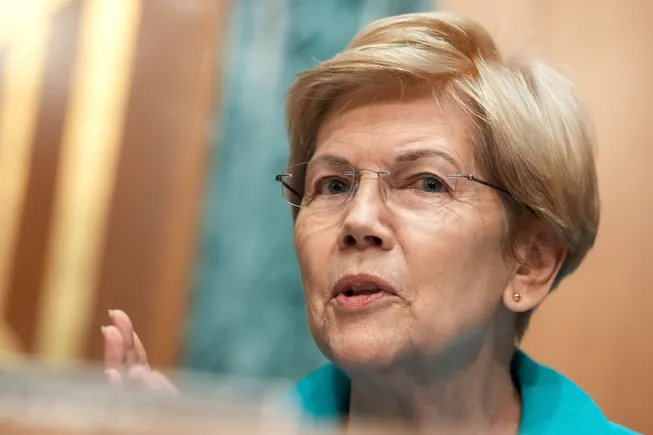
In a move that highlights the intensifying friction between federal regulatory oversight and the financial services industry, Senator Elizabeth Warren (D-MA) has launched a formal inquiry into the relationship between Capital One and the Consumer Financial Protection Bureau (CFPB). The request, directed at Capital One CEO Richard Fairbank, centers on the conduct of Brian Johnson, a high-ranking bank executive recently nominated to lead the nation’s top consumer watchdog agency.
Senator Warren’s intervention follows a series of controversial events that saw a major federal lawsuit against the banking giant abruptly evaporate, only for the company to later reach a massive settlement under the pressure of state-level litigation. At the heart of the matter is the "revolving door" phenomenon—the practice of individuals cycling between regulatory positions and the private companies they are tasked to oversee—and whether this dynamic has compromised the integrity of consumer protection enforcement.
The Chronology of a Disappearing Lawsuit
The timeline of the dispute paints a picture of shifting regulatory priorities and internal corporate maneuvering.
- January 2025: Six days before the inauguration of President Donald Trump, the CFPB filed a scathing lawsuit against Capital One. The agency alleged the bank had “cheated” millions of customers out of more than $2 billion in interest by effectively hiding higher-yield savings products from existing account holders.
- February 2025: Just one month after the lawsuit was initiated, the CFPB—now operating under new, Trump-appointed leadership—abruptly dropped the federal enforcement action against Capital One.
- May 2025: New York Attorney General Letitia James stepped into the regulatory vacuum, filing her own lawsuit against Capital One regarding the same savings account practices.
- Late May 2025: As Capital One prepared to finalize its acquisition of Discover Financial Services, the bank reached a $425 million settlement to resolve the claims raised by the New York Attorney General and private litigants.
- June 2025: President Trump nominated Brian Johnson, a former CFPB deputy director who had joined Capital One as a vice president in November 2024, to serve as the new director of the CFPB.
The Core Allegations: The 360 Savings Controversy
The lawsuit, originally brought by the CFPB, centered on a systemic bait-and-switch strategy involving legacy accounts. The issue originated with Capital One’s 2012 acquisition of ING Direct USA. ING Direct was known for its popular high-yield savings accounts, which were rebranded as "360 Savings" accounts under the Capital One banner.
According to federal regulators, Capital One marketed these legacy accounts as offering the "best" and "highest" rates. However, between 2019 and 2024, the bank intentionally froze interest rates on these accounts while simultaneously rolling out a new product, the "360 Performance Savings" account. This new product offered significantly higher returns—at one point reaching 14 times the interest rate of the legacy 360 Savings accounts.
The CFPB alleged that Capital One engaged in a calculated campaign to obscure the existence of the better-paying product from its own customers. The bank reportedly removed references to the legacy product from its website, replaced them with the new offering, and explicitly forbade employees from proactively informing long-term customers that they were being left in an inferior, low-interest account. By keeping millions of customers "in the dark," the bank allegedly prevented the payout of over $2 billion in earned interest.
Warren’s Inquiry: Probing the Revolving Door
Senator Warren’s letter to CEO Richard Fairbank is not merely a request for documentation; it is a direct challenge to the legitimacy of Brian Johnson’s nomination. Warren has set a deadline of July 7 for Capital One to provide comprehensive records, including all correspondence between Johnson and the CFPB regarding the now-defunct lawsuit.
The Conflict of Interest Question
Warren’s concerns are rooted in the dual roles held by Johnson. As a former deputy director of the CFPB during the first Trump administration, Johnson possesses an intimate understanding of the agency’s internal enforcement mechanisms. His transition to a vice president and compliance officer role at Capital One just months before the lawsuit was dropped—and his subsequent nomination to lead the very bureau that dropped the case—creates a potential conflict of interest that Warren argues is "inexplicable."
"Mr. Johnson’s role at Capital One, given the CFPB’s inexplicable and seemingly ill-considered decision to drop a major enforcement action against the bank, raises significant concerns," Warren wrote. She is specifically seeking to determine if Johnson provided the bank with internal advice on how to navigate or evade responsibility for the alleged misconduct while he was in the employ of the company.
Scope of the Demand
Senator Warren is demanding:
- Correspondence: All communications between Johnson and any CFPB personnel concerning the terminated lawsuit.
- Internal Advice: A detailed account of any advice Johnson provided to Capital One regarding the legality of the two-tier savings account structure.
- Meeting Records: Logs of any meetings or phone calls between Johnson and bureau officials from November 2024 to the present.
- Recusal Analysis: Data that might inform whether Johnson has legal or ethical obligations to recuse himself from future CFPB actions involving Capital One.
Implications for Regulatory Integrity
The implications of this investigation extend far beyond the specific case of Capital One. It touches upon the broader health of American financial regulation.
The "Advice and Consent" Responsibility
The Senate Banking Committee is tasked with the constitutional duty of "advice and consent" regarding executive nominations. Warren argues that without transparency from Capital One, the Senate cannot fulfill this duty. If a nominee for a top regulatory post has been deeply involved in the corporate strategy of an entity that successfully evaded enforcement, the public’s faith in the agency’s impartiality is severely undermined.
The Impact on Consumer Trust
The case has sparked a debate over whether large financial institutions are "too big to hold accountable." When a federal agency drops a case, only for a state attorney general to win a settlement shortly thereafter, it creates a perception of regulatory inconsistency. If the federal government is perceived as a "captured" entity that acts in the interests of industry executives rather than consumers, the deterrent effect of federal enforcement is rendered moot.
Institutional Memory and Recusal
One of the most critical aspects of Warren’s inquiry is the focus on recusal. If confirmed, Johnson would oversee the very bureau that dropped the case against his former employer. If he was involved in the development of the strategy to obscure interest rate differences, his ability to impartially manage the CFPB’s future dealings with Capital One would be functionally impossible. Warren’s request for internal correspondence is intended to establish whether such a conflict is already baked into the nominee’s professional history.
Conclusion: A Test of Congressional Oversight
The inquiry led by Senator Warren represents a pivotal moment for the CFPB and the broader regulatory landscape. As the financial sector continues to consolidate, the potential for conflicts of interest grows exponentially. The "revolving door" between regulators and the regulated is a well-documented phenomenon, but rarely does it collide so directly with a pending nomination of this magnitude.
For Capital One, the request places CEO Richard Fairbank in a difficult position. Providing the requested documents could expose internal corporate strategies that might lead to further legal trouble or reputational damage. Refusing to comply, however, could be interpreted as an admission of improper influence, potentially jeopardizing Johnson’s confirmation and inviting further scrutiny from Congress and the Department of Justice.
As the July 7 deadline approaches, all eyes remain on the Senate Banking Committee. The outcome of this confrontation will likely serve as a litmus test for how Washington handles the intersection of corporate power, federal enforcement, and the ethics of personnel transitions. For the millions of consumers who were, by the CFPB’s own original account, denied their fair interest earnings, the investigation is not just about political posturing—it is a necessary step toward ensuring that the watchdog meant to protect them is not, in fact, being led by those who sought to circumvent the rules.