In an increasingly complex macroeconomic environment, the practice of personal wealth management has undergone a fundamental digital transformation. Historically, calculating net worth—defined simply as total assets minus total liabilities—was a static, manual exercise typically conducted on physical ledgers or rudimentary spreadsheets. Today, the personal finance software industry has evolved into a highly automated, multi-billion-dollar sector driven by secure financial data aggregation, cloud computing, and artificial intelligence.
Modern net worth tracking platforms have transcended basic arithmetic. Rather than requiring users to manually input account balances, contemporary solutions utilize secure Application Programming Interfaces (APIs) and financial data networks (such as Plaid, Yodlee, and Finicity) to establish read-only connections with financial institutions. These platforms automatically aggregate real-time data across diverse asset classes—including checking and savings accounts, brokerages, retirement vehicles (401ks, IRAs), real estate, automobiles, and cryptocurrency wallets—against outstanding liabilities such as mortgages, student loans, and credit card debt.
The market features a bifurcated landscape of free, ad-supported tools and premium, subscription-based Software-as-a-Service (SaaS) applications. While free platforms often leverage user data to cross-sell financial services, paid alternatives promise heightened privacy, ad-free user interfaces, and advanced analytical suites. This report provides an analytical evaluation of the market’s leading net worth tracking tools—Empower, Monarch Money, Kubera, Rocket Money, Simplifi, and Tiller—assessing their feature sets, pricing structures, data security, and strategic positioning within the broader wealth tech ecosystem.
2. Chronology: From Ledger Books to AI-Driven Aggregation
The technological trajectory of personal asset tracking can be mapped across five distinct eras:
[1980s-1990s] The Desktop Era (Quicken, MS Money) -> [2006-2010s] The Cloud & Aggregation Wave (Mint.com) -> [2010s-2023] Institutional Consolidation (Personal Capital/Empower) -> [Late 2023-2024] The Post-Mint Diaspora -> [2025 & Beyond] The AI & Hyper-Integration Era
The Desktop Era (1980s–1990s): The inception of digital personal finance was marked by desktop-based programs like Quicken and Microsoft Money. These tools required manual data entry or periodic file downloads from bank portals. They offered robust local data storage but lacked real-time synchronization.
The Cloud and Aggregation Wave (2006–2010s): The launch of Mint.com in 2006 revolutionized the industry by introducing automated credential-based screen scraping, allowing users to view all their accounts in a single web browser interface. Personal Capital (founded in 2009) followed shortly after, focusing on high-net-worth investors by combining automated tracking with access to human financial advisors.
Institutional Consolidation (2010s–2023): Major financial institutions began acquiring independent wealth tech platforms. Personal Capital was acquired by retirement giant Empower in 2020 for $1 billion, eventually undergoing a complete rebrand to "Empower" in 2023. Meanwhile, legacy players struggled to adapt to changing API standards and consumer demands for privacy.
The Post-Mint Diaspora (Late 2023–2024): In October 2023, Intuit announced it would shut down Mint.com, forcing millions of users to seek alternative platforms. This catalytic event triggered a massive migration of consumers toward subscription-based platforms like Monarch Money, Simplifi, and Tiller, establishing a new industry standard where consumers are willing to pay for ad-free financial privacy.
The AI and Hyper-Integration Era (2025 and Beyond): The current market phase is defined by the integration of large language models (LLMs) and advanced data extraction. Platforms are no longer just aggregating numbers; they are utilizing generative AI assistants to answer natural-language queries about spending habits, automatically scanning and matching physical receipts, and tracking non-traditional assets like domain names and physical collectibles in real time.
3. Supporting Data: A Comparative Analysis of Leading Platforms
To assist consumers and financial professionals in navigating the modern wealth tech marketplace, we have compiled an exhaustive, data-driven analysis of the six premier net worth tracking solutions available today.
Empower (Editor’s Choice)
App Store Rating: 4.8 / 5 (Based on over 378,000 user reviews)
Supported Platforms: Apple iOS, Android, Web Browser
Cost Structure: Free (supported by optional wealth management services)
Primary Value Proposition: Premium investment management and asset allocation analysis at zero cost.
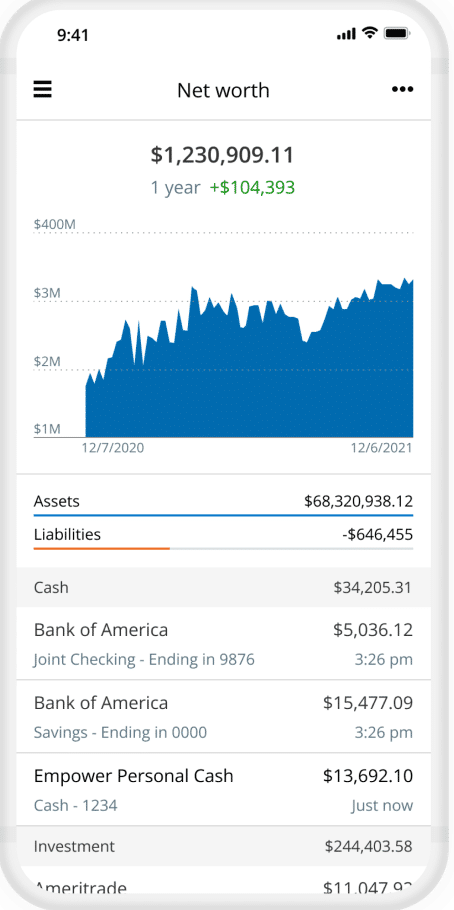
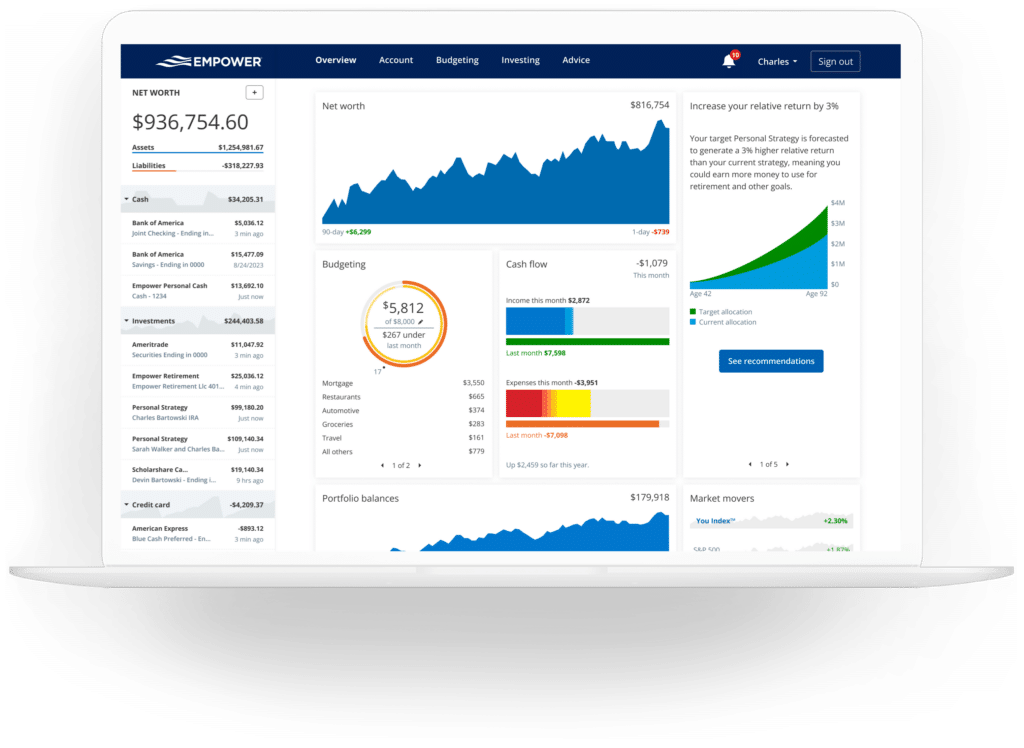
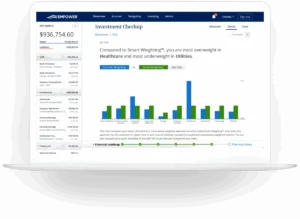
Empower remains the gold standard for free net worth tracking. It utilizes military-grade AES-256 encryption to secure financial connections. The platform excels at investment analysis, providing users with a comprehensive "Investment Checkup" tool that evaluates portfolio risk, asset allocation drift, and mutual fund fee drag.
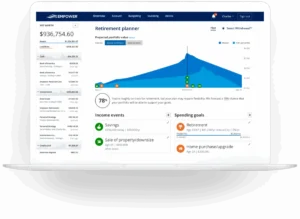
While its budgeting features are relatively basic compared to dedicated budgeting apps, its retirement planner—which runs Monte Carlo simulations to predict the probability of portfolio survival through retirement—is widely considered the best free tool on the market. The platform is monetized by offering personalized wealth management services to users with portfolios exceeding $100,000, though utilizing these advisory services is entirely optional.
Monarch Money
App Store Rating: 4.9 / 5 (Based on over 88,000 user reviews)
Supported Platforms: Apple iOS, Android, Web Browser
Cost Structure: 7-Day Free Trial; $99.99/year ($8.33/month billed annually). Promotional codes (e.g., MONARCHVIP or ROB50) frequently offer 50% off the first year.
Primary Value Proposition: Highly customizable budgeting and multi-user collaboration combined with robust net worth tracking.
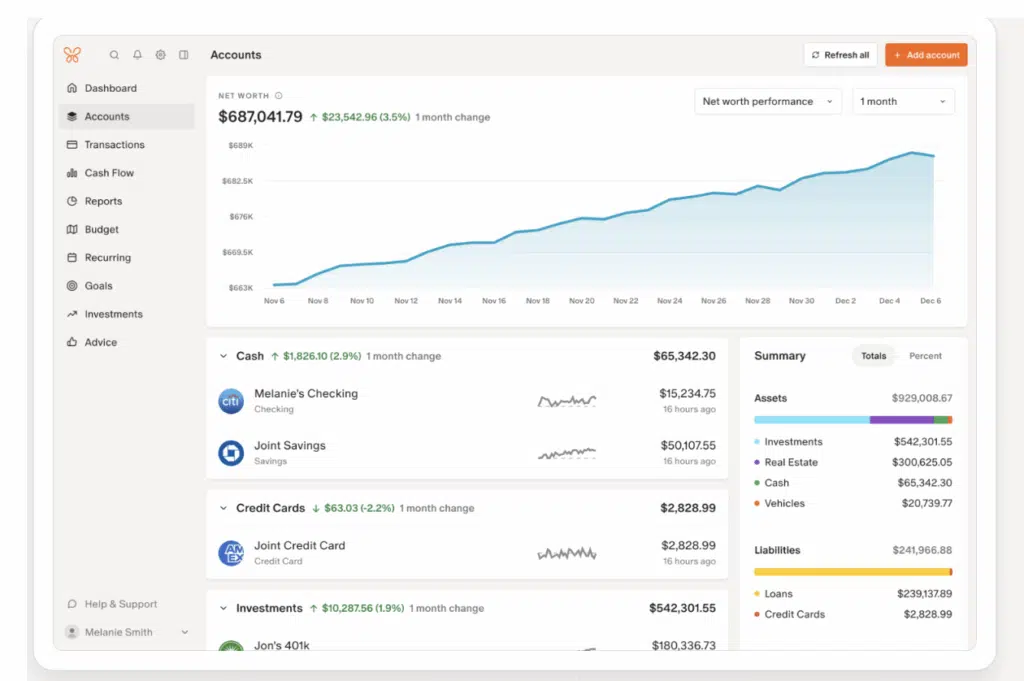
Monarch Money has emerged as one of the primary beneficiaries of the post-Mint migration. It offers a premium, ad-free environment that prioritizes user privacy. Monarch supports multi-network syncing (Plaid, Finicity, and MX) to ensure stable bank connections.
Beyond tracking traditional equities and liquid accounts, Monarch integrates with Zillow for real-time home valuation, Coinbase for cryptocurrency assets, and allows users to track vehicle depreciation by inputting their Vehicle Identification Number (VIN).
Recently, the platform introduced two major technological enhancements:
AI Financial Assistant: A generative AI tool allowing users to query their financial data using natural language (e.g., "How much did I spend on dining out compared to last month?").
Automated Receipt Scanner: A feature that extracts line-item data from uploaded physical or digital receipts and automatically matches them to corresponding banking transactions.
Kubera
App Store Rating: Primarily web-optimized; mobile companion apps available.
Supported Platforms: Web Browser, Apple iOS, Android
Cost Structure: 14-Day Free Trial; $249/year
Primary Value Proposition: Institutional-grade, global asset tracking designed specifically for high-net-worth individuals and complex portfolios.
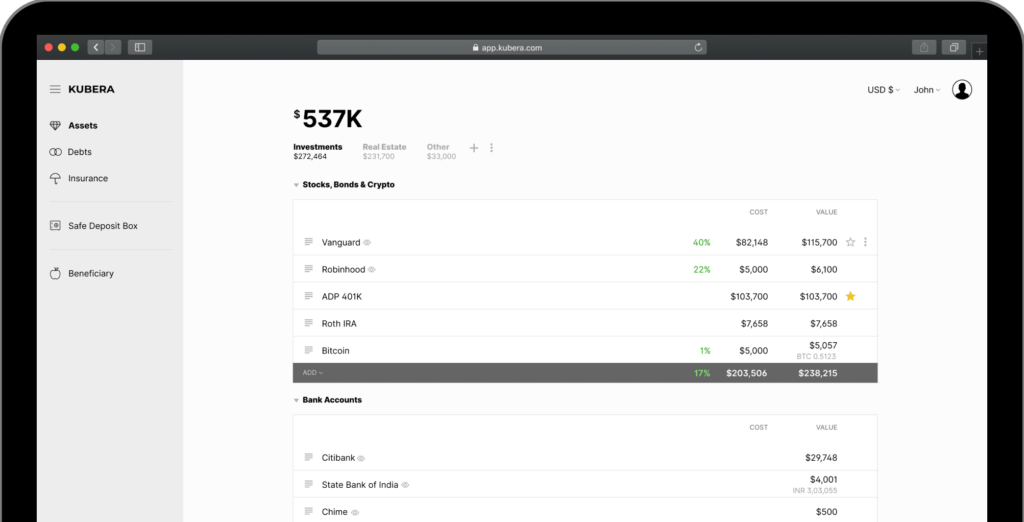
Kubera positions itself as the most advanced, privacy-centric net worth tracker on the market. It does not sell user data, feature advertisements, or cross-sell financial products.
The platform supports global currencies and connects with over 20,000 banks worldwide. It is uniquely engineered to track non-traditional assets, including domain name valuations, physical real estate (via Zillow integration), vehicles (via VIN), and custom manually updated assets like art, jewelry, and private equity.
Additionally, Kubera features a secure "Life Box" document vault for storing insurance policies, wills, and trust documents, complete with a "dead man’s switch" protocol to share vital financial details with beneficiaries in the event of the user’s death or incapacitation.
Rocket Money
App Store Rating: 4.3 / 5
Supported Platforms: Apple iOS, Android, Web Browser
Cost Structure: Free tier available; Premium features operate on a "pay-what-you-want" model ranging from $6 to $12/month (or as low as $4/month when billed annually).
Primary Value Proposition: Automated subscription cancellation and bill negotiation paired with everyday budgeting.
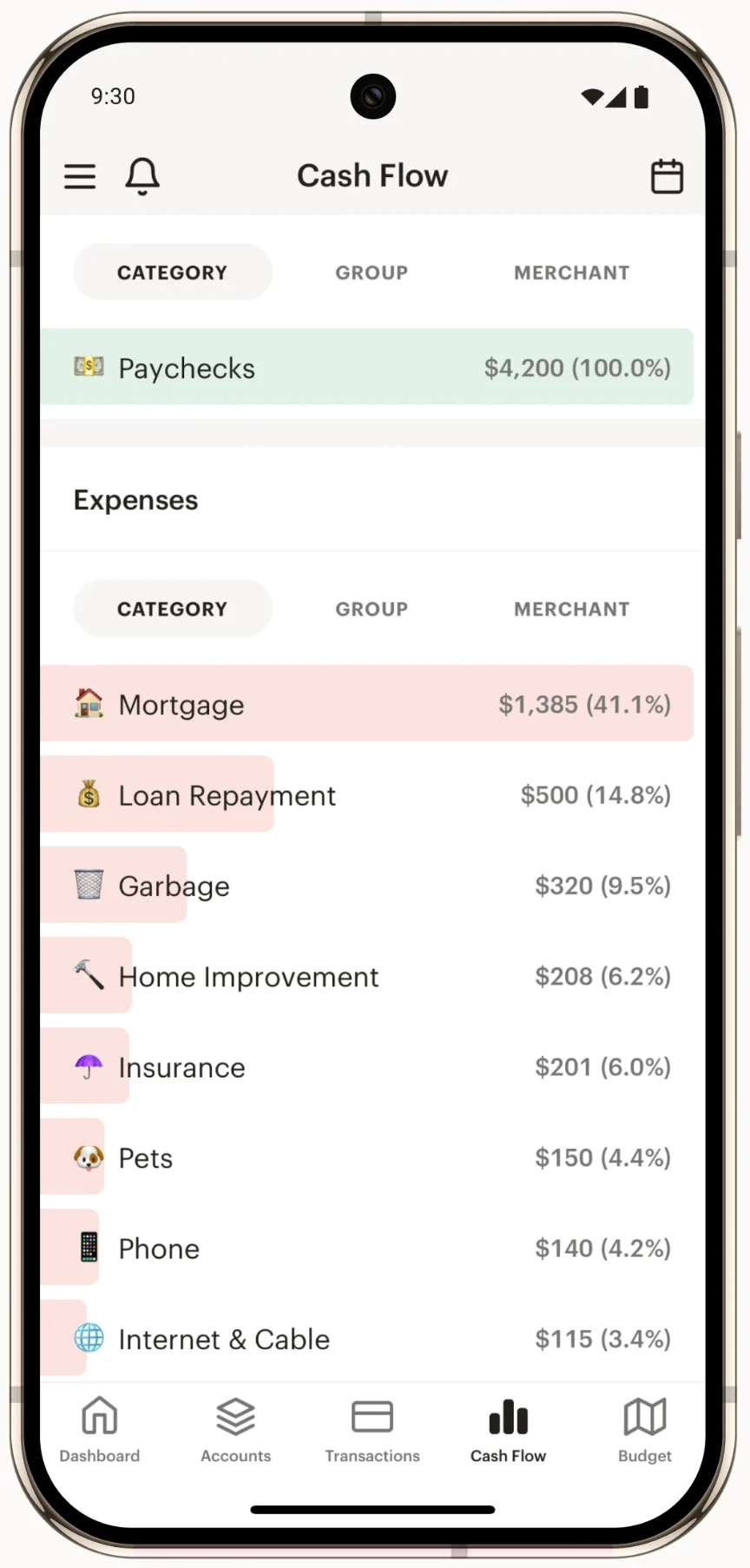
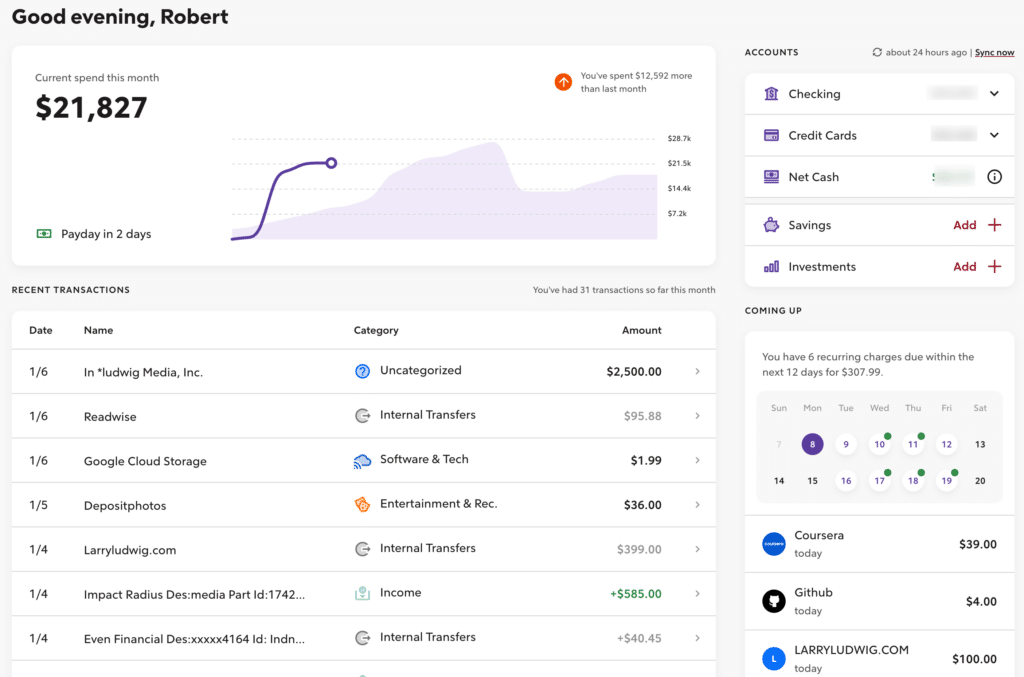
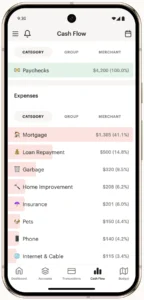
Formerly known as Truebill, Rocket Money is a consumer-centric app designed to optimize monthly cash flow. While it offers net worth tracking capabilities by connecting to investment and bank accounts, its core strengths lie in expense management.
The platform automatically scans transaction histories to identify recurring subscriptions, offering a one-click cancellation service. Rocket Money also provides a bill negotiation service, where company representatives contact service providers (such as telecom and internet companies) on the user’s behalf to negotiate lower rates, taking a percentage of the annual savings as a fee.
Simplifi (by Quicken)
App Store Rating: 4.1 / 5
Supported Platforms: Apple iOS, Android, Web Browser, Desktop
Cost Structure: $3.49/month for the first year (billed annually), renewing at $6.99/month.
Primary Value Proposition: A modern, mobile-first budgeting interface backed by the decades-long financial pedigree of Quicken.
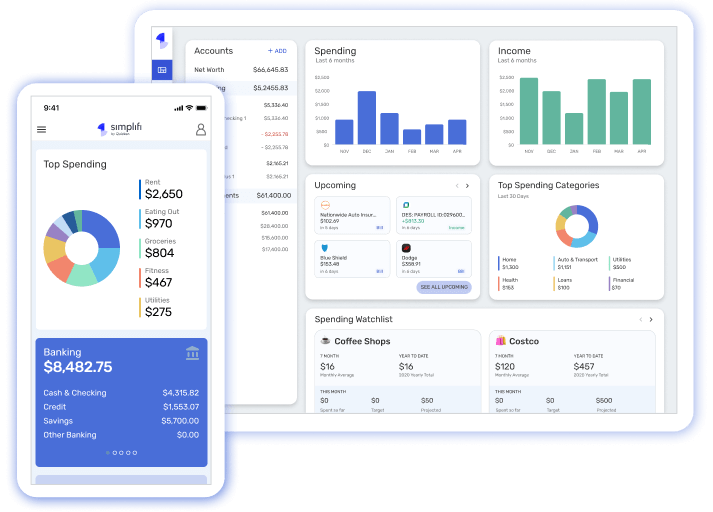
Simplifi bridges the gap between legacy desktop software and modern mobile applications. It offers a highly visual, intuitive dashboard that allows users to set customizable savings goals, track real-time spending, and monitor investments.
Over the past two years, Simplifi has significantly upgraded its investment tracking suite, allowing users to view portfolio performance, track asset allocation, and calculate real-time fluctuations in their net worth. Its "Spending Plan" feature dynamically calculates how much disposable income a user has left after accounting for fixed bills and savings goals.
Tiller
App Store Rating: N/A (Spreadsheet-based service)
Supported Platforms: Google Sheets, Microsoft Excel
Cost Structure: 30-Day Free Trial; $79/year
Primary Value Proposition: Complete data ownership and infinite customization for spreadsheet enthusiasts.
Tiller is a unique offering in the personal finance landscape, designed specifically for users who reject standard app interfaces in favor of spreadsheets. Tiller automatically aggregates data from a user’s financial institutions and securely feeds it directly into Google Sheets or Microsoft Excel.
Tiller provides a variety of pre-built templates, including a highly detailed Net Worth Tracker, monthly and yearly budget sheets, and debt payoff planners. Because the data resides in a standard spreadsheet format, users retain absolute control over their financial history, allowing them to write custom formulas, generate bespoke charts, and ensure their financial records remain independent of any single proprietary platform’s survival.
4. Official Responses and Industry Perspectives
The rapid evolution of the personal wealth tech sector has drawn significant commentary from cybersecurity experts, financial planners, and industry executives.
On Data Security and the Transition to Open Banking
For years, financial data aggregation relied heavily on "screen scraping"—a process where users handed over their bank login credentials to third-party aggregators, who then programmatically logged in to extract data. Cybersecurity experts have long warned against this practice.
In response, the industry is transitioning to Open Banking standards. Major aggregators like Plaid and Yodlee have established direct OAuth (Open Authorization) agreements with major institutions like JPMorgan Chase, Bank of America, and Wells Fargo.
A spokesperson from the Financial Data Exchange (FDX) noted:
"The industry-wide shift toward direct APIs and OAuth tokens represents a massive leap forward for consumer security. Users no longer need to share their actual passwords with third-party applications. Instead, they authorize secure, read-only data tokens that can be revoked at any time directly from their bank’s security portal."
On the Psychology of Net Worth Tracking
Certified Financial Planners (CFPs) emphasize that tracking net worth is a far more effective metric for long-term wealth accumulation than simply monitoring monthly budgets.
"Budgeting is an exercise in controlling short-term behavior, whereas tracking your net worth is an exercise in long-term strategy," says financial author and personal finance analyst Rob Berger. "When you track your net worth, you gamify your savings. You begin to see how paying down a mortgage or compounding investment returns directly increases your overall financial security. It shifts the psychological focus from restricted spending to wealth building."
5. Implications: The Future of Personal Wealth Management
The structural shifts observed in the wealth tech sector point to several critical implications for consumers and the broader financial services industry:
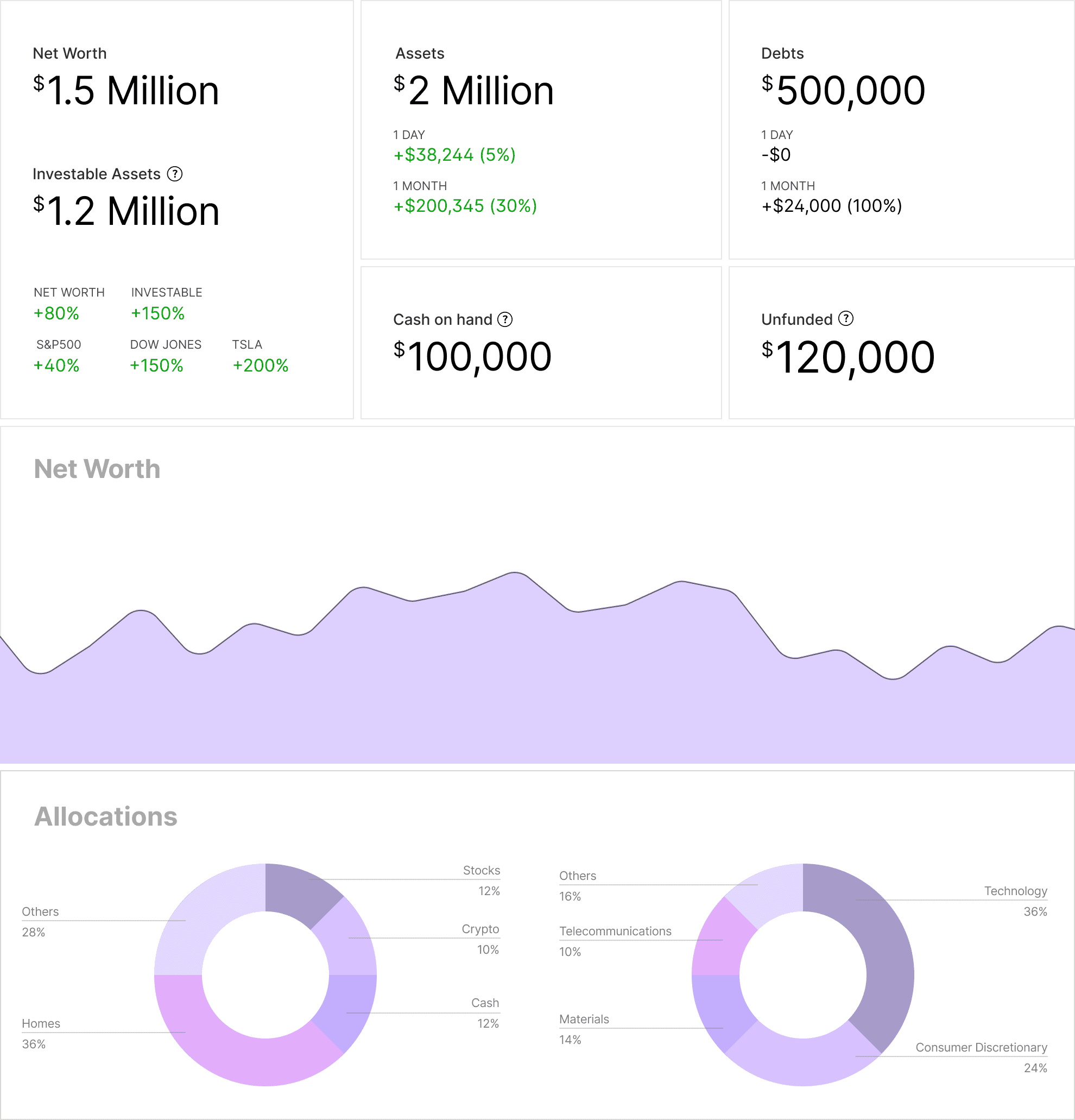
The Demise of "Free" and the Premiumization of Privacy: The shutdown of Mint.com underscored a fundamental reality of the internet age: if you are not paying for the product, you are the product. Free financial apps often monetize by selling aggregated consumer data, presenting targeted advertisements, or pushing high-interest financial products. The massive success of paid platforms like Monarch Money and Kubera indicates that modern consumers are increasingly willing to pay a premium subscription fee to guarantee their financial data remains private, secure, and ad-free.
The Democratization of High-Net-Worth Tools: Sophisticated analytical tools that were once the exclusive domain of professional wealth managers—such as asset allocation inspectors, fee analyzers, and Monte Carlo retirement simulators—are now accessible to the average retail investor for free or at a nominal annual fee. This democratization empowers individuals to manage their own portfolios, reducing their reliance on traditional, high-commission financial advisors.
AI as a Financial Equalizer: The integration of AI into platforms like Monarch Money represents the first step toward autonomous personal finance. In the near future, AI assistants will likely transition from answering historical questions ("What did I spend?") to providing proactive, predictive advice ("Based on your cash flow patterns, you should move $2,000 from your checking account to your brokerage account today to optimize your returns, as your upcoming expenses are projected to be lower than average.").
Data Portability and Consumer Sovereignty: As consumers cycle through various financial applications, data portability will become a key competitive battleground. Platforms that make it easy for users to import and export their complete historical transaction data (such as Tiller and Monarch) will likely enjoy higher consumer trust and retention than closed ecosystems that lock users in.
Ultimately, the choice of a net worth tracker depends on an individual’s specific financial goals, portfolio complexity, and budget. Whether utilizing the comprehensive free tools of Empower, the collaborative budgeting interface of Monarch, the institutional-grade tracking of Kubera, or the customizable sheets of Tiller, consumers now possess an unprecedented level of control over their financial destinies.