The Unstoppable Rise of the Retail Investor: A New Era in Financial Markets
June 26, 2026 – The financial landscape is undergoing a profound transformation, with the once-dismissed "mom-and-pop" retail investor emerging as an undeniable force. Far from a fleeting phenomenon, the surge in individual trading activity, ignited by the unprecedented conditions of the early 2020s, has not only persisted but continues to accelerate, reshaping market dynamics from initial public offerings to options contracts. This resurgence, underscored by massive demand for high-profile events like the SpaceX IPO and a focused interest in high-growth sectors, occurs paradoxically alongside record-high cash allocations, painting a complex picture of a market driven by diverse forces.
Main Facts: Retail Resurgence and Market Paradoxes
The narrative of the modern financial market can no longer be written without a prominent chapter dedicated to the retail investor. Their influence is quantified by staggering figures:
- SpaceX IPO Demand: Retail investors demonstrated an estimated $70 billion in demand for the highly anticipated SpaceX initial public offering. This colossal sum represents roughly 30% of the total $250 billion demand, a stark contrast to the historical norm of 5-10% typically reserved for individual investors. This signals a new level of engagement and capital deployment from the retail segment in marquee market events.
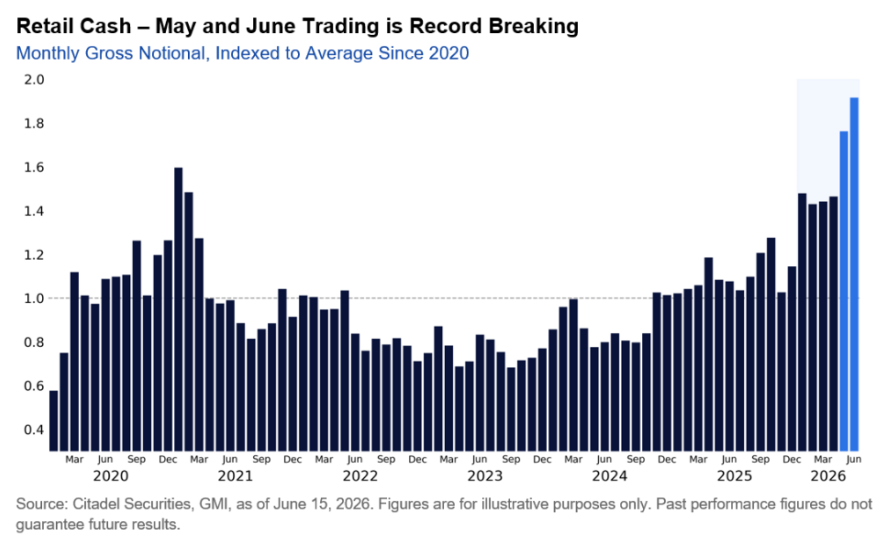
- Record Trading Activity: Data from market-making giant Citadel Securities confirms an unprecedented spike in retail trading volumes. Nine of the ten largest retail trading days ever observed on their platform occurred within the last month leading up to late June 2026, with seven of those falling in the first half of June alone. Friday, June 12, 2026, specifically marked the largest single day of retail net buying in Citadel’s dataset, surpassing the previous record by a staggering 50%.
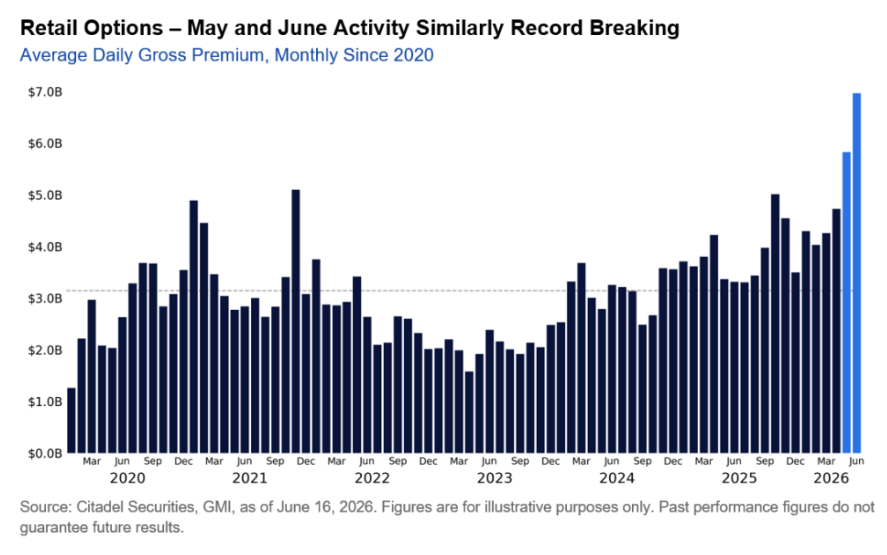
- Options Market Boom: The trend extends aggressively into the options market. Retail traders shattered average daily option volume records in May, up 20% year-over-year, only to set new consecutive records in the first and second weeks of June. This points to both increased participation and, potentially, a more sophisticated or speculative approach from individual traders.
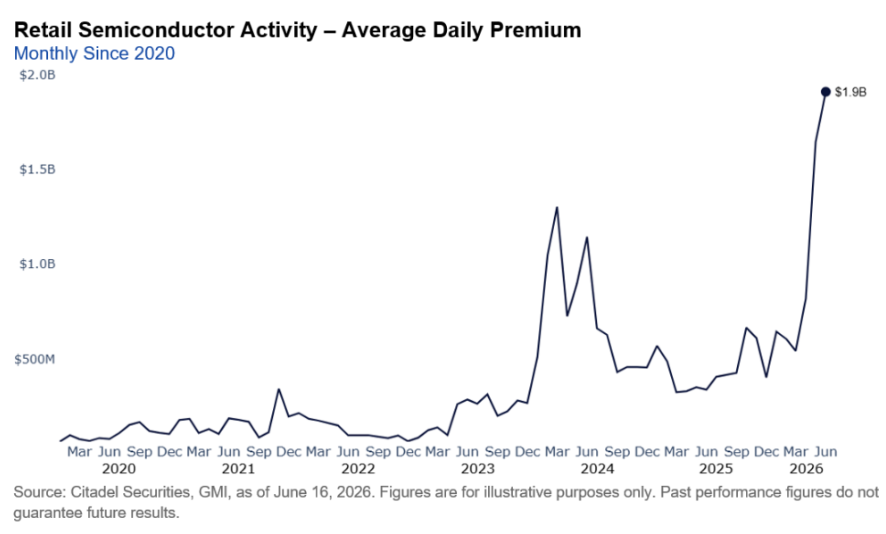
- Sectoral Focus: Retail investors are not merely chasing "meme stocks" anymore. They are actively participating in high-growth sectors, notably semiconductors, which have seen "otherworldly" returns. SanDisk, Western Digital, and Micron, for instance, have recorded gains of over 4,000%, 1,000%, and 1,000% respectively in the past 12 months. This engagement mirrors, and sometimes leads, institutional flows into these performance-driving assets.
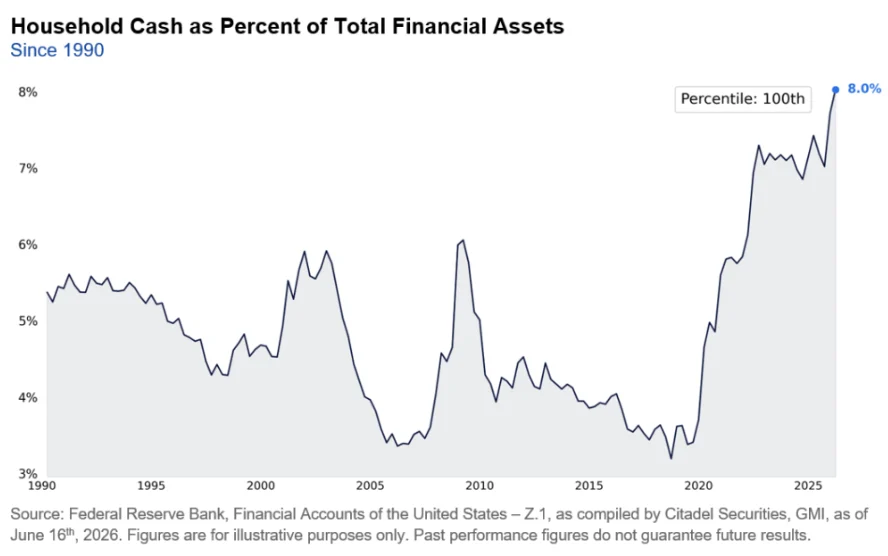
- The Cash Conundrum: Despite this apparent enthusiasm and speculative activity, a significant counter-trend exists: cash as a percentage of financial assets is at its highest level since 1990 and continues to grow. This paradox challenges the simplistic narrative of a purely speculative market and suggests underlying prudence and strategic positioning among a large segment of investors.
Chronology: From Pandemic Spark to Sustained Momentum
The evolution of the retail investor’s role in the financial markets traces a compelling timeline, marked by unexpected catalysts and persistent growth.
Pre-Pandemic Underestimation (Pre-2020)
For decades, retail investors were often caricatured as unsophisticated "mom-and-pops," frequently mocked by seasoned professionals for their perceived lack of institutional knowledge or emotional trading decisions. Their collective impact on overall market movements was considered negligible, typically limited to a small percentage of total trading volume and IPO allocations. The barriers to entry were higher, transaction costs were steeper, and access to real-time data and sophisticated tools was limited.
The Pandemic Ignition (2020-2021)
No one could have predicted that a global health crisis would ignite the largest retail trading boom in history. The COVID-19 pandemic, with its lockdowns, remote work, and direct stimulus payments, created a fertile ground for individual investors. With more time at home, disposable income, and the rise of zero-commission trading apps, millions flocked to the markets. This period saw the emergence of "meme stocks" and highly coordinated online trading communities, which dramatically illustrated the collective power of decentralized retail capital. This initial surge was often dismissed by critics as a temporary fad, fueled by boredom and government handouts, destined to subside once normalcy returned.
Post-Pandemic Persistence and Acceleration (2022-2025)
Contrary to widespread predictions, retail trading did not subside. Instead, it evolved and grew. The technological advancements that facilitated the initial boom—user-friendly platforms, fractional share ownership, and readily available financial information—became permanent fixtures. Retail investors demonstrated an increasing willingness to engage with more complex instruments, such as options, and to conduct their own research, often leveraging social media and online forums. This period solidified the retail segment’s presence as a consistent, influential market participant, moving beyond mere speculative fads.
The Current Apex (2026)
The current year, 2026, marks an unprecedented peak in retail activity. The estimated $70 billion retail demand for the SpaceX IPO, representing 30% of total demand, is a watershed moment, illustrating institutional-level interest and capital. Citadel Securities’ data from the past month, with multiple record-breaking retail trading days in early June, further underscores this sustained and accelerating momentum. The consistent breaking of options volume records signals a growing comfort and active participation in more complex derivatives. Moreover, retail investors are now actively deploying capital into core economic drivers like semiconductor stocks, reflecting a maturation beyond purely speculative plays into fundamental growth narratives.
The Bond Market’s Counter-Narrative (2020s)
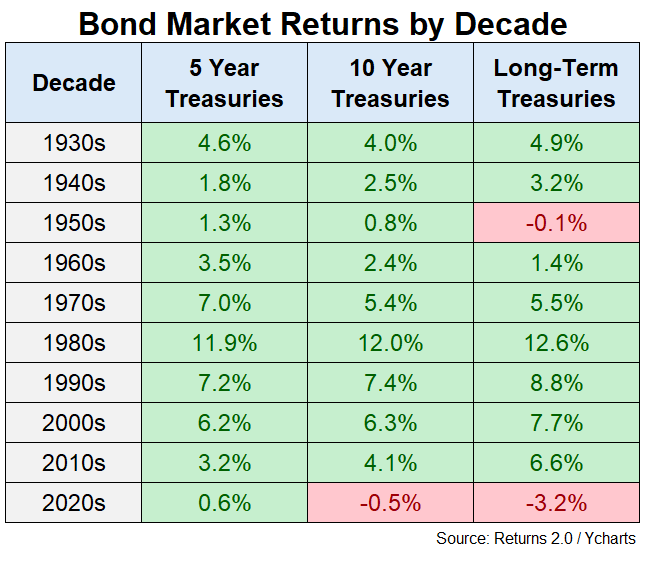
Simultaneously, the 2020s have presented a starkly different picture for traditional fixed-income investments. This decade has been "the worst ever for bond investors," highlighted by a severe bond bear market beginning in 2022. The Aggregate Bond Index (Agg) experienced its most significant drawdown in history, crushing high-quality bonds and forcing a re-evaluation of conventional portfolio allocations. This performance directly influenced the shift of many investors from bonds to cash, seeking safety and, eventually, yield.
The Return of Yield (Post-GFC to 2026)
Following more than a decade of near-zero interest rates post-Global Financial Crisis (GFC), cash finally began to offer attractive yields. The shift from 0% to current rates of 3-4% on cash equivalents significantly altered the opportunity cost of holding cash. This return to yield, coupled with the bond market’s struggles, made cash a more viable and appealing component of a balanced portfolio, especially for risk-averse investors and those nearing retirement.
Supporting Data: A Deep Dive into Market Metrics
The assertions of a powerful retail presence are firmly anchored in empirical data, painting a vivid picture of changing market dynamics.
SpaceX IPO: A Retail Power Play
Bloomberg’s estimate of $70 billion in retail demand for the SpaceX IPO is a crucial indicator. To put this in perspective, typical retail allocations in major IPOs rarely exceed 10%, often hovering around 5%. A 30% share signifies not just widespread interest but also a substantial pooling of capital from individual investors, challenging the traditional hierarchy of institutional dominance in primary market offerings. This suggests that highly anticipated, innovative companies like SpaceX can now leverage direct retail engagement to a far greater extent than previously imagined.
Citadel Securities: The Pulse of Retail Flow
Citadel Securities, as a major market maker, has unparalleled visibility into order flow. Their observations are therefore highly authoritative:
- Historic Trading Days: The fact that "Nine of the ten largest retail trading days ever observed on our platform have occurred in just the last month, including seven during the first half of June alone," is not merely an anecdote; it’s a testament to sustained, elevated activity. This isn’t a single event but a concentrated period of intense engagement.
- Record Net Buying: "Friday (June 12) marked the largest single day of retail net buying in our dataset, surpassing the previous record by 50%." This jump indicates a significant increase in conviction and capital deployment, moving beyond simple trading volume to substantial net inflows of capital from retail accounts. The charts provided visually corroborate this upward trajectory, showing a clear, accelerating trend in retail trading volumes that defy earlier predictions of a post-pandemic decline.
Options Market: A New Frontier for Retail
The surge in retail options trading is equally compelling. Citadel’s report of "average daily option volume for retail traders broke record highs in May, up 20% from a year earlier," followed by "another new volume record shattered in the first week of June followed by yet another the very next week," points to several things:
- Increased Access and Understanding: Retail traders are becoming more comfortable and proficient with derivatives, likely due to easier access through trading apps and an abundance of educational content.
- Leveraged Bets: Options allow for leveraged exposure, which can amplify returns (and losses). This suggests a segment of retail investors are seeking higher-risk, higher-reward opportunities.
- Hedging/Income Strategies: While some is speculative, a portion might also reflect more sophisticated strategies like hedging existing portfolios or generating income through covered calls, indicating a maturation of retail trading strategies.
The Semiconductor Sector: Convergence of Retail and Institutional Capital
The "otherworldly" returns in semiconductor stocks, with SanDisk up 4,000% and Western Digital and Micron both up nearly 1,000% in 12 months, highlight a key area of retail interest. Crucially, the data shows that retail investors have "poured money into this space," mirroring, and sometimes preceding, the movements of hedge funds. Michael Cembalest’s data from JPMorgan Funds confirms significant hedge fund allocations to the sector as well. This convergence signifies that retail investors are not just chasing fads but are actively participating in sectors driving overall market performance, particularly in the S&P 500 and Nasdaq 100, which are increasingly influenced by these technology giants. This challenges the notion that retail investors are solely focused on "meme stocks."
The Cash Paradox: A Foundation of Prudence
The observation that "cash as a percentage of financial asset is now at its highest level since 1990" and "it’s only growing" is perhaps the most intriguing data point. This seemingly contradicts the narrative of a speculative frenzy. Several factors contribute to this:
- The Bond Bear Market: The 2020s have indeed been a brutal period for bonds. The "worst decade ever for bond investors" saw the Aggregate Bond Index experience its "worst drawdown in history during the bond bear market that began in 2022." This led many investors to abandon traditional fixed-income allocations in favor of cash, which offered stability and liquidity.
- Return of Yield: After years of near-zero returns, cash equivalents now offer attractive yields of "3-4%." While not enough to retire on, it’s a substantial improvement over the post-GFC era, making cash a viable, low-risk holding for capital preservation and short-term liquidity.
- Baby Boomer De-risking: A significant demographic shift is underway, with "45-50 million baby boomers already retired" and "another 20-25 million closing in on their retirement." These investors typically seek to de-risk their portfolios, prioritizing capital preservation and income over aggressive growth. Cash serves as a crucial "margin of safety" in retirement portfolios, providing liquidity for expenses and reducing exposure to market volatility.
These data points collectively suggest a nuanced market where heightened retail engagement coexists with strategic, often conservative, asset allocation decisions, driven by a complex interplay of market conditions, technological access, and demographic shifts.
Official Responses and Expert Commentary: Shifting Perceptions
While the original article doesn’t contain direct "official responses" from regulatory bodies, it effectively incorporates commentary from key market participants and analysts, highlighting the evolving perception of the retail investor.
Ben Carlson (Author): The author’s overarching thesis, "Retail investors are no longer the mom-and-pops of the past, openly mocked by the pros," serves as a central declaration. His observation that "The growth of retail trading this decade is a massive sea change in the financial markets" underscores the transformative nature of this trend. Carlson directly challenges simplistic narratives, stating, "Some pundits would have you believe the markets have turned into a speculative orgy of degenerate gamblers. Sure, there is some of that going on… But this simply isn’t the case in all corners of the market." He advocates for a more balanced view, acknowledging both speculative elements and prudent financial decisions.
Citadel Securities: As a market maker, Citadel’s data is an "official response" from a crucial market infrastructure provider. Their detailed reporting on record retail trading days and options volumes serves as objective evidence of the trend. Their ability to track and analyze these flows gives their observations significant weight, confirming the magnitude and persistence of retail activity. Their insights contribute to a more data-driven understanding, moving beyond anecdotal evidence or stereotypes.
Bloomberg News: As a leading financial news and data provider, Bloomberg’s estimation of "retail demand for the SpaceX IPO was in the neighborhood of $70 billion" is a critical data point. This figure provides an "official" third-party assessment of retail’s capital deployment in a major primary market event, lending credibility to the narrative of their growing influence.
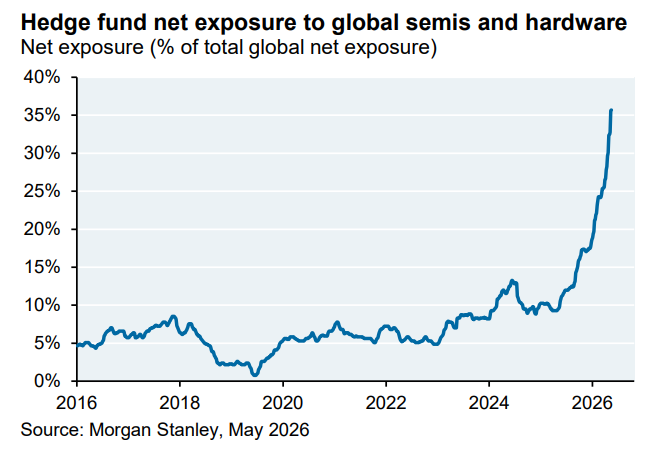
Michael Cembalest (JPMorgan Funds): Cembalest’s contribution, specifically the data showing hedge fund investment in semiconductor stocks, is crucial. By presenting this alongside retail investment data, he implicitly highlights a convergence of interest between institutional and individual investors in high-growth sectors. This suggests that "smart money" and "main street money" are sometimes targeting the same fundamental opportunities, dispelling the myth that retail investors only chase speculative, fringe assets.
General Market Pundits: The article implicitly addresses and refutes the "speculative orgy" narrative often promulgated by some financial commentators. By juxtaposing the retail trading boom with the record-high cash holdings, the author presents a counter-argument. This "official response" to a common market narrative suggests that the market is far more nuanced than a simple dichotomy of "gamblers" versus "prudent investors." Instead, it’s a market with "different investor types" and diverse motivations, ranging from aggressive growth seeking to conservative capital preservation. This nuanced view is essential for a professional journalistic approach, avoiding sensationalism and providing a more accurate reflection of market realities.
Implications: Reshaping the Financial Ecosystem
The persistent and growing influence of retail investors, coupled with the paradoxical rise in cash holdings, carries profound implications for market structure, investment strategies, and the broader economy.
Reconfigured Market Structure and Liquidity
The significant capital deployed by retail investors, as seen in the SpaceX IPO, fundamentally alters the demand side of the market. This increased participation means:
- Enhanced Liquidity: More participants generally lead to higher liquidity, making it easier to buy and sell securities. This can reduce price volatility in some instances, although concentrated retail buying can also create short-term price spikes.
- Broader Ownership Base: A larger retail footprint in IPOs and growth sectors like semiconductors means a wider distribution of ownership, potentially reducing the concentration of power among a few large institutional holders.
- Democratization of Finance: The barriers to entry have been significantly lowered. Zero-commission trading, fractional shares, and accessible market data have democratized access to investments, allowing a broader segment of the population to participate in wealth creation.
Evolution of Investment Strategies
Both institutional and individual investors must adapt:
- Institutional Adaptation: Hedge funds and asset managers can no longer ignore retail sentiment or flows. The collective power of retail can influence stock prices and market narratives, requiring institutions to monitor social media trends and retail trading data more closely.
- Retail Sophistication: The move beyond "meme stocks" into core growth sectors and the increased use of options suggest a growing sophistication among retail investors. This could lead to more diversified and long-term oriented portfolios within the retail segment.
- Active vs. Passive: While some retail activity is highly active and speculative, the high cash holdings also indicate a significant portion of investors are adopting a more cautious, passive, or opportunistic approach, waiting for favorable entry points or using cash as a hedge.
The Role of Cash as an Asset Class
The substantial and growing cash balances have several implications:
- Dry Powder: High cash levels represent significant "dry powder" that could be deployed into markets, potentially fueling future rallies or providing stability during downturns if investors choose to buy the dip.
- Interest Rate Sensitivity: The attractiveness of cash is highly dependent on interest rates. If rates fall significantly, the incentive to hold cash diminishes, potentially pushing capital back into equities or bonds.
- Economic Indicator: High cash levels can be interpreted in various ways – as a sign of caution, a lack of compelling alternatives, or a strategic decision given current yields. It indicates that despite market enthusiasm, a large segment of wealth remains on the sidelines, influencing future capital flows.
Broader Economic and Societal Impact
- Wealth Distribution: The democratization of investing can potentially lead to a broader distribution of wealth, as more individuals have access to market returns.
- Regulatory Scrutiny: The increased activity, especially in options and highly volatile assets, could attract greater regulatory attention to protect individual investors and ensure market integrity. The rise of new platforms and trading mechanisms may necessitate updated regulations.
- New Market Narratives: The market’s narrative is becoming increasingly complex. It’s no longer just about institutional movements or economic fundamentals; retail sentiment and collective action are now crucial elements to consider, creating a dynamic interplay of forces.
In conclusion, the current financial market, as of mid-2026, is a vibrant, multifaceted ecosystem. The retail investor, once a peripheral figure, now stands as a central pillar, driving significant capital flows, influencing valuations, and demanding attention from all corners of the financial world. This new era, characterized by both enthusiastic participation in high-growth opportunities and prudent cash management, defies simple categorization and promises continued evolution in the years to come. It is a testament to the fact that in financial markets, as in life, there truly is "something for everyone when it comes to market narratives these days."