Venezuela in Crisis: Twin Earthquakes Trigger Massive Humanitarian Emergency
Executive Summary: A Nation Under Duress
Venezuela is currently grappling with a catastrophe of historic proportions following two massive earthquakes that struck the nation on Wednesday evening. The seismic events, measuring 7.2 and 7.5 in magnitude, occurred within seconds of one another, tearing through the country’s infrastructure and leaving hundreds dead and thousands injured. As the death toll officially climbs toward 600, a chasm has emerged between government reporting and independent tracking efforts, with tens of thousands of citizens currently unaccounted for.
The disaster has crippled critical transit hubs, including the Simón Bolívar International Airport, and left vast swaths of the population without electricity, water, or gas. As the international community mobilizes to assist, the tragedy serves as a harrowing test for the interim government, led by Delcy Rodríguez, amid a landscape already defined by economic instability and international sanctions.
Chronology of the Disaster
The seismic sequence began on Wednesday evening, catching millions of residents off guard. Within a span of less than sixty seconds, two powerful tremors—a 7.2 magnitude shock followed by a 7.5 magnitude main event—decimated neighborhoods and collapsed structures across several Venezuelan states.
- Wednesday Evening: The initial tremors hit. Communication networks were instantly overwhelmed, and major structural failures were reported in the coastal state of La Guaira and the capital, Caracas.
- Thursday Morning: The government’s official death toll stood at 150. Meanwhile, residents began congregating in public spaces, fearing aftershocks. The US government signaled its intent to intervene, with President Donald Trump confirming that all US agencies were prepared to assist.
- Friday Morning: US Marine Corps General Kevin Jarrard arrived in Caracas to coordinate the influx of international search-and-rescue teams. By this time, rescue personnel from Mexico, El Salvador, and Switzerland had reached the ground.
- Ongoing: Continuous aftershocks have hindered search operations, forcing rescue teams to navigate unstable, rubble-strewn landscapes. The government has declared La Guaira a disaster zone and deployed military personnel to maintain order and expedite relief efforts.
The Human Toll and Data Discrepancies
The human cost of this tragedy is escalating by the hour. According to the latest official figures, at least 589 people have been confirmed dead, with nearly 3,000 suffering from injuries ranging from critical to minor.
The Missing Persons Crisis
A significant point of contention has arisen regarding the scale of the missing population. While the Venezuelan government’s official count remains conservative, the political opposition has launched a dedicated tracking portal—desaparecidosterremotovenezuela.com—which paints a far more dire picture. According to the opposition’s data, more than 58,000 individuals are currently listed as unaccounted for. This massive disparity has fueled public anxiety and fueled criticism of the government’s emergency response transparency.
The Epicenter: La Guaira
Health Minister Carlos Alvarado has described the situation in La Guaira as critical. Hospitals in the region are operating at maximum capacity, with field hospitals now being erected to handle the influx of the 4,300 injured individuals reported in that state alone. The coastal region, which serves as the gateway to Caracas, has suffered the most profound damage, effectively isolating the capital from its primary international aviation hub.
Official Responses and International Intervention
The Government Strategy
Interim President Delcy Rodríguez has taken a proactive, if pressured, stance. To combat the mounting economic fallout, the government announced the creation of a $200 million reconstruction fund, utilizing resources from the International Monetary Fund. This capital is earmarked for the repair of essential infrastructure, the construction of emergency housing, and the support of local businesses.
Furthermore, in a move to restore liquidity to the private sector, public and private banks have been instructed to activate special credit lines for citizens who have lost their livelihoods. The government is also engaged in a massive logistical operation, including the leasing of private-sector heavy machinery to clear debris and reach trapped victims.
International Aid and the US Role
The international community has responded with urgency. The United States has taken a leading role in the coordination of relief efforts. Crucially, the US Treasury Department issued a special license on Thursday, effectively waiving sanctions-related restrictions for any transactions directly related to earthquake relief. This bureaucratic maneuver is vital, as it allows for the rapid flow of funds and goods that might otherwise be blocked by the existing sanctions regime.
General Kevin Jarrard’s presence in Caracas underscores the strategic importance the US is placing on the recovery process. Additional aid is expected from Colombia, Spain, Barbados, and Panama, as regional partners attempt to stave off a total societal collapse in the wake of the quake.
Structural Challenges and Economic Implications
The Insurance Gap
The disaster has reignited debates regarding the region’s lack of financial resilience. In comments provided to the media, the reinsurance broker Howden Re highlighted a structural crisis: Latin America maintains a resilience score of only 8-9%. This indicates that the vast majority of economic exposure in the region remains uninsured.
"Closing these protection gaps requires sustained commitment from reinsurers, governments, and multilateral institutions," a spokesperson for Howden Re noted. The tragedy in Venezuela is being cited as a prime example of why current risk-transfer frameworks are insufficient for the scale of natural disasters in the developing world.
Energy and Market Impact
Venezuela’s economy, already struggling with hyperinflation and erratic utility delivery, faces a grim future. While major oil facilities—the lifeblood of the Venezuelan economy—are reported to be largely functional, the damage to a loading terminal near the epicenter and the suspension of operations at the El Palito terminal have sent jitters through the global energy market.
Financial markets have reacted with immediate alarm. Bonds issued by the state-owned oil company, Petróleos de Venezuela SA (PDVSA), have seen a sharp decline in value. Sovereign notes due in 2031 plummeted to under 54 cents on the dollar, marking a significant low since April. Investors are clearly factoring in the long-term cost of reconstruction and the potential for a total stagnation of the country’s economic output.
Social Unrest and Future Outlook
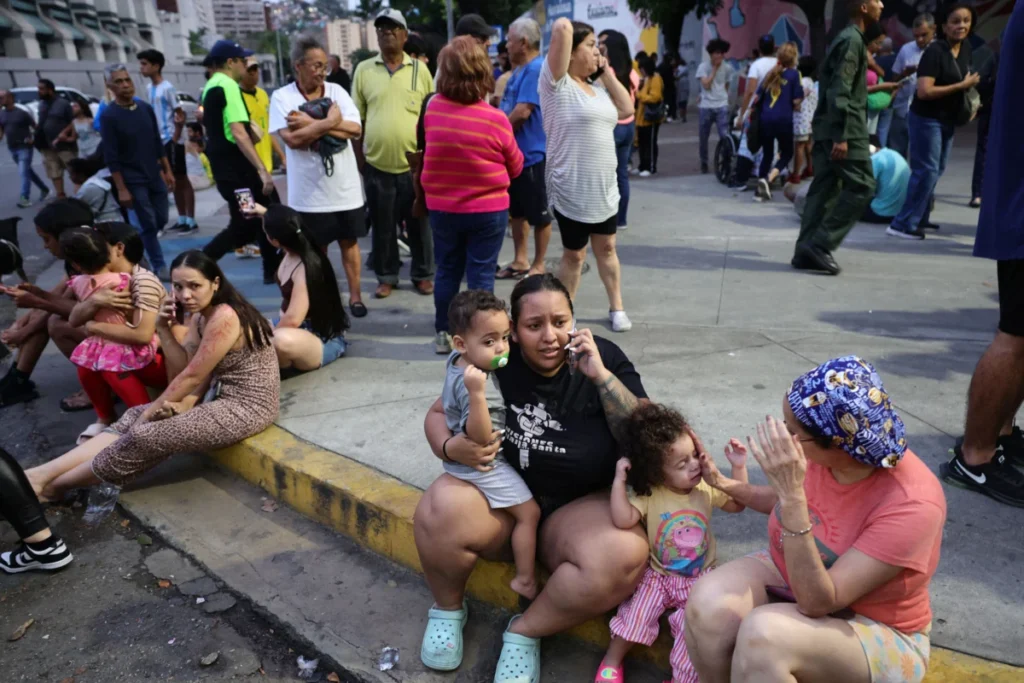
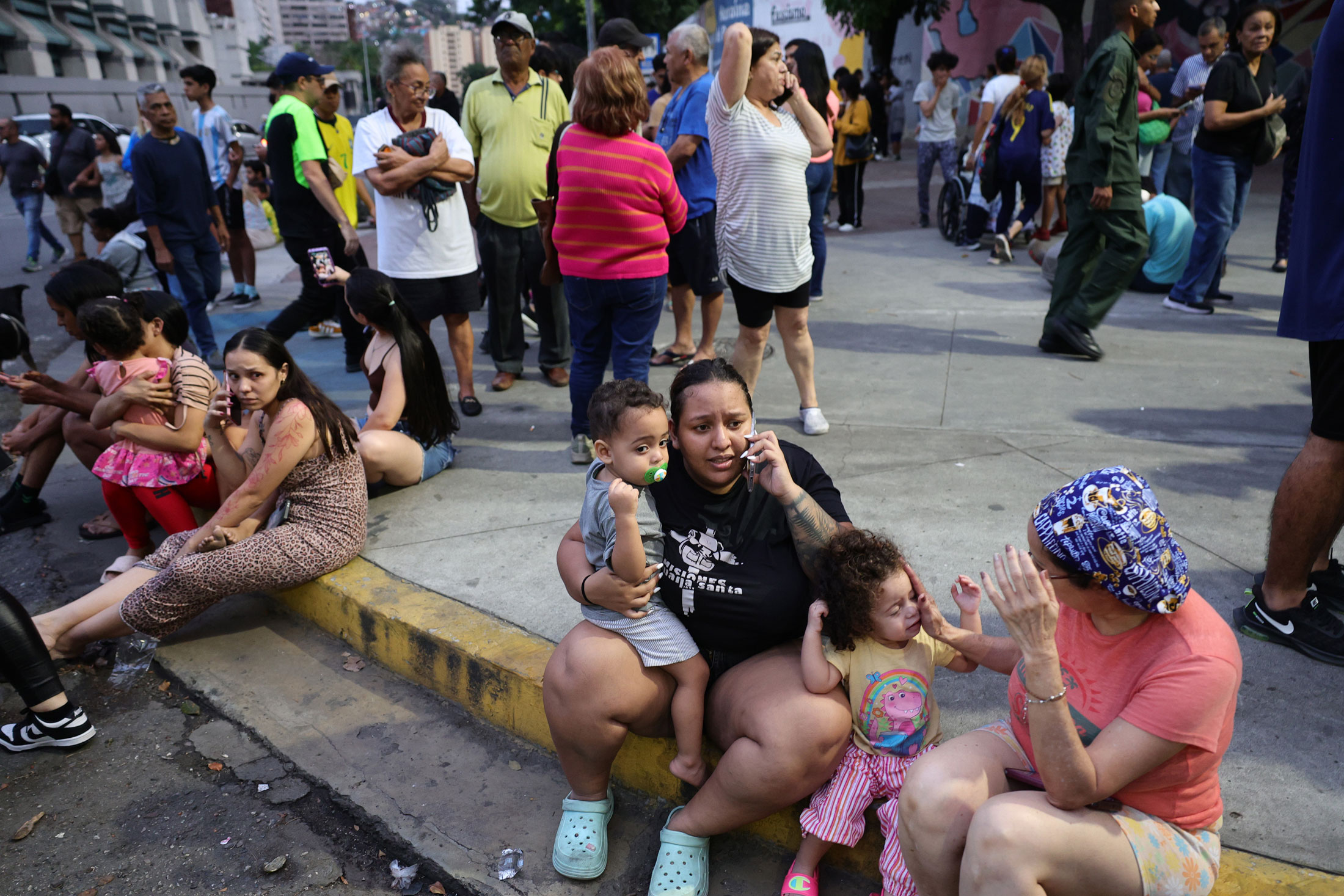
The societal impact is visible on the streets of Caracas. Supermarkets have seen a surge in panicked shoppers, with long lines forming at gas stations as citizens prepare for a prolonged period of uncertainty. The sight of makeshift tent camps in spaces like Parque del Este serves as a stark reminder that thousands of Venezuelans are now homeless, terrified of returning to structures that may have been compromised by the dual quakes.
For the interim administration, this event is a "make-or-break" moment. Having taken power under volatile circumstances earlier this year following the capture of Nicolás Maduro, the government must now navigate the dual pressures of a humanitarian disaster and a crumbling economy.
As search-and-rescue efforts transition into long-term recovery, the international community will be watching to see if the government can effectively manage the $200 million reconstruction fund or if the existing political, economic, and infrastructure deficits will prove too significant to overcome. The coming weeks will likely determine not just the physical survival of the affected regions, but the political stability of the nation itself.