The Sinking Middle Class: Miami’s Waterways Become a Tale of Two Tides
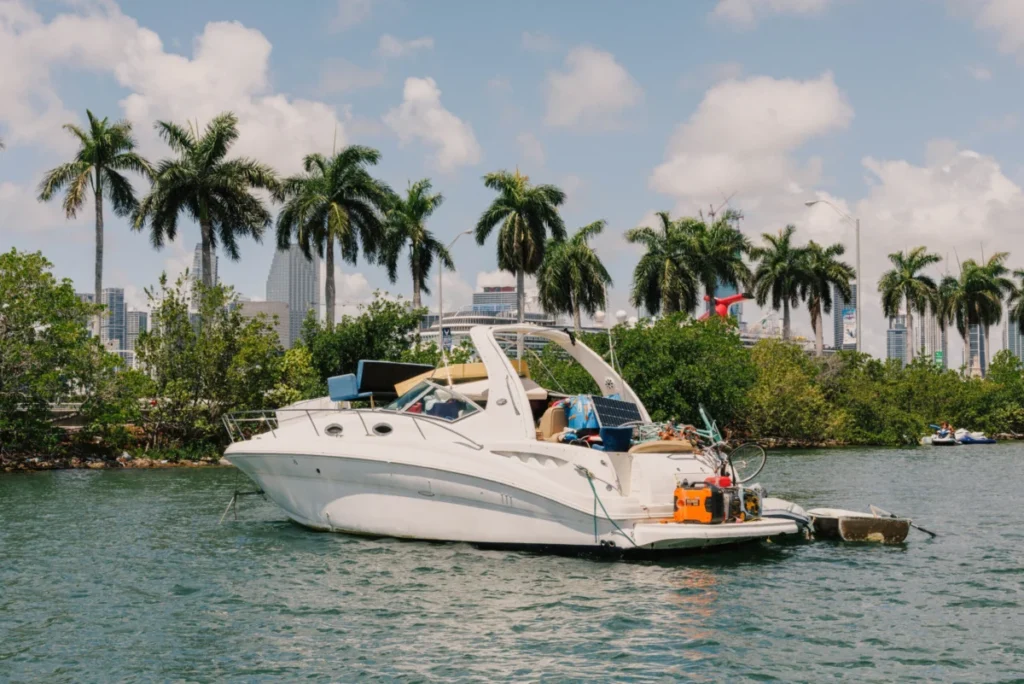
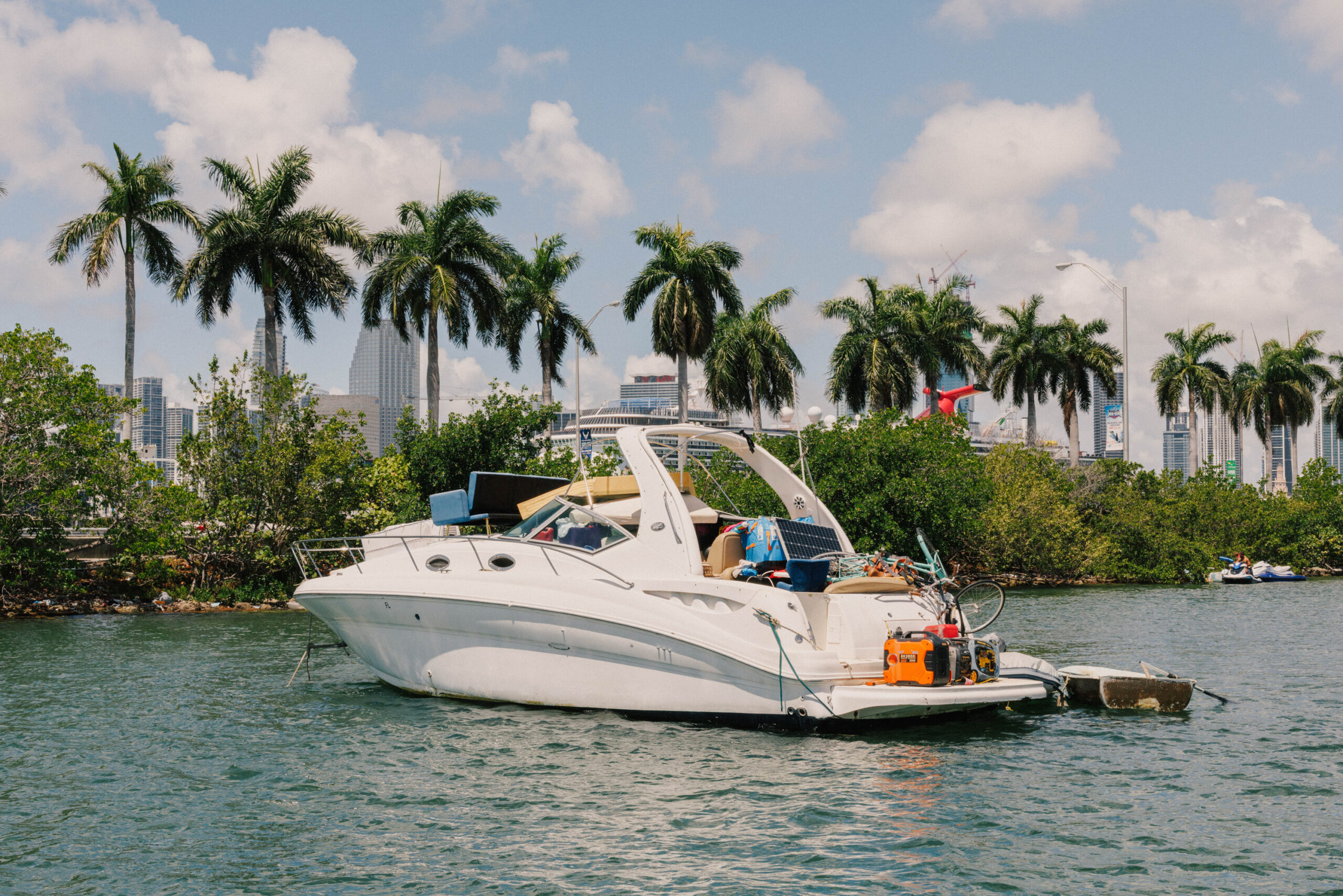
Not far from the sleek, multi-million-dollar superyachts docked outside the opulent island palaces of Miami’s new billionaire class, a far grimmer scene unfolds in the murky waters of Biscayne Bay. Here, partially submerged vessels, stripped of their former glory, languish in the relentless tropical heat—the rotting remnants of the "American Dream" that couldn’t keep pace with the city’s meteoric rise in the cost of living.
For the Miami Beach Police Department’s marine unit, these derelict boats have become a full-time, thankless occupation. Since October, officers have identified and removed approximately 140 vessels left to decay in the bay. Many more sit half-sunken or anchored precariously, serving as eyesores and environmental hazards in the shadow of some of the most expensive real estate on the planet.
The Reality of the "Marine Graveyard"
Sergeant Javier Fernandez, commander of the Miami Beach police marine unit, stands aboard the department’s 32-foot Contender patrol boat, surveying the horizon. About 100 yards off Star Island—home to celebrities and hedge fund titans—the water reveals a jagged, rotting wheelhouse protruding at an unnatural angle. It is a sunken 30-foot cabin cruiser, a monument to the financial ruin of its former owner.
"A lot of people buy a boat but don’t realize how much it costs for fuel, maintenance, and marina fees," Fernandez explains, steering the patrol boat away from the collision hazard. "They get in over their heads, the boat falls into disrepair, and eventually, they just walk away. This is where they end up."
This marine graveyard is the dark underbelly of a massive surge in recreational boating that began during the pandemic. As wealth flooded into Miami, the scale of vessels increased, pushing the costs of docking and maintenance to levels that have effectively priced out the middle-class mariner. According to the National Marine Manufacturers Association, Florida counted roughly 1.2 million registered boats in 2024—a 20% increase from 2023—making it the busiest boating state in the nation.
A Chronology of Gentrification on the Water
The story of Miami’s waterways mirrors the rapid transformation of the city’s land-based real estate. The shift can be traced through several distinct phases:
- 2020–2022 (The Pandemic Boom): As the world shut down, individuals flocked to Florida, seeking freedom and sunshine. Boat sales skyrocketed as the "new wealthy" sought isolation and luxury on the open water.
- 2023–2024 (The Cost Crunch): As the influx of capital drove land values up, the cost of living in Miami surged by more than 36% over six years—significantly outpacing the national inflation rate of 29%. This squeeze forced many long-term residents to abandon their lifestyles, including their boats.
- 2025–2026 (The Superyacht Consolidation): The market for mid-sized family boats cooled, but the ultra-luxury sector exploded. Marinas began pivoting toward "supersize" slips to accommodate the influx of yachts over 100 feet, leaving small charter businesses and local boaters without a home.
Supporting Data: The High Price of Ownership
The financial barrier to entry in the Miami boating scene is staggering. Boats under 26 feet—traditionally the entry-point for the middle class—carried an average price tag of $60,000 in 2025. For vessels between 26 and 35 feet, that number climbed to $170,000.
However, the purchase price is merely the "down payment" on a lifetime of expenses. Annual maintenance, fuel, insurance, and dockage typically consume 10% of a boat’s total value every year. In the current market, slip rentals in South Florida range from $25 to $55 per foot per month, with premium locations charging upwards of $100. When mechanical issues arise, the scarcity of skilled marine mechanics in Miami means a simple engine tune-up can cost thousands.
The resulting economic pressure is evident in the state’s budget. In 2024, Florida spent roughly $13 million on the removal of abandoned vessels. Recognizing the scale of the crisis, the Florida Legislature recently passed measures to expedite the removal process and levy harsher penalties on those who abandon their crafts.
The Human Cost: Safety and Collision
The influx of both massive yachts and inexperienced boaters has turned Miami’s waterways into a high-stakes obstacle course. With the number of boats rising, safety has plummeted. Florida’s 2024 boating death rate stood at 6.4 per 100,000 registered vessels—a figure roughly 50% higher than the national average.
According to the Florida Fish and Wildlife Conservation Commission, 67% of fatalities involved captains with no formal safety training. A third of all accidents are collisions with fixed objects, such as channel markers, as overwhelmed or inexperienced operators struggle to navigate the increasingly congested and complex bay channels.
Recent tragedies have highlighted the danger: a father was killed earlier this year when a large vessel ran over his small dinghy near Key Biscayne, and a snorkeling incident in June ended in a fatality. "There’s more congestion on the water," says George Reynaud, a spokesperson for the wildlife agency. "And more boats means more inexperienced boaters who are ill-equipped to handle the current environment."
Official Responses and the "War on the Water"
The conflict between the ultra-wealthy and the traditional boating community is playing out in local town halls and marina boardrooms.
In the heart of the Intracoastal Waterway, billionaire Joe Lewis’s firm, Tavistock, has poured $1 billion into the redevelopment of Pier Sixty-Six. The project is designed for the global elite, featuring a five-star resort and a marina specializing in yachts that measure over 200 feet—vessels that can cost upwards of $1 million per foot.
Meanwhile, at the city-owned Miami Beach marina, an overhaul is underway to prioritize larger, more profitable vessels. This has sparked a backlash from long-time charter operators who feel they are being purged from the city they helped put on the map.
"This is a war against working people by rich people who bought a condo for a view of the marina, but now they complain about the noise," says Jessica Londono, co-owner of a charter business that has operated out of the marina for two decades. Londono and others have faced increased scrutiny and restrictions following complaints from residents of nearby luxury high-rises regarding "unruly" or loud passengers.
Miami Beach Mayor Steven Meiner maintains that the city’s primary focus is the safety and quality of life for all residents and tourists. Yet, for operators like Londono, the policy shift is clear: "The rich are really putting the squeeze on us."
Implications for the Future
The transformation of Miami’s waters is a microcosm of a larger societal shift. As the gap between the ultra-wealthy and the rest of the population widens, the very nature of public space is being redefined. What was once an egalitarian pursuit—the freedom of the open sea—is being converted into a gated, exclusive amenity for the billionaire class.
As the state continues to spend millions to clear the wrecks left by the middle class, the infrastructure of the bay is being rebuilt to cater to those who view the ocean not as a shared resource, but as a private harbor for their status symbols. Unless a middle ground is found, the future of Miami’s waterways will be defined by the quiet, submerged hulls of the past and the towering, pristine steel of the future, with little room for anything in between.