Millions of Honeybees Swarm Texas Neighborhood Following Major Transport Accident
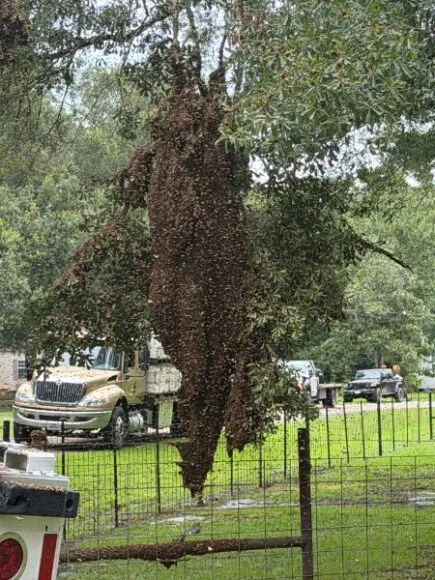
ORANGE, TEXAS — A rural neighborhood in Orange County was transformed into a buzzing epicenter of activity on Sunday morning after a commercial semitrailer carrying approximately 400 beehives overturned, releasing millions of honeybees into the local environment. The incident, which occurred just east of Houston near the Louisiana border, triggered an immediate emergency response as authorities scrambled to contain the insects and protect nearby residents.
The Incident: A Wrong Turn with Catastrophic Consequences
The operation, which was intended to transport 408 hives to North Dakota for the summer pollination season, came to an abrupt and chaotic halt when the transport truck took an unintended detour. According to local beekeeping experts familiar with the incident, the driver, navigating unfamiliar rural roads, took a wrong turn that led the heavy vehicle into a residential area with infrastructure ill-suited for a massive commercial rig.
While attempting to navigate a tight, narrow corner, the weight of the load shifted, causing the trailer to tip onto its side. The impact shattered dozens of wooden hive bodies, instantly creating a "zone of disturbance" as millions of agitated bees were suddenly liberated from their transport containers.
By mid-morning, emergency management officials in Orange County had cordoned off the area, closing several roads to prevent civilian traffic from entering the danger zone. Residents were issued an urgent shelter-in-place advisory, with officials warning that even in the absence of intentional provocation, the sheer density of the bee population posed a significant risk to those nearby.
Chronology of the Response
The emergency response began shortly after the crash, as local law enforcement and first responders arrived to find a scene that looked more like an apiary disaster than a typical traffic accident.
- Sunday Morning: The crash occurred, triggering the immediate closure of local roads. The Orange County Emergency Management team issued warnings to the public, advising residents to keep windows and doors sealed.
- Late Morning: Recognizing the need for specialized knowledge, local authorities reached out to the regional beekeeping community. By noon, volunteers from three to four local businesses had arrived at the scene.
- Mid-Afternoon: Beekeepers, equipped with protective gear, began the delicate process of assessing the wreckage. They worked to identify the remaining queens, knowing that the survival of the colonies hinged entirely on the health of these reproductive leaders.
- Evening: As the sun began to set, the rescue effort pivoted toward mitigation. While the trailer was being salvaged, other beekeepers deployed "catch boxes"—temporary housing units designed to lure wandering bees away from the neighborhood and back into managed colonies.
The Beekeeping Community: A Culture of Mutual Aid
One of the most notable aspects of the recovery effort was the rapid mobilization of the local beekeeping industry. Christie Ray, owner of Queen Bee Supply, arrived at the scene with a cadre of volunteers to assist in the salvage operation.
"They just help each other, that’s what they do," Ray remarked during the recovery process. "The beekeeping community is a great community."
This sentiment was echoed by Chris Moore, owner of Moore Honey, who brought his son and several employees to assist. The camaraderie, however, was tempered by the sobering reality of the situation. Moore, an industry veteran, provided a grim assessment of the wreckage. He estimated that only about 25% of the 408 hives—roughly 100 colonies—would be salvageable.
"It’s a big loss," Moore said. "Any time you lose that many in one shot, it’s a massive hit." He explained that the survival rate is almost entirely dependent on the survival of the queen bees. Without a queen, a colony cannot reproduce, forage, or sustain its population, effectively rendering the surviving workers a "lost cause" for commercial production.
Official Responses and Public Safety
As of Sunday evening, there were no reports of severe injuries or allergic reactions among the local population. Orange County officials praised the cooperation of the residents, who largely adhered to the stay-at-home orders, minimizing the risk of accidental stings.
The identity of the owner of the hives has not been disclosed, a common practice in commercial transport accidents involving livestock or agricultural assets until insurance and liability assessments are completed. The Texas Department of Public Safety (DPS) is overseeing the crash investigation, though their primary focus remains on clearing the roadway and ensuring that the environmental hazard is fully mitigated.
Economic and Agricultural Implications
The crash serves as a stark reminder of the massive logistical machine that keeps the American agricultural sector functioning. Large-scale beekeeping operations are migratory by nature. These "pollination fleets" move across the United States in a seasonal rhythm: beginning in the early spring, bees are moved to California to pollinate almond groves, followed by a northern migration to the Midwest and North Dakota to harvest honey and pollinate sunflower and canola crops.
The Economics of a Hive
For an operator, the loss of 300+ hives is not merely an environmental event; it is a significant financial catastrophe. Each hive represents a complex piece of agricultural equipment. Beyond the physical structure—the wooden boxes, frames, and foundation—the owner loses the "capital" of the colony: the bees themselves, the stores of honey, and the future revenue generated from pollination contracts.
In the current agricultural climate, where honeybee populations are already under pressure from environmental factors such as Colony Collapse Disorder (CCD), pesticide exposure, and habitat loss, the sudden loss of an entire truckload of managed, healthy bees is a substantial setback for both the individual business and the regional supply chain.
Challenges of Urban and Rural Interface
The incident in Orange County also highlights the tension between industrial agriculture and residential infrastructure. As rural areas see increased development, the "narrow roads" mentioned by Moore become a logistical nightmare for semi-trucks.
"The driver was just trying to get from point A to point B," noted an industry source familiar with the logistics of hive transport. "But these drivers are often managing thousands of pounds of living cargo, and one wrong turn on a road not designed for a fifty-three-foot trailer can lead to exactly this kind of situation."
Long-term Recovery and Environmental Mitigation
While the primary scene of the crash is being cleared, the secondary impact will be felt for several days. Millions of bees were disoriented by the crash. Even with catch boxes placed strategically around the crash site, many strays will continue to hover in the vicinity, searching for their lost hive mates or foraging for resources in nearby gardens.
Local experts suggest that it could take up to a week for the "residual" population to either die off or be successfully relocated. Residents are advised to keep pets indoors and to avoid disturbing any large clusters of bees found on fences, trees, or residential structures.
A Wider Pattern of Transport Accidents
The Orange County crash is not an isolated event. As the demand for commercial pollination continues to rise, the frequency of long-distance bee transportation has increased. In April of this year, a similar incident occurred near Knoxville, Tennessee, where a truck carrying hives overturned on an interstate, causing significant traffic delays and a localized "bee event" that required a specialized response from local beekeepers.
These incidents underscore the need for better regulation regarding the transport of live insects. Currently, there is little federal oversight regarding the routes taken by bee haulers, and the industry largely relies on the expertise of individual drivers to navigate routes that can take them through densely populated areas.
Conclusion
As the sun sets on this quiet corner of Texas, the efforts of the beekeeping community continue. For the volunteers working under the cover of protective veils and heavy-duty suits, the priority remains the preservation of the surviving colonies. While the financial loss will eventually be sorted through insurance adjusters and legal teams, the human element—the swift, selfless response of neighbors helping neighbors—remains the most defining feature of this incident.
The residents of Orange County can expect the roads to reopen soon, but the local ecosystem will likely bear the mark of this accident for the coming days as the millions of displaced bees find their way home, or succumb to the elements. For the beekeeping industry, it is a sobering reminder of the volatility inherent in moving the most important workers in the global food supply chain across the country.