The Great Portfolio Pivot: Why Financial Advisors Are Abandoning Mutual Funds for Sector ETFs

The landscape of modern wealth management is undergoing a structural transformation. For decades, the mutual fund served as the bedrock of the average investor’s portfolio—a passive, broad-market vessel designed for long-term growth. However, new data from State Street Global Advisors’ 2026 ETF Impact Report confirms that a seismic shift is underway. Financial advisors are systematically dismantling their reliance on traditional mutual funds, pivoting instead toward the surgical precision and liquidity offered by sector-specific Exchange Traded Funds (ETFs).
This transition is not merely a preference for one vehicle over another; it represents a fundamental change in investment philosophy—from "benchmark-chasing" to "outcome-oriented" planning.
The Core Shift: From Benchmarks to Outcomes
Historically, the advisor’s primary mandate was simple: construct a portfolio that tracked or outperformed a broad market benchmark, such as the S&P 500. Success was measured in relative terms—did the portfolio beat the index?
According to Michael Arone, Chief Investment Strategist at State Street Global Advisors, that era has effectively ended. "Investors no longer ask which benchmark they should own or beat," Arone notes. "Instead, the conversation has shifted toward specific outcomes. They are asking: ‘What do I need for my retirement? How do I generate reliable income? How do I hedge against the corrosive effects of inflation?’"
This shift in inquiry necessitates a shift in tools. Broad mutual funds are often too blunt an instrument to address these granular needs. In contrast, sector ETFs allow advisors to curate exposure with surgical accuracy, tilting portfolios toward specific themes—like AI-driven infrastructure or defensive utility income—without the friction and tax inefficiencies often associated with legacy mutual funds.
Chronology of a Market Evolution
The migration away from mutual funds is the culmination of several years of market frustration and product innovation.
- The Pre-2020 Era: Mutual funds dominated the advisory space, supported by long-standing institutional relationships and distribution channels. While ETFs were gaining traction, they were often viewed as tactical tools rather than core holdings.
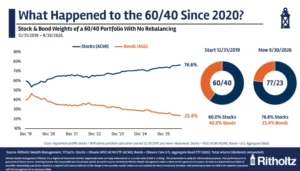
- The 2023–2024 Inflection Point: As global markets grappled with post-pandemic inflation and high interest rates, advisors found that traditional 60/40 portfolios (60% equities, 40% bonds) were failing to protect capital. The search for "all-weather" solutions pushed advisors to look at sector rotation strategies.
- The 2025 Surge: A record-breaking year, seeing $2 trillion in global ETF inflows. The speed of this adoption caught many analysts off guard, with actual flows running 18% ahead of previous projections.
- The 2026–2027 Outlook: We are currently in the midst of a "crossover" period. Data from Cerulli Associates projects that by 2027, advisor ETF allocations will climb to 25.8%, officially overtaking mutual fund allocations, which are expected to decline to 23.7%.
Supporting Data: The Numbers Behind the Move
The sheer scale of capital moving into the ETF ecosystem is unprecedented. In the first quarter of 2026 alone, ETFs captured $641 billion in inflows—a figure that eclipsed the previous first-quarter record by a staggering $211 billion.
State Street’s revised projections illustrate the gravity of this trend. While previous estimates placed global ETF assets at $54 trillion by 2035, the current velocity of inflows has forced analysts to bump that target to $63.49 trillion.
This is not just "retail" money. Financial advisors, who manage trillions in private wealth, are the primary drivers of this migration. Their preference for ETFs is supported by three primary drivers:
- Liquidity: The ability to enter and exit positions during intraday trading sessions.
- Tax Efficiency: The unique creation/redemption mechanism of ETFs, which generally minimizes capital gains distributions compared to mutual funds.
- Cost: Expense ratios for sector ETFs have continued to compress, making them increasingly attractive to fee-conscious advisors.
The Income Dilemma: Why Corporations Stopped Paying
A critical catalyst for this shift is a profound change in corporate behavior. For decades, dividend-paying stocks were the backbone of income-oriented portfolios. However, Matthew Bartolini, Global Head of Research Strategists at State Street, points out that the "income problem" has been exacerbated by a shift in corporate capital allocation.

"Corporations have increasingly moved away from paying dividends as their primary method of returning value to shareholders," Bartolini explains. "Instead, they have shifted toward share buybacks."
While buybacks can boost earnings-per-share and share prices, they do not provide the cash flow that retirees and income-seeking investors require. This has created a vacuum. Advisors are now using sector ETFs, such as the State Street Utilities Select Sector SPDR ETF (XLU), to "manufacture" the income that the broader market no longer provides. By isolating the utilities sector—which remains committed to dividend payouts—advisors can bypass the "buyback-heavy" segments of the market that offer growth but zero yield.
Strategic Implications: The AI Expenditure Cycle
Beyond income, the move toward sector ETFs is driven by a desire for thematic growth. The rise of Artificial Intelligence is not a monolithic event; it is a capital expenditure cycle. Advisors looking to capitalize on this are eschewing broad index funds, which may be diluted by non-tech holdings.
Instead, they are utilizing vehicles like the State Street Technology Select Sector SPDR ETF (XLK). By targeting the hardware, software, and semiconductor firms building the AI backbone, advisors can capture the "AI capital expenditure cycle" directly. This surgical approach allows for better risk management—if an advisor believes the AI hype is overextended, they can rotate out of the sector ETF instantly, a luxury that is harder to execute with broad-market mutual funds.
Official Responses and Industry Outlook
The industry is watching these figures with bated breath. The consensus among institutional analysts is that the "ETF-ization" of the portfolio is irreversible.
State Street’s report emphasizes that the primary risk to this trajectory is not a lack of interest, but rather the operational inertia of legacy systems. Many older brokerage platforms and legacy retirement plans are still built around the mutual fund structure. As these platforms modernize, the transition is expected to accelerate even further.
Furthermore, the rise of "model portfolios"—where advisors outsource the construction of portfolios to third-party managers—has favored ETFs. Model providers overwhelmingly prefer the transparency and liquidity of ETFs to build their sleeves, reinforcing the trend at the institutional level.
Conclusion: The Future of Advisory
The decline of the mutual fund is not a signal that the vehicle is "broken," but rather that it has become "outpaced." In an era of high-frequency information and shifting economic mandates, the modern financial advisor requires tools that offer precision, transparency, and liquidity.
As we look toward 2027 and beyond, the data suggests that the mutual fund will remain a component of the financial ecosystem, but it will no longer be the primary architecture of the investor’s portfolio. The future belongs to the sector-specific, thematic, and outcome-oriented ETF. For advisors, the choice is no longer just about picking a stock; it is about building an ecosystem of precision tools designed to meet the complex, evolving demands of their clients.
As the industry continues to evolve, the "Great Pivot" serves as a reminder: in finance, the most successful strategies are those that adapt to the reality of the market, not those that cling to the structures of the past.