Tragedy in Katy: Federal Investigators Probe Fatal Tesla Crash Amidst Corporate Pushback
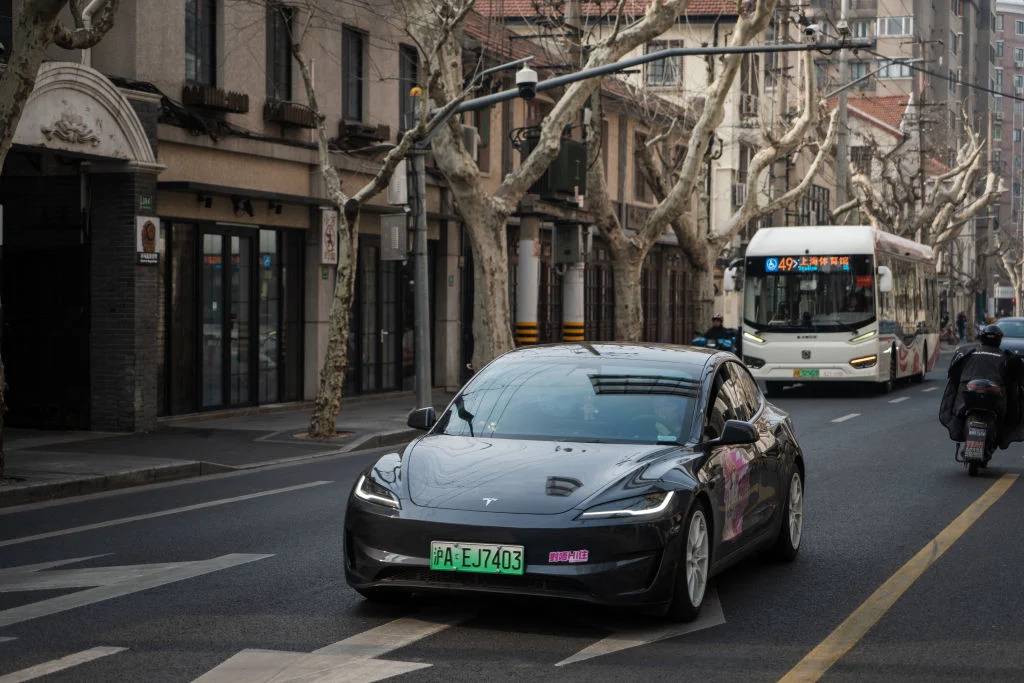
A quiet Friday night in Katy, Texas, turned into a scene of unimaginable devastation when a Tesla Model 3 veered off the road and plowed into a residential home, claiming the life of 76-year-old Martha Avila. The incident, which left a community grieving, has reignited a fierce national debate regarding the reliability of advanced driver-assistance systems (ADAS) and the limits of autonomous vehicle technology. As federal regulators descend upon the scene to initiate a formal investigation, Tesla has taken the rare step of breaking its self-imposed media silence to contest the narrative surrounding the crash.
The Tragic Sequence: A Chronology of the Incident
The events of Friday evening remain the subject of intense forensic scrutiny by the Harris County Sheriff’s Office. According to reports from the scene, the Tesla Model 3, operated by Michael Butler, departed from the roadway before smashing into the home of Martha Avila. The impact was catastrophic; Avila was airlifted to a nearby medical facility, where she was subsequently pronounced dead.
In the immediate aftermath, initial reports circulated that Butler had informed law enforcement that the vehicle was operating on "Autopilot" at the time of the collision. This disclosure acted as a catalyst, rapidly transforming the local tragedy into a national news story. The claim reignited long-standing questions regarding the safety of Tesla’s suite of driver-assistance features, which include Autopilot and the premium "Full Self-Driving (Supervised)" (FSD) package.
By Monday, the Harris County Sheriff’s Office confirmed that its investigation is ongoing, with findings to be presented to the local district attorney’s office to determine whether criminal charges are warranted against the driver.
The Technical Defense: Tesla’s Data-Driven Rebuttal
Tesla, a company that famously dismantled its public relations department years ago in favor of direct-to-consumer communication via CEO Elon Musk’s platform, X (formerly Twitter), deviated from its standard operating procedure on Monday.
Ashok Elluswamy, Tesla’s vice president of AI software and a foundational member of the company’s Autopilot team, provided a starkly different account of the incident based on the vehicle’s internal data logs. In a detailed post, Elluswamy asserted that the vehicle’s telemetry tells a story of human error rather than mechanical or software failure.
"In this case, the driver manually overrode self-driving by pressing the accelerator all the way to 100% of the accel pedal in this residential area," Elluswamy wrote. He further alleged that the vehicle reached a velocity of 73 mph—a speed significantly higher than what would be expected in a residential zone—and noted that the accelerator remained depressed even after the impact occurred.
Elon Musk quickly reinforced this position, highlighting the logical inconsistency of blaming the software for such a high-speed maneuver. "This [allegation] makes no sense," Musk posted on X. "FSD drives slowly through neighborhood streets, and this was a high-speed crash!"
The technical argument presented by Tesla suggests that even if a driver-assistance system were engaged, the physical override provided by the driver—pressing the accelerator to the floor—would take precedence, effectively turning the vehicle into a manually controlled machine at the moment of the disaster.
Contextualizing the Technology: Autopilot vs. FSD
To understand the gravity of the public debate, one must distinguish between the systems Tesla offers. In January, Tesla discontinued its base "Autopilot" branding in certain jurisdictions following a California ruling that the term was inherently misleading to consumers.
Currently, the company markets "Full Self-Driving (Supervised)," a service available for a $99 monthly subscription. Despite the marketing name, the system is classified as SAE Level 2 automation. This means that while the vehicle is capable of handling complex maneuvers—including steering, lane changes, navigating intersections, and parking—the system requires the driver to remain fully engaged and supervise the vehicle at all times.
The core of the legal and ethical debate rests on the "human-in-the-loop" requirement. Tesla maintains that its software is a tool for the driver, not a replacement for them. Critics, however, argue that the branding and the marketing of "Full Self-Driving" encourage a degree of complacency that leads users to overestimate the vehicle’s capabilities.
Federal Oversight: The NHTSA Steps In
The National Highway Traffic Safety Administration (NHTSA) has confirmed it is opening a special investigation into the Katy crash. This is not an isolated incident; it represents the latest in a series of more than 40 federal probes launched by the agency into Tesla crashes involving advanced driver-assistance systems.
The NHTSA’s involvement is critical. While Tesla’s internal data logs are the company’s primary evidence, the federal investigation will rely on independent forensic analysis, witness testimony, and a comprehensive review of the vehicle’s electronic control unit (ECU) data.
Federal investigators are looking for more than just the speed at the time of impact. They are evaluating whether the software’s "driver monitoring" systems—which typically use cameras to ensure the operator’s eyes are on the road—were functioning correctly and whether the software triggered any warnings prior to the crash. The outcome of this probe could have significant implications for the future of ADAS regulation in the United States.
Implications for the Future of Autonomous Driving
The Katy, Texas incident has crystallized the tensions between rapid technological deployment and public safety. Several key implications have emerged from the discourse:
1. The Burden of Evidence
The conflict between the driver’s initial claims and Tesla’s data logs underscores the "he-said, machine-said" dynamic that is becoming increasingly common in the era of smart vehicles. As vehicles become more like rolling computers, the data they log will become the primary evidence in almost every liability case. The industry is moving toward a standard where "black box" data must be accessible and transparent to third-party regulators.
2. Marketing vs. Reality
The pushback against Tesla’s nomenclature—specifically the "Full Self-Driving" label—is unlikely to fade. Safety advocates argue that as long as there is a gap between what the software can do and what the consumer perceives it can do, fatal accidents will continue to occur. This incident serves as a high-stakes reminder that the current generation of AI-assisted driving still requires vigilant human oversight.
3. The Legal Precedent
The decision by the Harris County District Attorney will be closely watched. If the investigation concludes that the driver was indeed at 100% throttle, it will likely absolve Tesla of liability in this specific case. However, if the probe uncovers a software bug that caused the vehicle to "surge" despite the driver’s intentions—a phenomenon known in the auto industry as unintended acceleration—the legal ramifications for Tesla could be profound.
4. Public Trust
Every headline-grabbing accident involving a Tesla and its driver-assistance software acts as a minor setback for the broader autonomous vehicle industry. Companies like Waymo, Cruise, and Tesla are all racing toward a future of hands-free driving, but public trust remains fragile. Incidents that occur in residential neighborhoods are particularly damaging to the "social license" required for these companies to operate on public roads.
Conclusion
The tragedy in Katy is a stark reminder that innovation does not come without cost. While Tesla is fighting to protect its reputation and the integrity of its software, the primary concern remains the life lost and the questions that linger for the family of Martha Avila.
As the NHTSA, the Harris County Sheriff’s Office, and Tesla’s engineering team continue their respective investigations, the tech industry waits for a definitive answer. Was this a failure of human judgment, or a failure of a machine that promised more than it could deliver? Until the vehicle’s logs are fully audited by independent federal authorities, the truth remains obscured by conflicting narratives and the high-speed wreckage of a quiet suburban street.
The road to fully autonomous, safe transportation is paved with such inquiries. For now, the takeaway is clear: the technology currently available to the public is not a replacement for human caution, and the debate over who—or what—is responsible when things go wrong is only just beginning.