Bridging the Resilience Gap: Carlyle Group Unveils Landmark Framework to Shield Assets from Climate Volatility
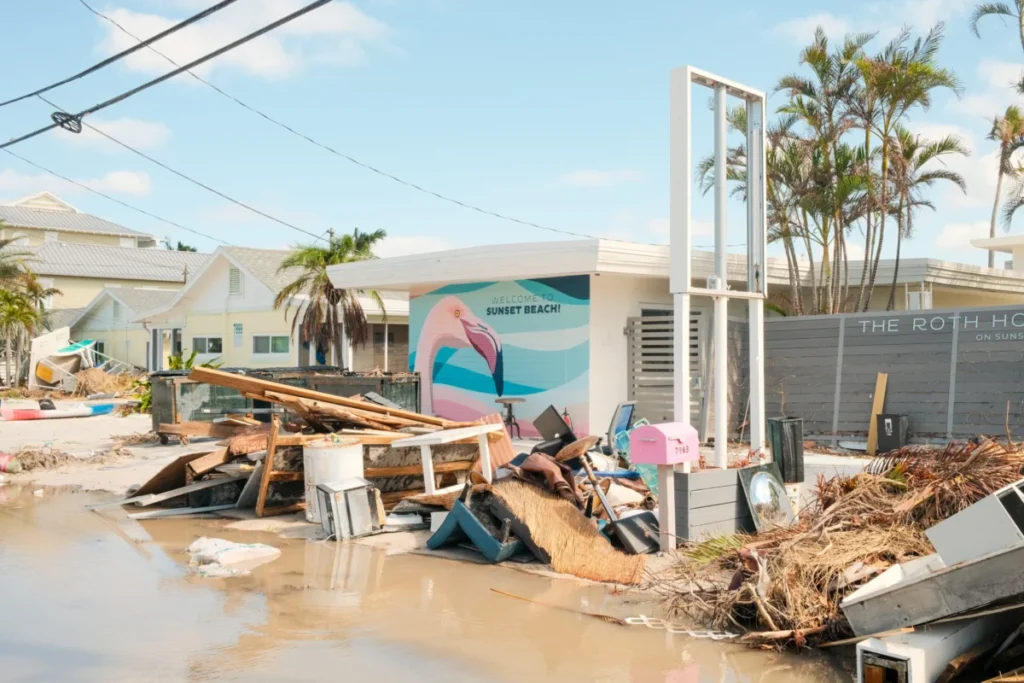
In a decisive move to overhaul how the global financial sector accounts for environmental catastrophe, The Carlyle Group Inc.—the Washington-based private equity titan managing $475 billion in assets—has unveiled a pioneering risk-assessment framework. The initiative is designed to fundamentally change how asset values are calculated, ensuring that portfolios reflect the true insurance implications of an increasingly unstable climate.
For years, the investment community has been criticized for maintaining a reactive stance toward climate change, often waiting for physical disasters to occur before adjusting valuations. By the time a hurricane tears the roof off a facility or a wildfire renders a commercial site uninsurable, the financial damage is already baked into the balance sheet. Carlyle’s new model aims to flip this paradigm, incentivizing "asset hardening"—the proactive engineering of buildings and infrastructure to withstand extreme weather—and creating a quantifiable mechanism for insurers to reward such resilience.
The Core Objective: Moving Beyond Reactive Finance
The current financial status quo is plagued by a lack of consistent communication between those who manage assets and those who underwrite the risks associated with them. As Steve Hatfield, co-head of global sustainability at Carlyle, notes, the disconnect is systemic.
"We want to flip the paradigm and de-risk it so that insurance continues to be available to assets that are in the crosshairs," Hatfield said in an interview. "But so far, there has been no consistent mechanism that allows insurers to recognize how asset hardening reduces risk."
The framework, developed in close collaboration with the global insurance brokerage firm Marsh, seeks to bridge this chasm. By creating a standardized language for resilience, Carlyle hopes to transform climate adaptation from a vague corporate social responsibility goal into a hard-nosed, return-driven investment thesis.
Chronology of a Financial Evolution
The development of this framework did not happen in a vacuum. It is the culmination of years of frustration felt by institutional investors who recognized that traditional, backward-looking models were failing to account for the accelerating pace of climate change.
- Initial Recognition (2020–2022): Investment managers, including those at Carlyle, began noticing a pattern: assets were being downgraded or denied insurance renewals without warning, leading to sudden, sharp drops in value.
- The Data Gap (2023): Hatfield and his team identified a consistent "roadblock": while engineers understood how to build for extreme weather, and insurers understood the risks, portfolio managers lacked a bridge to calculate the "return on investment" (ROI) from resilience upgrades.
- Strategic Collaboration (2024): Carlyle partnered with Marsh to synthesize expertise from climate scientists, structural engineers, and insurance underwriters.
- The Pilot Phase (Early 2025): The framework was tested across select sectors, including real estate and logistics, to verify that resilience investments could indeed yield tangible cash flow savings.
- Formal Unveiling (June 2025/2026): The framework makes its public debut at London Climate Action Week, signaling a shift in industry standards for government, central banks, and global investors.
Supporting Data: The Case for Resilience
The economic logic supporting Carlyle’s initiative is backed by increasingly dire data. A 2025 study by the World Resources Institute provided the catalyst for many investors, highlighting that proactive investments in climate adaptation can yield a potential ten-fold return over a decade.
This is particularly relevant for the rapid, capital-intensive build-out of global data centers. As the world pivots toward artificial intelligence, the physical infrastructure supporting this growth is often being constructed in high-risk zones. Recent reports from climate data firm XDI indicate that many planned facilities are situated in areas highly exposed to coastal inundation, extreme heat, and riverine flooding.
Without the "hardening" protocols suggested by the new Carlyle-Marsh framework, these multi-billion-dollar assets face the very real prospect of becoming "stranded assets"—investments that lose their value prematurely due to an inability to secure affordable insurance or physical degradation.
The Four-Step Implementation Process
Carlyle’s framework is not merely a theoretical exercise; it is a granular, four-step operational model designed for portfolio managers to execute:
- Probability Estimation: Managers must first quantify the likelihood of an asset encountering an extreme weather event. This includes mapping immediate threats like storm surges alongside slow-onset stressors, such as structural erosion from prolonged drought or shifting humidity levels.
- Resilience Gap Analysis: The second step involves measuring the distance between an asset’s current state and its "resilience target." This is a technical assessment that determines exactly what structural modifications are required to withstand specific climate-related stressors.
- Loss Reduction Modeling: Portfolio managers must then estimate how these specific upgrades will mitigate expected financial losses over the asset’s lifespan.
- Underwriting Engagement: Finally, these calculations are presented to insurance carriers. Armed with verified engineering data, the framework allows insurers to offer superior underwriting terms, including reduced premiums, lower deductibles, and more comprehensive coverage, effectively locking in the financial benefits of the resilience work.
Official Responses and Industry Reception
The reception from the investment community has been swift and supportive. Major institutional players, including the Abu Dhabi sovereign wealth fund Mubadala and the Danish pension manager Sampension, have already thrown their weight behind the approach.
Amy Barnes, head of Marsh’s climate and sustainability strategy, believes the industry has reached a tipping point. "We should not be newly constructing anything without also considering climate resilience," Barnes stated. "It is infinitely cheaper to design in the resilience than to retrofit it."
Barnes noted that for years, the insurance industry has been "ahead of the curve" in terms of understanding climate risk, yet that expertise rarely translated into underwriting policy. Underwriters often expressed a desire to help but lacked the standardized data to justify lower premiums for "hardened" assets. Carlyle’s framework provides that missing piece of the puzzle, essentially giving underwriters a permission structure to price risk more accurately.
Implications for the Future of Global Finance
The ripple effects of this framework could be profound. By creating a "signaling effect" to the market, Carlyle is attempting to move climate risk from the periphery of ESG reporting to the center of financial valuation.
A Shift in Asset Valuation
If this framework is widely adopted, the valuation of global real estate, transportation, and chemical sectors will change. Assets that are "resilient-ready" will command a premium, while those that remain vulnerable to climate shocks may face a "resilience discount."
The "Pot of Gold"
Hatfield describes the potential reward as a "pot of gold." By lowering the cost of insurance and reducing the probability of catastrophic asset failure, the framework protects the bottom line. In an era where "today’s infrastructure was designed for yesterday’s climate," the shift toward future-proofing is no longer an option—it is a financial necessity.
Regulatory and Macroeconomic Impact
As global central banks and regulators move toward stricter climate risk disclosure requirements, the Carlyle-Marsh framework offers a practical blueprint for compliance. It moves the discussion away from abstract climate models and toward concrete cash-flow savings.
"I was hitting roadblocks in terms of being able to enable my investment teams to suss out what’s the near-term return on investment," Hatfield admitted. By removing these roadblocks, Carlyle is signaling to the broader market that climate adaptation is not a cost center, but an essential component of modern asset management.
As the industry gathers in London, the message is clear: the era of reactive climate finance is coming to a close. Whether through the lens of institutional investors, sovereign wealth funds, or the insurance carriers themselves, the integration of climate resilience into the heart of asset valuation is set to become the defining financial narrative of the decade.