The Wealth Tech Revolution: A Comprehensive Guide to Modern Investment Tracking Apps
The contemporary investment landscape is characterized by unprecedented fragmentation. A typical retail investor’s portfolio is no longer confined to a single brokerage account; instead, it is often distributed across multiple tax-advantaged retirement accounts, taxable brokerage platforms, real estate holdings, cryptocurrency wallets, and private equity investments. Managing this level of complexity manually is not only labor-intensive but also prone to critical oversights regarding asset allocation, fee accumulation, and tax efficiency.
The rise of dedicated wealth-tracking software has revolutionized personal asset management. Modern investment tracking applications automate data ingestion, provide real-time performance analytics, dissect fund-level fees, and project long-term compounding growth. This comprehensive analysis evaluates the market’s leading investment tracking platforms based on data aggregation technology, analytical depth, pricing structures, and user accessibility.
Summary of the Market’s Leading Platforms
The table below summarizes the key features, target audiences, and pricing models of the leading investment tracking applications on the market today.
![8 Best Investment Tracking Apps [2026 Guide] – ROB BERGER](https://robberger.com/wp-content/uploads/2024/02/Empower-Logo.jpeg)
| Investment Tracking App | Best For | Pricing | Core Strength |
|---|---|---|---|
| Empower | Best Free Tracker | Free | Fee analysis and automated retirement planning |
| Kubera | Best for HNWIs | 14-day free trial; $249/year | Global multi-currency and alternative asset tracking |
| Monarch Money | Best All-in-One App | 7-day free trial; $99/year (50% off Core Plan first year with code ROB50) | Seamless integration of household budgeting and portfolio tracking |
| Stock Rover | Best for Stock Research | Free tier; paid plans from $79.99 to $279.99/year | Professional-grade equity research and screening |
| Snowball Analytics | Best for Rebalancing | Free tier; paid plans from $6.00 to $18.80/month | Dividend tracking and target asset allocation rebalancing |
| Simply Wall St. | Best for Visual Investors | Free tier; paid plans from $10.95/month | Infographic-based equity valuation and portfolio health analysis |
| Morningstar Investor | Best for Fund Research | 7-day free trial; $34.95/month or $249/year ($199 for the first year) | Institutional-grade mutual fund and ETF data |
| Quicken Premier | Best Desktop Software | Annual subscription (approx. $75/year; discounts apply) | Legacy double-entry bookkeeping and robust tax preparation |
The Evolution of Portfolio Tracking: A Brief Chronology
To understand the capabilities of modern wealth-tech platforms, it is essential to trace the historical progression of portfolio management technologies over the past four decades.
[1980s-1990s: Manual Ledgers & Desktop Software]
       │ (Users enter transactions manually into Quicken or Lotus 1-2-3)
       ▼
[2000s: Web 1.0 & Basic Online Portfolios]
       │ (Portals like Yahoo Finance offer static, manual watchlist tracking)
       ▼
[2010s: Cloud Aggregation & Automated Syncing]
       │ (Yodlee and Plaid enable read-only syncing; Personal Capital dominates)
       ▼
[Present: AI-Driven Multi-Asset Ecosystems]
         (Cross-border multi-currency tracking, AI PDF parsing, and estate planning)
Phase 1: Manual Ledgers and Early Desktop Software (1980s–1990s)
In the early days of personal computing, portfolio tracking was a manual process. Investors relied on physical ledgers, which eventually transitioned to basic spreadsheet software like Lotus 1-2-3 and early versions of Microsoft Excel. In 1983, Quicken introduced localized personal finance software, allowing users to track investments on their hard drives. However, every transaction, stock split, and dividend payment had to be inputted manually.
Phase 2: Web 1.0 and Basic Online Portfolios (Late 1990s–2000s)
The rise of the consumer internet brought web-based portals such as Yahoo! Finance and MSN Money. These platforms allowed users to build digital watchlists and portfolios. While this eliminated the need to look up stock prices in daily newspapers, these systems remained static and disconnected from actual brokerage accounts.
![8 Best Investment Tracking Apps [2026 Guide] – ROB BERGER](https://robberger.com/wp-content/uploads/2025/11/monarch-money-logo.png)
Phase 3: Automated Cloud Aggregation (2010s)
The introduction of financial data APIs—led by aggregators like Plaid, Yodlee, and Finicity—paved the way for automated portfolio tracking. Launched in 2009, Personal Capital (now Empower) utilized these aggregation engines to securely sync balances and transaction histories across multiple financial institutions in real time. This marked a major shift from manual input to automated, cloud-based asset tracking.
Phase 4: AI-Driven and Multi-Asset Ecosystems (2020s–Present)
Today, the definition of an investment portfolio has expanded beyond public equities and mutual funds. Modern platforms must track decentralized assets (cryptocurrencies, DeFi protocols), alternative investments (private equity, venture capital), digital real estate, and physical assets. To support this, modern platforms use AI-driven document parsers to scan PDF statements, connect directly to global blockchain ledgers, and provide cross-border, multi-currency reporting.
In-Depth Analysis of the Leading Tracking Platforms
1. Empower: The Premier Free Wealth Management Platform
Formerly known as Personal Capital, Empower is widely considered the gold standard for free investment tracking. Designed primarily as a wealth management tool, it offers robust diagnostic features that rival many paid alternatives.
![8 Best Investment Tracking Apps [2026 Guide] – ROB BERGER](https://robberger.com/wp-content/uploads/2024/01/Kubera-Logo.jpeg)
+-----------------------------------------------------------------+
|                       EMPOWER DASHBOARD                         |
+-----------------------------------------------------------------+
| [Net Worth Monitor] ---> Tracks Assets, Liabilities, and Cash   |
|                                                                 |
| [Retirement Fee Analyzer] ---> Highlights Hidden Fund Fees      |
|                                                                 |
| [Asset Allocation Map]  ---> Interactive Sector/Style Analysis  |
|                                                                 |
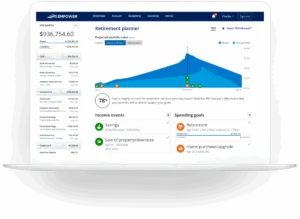
| [Retirement Planner]    ---> Monte Carlo Success Simulations    |
+-----------------------------------------------------------------+
Core Capabilities
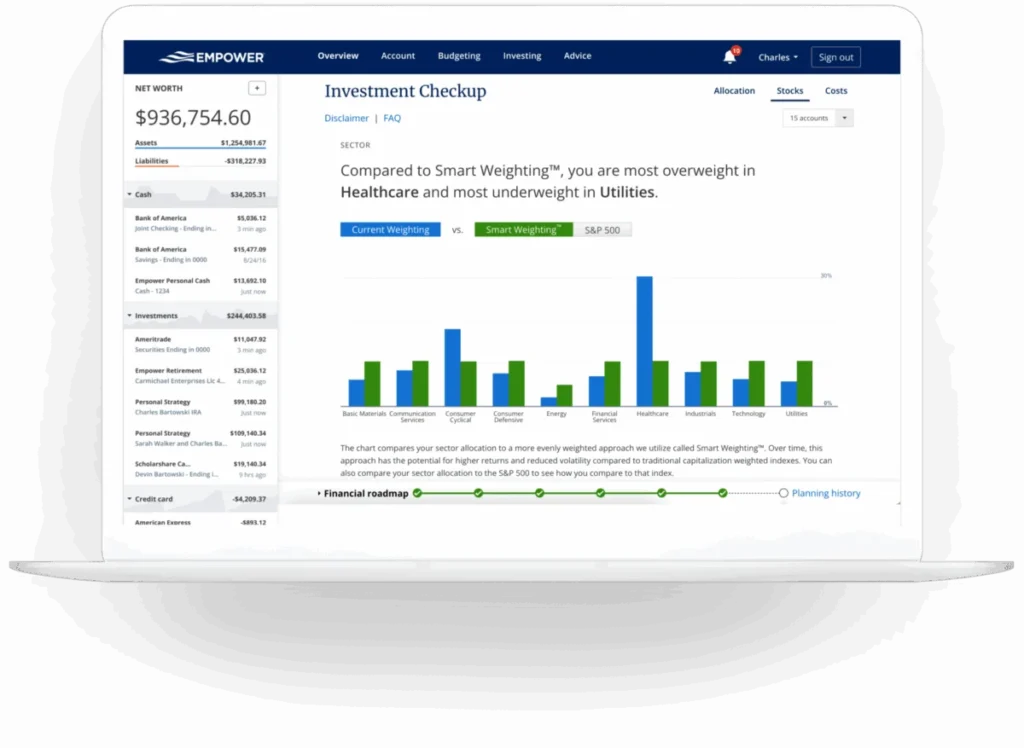
Upon linking your taxable and tax-advantaged accounts, Empower automatically imports transaction histories and balances. It excels at parsing underlying fund holdings to deliver a consolidated view of your asset allocation. Rather than simply showing that you own a specific target-date fund, the platform uncovers the fund’s underlying exposure to domestic equities, international equities, bonds, and cash.
The Retirement Fee Analyzer
One of Empower’s standout tools is its Retirement Fee Analyzer. The software scans linked mutual funds and ETFs for their internal expense ratios, calculates the weighted average cost of the portfolio, and projects the compounding impact of those fees over a multi-decade horizon. For many investors, visualizing these costs in cumulative dollar amounts rather than abstract percentages is a powerful eye-opener.
Pros
- Completely free to use.
- Highly secure, read-only data synchronization.
- Excellent retirement planning tool using Monte Carlo simulations.
- Integrates bank accounts, credit cards, mortgages, and home values via Zillow.
Cons
- Users with a net worth over $100,000 may receive promotional calls from Empower’s advisory division.
- Limited customization options for manual asset entries.
2. Kubera: The High-Net-Worth Multi-Asset Ledger
Designed specifically for high-net-worth individuals (HNWIs) and complex balance sheets, Kubera is a premium utility tracker that prioritizes data privacy, alternative asset classes, and clean design.
![8 Best Investment Tracking Apps [2026 Guide] – ROB BERGER](https://robberger.com/wp-content/uploads/2025/08/Snowball-Analytics-logo.png.webp)
+------------------------------------------------------------------+
|                         KUBERA SHEET                             |
+------------------------------------------------------------------+
|  Liquid Assets:   [Brokerages] [Bank Accounts] [Crypto Wallets]  |
|  Illiquid Assets: [Real Estate] [VINs] [Domain Names]            |
|  Alternative:     [Private Equity] [Gold/Crude Oil]              |
|                                                                  |
|  AI Engine:       Uploads PDF statements to update balances      |
|  Estate Planning: "Safe Deposit Box" + Beneficiary Protocols     |
+------------------------------------------------------------------+
Multi-Aggregator Architecture
While most platforms rely on a single data aggregator, Kubera utilizes multiple enterprise-grade aggregators (including Plaid, Yodlee, and Salt Edge) to connect to global financial institutions. This multi-engine approach ensures highly stable connections, particularly for international banks and boutique investment portals.
Comprehensive Asset Class Support
Kubera tracks an exceptionally wide range of assets, including:
- Real Estate: Tracks property valuations using global real estate databases.
- Vehicles: Automatically updates car valuations using Vehicle Identification Numbers (VINs).
- Digital Assets: Monitors domain names and crypto assets by tracking public addresses across multiple blockchains.
- Alternative Investments: Tracks private equity, venture capital, and physical commodities like gold and silver.
AI-Powered Document Parsing and Estate Planning
Kubera features a built-in AI tool that extracts balance information from uploaded PDF statements or CSV files, making it easy to track offline investments. Additionally, its "Safe Deposit Box" serves as a secure digital vault for estate planning, allowing users to designate beneficiaries who will automatically receive access to their financial records and documents in the event of death or incapacitation.
![8 Best Investment Tracking Apps [2026 Guide] – ROB BERGER](https://robberger.com/wp-content/uploads/2023/02/desktop-invst-chek-stock-EMP-1024x748.png)
Pros
- Ad-free, highly secure, and strictly private (Kubera does not sell user data).
- Excellent multi-currency support, ideal for expat and international investors.
- Simplifies tracking for complex alternative assets.
Cons
- Priced at $249 per year, with no permanent free tier.
- Does not offer budgeting tools or automated retirement projections.
3. Monarch Money: The Modern All-in-One Budget and Wealth Tracker
Launched by personal finance veterans, Monarch Money has emerged as a top-tier premium option for households looking to manage both daily budgeting and long-term investments in a single interface.
+-----------------------------------------------------------------+
|                      MONARCH MONEY SUITE                        |
+-----------------------------------------------------------------+
|  Daily Cash Flow:  [Budgeting] [Bill Tracking] [Transaction Tag] |
|                                                                 |
|  Long-Term Wealth: [Net Worth Tracker] [Historical Performance] |
+-----------------------------------------------------------------+
Collaborative Household Wealth Tracking
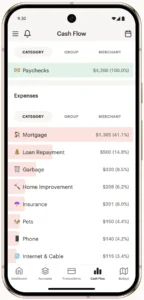
Monarch allows partners to co-manage a single household account with separate login credentials. The platform syncs with bank accounts, credit cards, mortgages, and brokerages to provide a complete view of net worth alongside day-to-day cash flow.
Investment Capabilities and Limitations
Monarch tracks portfolio values, historical performance, and cash balances across linked investment accounts. However, it offers limited asset allocation analysis. While it is highly effective for tracking net worth, it lacks the deep, fund-level portfolio analysis provided by platforms like Empower or Morningstar.
![8 Best Investment Tracking Apps [2026 Guide] – ROB BERGER](https://robberger.com/wp-content/uploads/2024/01/Kubera-Investment-Dashboard-983x1024.png)
Pros
- Modern, ad-free interface with highly customizable dashboards.
- Strong collaborative tools for partners and families.
- Offers a 7-day free trial, and users can save 50% on their first year of the Core Plan with the promo code ROB50 (normally $99/year).
Cons
- Limited asset allocation breakdown and fund fee analysis.
- No built-in rebalancing calculators.
4. Stock Rover: The Quantitative Investor’s Research Station
For active traders and quantitative investors, Stock Rover offers a comprehensive research station. Rather than focusing on simple balance tracking, it provides professional-grade tools to help users analyze and optimize their portfolios.
+------------------------------------------------------------------+
|                       STOCK ROVER CONSOLE                        |
+------------------------------------------------------------------+
|  Research:    [10-Year Financials] [Analyst Ratings] [Earnings]  |
|  Diagnostics: [Correlation Matrix] [Monte Carlo Simulations]     |
|  Screening:   [Custom Stock & ETF Screener]                      |
+------------------------------------------------------------------+
Professional Portfolio Diagnostics
Stock Rover connects to brokerage accounts to analyze your actual holdings. It provides advanced diagnostic metrics, such as:
- Correlation Matrices: Helps identify overlapping assets to avoid over-concentration in specific sectors.
- Trade Planning: Simulates the addition or removal of positions to see how changes would affect your overall risk profile.
- Dividend Projections: Forecasts future dividend income based on historical payment schedules and dividend growth rates.
Pros
- Incredibly detailed financial databases spanning over 10 years of historical corporate filings.
- Advanced custom screening tools for stocks, ETFs, and mutual funds.
- Robust free tier, with paid plans ranging from $79.99 to $279.99 per year.
Cons
- Steep learning curve, which may be intimidating for novice investors.
- The interface prioritizes data density over modern visual design.
5. Snowball Analytics: Dividend and Rebalancing Optimization
Snowball Analytics has gained a loyal following among income-focused and dividend-growth investors. It excels at visualizing dividend income streams and simplifying the portfolio rebalancing process.
![8 Best Investment Tracking Apps [2026 Guide] – ROB BERGER](https://robberger.com/wp-content/uploads/2025/08/Screenshot-2025-08-03-at-1.10.26-PM-1024x455.png.webp)
+------------------------------------------------------------------+
|                    SNOWBALL ANALYTICS ENGINE                     |
+------------------------------------------------------------------+
|  Dividend Tracker: [Payment Calendar] [Future Income Forecast]   |
|  Rebalancing Tool: [Target vs. Actual Allocation] [Trade Generator] |
+------------------------------------------------------------------+
Dividend Tracking and Rebalancing Tools
The platform features an interactive dividend calendar that tracks upcoming ex-dividend dates, payment dates, and projected dividend growth. Additionally, its rebalancing tool allows users to set target asset allocations. If a portfolio drifts from these targets, Snowball calculates the exact trades needed to realign the portfolio, making it easy to manage asset allocation without complex spreadsheets.
Pros
- Highly detailed dividend projections and cash flow calendars.
- User-friendly, automated rebalancing calculations.
- Competitive pricing, with a basic free tier and paid plans from $6.00 to $18.80 per month.
Cons
- Focuses primarily on public equities, with limited support for alternative assets.
- Lacks advanced retirement planning features.
6. Simply Wall St.: Visualizing Portfolio Health
Simply Wall St. takes a unique, highly visual approach to investment tracking. It transforms complex financial data into intuitive, easy-to-read infographics, making it ideal for visual learners.
                  Simply Wall St. "Snowflake" Diagram
                              [Value]
                                 /
                     [Future]   /     [Past]
                               |    |
                               |    |
                     [Health]     /   [Dividend]
                                 /
The Snowflake Rating System
The platform uses its signature "Snowflake" infographic to evaluate individual equities and entire portfolios across five key dimensions: Value, Future Growth, Past Performance, Financial Health, and Dividend Yield. This visual system makes it easy to quickly assess the strengths and weaknesses of your portfolio.
![8 Best Investment Tracking Apps [2026 Guide] – ROB BERGER](https://robberger.com/wp-content/uploads/2024/07/2024-07-16_07-42-34-1024x743.png.webp)
Pros
- Visually engaging and highly intuitive dashboard.
- Excellent international coverage, supporting over 2,000 brokerages globally.
- Helps investors quickly identify structural weaknesses, such as over-exposure to high-debt companies.
Cons
- Does not support mutual funds.
- Active traders may find the simplified infographics less detailed than traditional financial metrics.
7. Morningstar Investor: The Institutional Standard
For decades, Morningstar has been a trusted source of fund analysis. Its premium platform, Morningstar Investor, brings institutional-grade research and portfolio diagnostics directly to retail investors.
+-----------------------------------------------------------------+
|                       MORNINGSTAR X-RAY                         |
+-----------------------------------------------------------------+
|  Asset Allocation:   [US Stocks] [Foreign Stocks] [Bonds] [Cash] |
|  Style Box Exposure: [Value / Blend / Growth]                   |
|  Sector Weightings:  [Cyclical] [Defensive] [Sensitive]         |
|  Fees & Expenses:    [Weighted Expense Ratio Analysis]          |
+-----------------------------------------------------------------+
Portfolio X-Ray Analysis
The platform’s standout feature is the Morningstar X-Ray tool. It looks past the surface-level names of your mutual funds and ETFs to analyze their underlying holdings. This reveals your true exposure to specific sectors, regions, investment styles (such as large-cap growth vs. small-cap value), and individual companies that may be held across multiple funds.
Pros
- Access to Morningstar’s legendary analyst ratings and independent research.
- Unmatched fund-level analysis and portfolio diagnostic tools.
- Available for $249 per year, with a $50 discount for the first year ($199) and a 7-day free trial.
Cons
- Performance tracking is only available for manually entered accounts. Linked brokerage accounts provide asset allocation and research data, but do not show real-time performance metrics.
- The interface can feel dated and less intuitive than newer fintech platforms.
8. Quicken Premier: The Legacy Desktop Solution
Quicken Premier remains a popular choice for investors who prefer local desktop software over cloud-only platforms. It combines comprehensive double-entry bookkeeping with powerful tax preparation and investment tracking tools.
![8 Best Investment Tracking Apps [2026 Guide] – ROB BERGER](https://robberger.com/wp-content/uploads/2026/01/Screenshot-2026-01-13-at-7.32.22-AM-1024x607.png.webp)
Desktop Control and Advanced Tax Tools
Quicken Premier operates directly on your computer, offering greater control over how your data is stored. It shines when it comes to tax planning, offering advanced tracking for realized and unrealized capital gains, cost basis adjustments, and tax schedules. It also imports mutual fund data from Morningstar to help analyze asset allocation.
Pros
- Local desktop storage provides enhanced data ownership and privacy.
- Advanced tax reporting tools, including direct exports to TurboTax.
- Reasonably priced at approximately $75 per year.
Cons
- The desktop-first interface can feel clunky and has a steeper learning curve than modern web apps.
- Mobile companion apps offer limited functionality compared to the desktop software.
Technical Analysis: Financial Data Aggregation & Security
Understanding the technology behind portfolio tracking is key to choosing the right platform. Most modern apps rely on read-only financial data aggregators to securely import your information.
+------------------+         +----------------------+         +---------------------+
|  Your Brokerage  |  ====>  |   Data Aggregator    |  ====>  |   Portfolio App     |
| (Fidelity, etc.) |  (SSL)  | (Plaid, Yodlee, etc.)|  (SSL)  | (Empower, Monarch)  |
+------------------+ +----------------------+ +---------------------+- Read-Only Access: Aggregators act as secure messengers. They only have permission to read and import your account balances and transaction histories; they cannot execute trades or move money out of your accounts.
- Token-Based Authentication (OAuth): Modern platforms increasingly use OAuth tokens. This means you log in directly through your financial institution, which then issues a secure, limited-access token to the aggregator. Your actual login credentials are never shared with or stored by the portfolio app.
- Bank-Level Encryption: Reputable portfolio trackers protect your data using AES-256 encryption and TLS 1.2/1.3 protocols, matching the security standards used by major retail banks.
Strategic Implications: How Fee Drag and Asset Allocation Impact Long-Term Wealth
Using a portfolio tracker is about more than just watching your net worth grow—it is a vital tool for protecting your wealth from fee drag and asset drift.
![8 Best Investment Tracking Apps [2026 Guide] – ROB BERGER](https://robberger.com/wp-content/uploads/2026/01/Screenshot-2026-01-14-at-6.08.09-AM-1024x591.png)
The Impact of Fee Drag
Even seemingly small fund management fees can quietly erode your wealth over time. For example, consider two portfolios that both start with $100,000 and earn an average annual return of 7% over a 30-year period:
Portfolio A (Low-Cost Index Funds: 0.10% Expense Ratio)
  Initial: $100,000  --->  30 Years at 7% (less 0.10% fee)  --->  Final Value: $718,000

Portfolio B (Active Mutual Funds: 1.00% Expense Ratio)
  Initial: $100,000  --->  30 Years at 7% (less 1.00% fee)  --->  Final Value: $574,000

Resulting Fee Drag:
  The 0.90% difference in fees costs Portfolio B $144,000 in lost compounding growth.
By using fee diagnostic tools like Empower’s Retirement Fee Analyzer, you can easily identify high-cost funds and switch to lower-cost alternatives, saving tens of thousands of dollars over your investing horizon.
Preventing Asset Drift
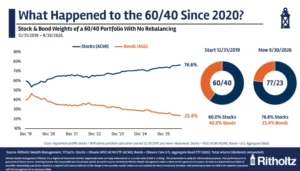
Over time, different parts of your portfolio will grow at different rates, causing your asset allocation to drift from your target. For instance, a hands-off portfolio that starts with a balanced 60% stock and 40% bond allocation can easily drift to 80% stocks after a prolonged bull market. This shift significantly increases your risk exposure. Regularly monitoring your portfolio with tracking apps allows you to rebalance and keep your risk level aligned with your financial goals.
![8 Best Investment Tracking Apps [2026 Guide] – ROB BERGER](https://robberger.com/wp-content/uploads/2024/02/2024-02-01_05-45-49-1024x576.png)
Choosing the Right Tracker for Your Financial Profile
No single investment tracking app is perfect for everyone. Your choice should depend on your net worth, the types of assets you hold, and your analytical needs:
- For the Everyday Investor: Empower is the best all-around free choice. It provides automated syncs, excellent asset allocation breakdowns, and powerful fee analysis tools at no cost.
- For High-Net-Worth Individuals & Alternative Assets: Kubera is the clear winner. Its ability to track global currencies, private equity, real estate, and digital assets—combined with a strict privacy model—makes it well worth its premium price.
- For Household Budgeting & Investing: Monarch Money is an outstanding, user-friendly option for families who want to manage daily spending and long-term net worth in one unified space.
- For Deep Equity & Dividend Research: Stock Rover and Snowball Analytics offer the specialized diagnostic, screening, and rebalancing tools that active, self-directed investors need to optimize their portfolios.