Nobel Laureate John Jumper Departs Google DeepMind for Anthropic in Major AI Talent Shuffle
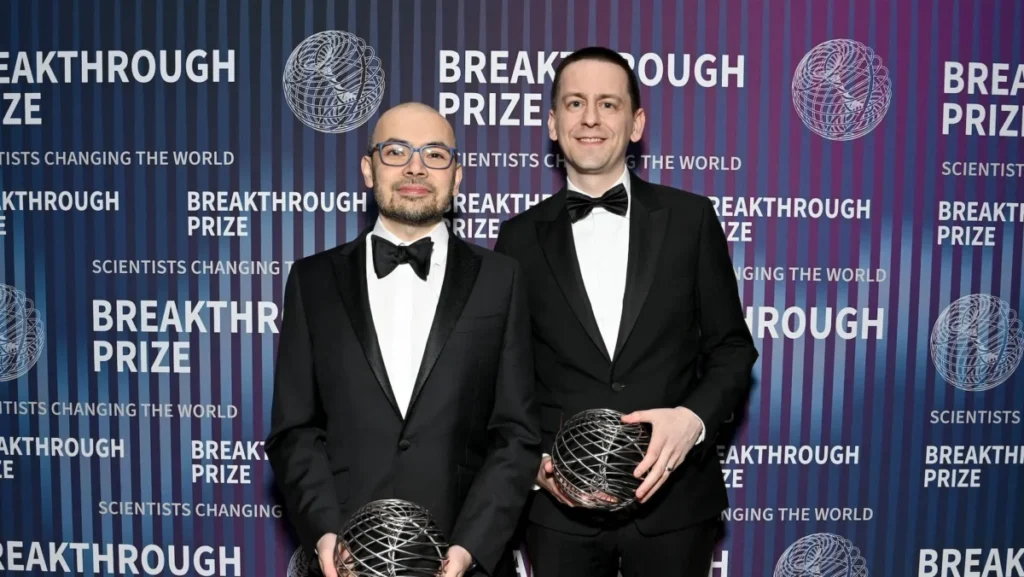
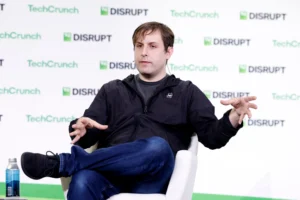
In a move that marks a significant shift in the high-stakes landscape of artificial intelligence research, John Jumper—a Nobel Prize-winning scientist and a central figure in the development of AlphaFold—has announced his departure from Google DeepMind. After a storied tenure spanning nearly nine years, Jumper is transitioning to Anthropic, one of the most formidable competitors in the generative AI sector.
This transition, confirmed on Friday, June 20, 2026, serves as the latest tremor in a tectonic talent war between the industry’s "Big Three": Google, OpenAI, and Anthropic. Jumper’s move follows a string of high-profile departures and executive reshuffling that suggests a new phase of intense competition as these companies pivot from pure research to enterprise monetization and IPO preparation.
The Core Facts: A Departure of Significant Weight
John Jumper’s career at Google DeepMind (GDM) is defined by the monumental success of AlphaFold, an AI-powered system capable of predicting the three-dimensional structures of proteins with near-experimental accuracy. His contribution to this breakthrough earned him, alongside DeepMind CEO Demis Hassabis, the 2024 Nobel Prize in Chemistry.
Beyond his scientific accolades, Jumper had recently pivoted toward the commercialization of AI, specifically focusing on the development of advanced coding tools for enterprise applications. His departure is particularly notable because it occurs while Google is aggressively attempting to scale its AI-driven developer products—an area where, according to industry reports, the company has faced significant headwinds in market adoption.
Key Details of the Transition:
- Duration of Tenure: Nearly nine years at Google DeepMind.
- The Destination: Anthropic, a leading AI research lab founded by former OpenAI executives.
- The Motivation: While Jumper has not publicly detailed his specific mandate at Anthropic, the move is widely viewed as a strategic acquisition of leadership expertise for a company currently racing to close the capability gap with OpenAI and Google.
Chronology: From Academic Ascent to Industry Icon
To understand the magnitude of Jumper’s departure, one must look at his trajectory within the halls of DeepMind.
2017: The Early Days
Jumper joined Google DeepMind during its most formative years. At the time, the company was primarily focused on fundamental research and mastering complex games like Go. It was during this period that Jumper began his work on protein folding, a "holy grail" of biology that had stumped researchers for half a century.
2020: The AlphaFold Breakthrough
Under the leadership of Demis Hassabis, Jumper led the AlphaFold team to a decisive victory at the CASP14 competition. The model’s ability to solve the protein folding problem changed the trajectory of drug discovery and structural biology overnight. Jumper’s leadership style, characterized by a blend of deep technical rigor and an ability to manage interdisciplinary teams, became a hallmark of the DeepMind culture.
2024: The Nobel Recognition
In October 2024, the Nobel Committee awarded the Nobel Prize in Chemistry to Jumper and Hassabis. The recognition solidified Jumper’s status as a household name in the scientific community and cemented Google DeepMind’s reputation as the preeminent hub for applied AI.
2026: The Strategic Pivot
Following the Nobel win, Jumper shifted his focus toward coding assistance tools. However, as 2026 progressed, the broader tech landscape became increasingly volatile. Following a week that also saw Character AI co-founder Noam Shazeer announce his departure from DeepMind to join OpenAI, the industry began to characterize this period as a "great migration" of top-tier AI researchers.
Supporting Data: The Talent War and Market Pressures
The departure of Jumper is not an isolated event; it is a symptom of a broader industrial trend. As of mid-2026, the cost of top-tier AI talent has reached unprecedented levels. Data from human resources analysts in the tech sector indicates that compensation packages for lead researchers now frequently exceed $10 million per year, often split between cash, equity, and performance-based bonuses.
The Enterprise Monetization Challenge
While Google DeepMind has produced industry-leading models, the company has struggled to convert its research successes into "sticky" business products. Reports from Bloomberg indicate that Jumper was instrumental in the effort to build coding tools for enterprise clients—a market currently dominated by GitHub’s Copilot and competing offerings from Cursor and OpenAI. The difficulty in gaining market share in the B2B space has reportedly led to internal friction regarding the prioritization of research versus product shipping.
The "IPO Readiness" Factor
With OpenAI widely rumored to be approaching an IPO, the pressure on its rivals to bolster their leadership teams has intensified. The recruitment of Jumper by Anthropic is likely a play to enhance the company’s credibility in the eyes of investors and researchers alike. By securing a Nobel laureate, Anthropic signals that it is not merely chasing the current state-of-the-art but is building a long-term foundation for the next generation of AI breakthroughs.

Official Responses: A Cordial Parting
Despite the competitive nature of the industry, the public discourse surrounding Jumper’s exit has been characterized by mutual respect.
In a poignant statement posted to X (formerly Twitter), Jumper reflected on his time at Google:
"Demis Hassabis took a real chance letting me lead the AlphaFold team just six months after finishing my PhD, and the entire GDM team taught me so much about how to do great science. GDM is a special place, and I’ll still be excited to hear about what amazing things they discover next."
Demis Hassabis, though yet to provide a lengthy public response, is known to maintain close ties with his former proteges. The general consensus among industry insiders is that the move is an amicable one, driven by a desire for a new set of challenges rather than internal conflict.
Implications: What This Means for the Future of AI
The movement of a scientist of Jumper’s caliber carries significant implications for the future of AI development.
1. The Decentralization of AI Leadership
For years, Google DeepMind was the undisputed "university" of AI—the place where the best minds went to learn and stay. The departure of key figures like Jumper and Shazeer suggests that the "center of gravity" in AI is becoming more distributed. As Anthropic and OpenAI continue to siphon talent, Google is being forced to rethink its retention strategies and organizational structure.
2. The Shift from Discovery to Utility
Jumper’s previous work was focused on the "science" of AI—solving protein structures to advance biology. His recent work on coding tools represents the industry’s collective pivot toward "utility"—the race to make AI useful in the daily workflows of engineers and businesses. His arrival at Anthropic suggests that the company is aiming to integrate high-level scientific reasoning into its commercial coding product suites.
3. Ethical and Safety Considerations
Anthropic was founded with a specific mandate focused on AI safety and constitutional AI. By bringing in a leader who has navigated the challenges of deploying high-impact technology like AlphaFold, Anthropic is clearly looking to balance aggressive scaling with rigorous safety standards. Jumper’s experience in the ethical deployment of scientific AI will likely be a key asset for Anthropic as they prepare to scale their models for public and enterprise use.
4. A Signal to the Market
For investors and stakeholders, the departure of a Nobel winner to a competitor serves as a market signal. It suggests that Anthropic is viewed as a "winner" in the current talent environment. It effectively raises the bar for what is expected of the company in its upcoming product cycles.
Conclusion
The departure of John Jumper from Google DeepMind to Anthropic is more than just a change of employment; it is a landmark event in the timeline of the AI revolution. As the industry matures, the focus is shifting from who can build the most impressive model in a research lab to who can effectively deploy AI at scale.
With Jumper now at the helm of new projects at Anthropic, the eyes of the tech world remain fixed on how he will apply his unique background to the next set of challenges—whether that be in the realms of biology, software engineering, or the broader quest for AGI. For now, the "Great AI Talent Shuffle" continues, and as the 2026 fiscal year progresses, we can expect further realignments that will define the leaders of the next decade.