The Architecture of Exclusion: Reckoning with the Distance Between Our Freedoms
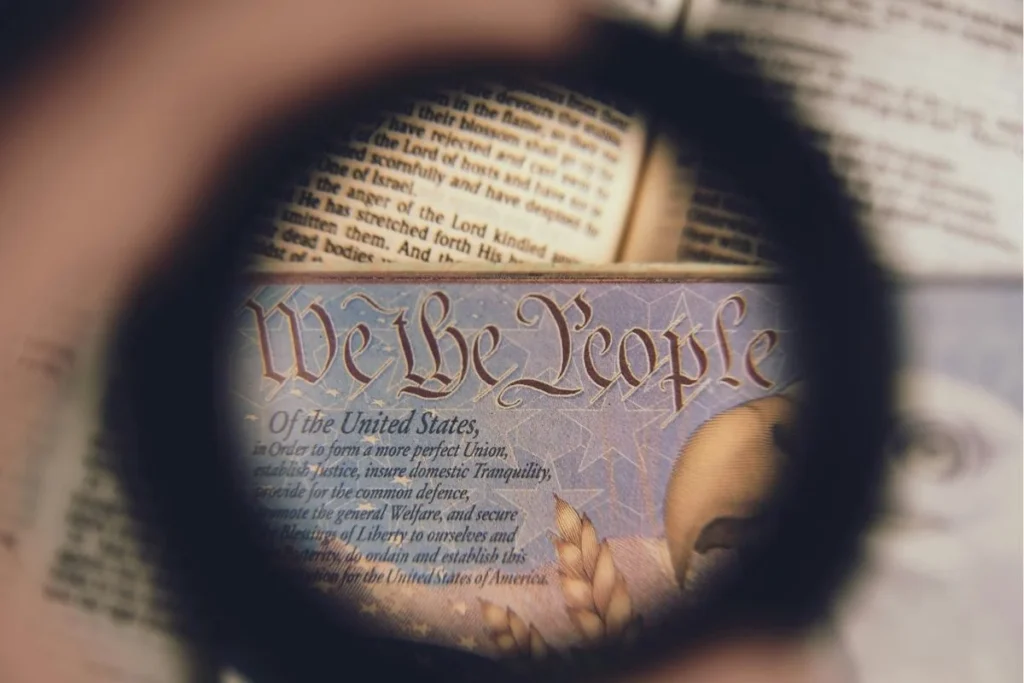
Every year, the American calendar is anchored by two pillars of liberty: the Fourth of July, marking the nation’s birth, and Juneteenth, commemorating the final emancipation of enslaved people. While separated by less than two weeks, these holidays are often treated as distinct historical silos—one representing the grand, universalizing arc of American democracy, the other relegated to the specific struggle of Black liberation.
However, a new intellectual series, The Distance Between Our Freedoms, argues that this bifurcation is a strategic myth. By placing these two milestones in direct conversation, we begin to see that they are not separate stories, but two sides of a singular, complex American project. The series poses an uncomfortable, foundational question: Is the persistence of racial inequality a failure of our democracy, or is it a mechanism upon which our democracy was built?
A Prophetic Warning: The Douglass Centenary
To understand the current crisis of American identity, one must look back to 1875. Less than a decade after the smoke cleared from the Civil War, Frederick Douglass stood before a crowd in Washington, D.C., to deliver an Independence Day address. The constitutional landscape had been transformed: slavery was abolished, and the 13th, 14th, and 15th Amendments had promised citizenship and equal protection to the formerly enslaved.
Yet, as the nation approached its centennial, Douglass was gripped by a profound unease. He looked at the emerging “reconciliation” between the North and South and famously asked: "If war among the whites brought peace and liberty to the blacks, what will peace among the whites bring?"
Douglass’s question proved to be a historical prophecy. Within a generation, the fragile gains of Reconstruction were dismantled by a wave of racial terror, state-sanctioned disenfranchisement, and the solidification of Jim Crow segregation. The experiment in biracial democracy was sacrificed at the altar of national unity. As the North and South reconciled, Black Americans were pushed outside the boundaries of the social contract. Douglass understood that, in the American context, national union was being purchased through racial disunion.
The Mechanism of Cohesion: Race as Political Glue
Modern political theory has long struggled to explain why the United States, despite its democratic rhetoric, maintained such a durable system of racial hierarchy. The answer lies in the concept of "political cohesion." For any democracy to function, it requires a shared sense of identity. In the United States, that identity was not built on a shared culture or history, but on a racialized political container.
Whiteness functioned as a mechanism to bind together a disparate population of European immigrants—groups that, on their home continent, had been historical enemies. By creating a rigid racial hierarchy, the American project allowed these groups to unify under a common banner of "whiteness."
In this framework, racial conflict was not a glitch in the system; it was the "democratic glue." By defining citizenship against the exclusion of Black, Indigenous, and other marginalized groups, the nation maintained social order and a sense of belonging for the white majority. The South’s caste system was, therefore, not just an economic engine for plantation agriculture; it was a foundational component of a national identity that required an "out-group" to define the "in-group."
The Straining of the Old Order
We are currently living through a period of profound democratic uncertainty. The conditions that once sustained this racialized stability—technological, demographic, and economic—are shifting beneath our feet.
As the United States approaches its 250th anniversary, the old mechanisms of cohesion are failing. Demographic transformation has made the "white-as-default" model of citizenship increasingly untenable. Globalization and technological disruption have eroded the economic stability that once buffered social inequality. Simultaneously, the rise of a truly interconnected world has made it impossible to ignore the gap between the democracy we imagine—a beacon of universal freedom—and the one that exists.
This transition is not merely political; it is an existential crisis. The persistence of inequality is no longer being viewed by historians and sociologists as a "contradiction" or a "hypocrisy." These terms, while comfortable, act as a shield. They allow us to preserve the belief that the American project is inherently virtuous, merely failing to live up to its own standards.
But what if the gap is not a failure, but a feature? What if the democratic project was designed to exclude, and the struggle for freedom has always been a battle against the very architecture of our government?
Confronting the Myth of Virtuous Democracy
For generations, the national narrative has framed racism as anathema to democracy. We teach that the "American Dream" is perfect in its conception but flawed in its execution. This narrative is a form of collective psychological preservation. To admit that our system was designed to rely on racial hierarchy is to confront a much more chilling reality: that the "distance between our freedoms" is the actual measurement of our democracy.
When we observe the divide between the Fourth of July and Juneteenth, we are measuring the distance between the idealized democracy of the majority and the lived reality of the marginalized. If we continue to treat these as two separate tracks of history, we ignore the fact that the Fourth of July’s promise of liberty was historically predicated on the suppression of Juneteenth’s reality of emancipation.
Implications for a Multiracial Future
The question now facing the American public is no longer whether this gap exists, but whether we possess the courage to dismantle the structure that created it.
Building a truly multiracial democracy requires more than legislative reform or social programs. It requires a fundamental "reckoning." It demands that we stop viewing racial equity as a peripheral issue and start viewing it as the central axis upon which our future stability depends. If we cannot build a nation that holds together without relying on racial hierarchy, the system will continue to fracture under the weight of its own internal contradictions.
Key Considerations for the Path Forward:
- Decoupling Power from Identity: We must interrogate how our political systems (such as the Electoral College or Senate representation) historically favored regional power structures that relied on racial exclusion.
- Redefining National Identity: The transition from a "white-centered" identity to a "multiracial" identity is the defining challenge of the 21st century. This requires moving beyond assimilation and toward a system of pluralistic belonging.
- The Honesty Gap: The most difficult step is the admission that the nation’s history of exclusion is not an "aberration," but an intentional design choice. Acknowledging this is the only way to move beyond the mythology that prevents genuine repair.
Conclusion: The Work Ahead
The series The Distance Between Our Freedoms serves as a mirror for the nation. As we move toward the 250th anniversary of the Declaration of Independence, we are being asked to choose: will we continue to hide behind the comfortable myths of a flawless founding, or will we accept the burden of our history?
The future of American democracy depends on our ability to bridge the distance between these two freedoms. It requires an acknowledgment that a democracy built on the exclusion of others is, by definition, a democracy that can never be fully realized. To build something more honest and durable, we must first accept that the work of the Fourth of July is not complete until it is fully integrated with the hard-won lessons of Juneteenth.
The gap between our ideals and our practice is not a space to be bridged with rhetoric; it is a space that must be filled with the hard work of creating a nation where belonging is no longer a matter of race, but a matter of universal human right.