The Unfulfilled Promise: Why the Creek Freedmen Case is a Litmus Test for Civil Society
In the landscape of American law and history, few documents carry as much weight—or as much unfulfilled potential—as the Treaty of 1866. It was a covenant forged in the aftermath of the American Civil War, designed to integrate formerly enslaved people into the Muscogee (Creek) Nation. Yet, in 2026, the status of those descendants remains a site of profound legal and moral contention. Despite multiple judicial rulings confirming their right to citizenship, thousands of Black descendants of enslaved Creek people remain in a state of institutional limbo.
For the nonprofit and philanthropic sectors, this is not merely a niche legal dispute occurring within Indian Country. It is a fundamental challenge to the integrity of legal obligations. When an institution possesses the authority to defy its own court orders, it sets a precedent that transcends tribal governance, threatening the very foundations of accountability that the civil sector relies upon to function.
A Chronology of Legal Stagnation
The modern struggle for Creek Freedmen citizenship is a masterclass in the gap between judicial decree and political reality. The core of the argument rests on Article 2 of the 1866 Treaty, which explicitly abolished slavery within the Nation and guaranteed that people of African descent, along with their descendants, would enjoy the same rights and privileges as other Creek citizens.
For over a century, these guarantees were systematically eroded through policies of exclusion, most notably by the introduction of "by blood" requirements for tribal membership. However, the legal tide began to turn in 2023:
- 2023: Muscogee (Creek) Nation District Court Judge Denette Mouser issued a landmark ruling in Muscogee v. Grayson, affirming that the Freedmen were entitled to full citizenship under the 1866 Treaty.
- July 2025: The Muscogee (Creek) Nation Supreme Court unanimously upheld the district court’s decision. The justices ruled that "by blood" restrictions were fundamentally at odds with the treaty’s guarantees and were void from their inception.
- April 2026: In an apparent move to circumvent the judicial mandate, Principal Chief David W. Hill issued Executive Order 2602, establishing the "Mvskoke Citizenship Integrity Protection Commission." This body was tasked with "studying" the implementation of the court’s ruling—a move widely viewed by advocates as a stalling tactic.
- May 2026: The Muscogee (Creek) Nation Supreme Court closed the case, denying emergency enforcement motions. The court effectively washed its hands of the implementation, asserting that the logistics of citizenship belonged to the political branches of the government, thereby leaving the plaintiffs with a recognized right but no institutional mechanism to claim it.
The Human Dimension: Kinship and Shared History
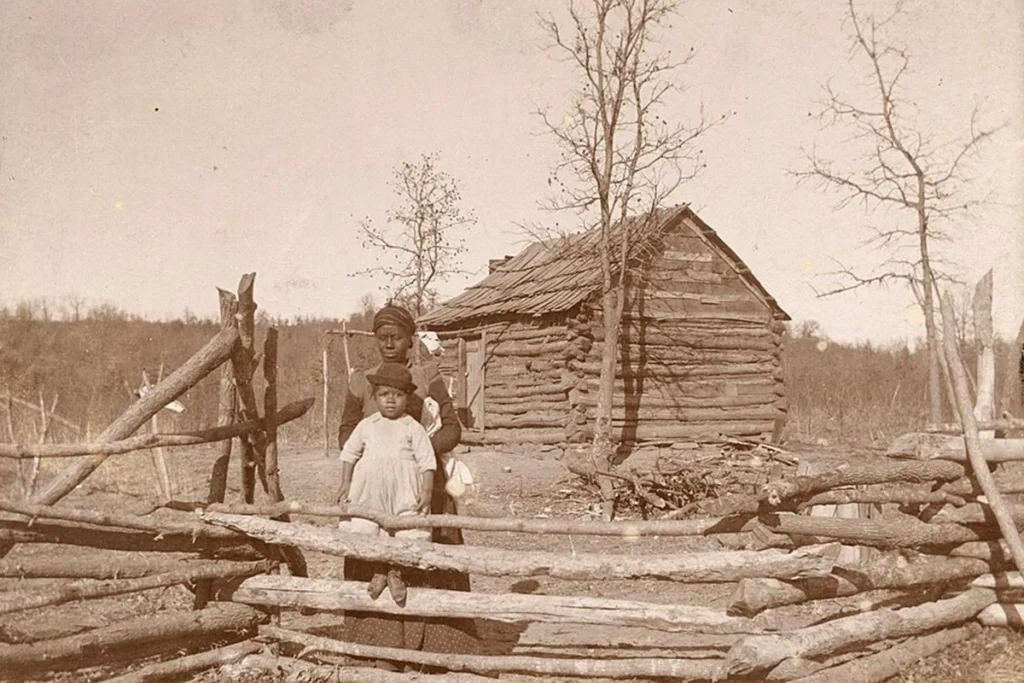
To understand the weight of this case, one must look beyond the sterile language of legal briefs. The history of Black Creek people is inextricably linked to the history of the Muscogee Nation. My own ancestor, Jesse Franklin, served as a judge on the Muscogee (Creek) Nation Supreme Court following emancipation. He was not an outsider; he was part of the civic fabric of a nation reconstituting itself after the trauma of the Trail of Tears and the Civil War.
Black Creek people survived the same removal and the same bondage as their tribal counterparts. They helped build the Nation’s institutions. The Treaty of 1866 was meant to be the legal recognition of that shared struggle and the promise that, as the Nation moved forward, Black Creek people would belong to it. The current denial of that citizenship is not just a denial of a legal right; it is a betrayal of the kinship forged in the crucible of history.
Sovereignty, Human Rights, and the Institutional Shield
A common mischaracterization of this struggle is the attempt to frame it within the modern political debates surrounding Diversity, Equity, and Inclusion (DEI). This is a tactical error that obscures the reality of the situation. This is not a matter of voluntary policy or organizational culture; it is a matter of binding federal treaty law.
Under the United Nations Declaration on the Rights of Indigenous Peoples (UNDRIP), which the Muscogee (Creek) Nation rightly champions for its own protection, there is an equal obligation to enforce treaties and ensure nondiscrimination. The Nation cannot selectively invoke human rights frameworks to shield its sovereignty while simultaneously discarding those same frameworks when they impose obligations upon the Nation itself.
When institutions treat rights frameworks as "shields" to protect their own autonomy but refuse to use them as "mirrors" to reflect their own responsibilities, they enter dangerous territory. It is a pattern familiar to those in the civil sector: when the cost of political compliance becomes too high, the commitment—no matter how solemn—becomes theoretical.
The Broader Implications: A Warning to the Civil Sector
The risks of this situation extend far beyond the borders of the Muscogee (Creek) Nation. The 2020 U.S. Supreme Court decision in McGirt v. Oklahoma was a watershed moment for tribal sovereignty, reinforcing that treaty promises are the bedrock of federal Indian law. If the Muscogee (Creek) Nation’s resistance to its own treaty obligations is permitted to stand, it invites a dangerous precedent.
Critics of tribal sovereignty—those who have long sought to undermine the legal protections established in McGirt—may seize upon this dispute to argue that treaty logic is malleable and subject to political whim. By refusing to honor the 1866 Treaty, the Nation is not protecting its sovereignty; it is providing ammunition to those who would see that sovereignty dismantled.
For the nonprofit and philanthropic sectors, the lesson is stark. Organizations that rely on community investment covenants, CDFI agreements, and long-term moral commitments must recognize that they are operating in an environment where "law" is increasingly being subordinated to "political convenience." If the civil sector remains silent while treaty obligations are discarded in plain sight, they are signaling that their own commitments to justice and equity are similarly negotiable.
Why Silence is a Strategic Failure
Some might argue that external organizations should refrain from commenting on the internal governance of a sovereign Tribal Nation. However, this is not an internal governance dispute; it is a human rights and treaty-law failure that has been validated by the Nation’s own judiciary.
The Cherokee Nation provides a compelling counter-example. After a protracted struggle, the Cherokee Nation ultimately integrated its Freedmen, fulfilling its treaty obligations and strengthening its sovereign identity in the process. Former Interior Secretary Deb Haaland praised this move, noting that honoring these obligations is a hallmark of a robust, self-determined nation.
The civil sector, particularly those working in racial justice and community development, has a responsibility to speak. When an institution uses its power to render a court order toothless, it creates a "catastrophe of implementation." We saw this in 1832 with Worcester v. Georgia, where a legal victory for sovereignty was rendered moot by executive defiance, leading to the forced removal of thousands. History shows that when the political branches decide to ignore the courts, the vulnerable are the ones who pay the price.
Conclusion: The Call to Action
The Creek Freedmen are not asking for a favor. They are asking for the fulfillment of a promise that has been validated by two courts and cemented in federal law. They are a community that has done everything the legal system asked of them, yet they remain on the outside, watching as the institutions their ancestors helped build turn their backs on them.
For leaders in the nonprofit and philanthropic worlds, the question is not "What do I think about this?" but rather "What am I going to do when a binding promise is broken in front of me?"
Silence is not an act of caution; it is an act of complicity. By choosing not to engage, organizations are implicitly validating the logic that legal and moral covenants are only binding when they are easy to keep. The civil sector is built on the belief that institutions are accountable and that commitments matter. If that belief is to hold any weight, the sector must stand with those whose rights are being denied. The Creek Freedmen are still fighting, and they are watching to see if the values of justice, integrity, and responsibility are as foundational to the rest of our society as they are to the legal system itself.