Resilience in the Face of Reform: How Crypto Markets Defied the Bank of Japan’s Historic Rate Hike
Main Facts: A Shift in Global Monetary Policy
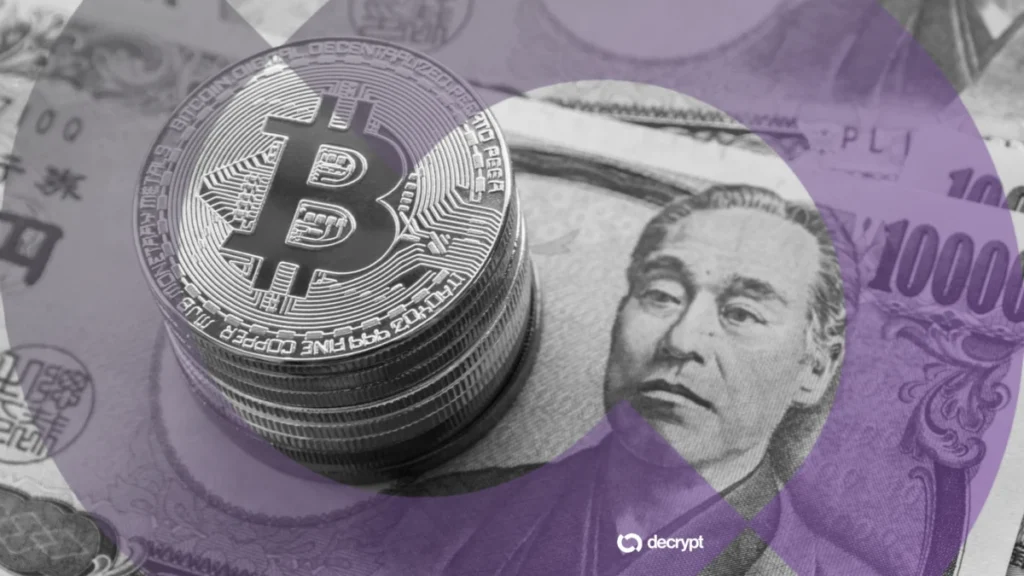
In a move that marks the end of an era for global finance, the Bank of Japan (BoJ) officially raised its benchmark interest rate to 1% on Tuesday, marking its highest level in over three decades. The decision, passed in a 7-1 vote by the policy board, effectively concludes a long-standing period of ultra-loose monetary policy that has defined the Japanese economy since the mid-1990s.
Despite the historical weight of this decision—which comes as the nation grapples with persistent domestic inflation and rising energy costs—cryptocurrency markets have demonstrated a surprising degree of resilience. While traditional analysts often fear that rising Japanese rates could trigger a mass liquidation of the "yen carry trade," Bitcoin and the broader digital asset market held firm, maintaining a total market capitalization of approximately $2.34 trillion.
Chronology of the Decision and Market Reaction
The BoJ’s policy pivot, which took effect on June 17, was framed as a necessary measure to combat inflation risks. Policymakers warned that rising global oil prices were increasingly feeding into consumer goods, threatening to push inflation beyond the central bank’s 2% target.
The market’s calm demeanor was not accidental; it was the product of a weekend of geopolitical developments that provided a buffer against financial instability. Following President Donald Trump’s announcement of a prospective deal with Iran, which is expected to be signed this Friday, market tensions in the Middle East—a primary driver of oil price volatility—began to dissipate. This "relief rally" provided the momentum needed for Bitcoin to climb from the low $60,000 range to over $65,000.
By the time the BoJ’s announcement was made public on Tuesday, the market had already factored in the likelihood of a hike. At the time of writing, Bitcoin was trading at approximately $66,000, reflecting a modest daily dip of 1.1%, a negligible fluctuation compared to the volatility usually associated with central bank intervention.
Supporting Data and Market Sentiment
While the price of Bitcoin has stabilized, sentiment among traders remains cautious. According to data from the prediction market Myriad, participants are currently leaning toward a bearish outlook. The market currently assigns a 64% probability that Bitcoin’s next significant move will be a descent to $55,000, rather than an ascent to $84,000.
On-chain data confirms that the market has undergone a significant "de-leveraging" process. According to CoinGlass, open interest in Bitcoin futures has eased over the past 24 hours, suggesting that traders have preemptively reduced their exposure to leveraged positions. By clearing out these aggressive bets, the market has effectively eliminated the "tinder" that usually fuels a cascading sell-off during periods of macroeconomic uncertainty.
The Yen Carry Trade: A Defused Threat
For years, the "yen carry trade"—the practice of borrowing low-interest yen to invest in higher-yielding global assets—has been a source of anxiety for crypto investors. The fear is that if Japanese rates rise, the cost of borrowing increases, forcing institutional investors to sell off their crypto holdings to repay their yen-denominated debts.
However, analysts argue that the narrative surrounding this threat has shifted. Ryan Yoon, a senior analyst at Tiger Research, noted that the market’s memory of previous carry trade scares is still fresh, yet investors have developed a thicker skin.
"The Yen carry trade has failed to trigger any meaningful disruption in either crypto or global equities this time around," Yoon told Decrypt. "Investors refused to panic because the market appears to have fully recovered from that earlier shock."
Yoon suggests that the carry trade has essentially lost its ability to shock the market. Unless Japan’s monetary shift begins to aggressively drain liquidity from the U.S. markets—the primary source of global capital—the "carry trade" is increasingly viewed as little more than a headline-grabbing concept rather than a systemic catalyst for a crash.
Official Responses and Economic Outlook
The Bank of Japan’s guidance suggests a cautious approach to the future. While the central bank acknowledges that the economy has "recovered moderately," it remains wary of the "decelerated rate" of growth. To mitigate the risk of a sharp economic slowdown, the BoJ has paired its rate hike with a pledge to continue its support for the bond market.
The bank confirmed it will continue to trim its bond purchases by approximately ¥200 billion (roughly $1.3 billion) each quarter until early 2027, eventually leveling off near ¥2 trillion. This structured tapering is designed to provide a soft landing, ensuring that the increase in borrowing costs does not cripple an economy that is already burdened by public debt exceeding 200% of its GDP—the highest among all advanced economies.
Implications for the Future of Crypto
The relative stability of the crypto market in the face of this interest rate hike provides several key takeaways for investors and observers:
1. Market Maturation
The lack of panic-selling indicates that the crypto market has matured. It is no longer as hyper-reactive to central bank news as it was during the COVID-19 pandemic era. As Maksim Balashevich, founder and CEO of Santiment, noted, the hike was largely "priced in."
"The ‘unknown’ events of the future, which aren’t fully priced in and are able to move markets significantly, must be some other pieces of unveiling reality," Balashevich explained. The market is now looking toward domestic U.S. inflation data, regulatory developments, and institutional adoption rather than just global interest rate differentials.
2. The Decoupling of Narratives
There is a growing trend of decoupling between crypto price action and the traditional macroeconomic "fear" narrative. While the yen carry trade was once an existential threat to Bitcoin, the market has learned to absorb these shocks. The "sky isn’t falling" realization has effectively stripped the carry trade of its power to move prices.
3. Geopolitics vs. Monetary Policy
The role of the Trump-Iran deal in shielding crypto markets from the impact of the BoJ decision underscores the complex intersection of geopolitics and digital assets. By reducing energy price volatility, the diplomatic thaw provided a counter-narrative that outweighed the hawkish tone of the Japanese central bank.
4. A New Floor for Japan
By reaching a 1% benchmark—a level not seen since 1995—Japan is signaling that the era of "easy money" is truly over. While this provides a more traditional economic framework for the nation, it also means that global markets must adjust to a world where the Japanese yen is no longer the primary engine of global liquidity.
Conclusion
As the dust settles following the Bank of Japan’s policy shift, the crypto market remains standing. While the path ahead may be fraught with uncertainty—as evidenced by the bearish sentiment on prediction markets—the resilience shown this week suggests that Bitcoin and its counterparts are increasingly trading based on their own internal momentum and broader risk-on sentiment, rather than merely reacting to the mechanical levers of central banking.
For now, the "carry trade" scare has been relegated to the background, and investors are turning their eyes toward the next "unknown" in a rapidly evolving global financial landscape. Whether this stability persists will depend largely on whether the BoJ can successfully navigate its path toward normalization without triggering the very slowdown it aims to avoid. For the crypto industry, the lesson remains clear: the market is growing increasingly difficult to surprise.