The David of Diffusion: How Reve 2.0 Is Disrupting the AI Image Hegemony
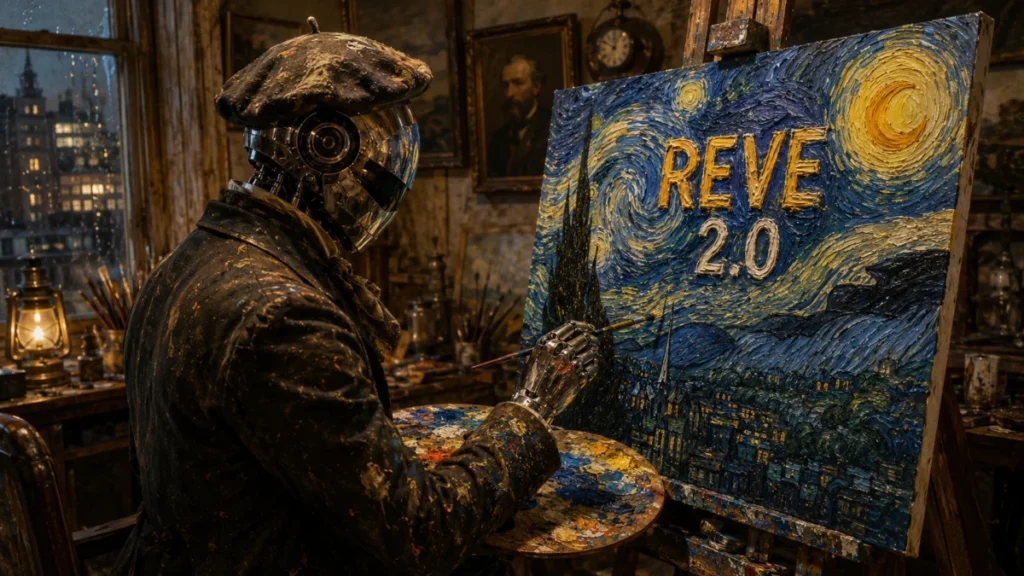
On June 3, the landscape of generative artificial intelligence shifted—not through the brute-force compute of a trillion-dollar monolith, but through the surgical precision of a scrappy startup. Reve, a company that was largely an industry footnote just twelve months ago, released version 2.0 of its flagship image model. The results were immediate: the model vaulted to the #2 position on the prestigious Arena text-to-image leaderboard, trailing only OpenAI’s GPT Image 2 and comfortably outpacing Google’s Nano Banana 2.
What makes this achievement particularly disruptive is the efficiency behind it. Reve claims its model was trained on a mere fraction—specifically, 10%—of the GPU resources utilized by its gargantuan rivals. By rethinking the fundamental architecture of image synthesis, Reve has proven that in the race for AI dominance, clever engineering may finally be eclipsing raw, unbridled compute.
The Architectural Pivot: Moving Beyond Diffusion
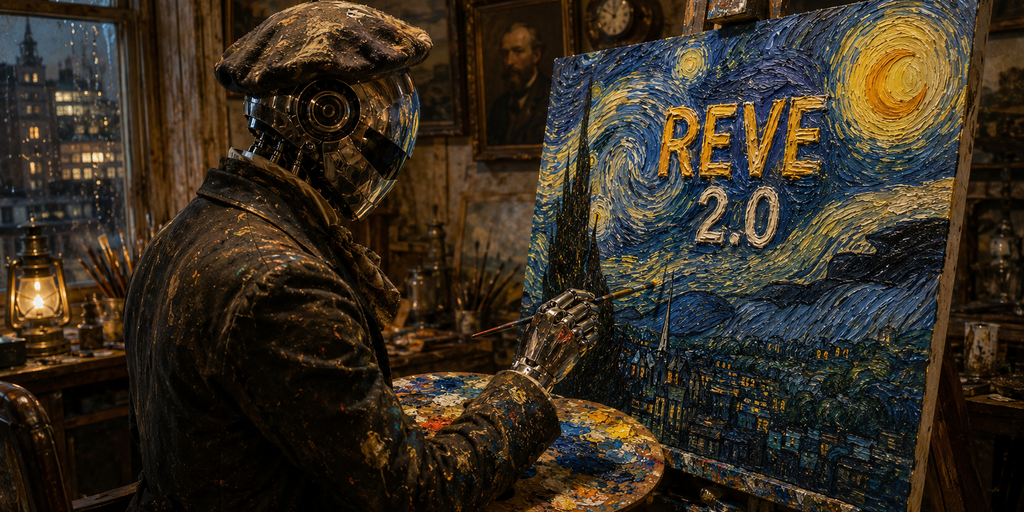
For years, the standard operating procedure for AI image generation has been the "black box" approach: feed a long, descriptive prompt into a diffusion engine and hope the model interprets the semantic nuances correctly. Reve has fundamentally abandoned this paradigm.
Instead, the team at Reve introduced a "layout" system. In this workflow, the image is not treated as a singular, monolithic output but as a structured, editable blueprint—a concept analogous to how HTML defines the skeleton of a webpage. Every object in a scene is assigned a specific coordinate, a size, and an individual caption.
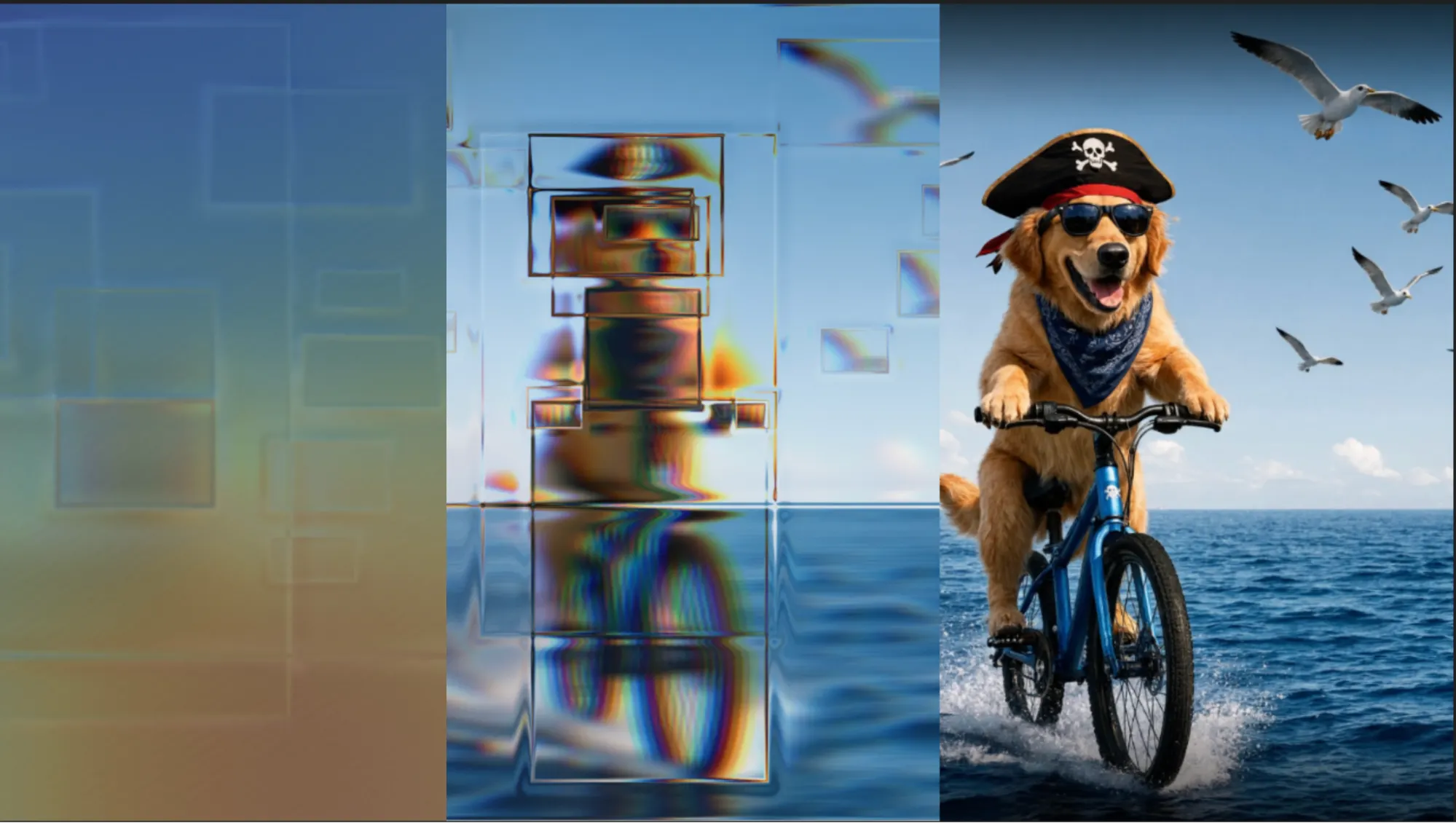
When a user submits a prompt, the model performs a "thinking trace" to reason through this layout before rendering the pixels. The result is native 4K output, delivering 16 megapixels of resolution without the need for aggressive upscaling artifacts. This architectural shift transforms the generator from a slot machine into a design tool. Users can move a subject, swap a background, or rewrite a sign on a wall without needing to re-roll the entire image, saving massive amounts of time and computational overhead.
Chronology of a Breakthrough
The rise of Reve has been a masterclass in iterative development.

- Early 2025: Reve launches its first model. While it garnered attention for its filmic, photojournalistic aesthetic, it was largely seen as a niche player, praised primarily for its cost-efficiency (roughly one cent per image) compared to industry titans like Midjourney and Flux.
- Late Spring 2025: Behind the scenes, the engineering team shifts toward the "layout-first" architecture, focusing on spatial reasoning and agentic pipelines.
- June 3, 2026: The official release of Reve 2.0. The model debuts on the Arena leaderboard, signaling a major leap in capability, particularly in handling complex, multi-subject scenes and legible typography.
- Post-Launch Period: Early adopters and developers begin integrating the API, noting the extreme cost-to-performance ratio compared to the 7-to-13-cent price point of competing models.
Performance Analysis and Benchmarking
To understand where Reve 2.0 sits in the current market, we subjected it to a rigorous battery of tests covering eight distinct domains.
Photorealism and Depth
In a test featuring a subject in a beige trench coat on a Manhattan rooftop at golden hour, Reve 2.0 displayed remarkable maturity. The "waxy" skin smoothing that historically plagued early AI models was absent. The optical effects—such as the fall-off in depth of field and the rendering of wire-rimmed glasses—mimicked high-end mirrorless camera output. While GPT Image 2 remains slightly ahead in pure, clinical realism, Reve 2.0’s ability to handle high-density prompts without succumbing to "synthetic gloss" makes it a formidable competitor.

Spatial Awareness and Clutter
We challenged the model with a Renaissance-era scene involving a brass orrery, three distinct light sources (candle, moonlight, green jar), and a complex array of objects. Reve 2.0 excelled where others failed: the lighting zones remained distinct, with the warm candle light and cold moonlight not bleeding into each other. While it struggled with minor anatomical details like human fingers, the spatial placement of objects was largely flawless.
The Typography Threshold
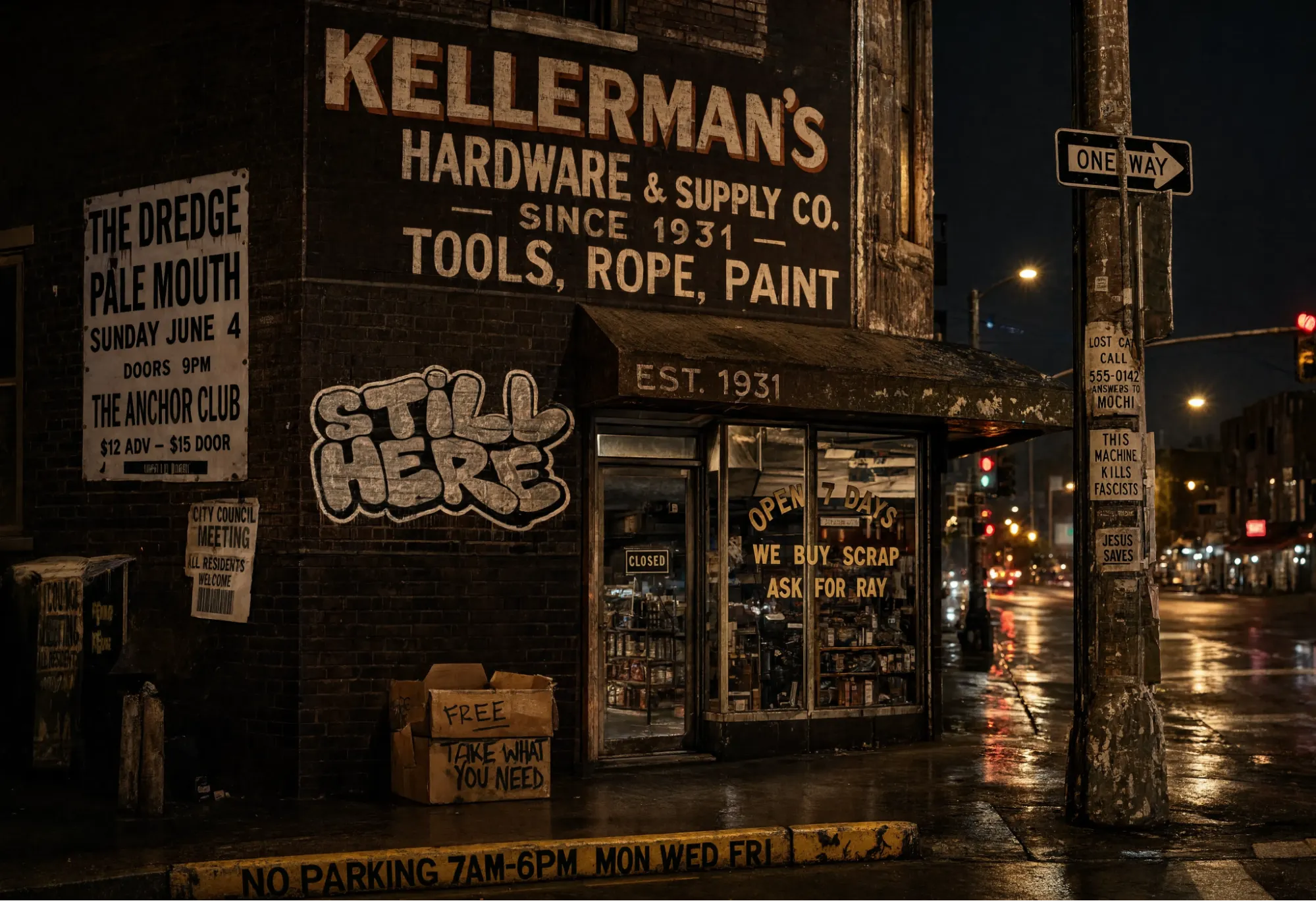
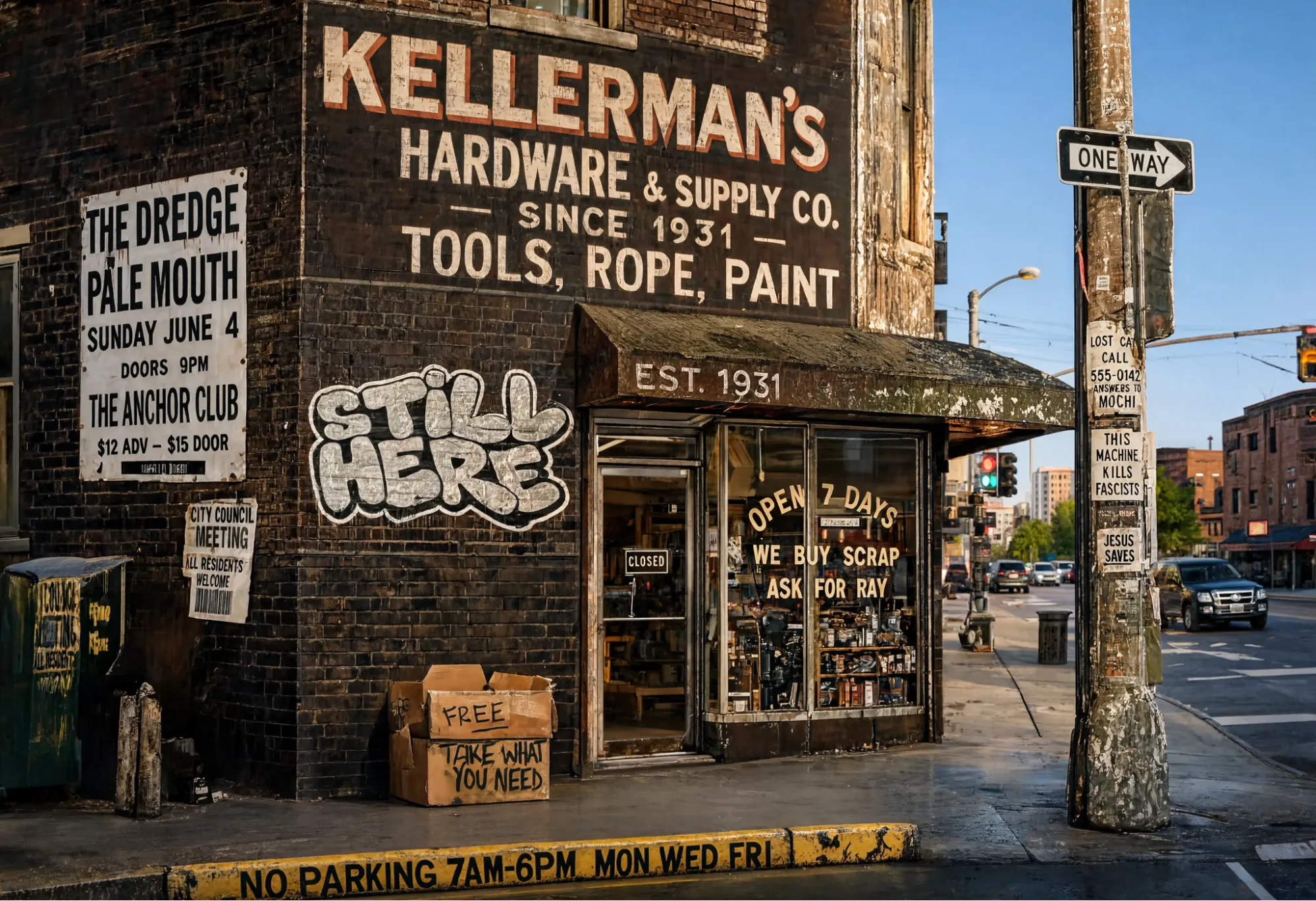
Text remains the "final boss" of AI image generation. When tasked with a hardware store scene featuring multiple layers of signs, posters, and graffiti, Reve 2.0 proved highly reliable. It rendered complex, long-form text like "KELLERMAN’S HARDWARE & SUPPLY CO. SINCE 1931" with near-perfect spelling. While GPT Image 2 was able to render even smaller, micro-stickers, its output suffered from heavy grain and artifacts, whereas Reve’s output remained clean and production-ready.
Agentic Versatility
Perhaps the most intriguing aspect of 2.0 is its "agentic" nature. When asked for a timeline of Bitcoin history in a "kids’ drawing" style, the model didn’t just generate a generic illustration. It researched the milestones—Genesis block, Pizza Day, the 2022 crash—and arranged them sequentially across a timeline. It acted as an intelligent agent, demonstrating that it understood the concept of a timeline rather than merely creating a chaotic collage of related imagery.
Official Stance and Market Positioning
Reve has positioned itself as the "developer’s choice." With API generations costing a mere fraction of a cent, the company is targeting agencies, print media, and app developers who need high-volume, controllable output.

When questioned about their unique approach, company spokespeople emphasized that their decision to focus on "layout" rather than "parameter count" is a deliberate response to the industry’s obsession with massive, inefficient models. By training on a smaller dataset with a more sophisticated structural understanding, they argue that they have achieved a more "controllable" intelligence.
Regarding censorship and safety, Reve has adopted a significantly more permissive posture than its Silicon Valley peers. In a test involving a "clash between mortal enemies," OpenAI and Google’s models either censored the gore or refused the prompt entirely. Reve processed the request, delivering a cinematic (though not gratuitous) scene. This openness is likely to attract a specific subset of creative professionals who feel stifled by the increasingly restrictive guardrails of mainstream AI tools.
The Broader Implications for the AI Industry
The success of Reve 2.0 carries three major implications for the future of the generative AI market:
- Efficiency as a Moat: If a company with 10x fewer GPUs can produce a model that rivals the best in the world, the "compute-is-everything" narrative of the last three years may be nearing its end. This suggests that future innovation will likely favor architectural efficiency over raw hardware investment.
- The Rise of Agentic Design: The shift toward layout-based generation indicates that the future of AI art is not about "prompt engineering" (the art of guessing what a model wants) but about "interface control." Users want to be directors, not just gamblers waiting for a lucky roll.
- Commoditization vs. Ecosystems: While Reve is technically superior for professional workflows, it faces a massive hurdle: ecosystem lock-in. For the average user, the convenience of having an image generator inside ChatGPT or Gemini, bundled with a subscription that includes coding, data analysis, and document management, is a powerful incentive to stay within a walled garden.
Conclusion
Reve 2.0 is not a perfect model. It occasionally drops elements of a prompt, and its identity preservation in multi-subject editing still lags behind the industry’s very best offerings. However, for those who view image generation as a professional process—a workflow requiring iteration, high-resolution output, and strict adherence to layout—it is currently the most compelling tool on the market.

By providing a professional-grade, highly affordable, and less restrictive alternative to the tech giants, Reve has forced a conversation about what "state-of-the-art" actually means. It is no longer just about who has the most H100s; it is about who can best bridge the gap between human intent and machine execution. As of June 2026, that crown belongs to a team that dared to stop adding more power and started adding more logic.