When the Glitter Fades: What Dolly Parton’s Estate Battle Teaches Us About the High Stakes of Family Wealth Planning
For decades, country music legend Dolly Parton charmed the world with her self-deprecating wit, unmistakable voice, and a business acumen built on a massive empire spanning a celebrated song catalog, theme parks, multimedia brands, and tireless philanthropic ventures. Yet, behind the rhinestone suits and stadium lights, Parton maintained a laser focus on one practical, often somber reality: she wanted to make sure she didn’t leave her loved ones with a logistical and legal "mess" after her passing.
Having no children and following the death of her beloved husband of over 50 years, Carl Dean, in 2025, Parton understood that her sprawling estate required meticulous foresight. Her assets went far beyond standard financial accounts; they encompassed a global brand, intellectual property, corporate entities, and a large extended family. To prevent public exposure and administrative gridlock, reports indicate she utilized a sophisticated network of trusts, business entities, and financial managers to bypass the public probate court system entirely following her death on August 25.
Yet, as recent headlines prove, even the most thoroughly engineered estate plans cannot always immunize a family against the toxic collision of grief, loyalty, power, and high-stakes finance.
Main Facts: The Anatomy of a Post-Mortem Power Struggle
While Parton’s multi-hundred-million-dollar empire is uniquely vast, the core friction points of her estate echo those experienced by everyday families. According to court documents surfaced by The New York Times and other outlets, the battle lines have been drawn not over physical memorabilia or cash accounts, but over control and influence.
Parton’s longtime manager has filed a lawsuit against the late singer’s nephew and former head of security, Bryan Seaver. The legal action alleges that Seaver threatened staff members and corporate partners, explicitly vowing to "destroy the entire brand" unless financial and operational demands were met. In response to the escalating tensions, legal representation for the estate’s management has formally requested a restraining order against Seaver.
Meanwhile, the narrative has grown complicated. Seaver has publicly denied threatening anyone associated with Parton’s estate, arguing that his communications have been aggressively misconstrued to cast him as an adversarial figure. Adding to the family drama, Parton’s sister, Frieda Parton, has publicly downplayed the severity of the rift, insisting that the family at large is not engaged in an all-out war over the estate.
Nevertheless, the legal filings underscore a sobering truth: when massive wealth changes hands, the primary battles rarely center on fair shares of monetary accounts. Instead, they ignite over who holds the reins of power, who gets to dictate the narrative of a legacy, and who feels sidelined by organizational decisions.
Chronology of Events: From Proactive Planning to Public Fallout
To understand how a meticulously planned estate found itself in the headlines, it is helpful to trace the timeline of events leading up to and following the iconic singer’s passing.
- Decades Prior: Dolly Parton frequently expresses her determination to avoid the chaotic, drawn-out estate battles that plague many celebrity deaths. She quietly builds a complex corporate infrastructure, incorporating trusts and business managers to protect her brand and provide for her extended family.
- 2025: Carl Dean, Parton’s husband of more than five decades, passes away. Parton shifts her final focus toward solidifying her comprehensive asset distribution and business control mechanisms.
- August 25, 2025: Dolly Parton passes away, triggering the execution of her carefully constructed trust and estate planning documents designed to keep her affairs out of public probate court.
- Post-Death Period: Tensions bubble under the surface regarding the day-to-day administration of the brand and corporate entities. Allegations emerge regarding pressure and ultimatums from within the extended family circle.
- The Lawsuit: Parton’s longtime manager files a lawsuit against nephew and former head of security Bryan Seaver, alleging threats and coercion aimed at disrupting the brand. A restraining order is requested.
- Public Defense: Seaver denies the allegations, claiming his words were twisted, while family members like Frieda Parton attempt to calm public perception by stating the family is united. Legal proceedings continue to unfold behind the scenes.
Supporting Data: The Generational Wealth Transfer and Planning Deficits
Parton’s high-profile dispute serves as an extreme mirror for broader macroeconomic and cultural trends sweeping the United States. We are currently living through the opening stages of the "Great Wealth Transfer," where trillions of dollars will pass from aging generations to their heirs. However, data indicates that families are remarkably unprepared for these conversations.
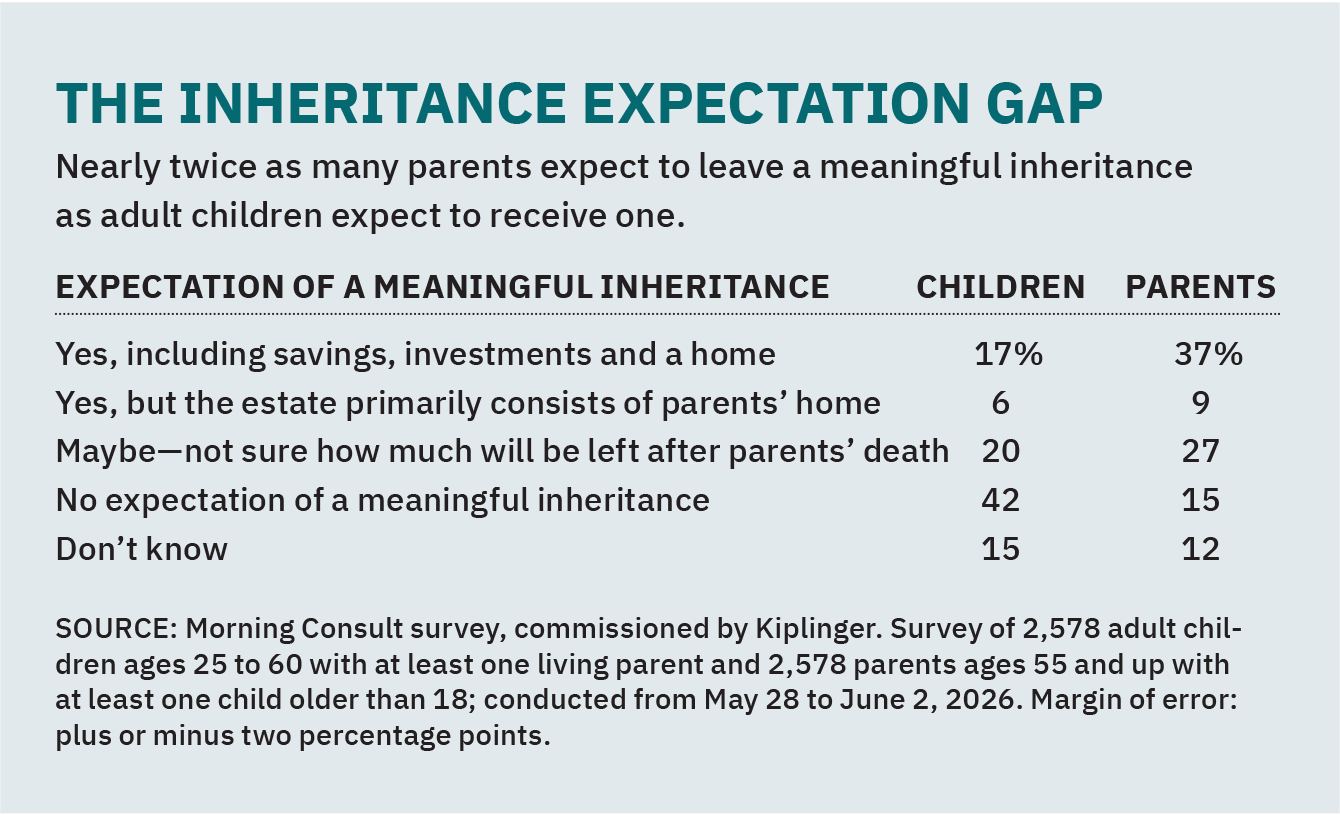
A recent survey conducted by Kiplinger and Morning Consult highlights a profound generational divide in family financial planning and communication:

- Two in five families have never once discussed inheritance expectations or plans.
- 30% of parents have no formal estate plan in place whatsoever.
Ron Gura, co-founder and CEO of the bereavement and estate navigation platform Empathy, notes that these gaps in communication routinely pave the way for emotional devastation. When parents fail to outline their intentions, children and extended family members are left to fill in the blanks with their own assumptions, grievances, and expectations.
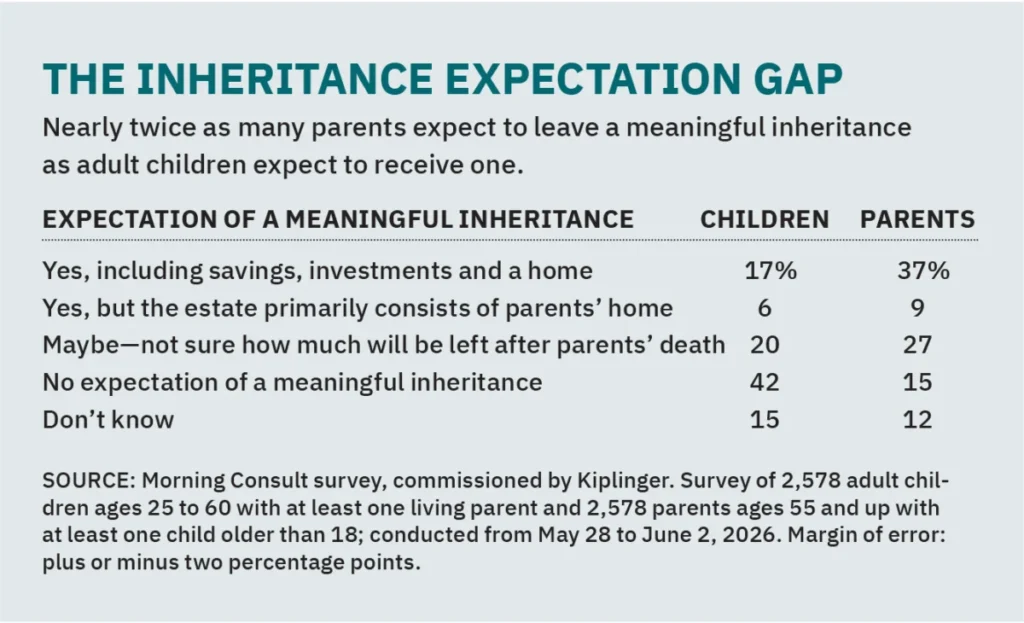
Furthermore, proprietary charts from Kiplinger and Future research illustrate a persistent disconnect between what younger generations expect to receive and what older generations actually plan to pass down. This mismatch in expectations often translates directly into post-mortem hostility, turning grief into litigation.
Official Responses and Legal Perspectives
Legal experts emphasize that while Parton’s situation involves a $450 million entertainment empire, the underlying psychological triggers are universal.
Phil Reed, an estate and asset protection attorney at Reed Law, PLC, points out that fairness is invariably the first emotional hurdle families face. However, Reed stresses that equality and fairness are two entirely different concepts.
"The primary thing to keep in mind when deciding how to divide your estate is communicating the reasons for that decision and having those memorialized in your estate plan specifically," Reed explains. If one child or family member is handed operational control of a business while another receives liquid assets, failing to explain the why behind the decision is a recipe for resentment.
Kim Hegwood, owner and managing attorney at Your Legacy Legal Care, echoes this sentiment, noting that traditional wills are often insufficient for high-profile or complex estates because they mandate public probate.
"A will must go through probate for it to be enforceable," Hegwood says. "Depending on the person’s wishes, the assets they own, and how they want things to be managed upon incapacity or death, a trust may be the best type of estate planning tool to help keep it from the public eye."
Hegwood also highlights the utility and limitations of no-contest clauses—provisions within a trust or will that state an heir will forfeit their inheritance if they unsuccessfully challenge the document. While it sounds like a silver bullet, Hegwood warns that such clauses only work if the challenger actually stands to inherit something. If an heir is already disinherited, a no-contest clause holds no deterrent value. Moreover, courts in many jurisdictions (such as Texas) will not enforce a no-contest penalty if the challenger brought a good-faith claim with probable cause.
Implications: Seven Golden Rules to Protect Your Estate
Dolly Parton’s cautionary tale demonstrates that even an army of financial managers and watertight legal structures cannot completely eliminate human friction. However, everyday individuals can take concrete steps to safeguard their families from descending into costly and bitter feuds. Legal and financial experts recommend implementing the following strategies:
1. Put Your Plan in Writing—and Keep It Updated
A missing, outdated, or half-finished estate plan is an open invitation for a family dispute. Life changes rapidly through marriages, divorces, births, and deaths. Experts recommend reviewing and updating your estate planning documents every three to five years, or immediately following any major life-altering event.
2. Consider Establishing a Living Trust
As demonstrated by Parton’s initial strategy, utilizing a funded living trust allows your assets to be distributed privately and efficiently. Unlike wills, which must wind their way through public probate court—exposing your financial details and inviting challenges—trusts allow a designated trustee to execute your wishes swiftly without judicial oversight.
3. Choose Your Executor or Trustee Wisely
Do not leave the selection of your executor to chance or state law. Choose someone who is organized, emotionally steady, and capable of executing your directives impartially. In complex situations, appointing a neutral, professional third-party fiduciary can prevent family members from locking horns over daily operational control.
4. Explain Unequal Gifts While You Are Alive
If your estate distribution will not be split evenly down the middle, do not leave your heirs guessing your motivations. Have open, honest conversations with your family well before you pass away. Documenting the rationale behind your decisions within your estate plan can dismantle accusations of favoritism.
5. Create an Explicit Inventory of Personal Property
Fights over sentimental items—such as family heirlooms, artwork, vehicles, or jewelry—frequently cause permanent damage to sibling relationships. Draft a clear, written memorandum detailing who receives specific personal belongings, and keep it in a secure, accessible place alongside your core legal documents.
6. Prioritize Privacy Mechanisms
If discretion is a priority for your family, look beyond a standard will. Speak with an estate planning attorney about incorporating privacy structures, such as revocable living trusts and family limited partnerships, to shield your personal affairs from public record requests and tabloid scrutiny.
7. Utilize No-Contest Clauses Strategically
While not foolproof, a no-contest (in terrorem) clause can deter beneficiaries from filing frivolous, meritless lawsuits against your estate. Understand the legal limitations of these clauses in your specific state, and ensure they are drafted tightly by a qualified professional.
The Final Word
Dolly Parton approached her mortality with pragmatism, hoping to spare her loved ones the logistical nightmares she had witnessed fellow celebrities leave behind. Unfortunately, her legacy’s first major post-mortem chapter was defined not by a celebration of her music, but by a high-stakes struggle for corporate and personal control.
The overarching lesson for everyday families is clear: while an estate plan cannot erase the profound grief of losing a loved one, a well-crafted, transparent, and legally sound strategy can keep a family from tearing itself apart at the seams.
As Kim Hegwood aptly summarizes: "We always say the kindest thing you can do for the people you love is to make sure they never have to guess what you wanted. Grief is hard enough without adding a legal fight."