Bridging the Gap: A Deep Dive into Financial Planning, Debt, and Future Aspirations

For many, the transition into true "adulthood"—marked by stability, homeownership, and a clear path toward retirement—can feel like an elusive target. This is particularly true for Brian and Michael, a 34-year-old couple living in central Connecticut. Despite successful careers in the public and non-profit sectors, the pair finds themselves grappling with the friction between their long-term life goals and the reality of their current financial landscape.
As they approach their 10-year anniversary, they have turned to the Frugalwoods community for a "Financial Case Study," a collaborative diagnostic tool designed to help individuals navigate complex money dilemmas. Their situation serves as a compelling case study on the pressures of the modern economy, the burden of consumer debt, and the psychological weight of feeling "behind" despite clear professional achievements.

The Financial Snapshot: A Profile of Ambition vs. Reality
Brian and Michael’s household presents a blend of stability and vulnerability. Brian, a quality assurance manager for a state-run hospital, and Michael, a project coordinator for a behavioral health agency with a side practice in advocacy, bring in a combined gross annual income of $167,544. On paper, this is a robust figure. However, their net annual income is approximately $109,455, and their current annual spending hovers at $96,414.
The Debt Burden
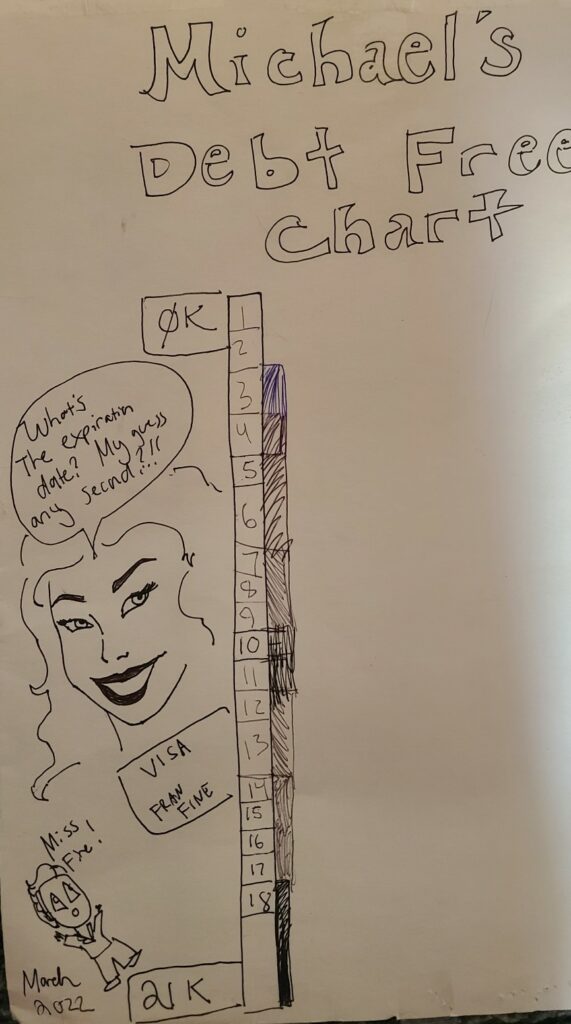
The primary source of the couple’s stress is a $28,259 consumer debt load. This includes various credit card balances, with interest rates ranging from 0% (on promotional offers) to 17.99%. For the couple, this debt represents a "cycle" that has hindered their ability to accumulate assets.

Assets and Savings
Currently, the couple holds roughly $91,250 in total assets, including retirement accounts (401ks, 403b, 457, and a pension) and a modest emergency fund of $7,000. While they have successfully avoided mortgage debt—a major milestone for many—they feel the lack of homeownership acutely, particularly as they navigate a volatile rental market.
Chronology of Challenges: From Studio to Uncertainty
To understand how the couple reached this juncture, one must look at the events of the past 18 months. In August 2022, Brian and Michael were living in a comfortable, low-cost studio apartment. Their plan was straightforward: continue saving and transition into the housing market by late 2023.

The landscape shifted abruptly. The couple was forced to vacate their long-term home, leading to a scramble in a high-cost rental market. This transition, compounded by significant, unplanned veterinary expenses for their two kittens, acted as a "financial vacuum," depleting their savings and forcing a reliance on credit.
The move into their current two-bedroom apartment in a refurbished mill—while aesthetically and functionally superior—came with a higher cost of living. This shift has forced a reassessment of their spending habits, as they now realize their previous financial equilibrium was fragile.

Supporting Data: Expense Analysis and Spending Habits
A breakdown of the couple’s monthly expenses reveals an annual outflow of $96,414. While they live in a relatively high-cost region, certain expenditures—such as eating out, gifts, and personal care—have been flagged as "discretionary."
| Expense Category | Monthly Amount |
|---|---|
| Housing (Rent) | $2,000 |
| Debt Repayment | $2,000 |
| Transportation/Repairs | $1,064 |
| Pet Expenses | $517 |
| Groceries | $469 |
| Discretionary (Eating out, gifts, etc.) | ~$1,000+ |
The central issue identified by financial observers is not a lack of income, but a lack of intentionality in the "discretionary" category. By failing to categorize spending, the couple has inadvertently allowed lifestyle inflation to erode their savings potential.
Expert Recommendations: The Path to Financial Autonomy
Liz Frugalwoods, who provided the consultation, emphasizes that the couple is in a far better position than they realize. The "shame" Brian feels is, in her view, a psychological barrier rather than a mathematical reality. Her recommendations focus on three core pillars:
1. The Spending Detox
The most immediate recommendation is a "spending detox." By cutting all discretionary spending—items that are "nice to have" but not essential—the couple could potentially redirect over $4,000 per month toward debt repayment. At this rate, the entirety of their $28,259 debt could be eliminated in approximately six to seven months.

2. Prioritizing the "Financial Hierarchy"
Financial stability requires a specific order of operations:
- Step 1: Emergency Fund. Build a robust safety net that covers 3–6 months of living expenses. This fund must be insulated from "expected" expenses like vet bills or car repairs, which should be budgeted for separately.
- Step 2: Debt Elimination. High-interest credit card debt is the primary obstacle to wealth building.
- Step 3: Retirement Optimization. The couple has access to a "triple crown" of retirement vehicles: a 403b, 457b, and a pension. These should be maxed out as their salary increases.
3. The "Masters Degree" Verdict
Regarding Brian’s desire for a graduate degree, the expert advice is cautious: "Do not pursue it unless there is a precise, iron-clad correlation to a significant salary increase." In the absence of a guaranteed ROI, education should be viewed as a hobby, not a career strategy, particularly when the couple is trying to shed debt and save for a home.

Implications: The Psychology of "Adulting"
The broader implication of Brian and Michael’s story is the cultural pressure to reach "life milestones" on an arbitrary schedule. The couple feels the weight of societal expectations: marriage, homeownership, and career prestige.
However, the analysis suggests that these are not goals to be chased at the expense of fiscal health. By shifting their focus from "comparing" themselves to peers to "calculating" their own path, the couple can move from a cycle of "feast and famine" to one of sustainable growth.

Conclusion
Brian and Michael’s case serves as a reminder that financial wellness is a continuous, iterative process. It is rarely about one single, massive windfall, but rather the cumulative effect of small, intentional choices. By automating their savings, rigorously tracking their outflows, and addressing the emotional weight of their financial choices, the couple is well-positioned to achieve their long-term goals. They are not merely "behind"; they are simply at a pivot point—one that, if navigated with discipline, will lead to the stability they seek.
As they move forward, the couple’s primary challenge will be to resist the urge to increase their spending in lockstep with their future income increases. True freedom, in the context of the Frugalwoods philosophy, is found not in higher consumption, but in the widening gap between what one earns and what one truly needs to live a meaningful life.